Previous Story
LATAM Airlines Colombia Builds Out Medellín as Its Second-Largest Base Through Year-end
Posted On September 4, 2026
Comment: Off
Tag: aerocivil, air cargo, air connectivity, aircraft maintenance, airline capacity, airline employment, AlmaExperience Colombia, Almaviva, antioquia, barranquilla, boeing 767, bogotá, bpo, cali, Colombia aviation, Colombian Senate, contact center, cut flower exports, Delta Air Lines, El Dorado International Airport, erika zarante, José María Córdova International Airport, latam airlines colombia, LATAM Airlines Group, latam cargo, Liliana María Ospina, lima, market share, medellin, miami, monteria, mro, pereira, rionegro, san andres, Santiago Álvarez Matamoros
Medellín gets 24% of LATAM’s Colombian seats and 419 staff
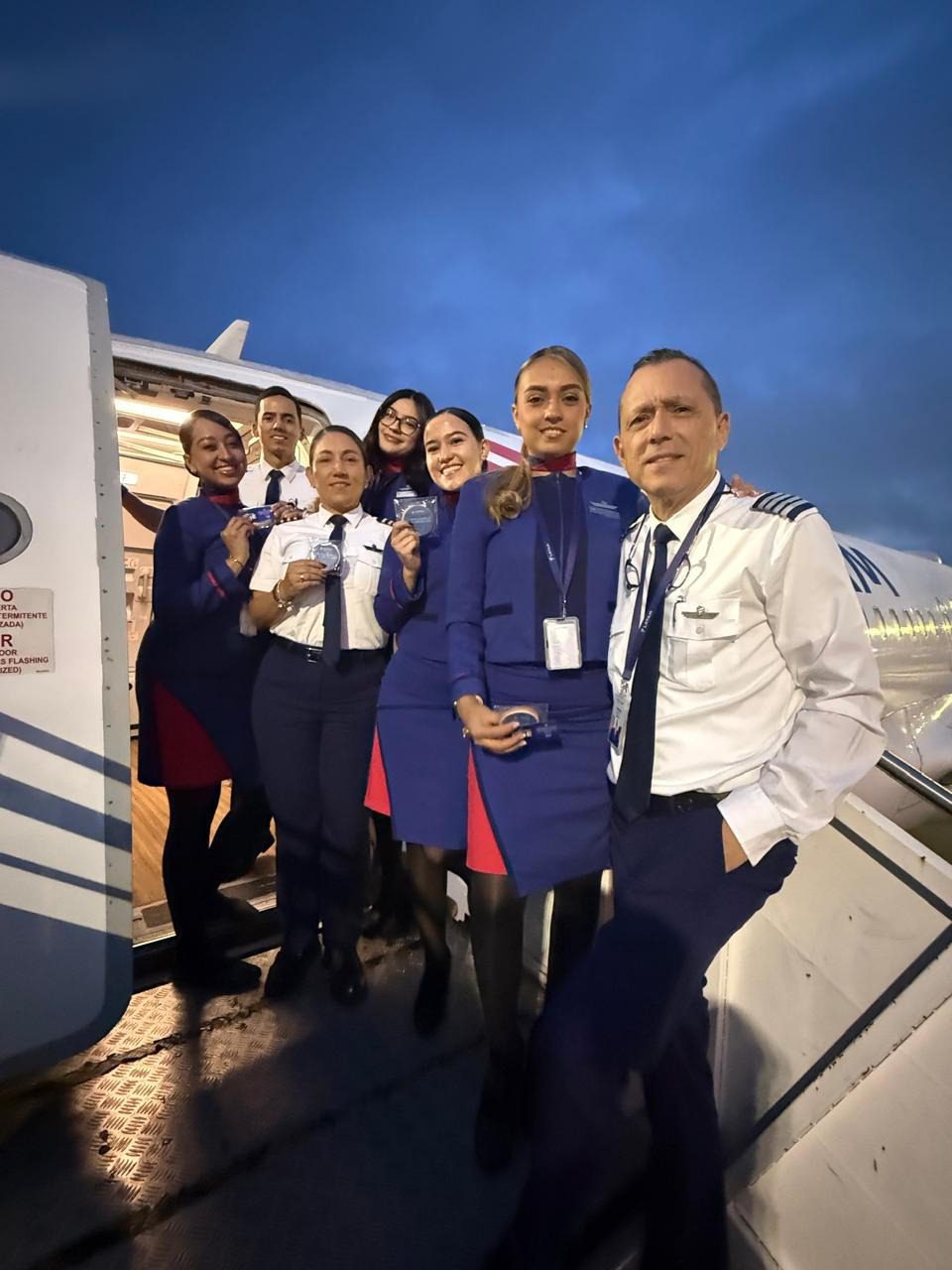
LATAM Airlines Colombia crew based in Medellín. (Photo courtesy LATAM Airlines Colombia)
LATAM Airlines Colombia said on September 2, 2026, that it has strengthened its Medellín operation for the remainder of the year across passenger flying, maintenance, cargo, and customer service, in a city the airline describes as its second-largest base in the country. The passenger schedule accounts for 245,554 monthly seats, roughly 24% of the 1,018,234 monthly seats the carrier offers across Colombia.
Headcount in the city reached 419 in September, an increase of 51%, spread across operations, on-board service, maintenance, and airport functions. Of that total, the airline said 143 people are assigned to passenger and cargo operations, with the growth concentrated in cabin crew and pilots based in Medellín. In an interview with El Colombiano, Erika Zarante, chief executive of LATAM Airlines Colombia, put the additions at 95 cabin crew and 48 flight-deck crew. The newspaper reported that the crew base allows employees from Antioquia who had been working out of Bogotá to return to the region.
The airline also set daily overnight parking for eight aircraft at José María Córdova International Airport in Rionegro, and said the base can now perform inspection and intervention work on engines, landing gear, and fuselages. The airline said the capability improves fleet availability and service reliability.
In May 2025, Vice Minister of Infrastructure Liliana María Ospina told the Comisión Sexta (Sixth Commission) of the Colombian Senate that only the first stage of the airport’s master plan had been funded at that point, and that the second stage, which contains a second runway and a new terminal, fell outside the administration’s budget planning. Finance Colombia reported at the time that the terminal had handled 12.5 million passengers and 129,000 tons of cargo over the preceding year.
Zarante told El Colombiano that the airport’s planned expansion to 17 million passengers opens room for airlines to keep growing in the city, but that airport infrastructure has to work as a network anchored on Bogotá, where LATAM is pressing for slot monitoring at El Dorado International Airport and views the Dorado Max project as a source of additional capacity over the medium and long term. She said LATAM is willing to invest and bring more aircraft to Colombia as that capacity opens.
On the cargo side, the group’s freight arm, LATAM Cargo, operates seven weekly freighter frequencies between Medellín and Miami using Boeing (NYSE: BA) 767 aircraft, which the airline said play a strategic role in exports from Antioquia’s flower-growing sector. At a half-year briefing in July, reported by Colombian aviation outlet volavi, the airline said it moved 75,000 tons of cargo in Colombia during the first six months of 2026, held the lead in air freight exports of flowers, and widened its cargo mix to include fruit, tilapia, pharmaceutical freight, e-commerce, and high-value goods.
Two group-wide support functions also sit in the metropolitan area. The airline said Medellín supplies uniforms for its employees worldwide and hosts the largest business process outsourcing and contact center operation in the LATAM group’s regional network, staffed by 700 agents working exclusively on the airline’s account. That center is run by AlmaExperience Colombia, which operates offices in Bogotá and in Sabaneta, in the Medellín metropolitan area, and reports more than 3,500 employees nationwide. AlmaExperience Colombia, formerly Almacontact, belongs to the Almaviva group of Italy.
The passenger network from Medellín covers 162 weekly frequencies to seven destinations, six of them domestic. Bogotá accounts for 100 weekly flights, followed by Cali and Barranquilla at 14 each, San Andrés at 13, and Pereira, Montería, and Lima at seven each. Lima, the only international route in the schedule, connects Medellín to the wider network of LATAM Airlines Group (NYSE: LTM) through Peru. Zarante told El Colombiano that the Bogotá-Medellín route has grown about 4% to 5% and ranks third by number of frequencies across the entire LATAM group, and that the airline’s near-term priority is consolidating existing routes rather than launching new ones.
Measured in available seat kilometers (ASKs), the airline projects 77 million ASKs from Medellín against 512 million ASKs for its Colombian operation as a whole, and describes the plan as representing 8% growth over 2025. The airline highlighted three routes: Barranquilla-Medellín, where seats rise 64%; San Andrés-Medellín, up 63%; and Bogotá-Medellín, up 10%. Bogotá-Medellín was already the busiest pair in the carrier’s domestic network in the first half of 2026, carrying 754,925 passengers, according to figures volavi reported from the group’s second-quarter results.
At the July briefing the airline said it carried more than 5 million passengers on domestic and international flights to and from Colombia between January and June, holding its position as the second operator in the domestic market. It told trade outlet Reportur in July 2026 that it operates 29 aircraft in the country and is targeting a share close to 30% of the Colombian air market, against the 26% of seat capacity its chief executive cited for 2025.
Parent company LATAM Airlines Group reported net income of $125 million USD for the second quarter of 2026 on revenue of $4.18 billion USD, a 28% increase over the same quarter of 2025, with an adjusted operating margin of 5.4% and aircraft fuel costs up 93.1% year over year, according to the group’s results release dated August 4, 2026. The group and Delta Air Lines (NYSE: DAL) agreed to a joint venture in 2020, and the Colombian civil aviation authority, Aeronáutica Civil (Civil Aeronautics), known as Aerocivil, approved it in May 2021.
Zarante said the city’s role in the group extends past its position in the route map. “Medellín is much more than a relevant destination within our network: it is a strategic platform for LATAM’s growth in Colombia and for the Group in the region,” she said. “Our commitment to Antioquia combines connectivity, employment, cargo, customer service, and maintenance, with a long-term vision that seeks to drive stronger connectivity, a more efficient operation, and a business model that integrates local capabilities with global opportunities.”
Zarante took the chief executive role on January 1, 2025, succeeding Santiago Álvarez Matamoros. La República reported at the time of her appointment that she had spent 23 years in the aviation sector and had been leading the airline’s legal department.
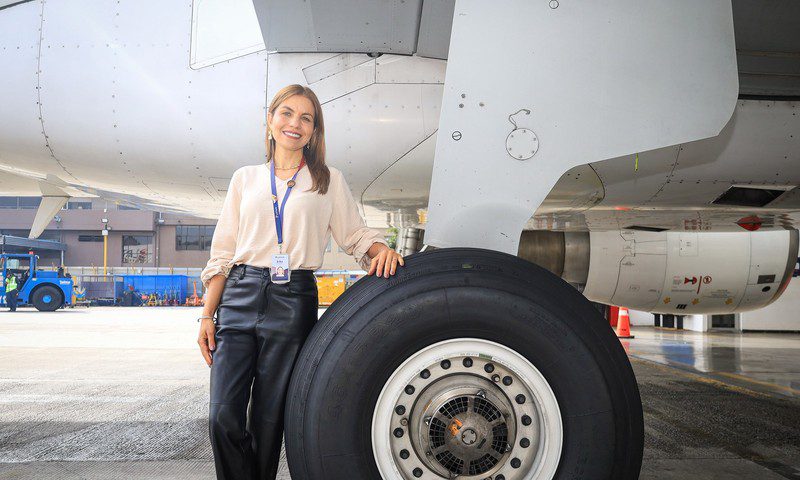
Headline photo: Erika Zarante, CEO of LATAM Airlines Colombia, beside the landing gear of a LATAM aircraft. (Photo courtesy LATAM Airlines Colombia)