Previous Story
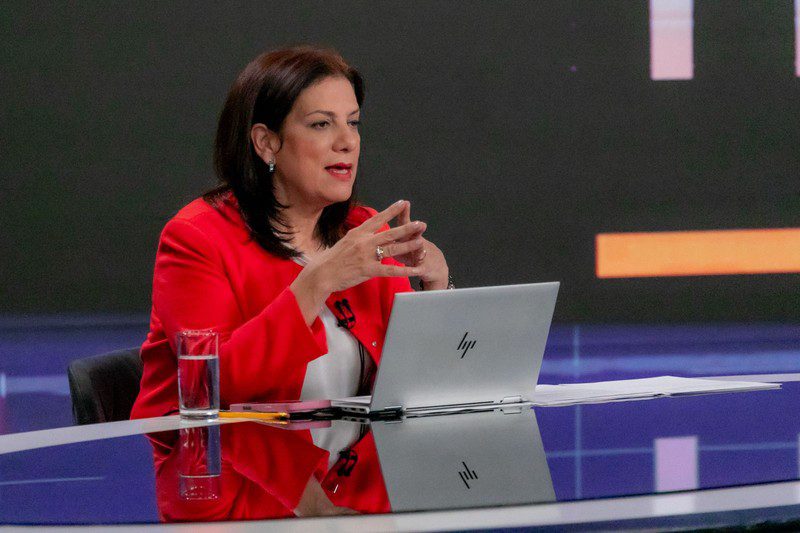
Colombia’s ICT Minister Opens ANDICOM 2026 by Asking Industry to Co-write a 2026–2030 Technology Plan
Posted On September 4, 2026
Comment: Off
Tag: abelardo de la espriella, agencia nacional del espectro, Alexandra Falla Zerrate, ANDICOM, ANDICOM 2026, Artificial Intelligence, bogotá, cartagena, cepal, CINTEL, colombia, Comisión de Regulación de Comunicaciones, connectivity, cybersecurity, Data Centers, Departamento Nacional de Planeación, Digital Economy, digital talent, Digital Transformation, ECLAC, european union, fintech, FUTIC, govtech, ICT policy, ILIA 2025, Latin American Artificial Intelligence Index, Milagro Tecnológico, mintic, Plan TIC Colombia 2026-2030, spectrum policy, superintendencia de industria y comercio, Telecommunications
MinTIC shifts its yardstick from coverage to productivity and jobs
Colombia’s technology minister, Alexandra Falla Zerrate, used the opening of ANDICOM 2026 in Cartagena on September 2, 2026, to ask operators, technology companies, universities and regional governments to help write a new national technology plan for 2026 through 2030, one that the Ministerio de Tecnologías de la Información y las Comunicaciones (Ministry of Information and Communications Technologies, or MinTIC) says will be judged on jobs, income and business productivity rather than only on the number of connections it delivers.
The Plan TIC Colombia 2026–2030, subtitled “Colombia: el milagro tecnológico” (Colombia: the technological miracle), was presented as an invitation rather than a finished document. According to the ministry, its stated goal is to make Colombia the technology hub of the Americas, and the process will involve the national government, regulators, departments and municipalities, operators, companies, startups, universities, research centers and civil society, following a sequence the ministry describes as listen, diagnose, prioritize, design, validate, execute and measure.
“Colombia has the position, it has the cables, it has the talent, it has the energy, and now it has the direction,” Falla said. “Together, we are going to build the Technological Miracle 2026–2030.”
The minister addressed the conference by video link from a television studio in Bogotá rather than in person, according to Infobae, which reported that she apologized for her absence because she was touring the areas hit by the earthquake of August 10, 2026. Falla took office with the administration of President Abelardo de la Espriella, which was inaugurated on August 7, 2026, and is managing reconstruction after the earthquake.
Seven Questions for the Industry
Falla listed the operators, infrastructure providers, universities, entrepreneurs, trade associations, multilateral banks, international cooperation agencies, civil society and the members of Congress present in the hall as the parties she wants at the table, Infobae reported. She put seven questions to them, ranging from the main problem the government should solve and the decision it most needs to take to what each organization is prepared to contribute, with answers collected through a form on a MinTIC microsite that the ministry said would remain open only during ANDICOM, after which it would announce a sector-wide consultation phase. Falla told attendees the call was for commitments rather than commentary, Infobae reported.
“This invitation is not an invitation to offer opinions from the stands. It is to make a commitment on the field.”
— Alexandra Falla Zerrate, Colombia’s minister of information and communications technologies
The First 100 Days
MinTIC says it will start several lines of work during the first 100 days. Among them, the ministry plans to reorganize the Fondo Único de Tecnologías de la Información y las Comunicaciones (Single Fund for Information and Communications Technologies, or FUTIC), the fund consolidated under Law 1978 of 2019 that finances universal access programs and public television; design a new connectivity policy; review the policy for spectrum use and assignment; establish a strategy for computing and data centers; and design a national cybersecurity architecture.
The list also includes a national roadmap for applied artificial intelligence, a national digital talent mission, the identification of the 20 government procedures whose digitalization would have the greatest impact, a portfolio of ICT projects with high regional impact, and a proposal for a permanent coordination mechanism linking government, industry, academia and the regions.
Falla said MinTIC works with the Departamento Nacional de Planeación (National Planning Department) and the ministries of science, education, labor and finance, and on the regulatory side with the Comisión de Regulación de Comunicaciones (Communications Regulation Commission), the Agencia Nacional del Espectro (National Spectrum Agency) and the Superintendencia de Industria y Comercio (Superintendency of Industry and Commerce), according to Infobae.
New Metrics for Digital Progress
The ministry says the proposal changes how digital transformation is understood. For years, according to MinTIC, digital progress has been tracked through coverage, connections, speed, devices delivered and people trained. The new plan proposes to measure what changed in people’s lives after they were connected: reductions in digital poverty, technology adoption, employability, income, business productivity and the productive use of artificial intelligence. In the ministry’s framing, “connectivity of the future” will be defined by quality, speed, stability, affordability, devices, skills and purpose rather than by coverage alone.
Falla offered one example, according to Infobae: 22,000 people have been trained in artificial intelligence, and the ministry’s question now is what that training produced in terms of productive development, employability and living conditions. “We cannot keep counting how many diplomas we hand out,” she said.
Falla also presented figures on the gaps the plan is meant to close, according to Infobae. Internet use in Colombia rose from 58% to 87% between 2020 and 2025, but only 35.7% of households own a computer, 10 of the country’s 32 departments remain below 50% connectivity, and 45% of Colombians without internet access lack it because they cannot afford it. On artificial intelligence, 24% of Colombians already use AI tools, and Colombia ranks fourth among 19 countries in the 2025 Latin American Artificial Intelligence Index published by the Comisión Económica para América Latina y el Caribe (Economic Commission for Latin America and the Caribbean, or CEPAL). “If we do not close this gap today, AI will not be a leveler of opportunities but an amplifier of inequalities,” Falla said.
Five Missions and a 2030 Target
The plan is organized around five national missions, according to the ministry: connecting Colombia with universal, relevant, high-quality connectivity; preparing Colombia through talent, education, STEM and artificial intelligence; making Colombia produce through AI, data, business digitalization and the digital economy; transforming the state through interoperability, GovTech, data and public-sector AI; and protecting Colombia through cybersecurity, digital sovereignty and digital trust. In her remarks, as reported by Infobae and Valora Analitik, Falla summarized the plan as five pillars: connect, enable, produce, protect and transform. The ministry says it wants Colombia to create, adapt and export technology rather than only consume it, in areas including applied AI, AI agents, GovTech, FinTech, cybersecurity, data infrastructure and exportable digital services.
The ministry’s stated 2030 targets include connectivity as an effective right, technology training that translates into jobs and income, and a state that operates as a digital platform. Falla proposed what MinTIC calls a new Colombian digital compact, under which the government leads and enables, companies invest and transform, universities research and train, regions adapt and adopt, and citizens use, participate and demand results.
“Colombia’s technological future cannot be designed from a single office,” Falla said. “We have to listen to one another, understand the needs of the regions, and work together with those who are part of the country’s technological and productive ecosystem.”
The Venue
ANDICOM is organized by CINTEL, the Centro de Investigación y Desarrollo en Tecnologías de la Información y las Comunicaciones (Center for Research and Development in Information and Communications Technologies), founded in 1991. The 2026 edition, the 41st, ran from September 1 to September 4 at the Las Américas Convention and Exhibition Center and the Faranda Collection hotel under the theme “Unleashing the Power of AI,” with the European Union as guest of honor. El Universal reported that the organizers expected more than 6,000 attendees, 180 speakers and participants from 40 countries. Finance Colombia previewed this year’s agenda in August.
Headline photo:Minister Alexandra Falla Zerrate delivers her ANDICOM 2026 address from a television studio in Bogotá. (Photo courtesy MinTIC)