Previous Story
Colombia’s Technology Ministry Creates Weekly Working Group to Oversee Social Media Response Combatting Criminal Recruitment of Minors
Posted On September 4, 2026
Comment: Off
Tag: abelardo de la espriella, Alai, Alexandra Falla Zerrate, amazon, armed groups, Artificial Intelligence, Asociación Latinoamericana de Internet, ByteDance, cauca, child protection, child recruitment, colombia, content moderation, Defensoría del Pueblo, digital platforms, facebook, FARC Dissidents, forced recruitment, google, Human Rights Watch, Juanita Goebertus, mercadolibre, meta, Ministerio de Tecnologías de la Información y las Comunicaciones, minors, mintic, online safety, Raúl Echeberría, social media, technology policy, tiktok, universidad externado de colombia, X
Platforms face weekly checks after HRW counts 1,500 minors recruited
Colombia’s Ministerio de Tecnologías de la Información y las Comunicaciones (Ministry of Information Technologies and Communications, or MinTIC) will create a specialized working group to monitor what social media platforms are doing to detect and remove content that criminal structures use to recruit minors, the ministry announced on August 28, 2026. The group will meet weekly to check whether the platforms and other digital-industry actors are meeting the commitments they have made.
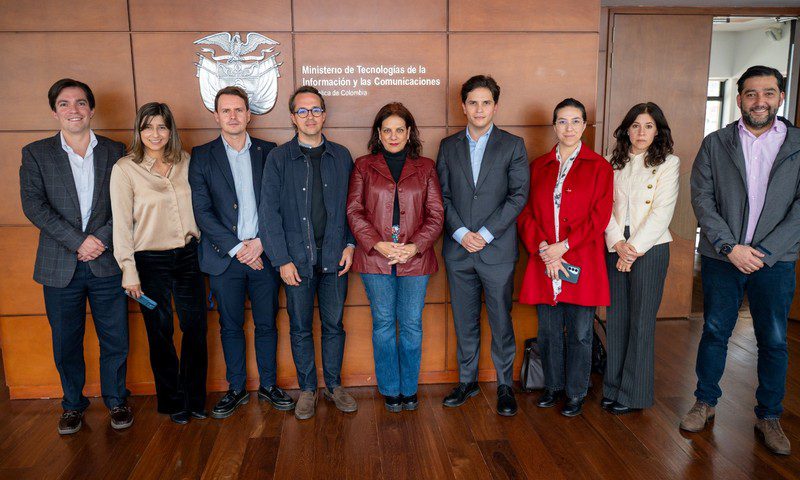
Minister Alexandra Falla Zerrate made the announcement after meeting with representatives of the Asociación Latinoamericana de Internet (Latin American Internet Association, or Alai), a Montevideo-based industry association whose members include Meta (NASDAQ: META), TikTok, Google (NASDAQ: GOOGL), Amazon (NASDAQ: AMZN), X and MercadoLibre (NASDAQ: MELI). According to the ministry, the meeting examined the growth of the problem and the way criminal structures use digital platforms to approach children and adolescents.
The announcement came four days after Human Rights Watch published a 124-page report on the recruitment of minors by armed groups in Colombia. Based on its analysis of data from the Defensoría del Pueblo (Ombudsman’s Office), the organization counted at least 1,500 children and adolescents recruited since 2021, with a sharp rise in cases since 2023, and found that dissident factions of the demobilized FARC were behind the large majority of reported cases, and that more than half of all reported cases were in the department of Cauca. The report’s researchers reviewed more than 70 accounts and 40 posts on platforms including Facebook and TikTok that glorified membership in armed groups or invited users to join them, and concluded that the platforms had not effectively detected or removed that content and that in some cases their algorithms appeared to promote it.
“Armed groups in Colombia are recruiting children with impunity, as protection systems are failing, and social media platforms have become a more effective recruiting ground,” said Juanita Goebertus, Americas director at Human Rights Watch, when the report was released.
Separately, the Defensoría del Pueblo registered 97 cases of forced recruitment of minors between January 1 and July 31, 2026, according to El Espectador, after 684 cases in all of 2024 and 428 in 2025. The agency cautioned that the lower reported figure does not necessarily mean recruitment has fallen, since many victims and families do not report out of fear, distrust of institutions or normalization of the violence.
Five measures
The ministry listed five measures coming out of the meeting. The first is the working group itself, which will provide permanent follow-up on the actions taken by platforms and other ecosystem actors and verify compliance with the commitments made to prevent recruitment.
The second concerns detection technology. Participants discussed the role of artificial intelligence in identifying and filtering recruitment-related content and concluded that, while automated tools catch and remove a significant share of posts, they must be complemented by interdisciplinary human review to catch material that slips past the filters. Falla urged the digital-industry participants to build teams of people who understand Colombian forms of communication, whether visual, verbal or written, so that they can recognize this type of messaging and act on it immediately.
The third measure is a push to stop the content from being published in the first place rather than removing it after the fact. Falla said she was concerned about the circulation of content that can be used to lure or induce minors into recruitment and called for technological tools, including properly programmed detection algorithms, that identify and block such posts before they go up.
The fourth addresses the share of content that evades detection. Raúl Echeberría, Alai’s executive director, told the meeting that platforms currently remove more than 90% of the identified content related to the problem. Falla responded that the challenge is to keep cutting the percentage that gets past detection mechanisms and to reach 100% neutralization of that content.
The fifth measure is coordination. The ministry and the industry representatives agreed that confronting the online recruitment of minors requires joint action by the authorities, the technology platforms, other digital-ecosystem actors and families.
What the platforms have said
In written responses to Human Rights Watch that were published as annexes to the report, both Meta and ByteDance, the parent company of TikTok, said their policies prohibit content that promotes, supports or champions violent organizations, including Colombian armed groups, and that they had removed the profiles the organization flagged. According to El Tiempo, Meta reported removing 16 Facebook profiles and TikTok reported removing 35 profiles and their associated content. TikTok also told the organization that between January and March 2026 it removed 99.4% of content in Colombia that violated its policy on violent organizations and individuals before it was reported, that it blocks search terms associated with criminal organizations, and that users under 16 cannot access direct messages or group chats where those features are available.
Human Rights Watch’s own conclusion was that the platforms have not been able to effectively detect and prevent the spread of this content. According to El Tiempo, the full report recommends that the platforms establish specific reporting channels adapted to children in Spanish and in relevant indigenous languages, preserve evidence when content is removed, and publicly report on their compliance with child-safety obligations under international standards and Colombian law.
Falla, a social communications graduate of the Universidad Externado de Colombia with more than three decades in the audiovisual and public television sector, took office with the administration of President Abelardo de la Espriella, which was inaugurated on August 7, 2026. The ministry said that for Falla the protection of minors is a priority issue. The announcement did not specify who will sit on the working group or whether the platforms’ commitments will be made public.
Headline photo: Minister Alexandra Falla Zerrate with representatives of the Asociación Latinoamericana de Internet and the digital industry at the ministry. (Photo courtesy MinTIC)