Previous Story
Colombian Scientist Laura González García Wins Pew Fellowship for RNA Research
Posted On August 3, 2026
Comment: Off
Colombian genomicist joins Pew’s 2026 biomedical fellowship class
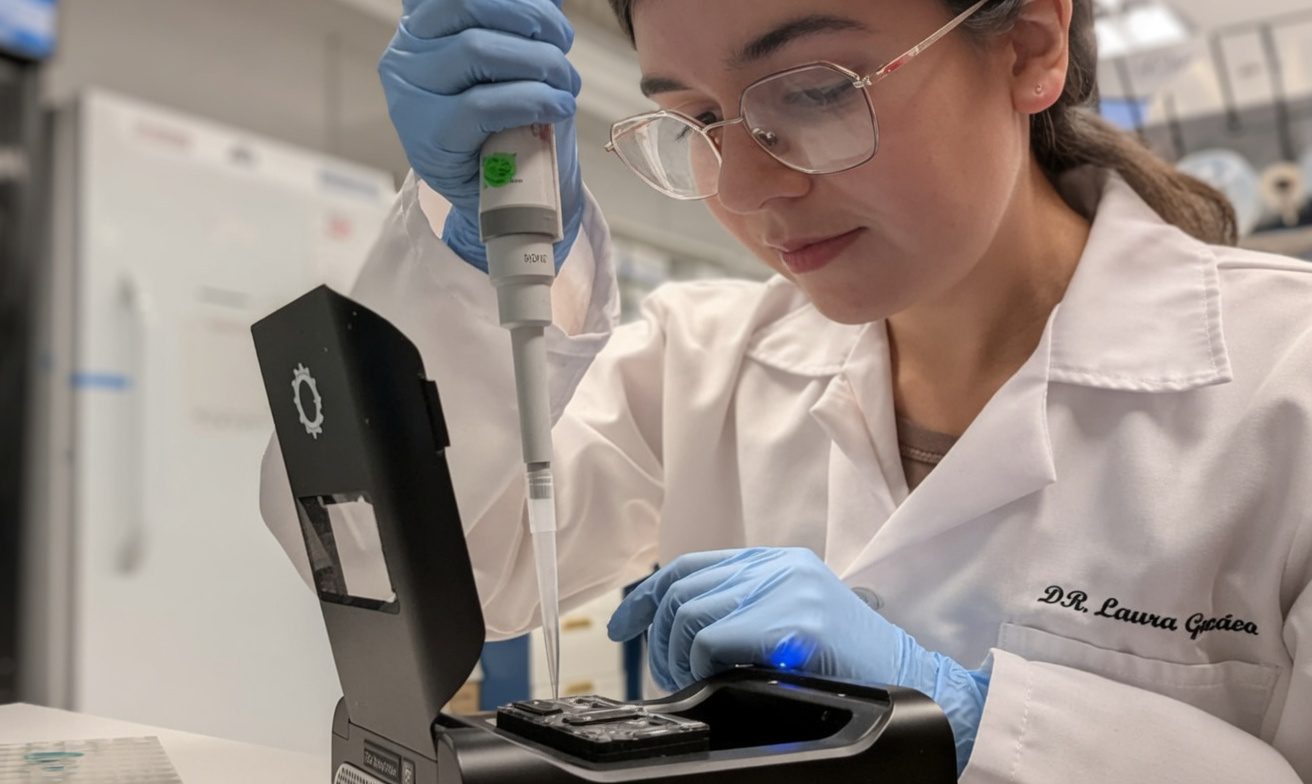
Colombian scientist Laura González García has been selected for the 2026 class of the Pew Latin American Fellows Program in the Biomedical Sciences, a competitive postdoctoral fellowship supporting early-career researchers from Latin America.
González García is one of ten scientists selected for this year’s cohort and one of two fellows representing Colombia. The program, established by The Pew Charitable Trusts, provides two years of research funding for fellows to conduct research in United States laboratories under the mentorship of established scientists.
“If we know which RNAs have DHU and can associate that modification with a particular context, like cancer or crop performance, we can use them as potential biomarkers.”
— Laura González García, 2026 Pew Latin American Fellow, Boyce Thompson Institute
The 2026 fellows represent seven Latin American countries: Argentina, Brazil, Chile, Colombia, Mexico, Peru, and Uruguay. According to Pew, the program has supported more than three decades of biomedical research development, with nearly 70% of previous fellows going on to establish laboratories or research programs in Latin America.
“For 35 years, Pew has proudly supported talented scientists from Latin America as they pursue cutting-edge research in US labs,” said Donna Frisby-Greenwood, Pew’s senior vice president for Philadelphia and scientific advancement. “This year, we’re excited to support 10 new fellows whose research will accelerate global health and carry on this legacy of impactful biomedical research.”
González García is a postdoctoral researcher in the laboratory of Andrew D. L. Nelson at the Boyce Thompson Institute, an independent research institute located on the Cornell University campus in Ithaca, New York.
Her Pew-funded project focuses on epitranscriptomics, an emerging field that studies chemical modifications added to RNA molecules after transcription. These modifications can influence how RNA functions without changing the underlying DNA sequence.
The research centers on dihydrouridine (DHU), a relatively understudied RNA modification, and the enzymes responsible for creating it, known as dihydrouridine synthases (DUS proteins). While these molecules are conserved across plants, animals, and humans, scientists still have limited understanding of their broader biological roles.
In humans, changes in DUS activity have been associated with certain cancers, while in plants, the modification has been linked to stress responses and photosynthetic performance.
A major challenge in studying DHU has been the difficulty of identifying where the modification appears within RNA. González García plans to address this using Nanopore sequencing, a technology that can detect molecular changes by measuring electrical signals as RNA passes through microscopic pores.
Her project will combine experimental data with machine learning to develop a model capable of identifying DHU modifications across RNA sequences. Although the initial research is being conducted using the plant Arabidopsis thaliana, González García said the approach could eventually be adapted to other organisms, including humans.
The fellowship builds on González García’s background in computational biology and genomics. She earned dual doctorates in computer engineering and evolutionary biology from Universidad de los Andes in Bogotá and Université de Montpellier in France.
Her previous research has focused on comparative and computational genomics, including studies of Leishmania parasite genomes, genome-analysis software development through NGSEP, methods for annotating transposable elements, and research into transposable-element dynamics in lima bean.
The Pew fellowship represents a transition from her previous DNA-focused research toward RNA biology, with applications that could contribute to future advances in medicine, agriculture, and biotechnology.
Following her postdoctoral training, González García plans to establish her own laboratory at a Latin American research institution, aligning with Pew’s objective of strengthening scientific capacity across the region.