Previous Story
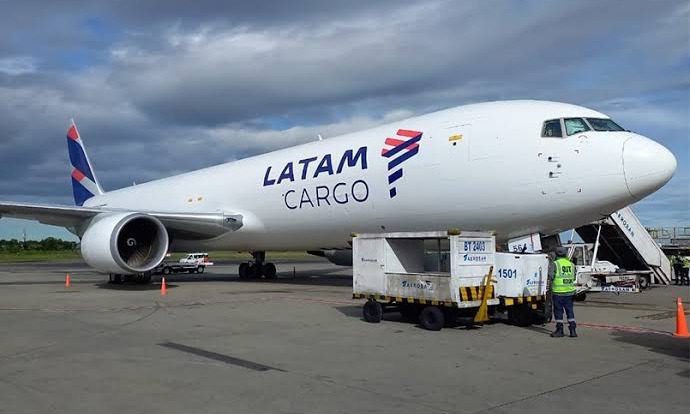
LATAM Cargo Will Triple Its Bogotá Warehouse Space With a 4,312-Square-Meter El Dorado Facility
Posted On November 17, 2026
Comment: 0
Tag: aerocivil, aeronautica civil, air cargo, air freight, airport infrastructure, Airports Council International, Andrés Bianchi, asocolflores, Avianca Cargo, bogotá, brazil, CargoLink, cold chain, cold storage, colombia, ecuador, El Dorado International Airport, floriculture, flower exports, iata, IATA Cargo Day Colombia, LATAM Airlines Group, latam cargo, LATAM Cargo Colombia, LATAM Cargo Group, Laura Valdivieso, leticia, logistics, medellin, ONE Record, opain, paula bernal, pereira, Peter Cerdá, RFID, san andres, santiago alvarez, Section 301, USTR
LATAM Cargo’s Bogotá cold storage will grow 20% for flower exports
LATAM Cargo has been awarded a plot of land in the cargo zone of Bogotá’s El Dorado International Airport, where it will build a 4,312-square-meter warehouse that the carrier says will triple its warehouse space in the Colombian capital and enlarge the cold rooms it uses for flower exports. The cargo arm of LATAM Airlines Group (NYSE: LTM, Bolsa de Santiago: LTM, BVC: LTMCO) announced the project on November 11 at IATA Cargo Day Colombia 2026, the first edition of the International Air Transport Association’s cargo conference held anywhere in the Americas.
The site sits at the eastern end of the cargo terminal and offers a direct connection between trucks and aircraft, which the company says will make it quicker to move freight onto the apron. LATAM Cargo did not disclose what the building will cost or when it expects to finish it.
The new facility will raise the carrier’s own refrigerated warehouse capacity in Bogotá by roughly 20%, to serve growth in flower exports, a segment in which LATAM Cargo puts its own share at 35%. The company also plans to enlarge its domestic cargo warehouses in Bogotá and to build a separate area for inbound import freight.
The expansion lands at an airport IATA says is running close to its limits. Semana reported that El Dorado’s declared capacity is 74 operations an hour, and that Paula Bernal, the association’s country manager for Colombia, told the same conference the airport runs under Level 3 congestion rules and handles more than 80% of the country’s passenger and cargo flights. Peter Cerdá, IATA’s regional vice president for the Americas, said Colombia needs to work on a long-term agenda with the government to strengthen airport infrastructure, and that only three of the 23 recommendations in IATA’s 2023 study of the country have been carried out. Those recommendations were aimed at lifting El Dorado to 90 and eventually 100 operations an hour. The association separately argued for a review of the sector’s tax burden, including the carbon tax increase proposed in the tax reform.
El Dorado is already the busiest freight airport in the region. It handled 828,600 tons of cargo in 2025, ahead of São Paulo-Guarulhos at 529,600 tons, according to Prensa Mercosur, citing traffic data from Airports Council International Latin America and the Caribbean. The airport is run under concession by Opain.
The flower business the new cold rooms are meant to serve is absorbing a new cost. On July 24 the Office of the United States Trade Representative imposed an additional 12.5% tariff on products of Colombia, the outcome of a Section 301 investigation into the measures countries take to keep goods made with forced labor out of supply chains. Colombia draws the flat rate rather than the offset treatment the notice applies to five other economies.
Asocolflores, the Colombian flower exporters association, put the cost at close to $250 million USD a year against annual US sales of about $2 billion USD, according to El Universal. Laura Valdivieso, president of Asocolflores, told Portafolio that Ecuadorian flowers enter the same market at a most-favored-nation rate of 6.8%, and that 80% of the flowers Colombia exports are sold there.
“This investment is fundamental to underpinning the airline’s future growth plans in the Colombian market and represents a new signal of the confidence that the LATAM Group has in the country, with a perspective that goes beyond an economic cycle or a season.” — Santiago Álvarez, chief commercial officer, LATAM Cargo Group
Santiago Álvarez, chief commercial officer of LATAM Cargo Group, ran LATAM Airlines Colombia for seven years before being promoted to the cargo unit, Forbes Colombia reported at the time of his appointment. He now oversees the cargo division’s commercial and sustainability teams across North America, Europe, Asia and South America.
Outside Bogotá, the company has been upgrading three airports, enlarging warehouse space, replacing X-ray screening equipment and adding technology at reception counters in San Andrés, Leticia and Pereira. LATAM says the group carries 46% of the freight moved in the holds of passenger aircraft in Colombia, citing figures from the Unidad Administrativa Especial de Aeronáutica Civil (Special Administrative Unit of Civil Aeronautics), the national aviation regulator known as Aerocivil.
The construction program runs alongside a set of technology changes. Internationally, LATAM Cargo is working toward ONE Record, the IATA data standard intended to replace message-based exchanges between carriers, forwarders and customs authorities with a single shared record per shipment. In Colombia the company has put artificial intelligence and radio-frequency identification tools into the tracking of flower shipments, and says its CargoLink platform handles advance reception of cargo.
Andrés Bianchi, chief executive officer of LATAM Cargo Group, told Portafolio that Colombia accounts for close to 14% of the group’s global cargo volume and that LATAM Cargo Colombia holds about 40% of its total freighter fleet. The company says its cargo subsidiaries together operate 20 freighters and also sell capacity in the holds of LATAM’s passenger aircraft. LATAM Airlines Colombia has been adding capacity elsewhere in the country as well, building out Medellín as its second-largest base through the end of this year.
Avianca Cargo, the official host of the Bogotá conference, moved 42% of the Colombian flowers shipped to the US during the 2026 Mother’s Day season and operated more than 330 flights over the period, Valora Analitik reported.
Headline photo: A LATAM Cargo freighter on the apron during loading. (Photo courtesy LATAM Cargo)