Previous Story

Who is Financing the Future?
Posted On August 12, 2026
Comment: Off
A few years ago, I began asking myself a question that has only become more urgent with time: Who is financing the future?
Not the next quarter. Not the next election cycle. Not the next sustainability report. The future.
The kind of future where a young woman escaping violence can access dignified work. Where communities in remote regions can shape their own development. Where social mobility is not an exception but a possibility. Where prosperity is shared, not concentrated.
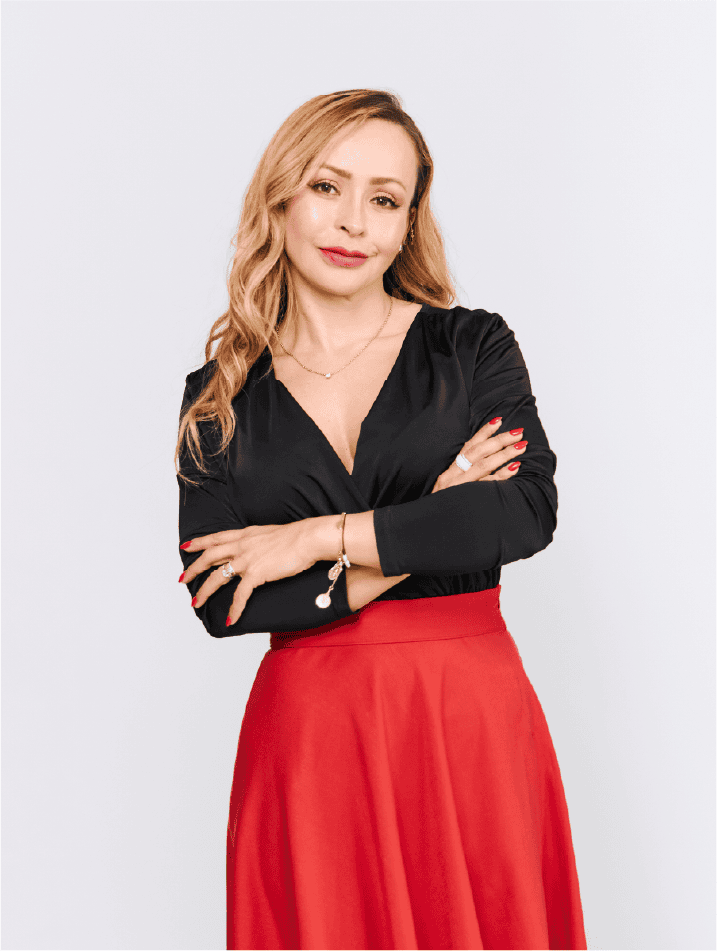
“My greatest motivation to lead the work at One is to witness value-generating projects whose results are sustainable over time and drive new initiatives” – Monica Gil Ryan
Throughout my career, I have worked at the intersection of public policy, private sector leadership, and social transformation. Those experiences taught me that lasting change does not happen by accident. It requires intention, resources, patience, and above all, trust.
That conviction is what led us at One Inversión Social to rethink a fundamental question: how can capital become a force for transformation?
At One, we believe social investment is not charity. It is one of the most strategic investments a society can make. We connect philanthropists, families, companies, and foundations with initiatives capable of generating measurable, sustainable, and systemic impact. Our work is based on a simple premise: resources create greater value when they are deployed with rigor, purpose, and a long-term vision.
Yet despite growing conversations around ESG, sustainability, and corporate citizenship, many important questions remain unanswered.
Why do we continue to finance short-term solutions for long-term problems? Why do we expect communities facing generations of exclusion to demonstrate transformational outcomes in six or twelve months? Why do we still measure social progress primarily through outputs rather than through lasting changes in people’s lives? And perhaps most importantly: Why do we trust financial markets to think in decades but expect social transformation to happen overnight?
One of the most common mistakes in philanthropy is impatience. We want immediate indicators. We want certainty. We want guarantees. But social change does not operate according to quarterly reporting cycles.
The most meaningful transformations often begin with something difficult to quantify: trust. Trust between organizations and communities. Trust between funders and local leaders. Trust that allows experimentation, learning, adaptation, and growth.
My two experiences at Harvard Business School reinforced the importance of technical rigor, evidence-based decision-making, policy design, and measurement. These tools matter deeply. Data matters. Evaluation matters.
But the field taught me something equally important. No framework, however sophisticated, can replace listening.
The leaders who understand the challenges of a territory are often the people who live there every day. Community organizations, grassroots leaders, local entrepreneurs, and social innovators frequently possess knowledge that no external consultant can replicate.
The role of philanthropy is not to arrive with all the answers. Its role is to identify those already creating solutions, provide them with patient and flexible capital, and help them scale what is already working.
This is where the private sector has an extraordinary opportunity.
For decades, many companies approached social responsibility as an activity adjacent to business. A donation here. A project there. A photograph for the annual report. That model is no longer enough.
The companies shaping the future are integrating social impact into their core operations. They are strengthening local supply chains, diversifying procurement, investing in talent development, supporting entrepreneurship, and using their operational capabilities to address challenges within their ecosystems.
The question is no longer whether companies should contribute to social transformation. The question is how intentionally they are doing it.
Because every allocation of capital is ultimately a statement about the future we want to build. Every investment reflects a belief. Every philanthropic decision reveals a priority. Every partnership sends a signal about whose voices matter and whose solutions deserve support.
So I return to the question. Who is financing the future?
Governments cannot do it alone. Communities should not have to do it alone. And philanthropy, while powerful, will never be enough if it remains disconnected from the broader economic system.
The future will be financed by those willing to think beyond immediate returns. By leaders who understand that prosperity and social cohesion are inseparable. By companies that recognize impact as a strategic asset. By philanthropists who combine the discipline of analysis with the humility of listening.
Most importantly, it will be financed by those who understand that social transformation is not an expense. It is an investment.
The challenge before us is not whether resources exist. The challenge is whether we have the courage, the patience, and the vision to direct them where they matter most.
Because the future is already being financed. The real question is: are we investing in the right one?
If this conversation resonates with you, I’d love to continue it. Let’s rethink together how philanthropy, business, and long-term social investment can help finance the future we all want to build.
Follow the conversation:
LinkedIn: Mónica Gil Ryan (linkedin.com/in/monica-gil-coca-5bb08143)
Instagram: @monicagilryan