Previous Story
ELN Guerrilla Group Announces Unilateral Ceasefire During Colombia’s Presidential Elections
Posted On May 22, 2026
Comment: Off
Tag: Association for Peasant Unity of Catatumbo (Asuncat), Ceasefire, Colombia Ministry of Interior, Colombia´s Ceasefire, Colombia’s Government Peace Delegation, ELN Colombia, ELN guerrilla group, ELN National Directorate, Foundation for Peace and Reconciliation (FIP), Freiman David Velásquez, Gustavo Petro, Ministry of the Interior, National Liberat, paz total, total peace, Unilaterañ Ceasefire
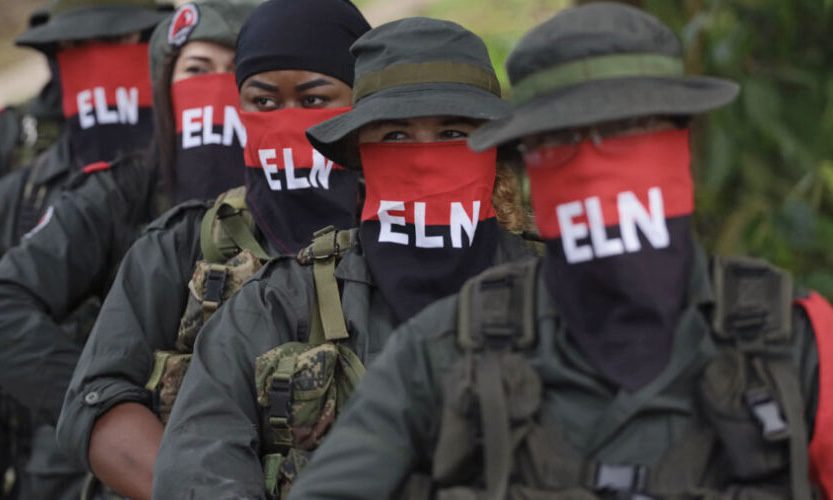
Colombia’s National Liberation Army (ELN) guerrilla group announced Wednesday, May 20, 2026, a unilateral ceasefire ahead of the country’s presidential election and said it would not interfere in the voting process, whose first round is scheduled for May 31.
According to a statement released by the insurgent group, the ceasefire will begin at 12:00 am on May 30 and remain in effect until 12:00 am on June 2, with the stated objective of respecting Colombians’ “free right to vote.”
“The National Liberation Army informs the Colombian people of its respect for the free right to vote and its noninterference in the current electoral process, and for that purpose will carry out a unilateral ceasefire during the May 31 voting day,” the ELN said in the statement.
The organization also said it instructed all of its armed units to suspend offensive military operations against state security forces during the announced period.
“The ELN National Directorate instructs all combat units not to conduct offensive military operations against the State’s Armed Forces,” said the guerrilla group, which is designated as a terrorist organization by both the United States and the European Union.
“The ELN National Directorate instructs all combat units not to conduct offensive military operations against the State’s Armed Forces,” said the guerrilla group, which is designated as a terrorist organization by both the United States and the European Union.
Announcement follows renewed violence
The announcement comes amid worsening security conditions in several regions of Colombia and one day after a massacre in the northeastern department of Norte de Santander that Ministry of the Interior suspect was carried out by the ELN.
The armed group also referred to recent military operations ordered by President Gustavo Petro in municipalities including Ábrego, Tibú and other areas of the Catatumbo region, a strategic border zone with Venezuela marked by territorial disputes, illegal economies and the presence of multiple armed groups.
In its statement, the ELN claimed that military bombings carried out May 9, 2026, in Tibú “fell into empty territory” and said the organization suffered no casualties.
“We want to clarify to national and international public opinion that the bombings carried out by the Military Forces under the direction of Gustavo Petro against the ELN on the night of May 9 resulted in neither deaths nor injuries on our side,” the group said.
However, recent military operations and violence in Norte de Santander have left multiple victims. Among them was Freiman David Velásquez, a social leader from the Association for Peasant Unity of Catatumbo (Asuncat), who was killed despite having a government protection scheme in place.
“Total Peace” policy faces renewed challenges
The ELN, founded in 1964 and considered Colombia’s oldest active guerrilla organization, has engaged in several rounds of peace negotiations with the Colombian government over recent decades.
Under Petro’s administration, the group participated in negotiations under the government’s “Total Peace” (Paz Total) policy, an initiative designed to pursue simultaneous talks with multiple illegal armed organizations.
However, according to Colombia’s Government Peace Delegation, the process has repeatedly stalled amid kidnappings, armed attacks, targeted killings and territorial violence linked to the guerrilla group, reducing prospects for a negotiated settlement in the short term.
According to figures cited by the Foundation for Peace and Reconciliation (FIP), the security crisis in conflict-affected region of Catatumbo (Norte de Santander) has left at least 166 people dead, including six signatories of Colombia’s peace agreement and 10 minors, as well as 19 members of the security forces killed.
The organization also reported that nearly 92,000 people have been forcibly displaced from their homes as violence escalates across several regions of the country.
The ELN’s announcement comes less than two weeks before a presidential election marked by high political polarization, security concerns and fears over potential disruptions to voting in regions historically affected by Colombia’s armed conflict.
More about Colombia´s presidential elections? Read Colombia’s Presidential Race Marked by Polarization, Divided Right and Absence of Debates by Finance Colombia.