Previous Story
De la Espriella Begins Building Congressional Support with Interior Minister Appointment and Early Political Alliances
Posted On July 4, 2026
Comment: Off
Tag: abelardo de la espriella, Cambio Radical, Centro Democratico, Colombia´s House of Representatives, Colombia´s Ministry of Interior, Colombia´s Senate, Colombian Congress, Congress of Colombia, Conservator Party, Gustavo Petro, La U Party, Law 1909 of 2018, Minister of the Interior, Ministry of Interior, Presidential Program for Efficiency, Rodrigo Lara Bonilla, Rodrigo Lara Restrepo, salvación nacional, Transparency and the Fight Against Corruption
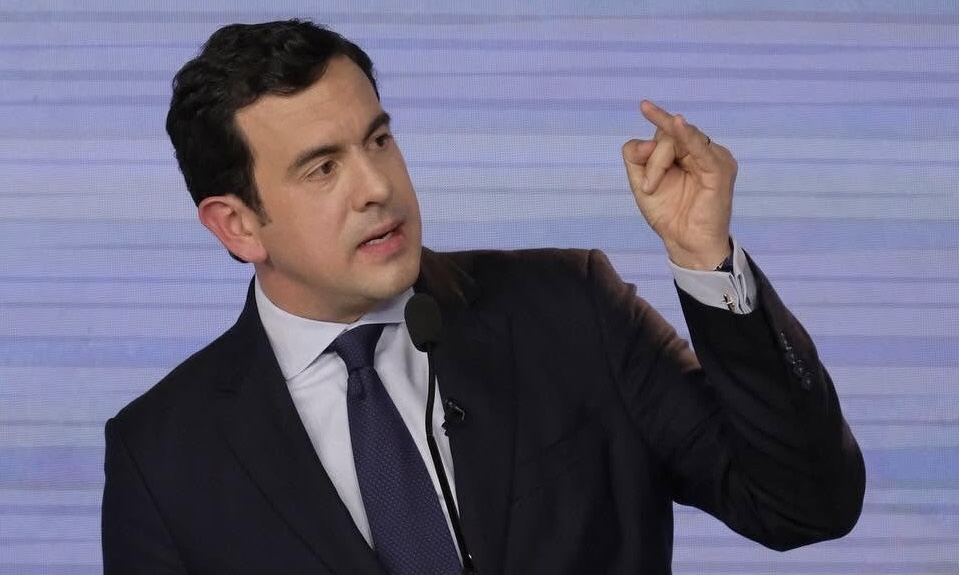
President-elect Abelardo de la Espriella appointed Rodrigo Lara Restrepo as interior minister. Here’s why the position is critical to his administration
Just over a month before president-elect Abelardo de la Espriella takes office, Colombia’s political landscape is beginning to take shape as the incoming administration seeks to build congressional support, a key requirement for governing after August 7, 2026.
The first step in that strategy was the appointment of Rodrigo Lara Restrepo as minister of the Interior, the first Cabinet nomination announced by the far-right De la Espriella since his victory in the presidential runoff.
The appointment is no coincidence. The president-elect’s party, Salvación Nacional, will hold only four seats in the new Congress, an insufficient number to advance its legislative agenda without reaching agreements with other political parties.
In that context, the Ministry of the Interior takes on a central role, as it will be responsible for managing the executive branch’s relationship with Congress and negotiating the majorities needed to pass legislation and reforms.
Lara Restrepo, once widely known as Colombia’s “anti-corruption czar,” served as director of the Presidential Program for Efficiency, Transparency and the Fight Against Corruption from 2006 to 2007 under then-president Álvaro Uribe. He later served two terms in the Senate (2007-10 and 2018-22) and one term in the House of Representatives (2014-18), experience that has given him extensive knowledge of how Colombia’s legislature operates.
He is also the son of former Justice Minister Rodrigo Lara Bonilla, who was assassinated in 1984 on the orders of drug leader Pablo Escobar after leading the government’s war against the Medellín Cartel.
“No more backroom deals. No more hidden pacts. No more corruption,” De la Espriella wrote on X when announcing the appointment. The president-elect also said that, with the support of the new minister, his administration would begin “an era of harmony, transparency and major social reforms.”
Lara Restrepo responded by saying, “We will forge a broad agreement around the fundamental issues that unite us and that can endure over time.”
El que NUNCA abandonó lo que más ama.
Emprendedor, abogado, docente universitario, senador de la República, presidente de la Cámara de Representantes y zar anticorrupción.
El que NUNCA, a pesar de haber sido víctima de la violencia, dejó de trabajar por su Patria; el que NUNCA… pic.twitter.com/K2QYhpjvV7
— Abelardo De La Espriella (@ABDELAESPRIELLA) June 26, 2026
Political coalitions begin to take shape
Alongside the appointment of the interior minister, political parties have begun defining their positions toward the incoming administration.
Law 1909 of 2018, known as the Opposition Statute, requires political parties represented in Congress to declare whether they will join the government, remain independent or enter the opposition within one month of the installation of the new Congress, scheduled for July 20, 2026.
The first formal endorsement of the incoming administration came from Centro Democrático, the party led by former President Álvaro Uribe Vélez, which will become the second-largest bloc in Congress with 46 seats: 17 in the Senate and 29 in the House of Representatives.
That decision was followed by Cambio Radical, the party to which Lara Restrepo belongs, which, despite its relatively weak electoral performance, will hold 19 seats in Congress, six senators and 13 representatives. In recent days, Creemos, the political movement led by Medellín Mayor Federico “Fico” Gutiérrez, also announced its support. The party will hold two seats in the House of Representatives.
Although these endorsements strengthen the president-elect politically, they remain far from guaranteeing a legislative majority. Moreover, De la Espriella has not issued any public statement regarding those endorsements.
Attention is now focused on the Conservative Party, the Liberal Party and the Party de La U, none of which has yet decided whether it will support the incoming administration, remain independent or join the opposition. Under the legal deadline, those parties have until August 19 to formally announce their decisions, a development that could significantly reshape the political landscape.
Attention is now focused on the Conservative Party, the Liberal Party and the Party de La U, none of which has yet decided whether it will support the incoming administration, remain independent or join the opposition. Under the legal deadline, those parties have until August 19 to formally announce their decisions, a development that could significantly reshape the political landscape.
Meanwhile, Pacto Histórico, the largest political coalition in the new Congress, has announced that it will serve as the opposition under the leadership of former presidential candidate Iván Cepeda.
The coalition holds 66 seats across both chambers and could coordinate with other center-left groups, including Alianza por Colombia (20 seats), representatives elected through the Special Peace Constituencies (16 seats) and other smaller progressive parties.
A fragmented Congress
The fragmentation of the new Congress makes the Ministry of the Interior one of the most strategic Cabinet posts in the incoming administration.
De la Espriella’s government will need to build permanent coalitions to advance any legislative initiative, particularly during its first months in office, when it must submit both the National Development Plan and the General Budget of the Nation to Congress.
In addition to parliamentary opposition led by Cepeda, the incoming administration will also have to contend with the outgoing President Gustavo Petro‘s continued ability to mobilize public support.
Colombia’s Congress consists of 103 senators and 183 members of the House of Representatives. Depending on the type of legislation, bills require simple majorities, absolute majorities or, in the case of constitutional amendments, approval by two-thirds of both chambers.
In the coming weeks, De la Espriella is expected to announce the remaining members of his Cabinet, which must be finalized before his inauguration on August 7.
Want to read more? After a Polarized Vote, Colombia’s Next President Must Navigate a Fragmented Congress