Previous Story
Tecnoglass Absorbs a Tariff Shock While Its Backlog Hits a Record Amidst Record Q2 Results
Posted On August 13, 2026
Comment: Off
Margin pain looks temporary; Colombia’s new government is a tailwind
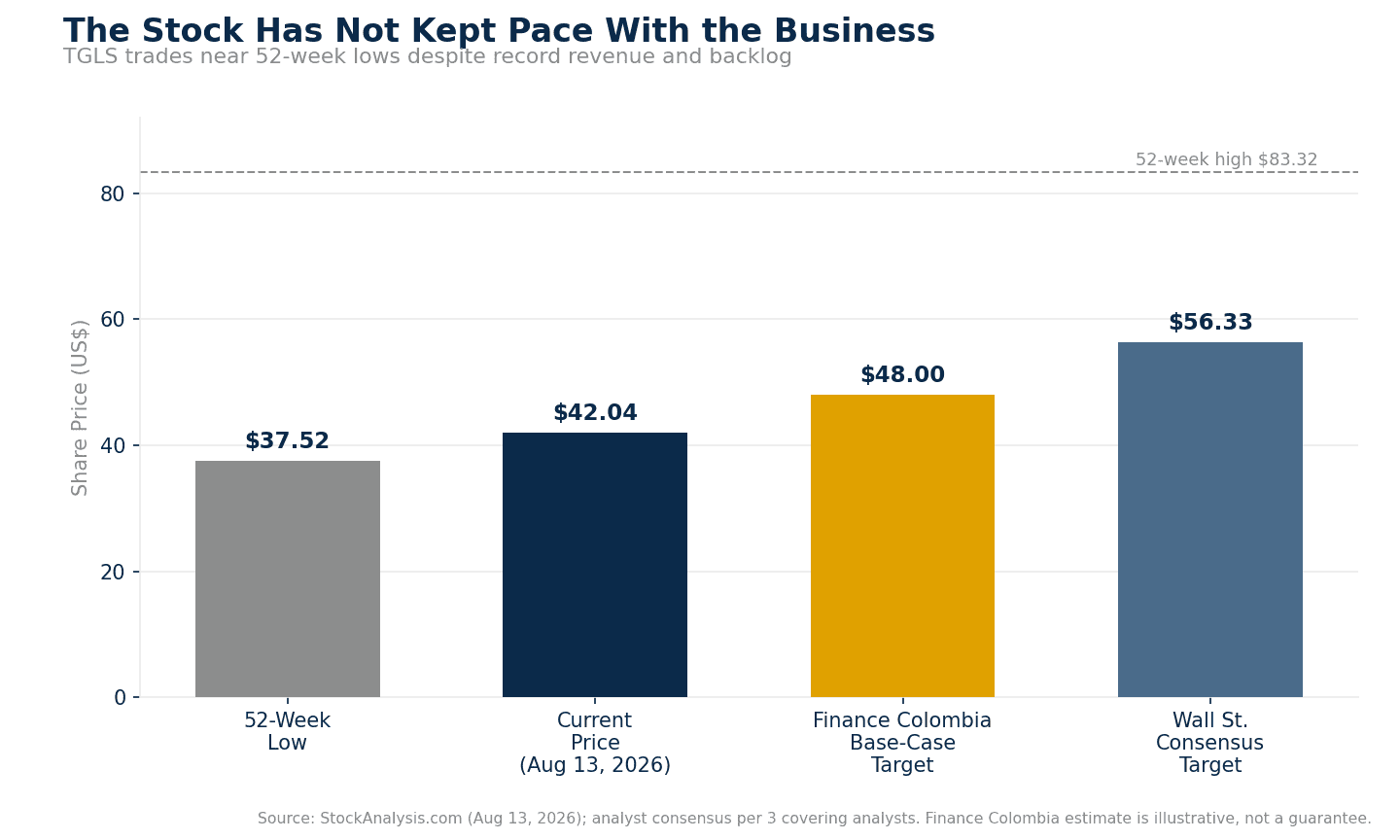
Tecnoglass Holdings Inc. (NYSE: TGLS), the Barranquilla, Colombia-based manufacturer of architectural glass and aluminum windows, reported record second-quarter revenue of $295.3 million USD on August 6, up 15.6% from $255.5 million USD a year earlier, even as new US tariffs on imported aluminum cut deeply into profitability. Shares, trading near $42 USD as of August 13, sit closer to their 52-week low of $37.52 USD than their 52-week high of $83.32 USD — a gap that looks increasingly out of step with the underlying business.
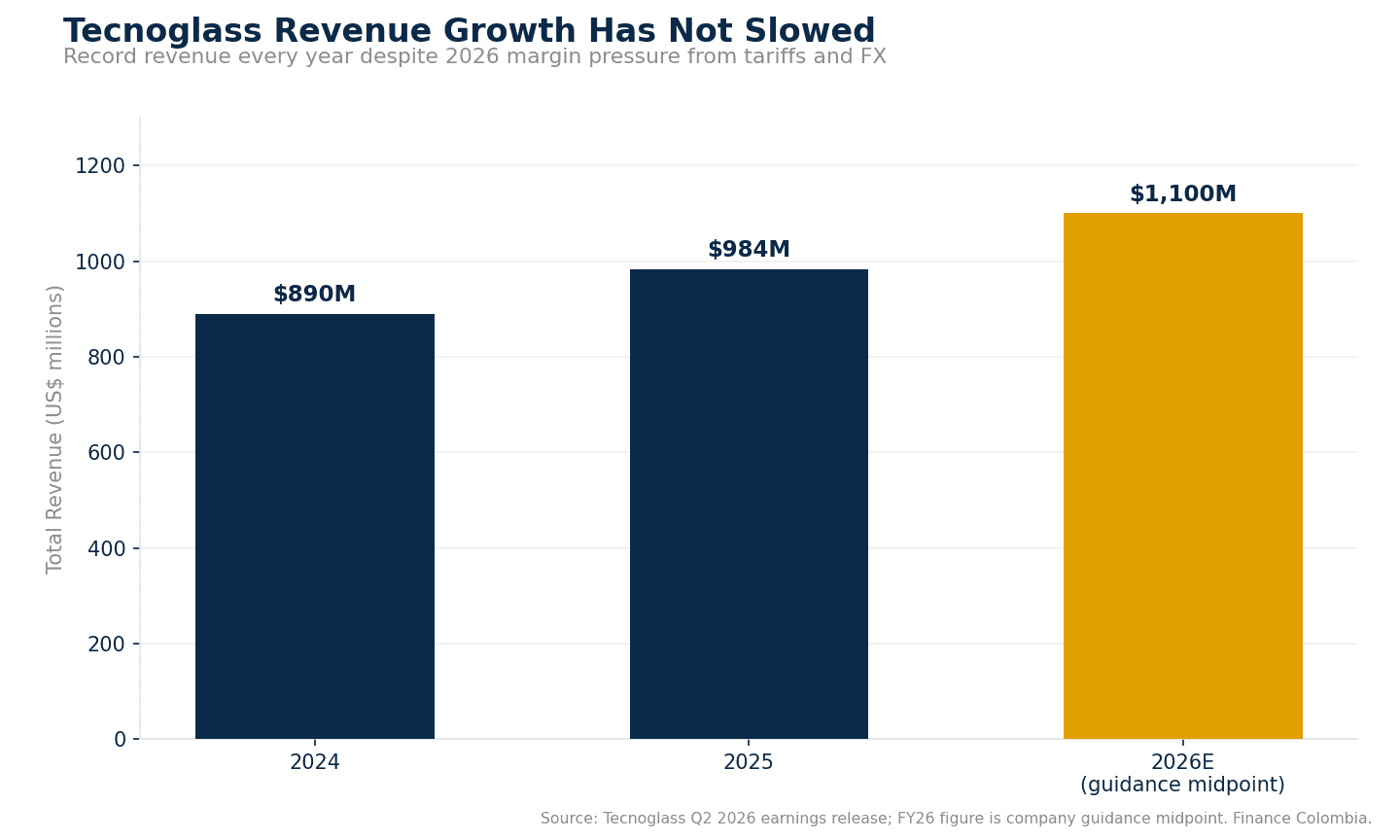
Tecnoglass has posted record revenue every year since 2024, including into 2026 guidance
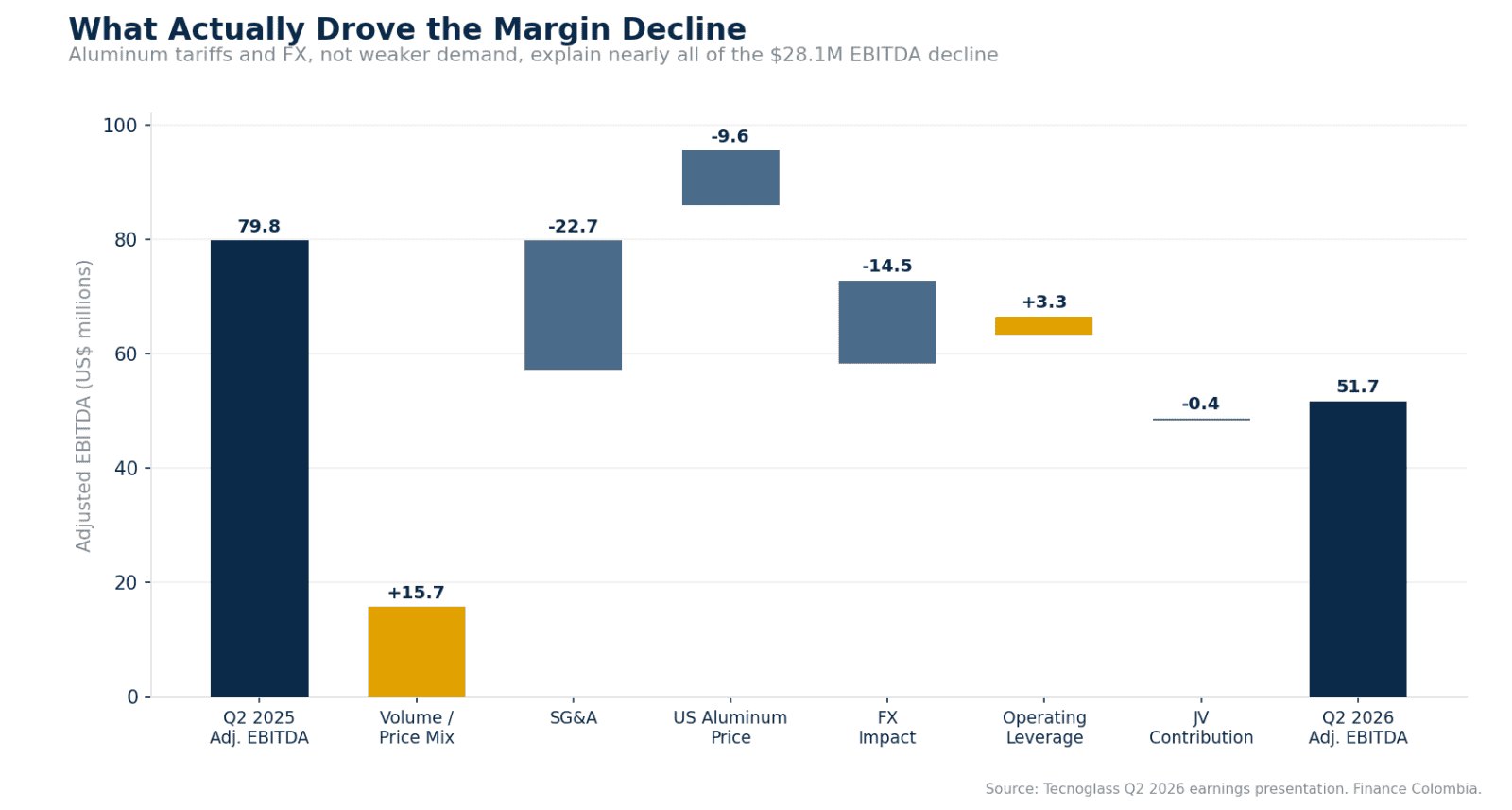
Quarterly net income fell to $24.6 million USD, or $0.55 USD per diluted share, from $44.1 million USD, or $0.94 USD per diluted share, a year earlier. Adjusted EBITDA dropped to $51.7 million USD, or 17.5% of revenue, from $79.8 million USD, or 31.2% of revenue, in the second quarter of 2025, and gross margin compressed to 37.3% from 44.7%.
Chief Executive Officer José Manuel Daes attributed nearly all of the decline to external cost pressures rather than softening demand. “Margins developed largely as we outlined last quarter, reflecting elevated aluminum costs, a stronger Colombian Peso and the initial impact of the April enactment of Section 232 tariffs on certain aluminum-based products,” Daes said in the company’s August 6 earnings release. Management said pricing actions taken since May and accelerated automation should begin offsetting costs in the second half of 2026, with tariff impact fully offset by 2027.
The company’s own reconciliation of the year-over-year Adjusted EBITDA decline shows where the pressure came from: higher US aluminum prices cut $9.6 million USD, the stronger Colombian peso cut $14.5 million USD, and general and administrative cost growth tied largely to the new tariffs cut $22.7 million USD. Those three items alone total more than the entire EBITDA decline, while higher sales volume and pricing added back $15.7 million USD.
Tariffs, currency and cost inflation, not weaker demand, explain nearly all of the EBITDA decline
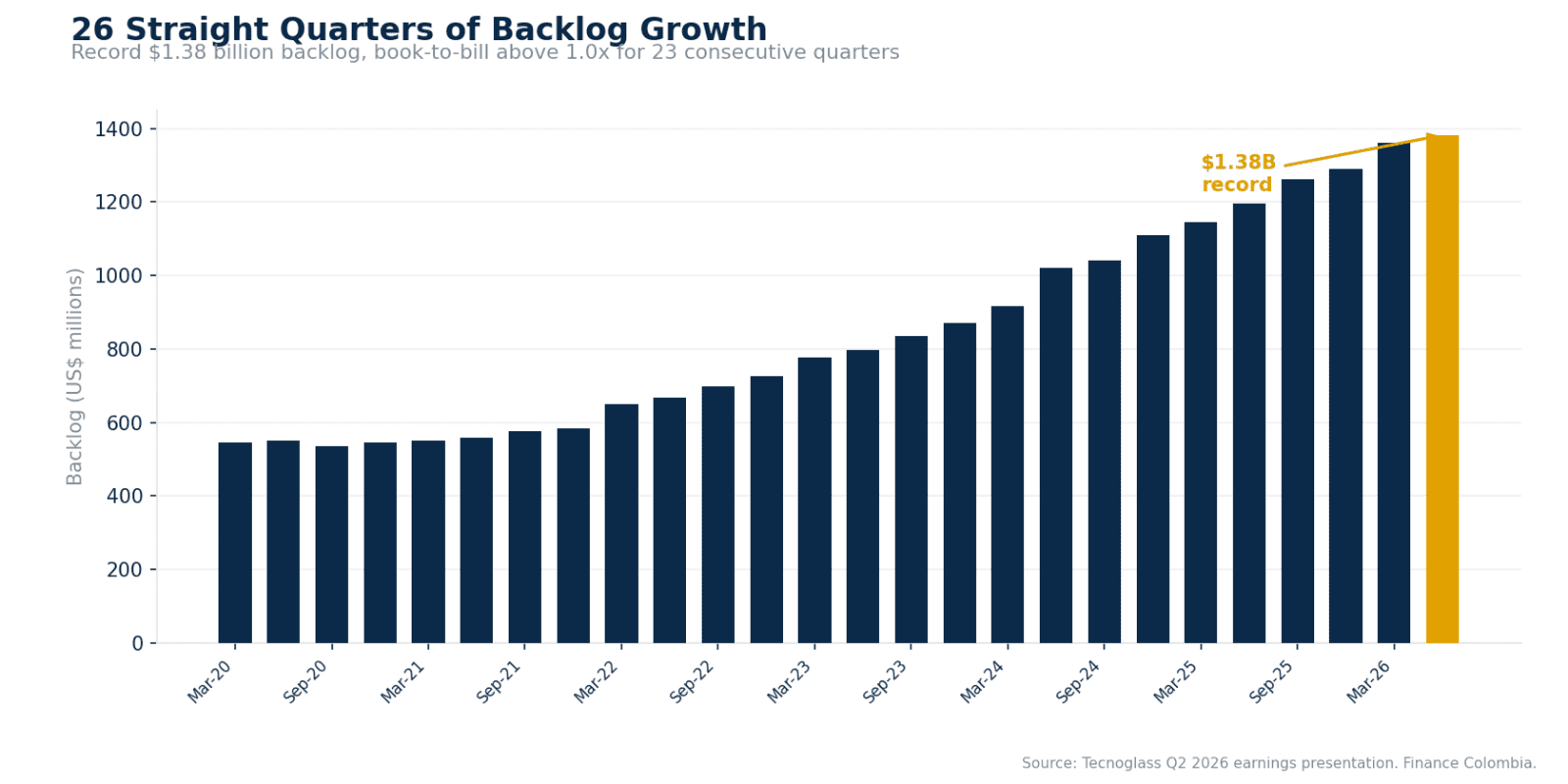
Backlog — orders not yet recognized as revenue — grew 15.6% year-over-year to a record $1.38 billion USD, extending a streak of consecutive quarterly gains that Chief Operating Officer Christian Daes said dates to 2021. “Our backlog grew to another record of $1.38 billion, extending our track record of sequential quarter growth since 2021 and reflecting consistent execution on a growing pipeline of multi-family and commercial projects,” Christian Daes said.
Backlog has grown for 26 consecutive quarters, reaching a record $1.38 billion
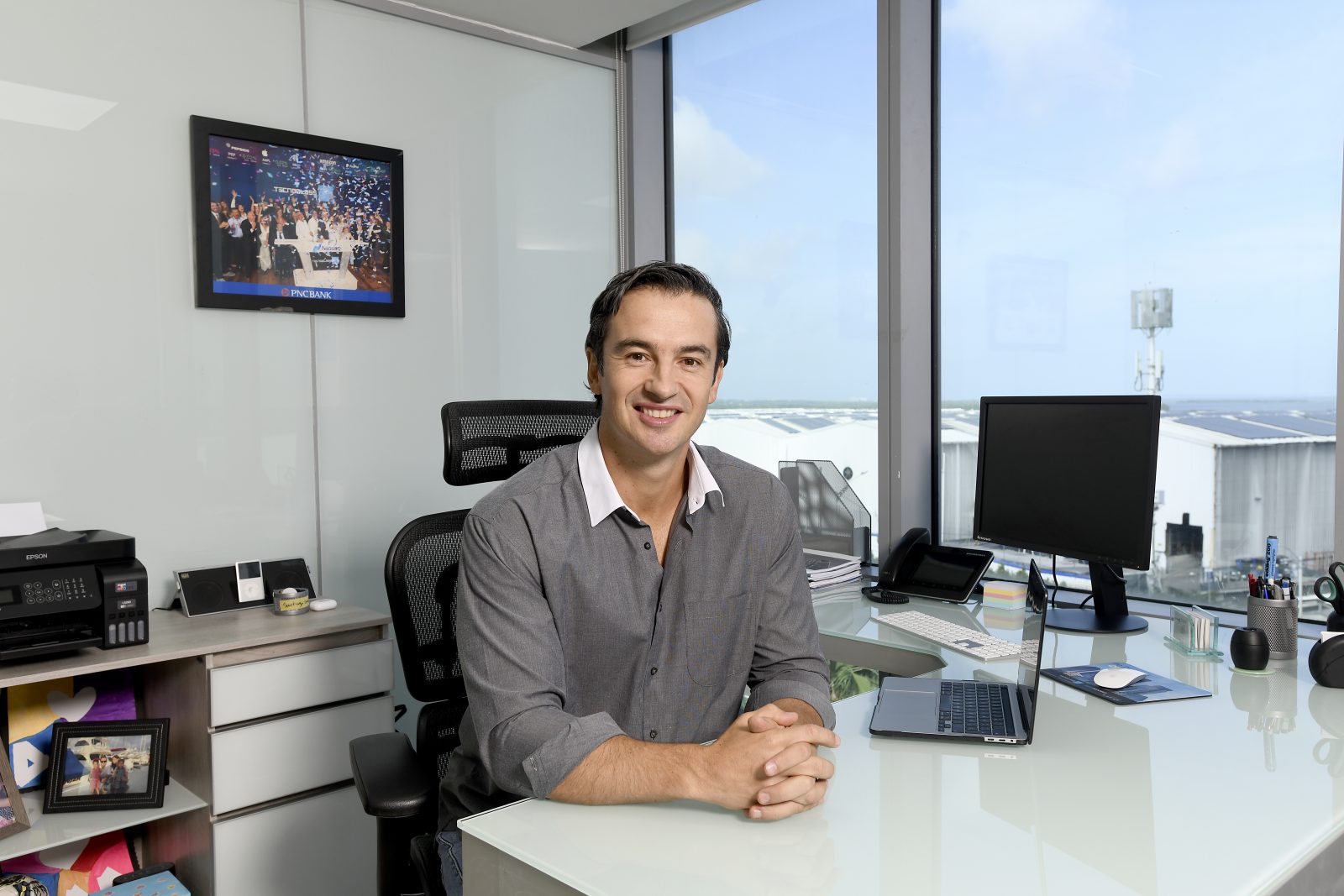
Chief Financial Officer Santiago Giraldo (above photo) narrowed full-year 2026 guidance to revenue of $1.08 billion USD to $1.12 billion USD and Adjusted EBITDA of $220 million USD to $230 million USD. “The revision primarily reflects sustained high aluminum costs and a Colombian peso that has strengthened beyond our prior assumptions, not a change in the demand for our products,” Giraldo said, adding that the company is “committed to fully offsetting the impact of tariffs in 2027.”
That distinction — a company executing well against an external cost shock, rather than one with a demand problem — sits at the center of the bull case. Tecnoglass discloses a three-year average return on invested capital of 34%, versus roughly 10% for the building-products peer group it tracks against in its own investor materials, a group that includes Apogee Enterprises Inc. (NASDAQ: APOG), Armstrong World Industries Inc. (NYSE: AWI) and Fortune Brands Innovations Inc. (NYSE: FBIN).
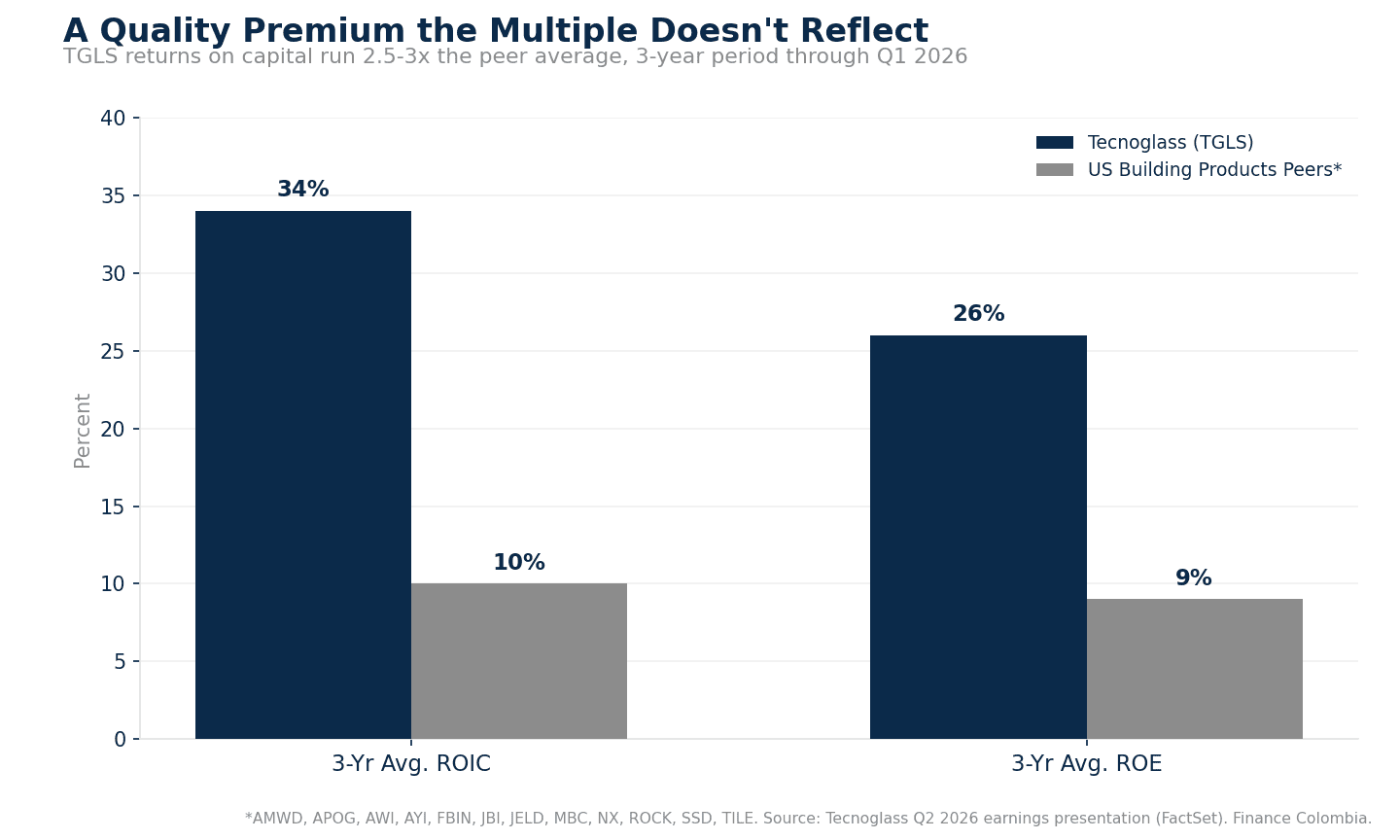
Tecnoglass’s returns on capital run roughly three times the peer average
At roughly 8.6 times enterprise value to trailing Adjusted EBITDA — near the low end of its 52-week range for that multiple, according to StockAnalysis.com — Tecnoglass trades well below the mid-teens multiple the stock has commanded in stronger periods over the past two years. Three analysts covering the stock hold an average price target of $56.33 USD, according to the same source — roughly 34% above the stock’s August 13 level.
The stock trades well below both its 52-week high and Wall Street’s own consensus target
Colombia’s own political calendar adds a variable outside Tecnoglass’s control. Abelardo de la Espriella won a narrow June 21 runoff for the Colombian presidency — by less than one percentage point over Iván Cepeda, according to election results — and was inaugurated August 7 in Cali. He campaigned on a smaller state, lower taxes and closer security and economic cooperation with the United States. Law firm Herbert Smith Freehills Kramer and the Atlantic Council have described the shift as a potential catalyst for renewed foreign investment, though both note Colombia’s fiscal deficit, estimated at 7% to 8% of GDP, a divided Congress, and outgoing president Gustavo Petro’s public dispute of the election’s legitimacy leave significant execution risk around the transition itself. For a manufacturer with 5.8 million square feet of production capacity concentrated in Barranquilla, a more stable currency and investment climate in Colombia would work in the opposite direction of the peso appreciation that hurt second-quarter margins — though that relationship is not mechanical, and the president’s narrow mandate is no guarantee of smooth execution.
“The revision primarily reflects sustained high aluminum costs and a Colombian peso that has strengthened beyond our prior assumptions, not a change in the demand for our products.” — Santiago Giraldo, chief financial officer, Tecnoglass
None of this guarantees a rebound. Tecnoglass’s own guidance assumes aluminum costs and the peso remain elevated through the balance of 2026, and the company does not expect to fully offset tariff costs until 2027. Selling, general and administrative expense rose to 24.9% of revenue from 20.8% a year earlier, largely on about $17.0 million USD in costs tied to the Section 232 tariffs on finished aluminum window imports — a cost base that could grow if tariff policy shifts again. The company also cut headcount by 10% as of the end of June as part of its automation push, evidence the cost pressure was significant enough to require structural changes, not just pricing actions.
Tecnoglass ended the quarter with $360.0 million USD in total liquidity, including $80.8 million USD in cash, against $225.4 million USD in total debt, a net-debt-to-EBITDA ratio the company puts at approximately 0.6 times. It paid $6.7 million USD in dividends during the quarter and had roughly $92.5 million USD remaining on its share buyback authorization as of August 6. On July 7, the company completed a previously announced move of its corporate domicile from the Cayman Islands to Florida, a step management said should broaden the pool of index funds and US-only investors able to hold the stock.
For investors willing to look through a quarter defined by input costs rather than demand, the combination of a record backlog, capital returns and returns on capital well above peers, and a valuation multiple already below its own historical average makes Tecnoglass one of the more interesting names in US building products heading into the back half of 2026 — with Colombia’s political transition as a wild card that could work in the company’s favor if it delivers the currency and investment stability its early backers expect.