Previous Story
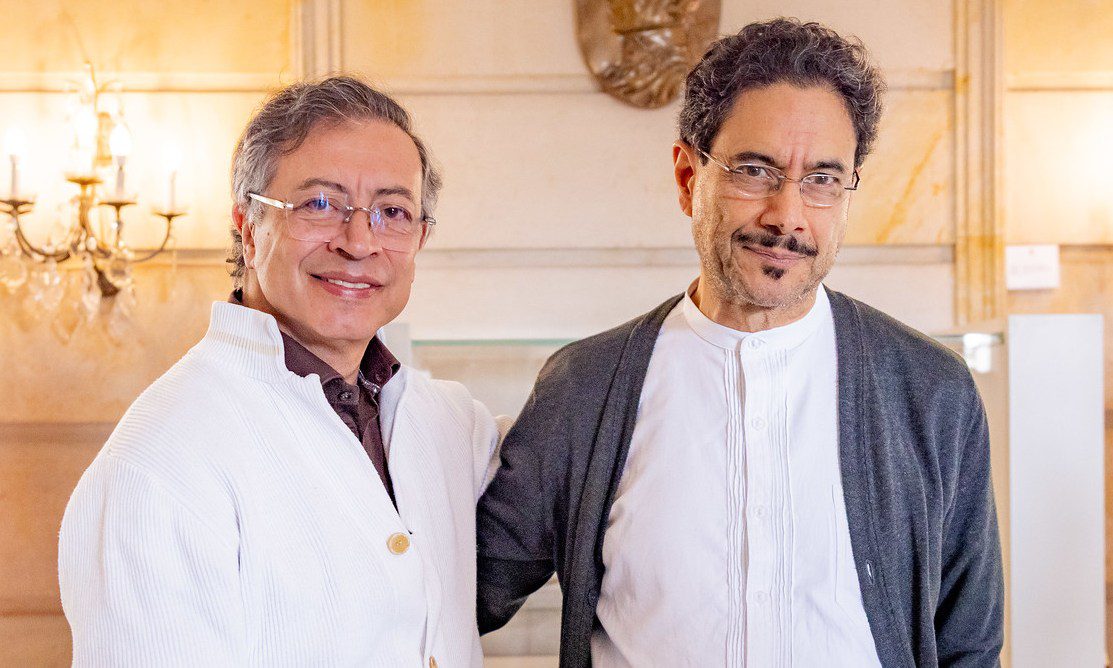
Colombian Investigators Open Criminal and Disciplinary Probes Into the Alleged “Pacto de Valledupar”
Posted On October 21, 2026
Comment: 0
Tag: 2026 presidential election, abelardo de la espriella, alvaro uribe, Angie Rodríguez, armando benedetti, auc, Centro Democratico, colombia, Comisión de Acusaciones, Corte Suprema de Justicia, electoral manipulation, Fiscalía General de la Nación, german vargas lleras, Gustavo Petro, Iván Cancino, ivan cepeda, JEP, Jorge 40, Jota Pe Hernández, Juan Carlos Villamizar, lúz adriana camargo, Melquisedec Torres, Pacto de Ralito, Pacto de Valledupar, pacto historico, paz total, procuraduria general de la nacion, Resolución 327, Salvatore Mancuso, transitional justice, valledupar, Víctor de Currea-Lugo
Parallel probes reach a former president’s inner circle
Colombia’s Fiscalía General de la Nación (Office of the Attorney General) and Procuraduría General de la Nación (Inspector General’s Office) have opened separate investigations touching former president Gustavo Petro and two of his former senior officials over what Colombian media have labeled the “Pacto de Valledupar,” an alleged attempt to induce demobilized paramilitary commanders to give testimony incriminating three political figures of the right ahead of the 2026 presidential election.
The episode was first laid out by columnist Melquisedec Torres in El Colombiano on October 17, 2026, and expanded two days later in an exclusive by Semana. It centers on a series of meetings held in Valledupar, capital of Cesar department, in October 2025, between national government officials and former chiefs of the demobilized Autodefensas Unidas de Colombia (United Self-Defense Forces of Colombia), or AUC. The stated purpose was to advance a closure of the Ralito peace process, the 2003 accord under which the AUC demobilized. The three figures the former paramilitaries were allegedly asked to implicate were Abelardo de la Espriella, then the front-running presidential candidate and now president of Colombia; former president Álvaro Uribe; and the late former vice president Germán Vargas Lleras.
The allegations date to the 2025 run-up to the election, but the consequences are now institutional. A criminal referral sits before Congress and a disciplinary inquiry is open at the Procuraduría, both bearing on a former president and two of his most senior former officials.
The former DAPRE director describes a presidential order
The central account comes from Angie Rodríguez, who served as director of the Departamento Administrativo de la Presidencia de la República (Administrative Department of the Presidency), or DAPRE, and who Semana also identifies as manager of the Fondo Adaptación (Adaptation Fund). Rodríguez first described the alleged plan in a statement published by Semana on August 1, 2026, which the outlet said was drawn from a declaration she gave to the incoming government’s transition team; Semana reported the resulting complaint was before the Fiscalía. In the October reporting she ratified that account and added detail.
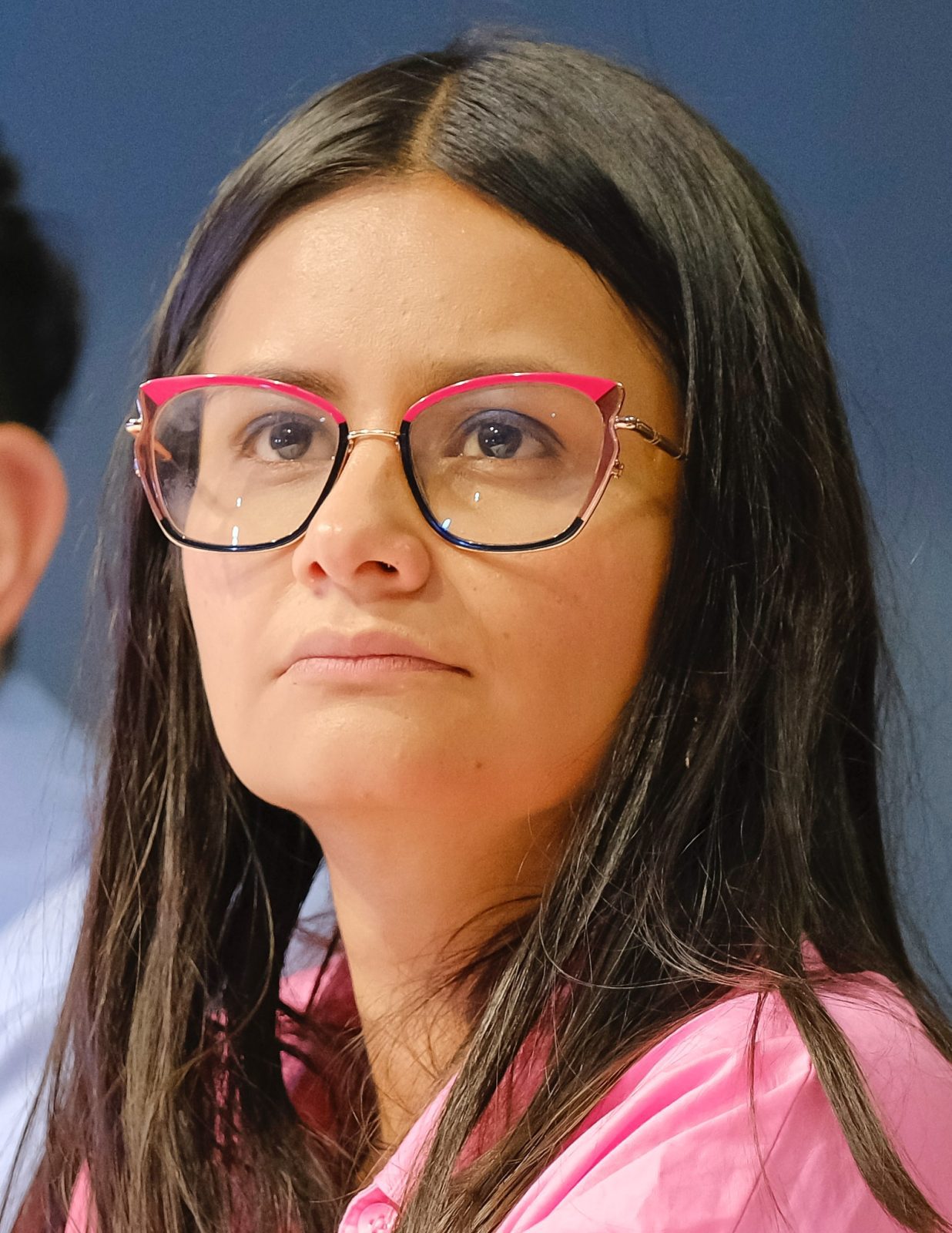
Angie Rodriguez, former Secretary General of the Presidency and head of DAPRE under former President Gustavo Petro (photo: Presidencia de La República)
According to Rodríguez, the instruction originated with Petro and then-interior minister Armando Benedetti. “Gustavo Petro gave me the order, and it was that we had to carry out the closure of the Ralito negotiation under the pretext of his total-peace policy,” she told Semana. “Obviously, at the time, I naively believed that was the purpose. Later I learned the focus was something else.” She said that days before the event Petro told her, in her telling, “What I need is for them [the former paramilitaries] to talk about the involvement of Álvaro Uribe, Abelardo De La Espriella and Germán Vargas Lleras.”
Rodríguez said she organized the event and, once with the former commanders, relayed the request; several reacted with visible anger, and one responded that they would not lend themselves to it because they had already spoken to the justice system. She said she then proposed, instead, that the former fighters focus on reparations for victims and the location of mass graves, and that when she reported the former commanders’ refusal to Petro by telephone, he reacted sharply. In her account, Petro told her he had not sent her to Valledupar for that and ordered her back to Bogotá, and later warned, “If you do not return to Bogotá, I will remove you from the government.” Rodríguez said she believes Petro “wanted to influence the 2026 elections so that the progressive government would continue, and to discredit his adversaries.” Petro has rejected her characterization.
Two former AUC chiefs corroborate the account, though the details diverge
Semana reported that it contacted three former AUC leaders who took part in the meeting to corroborate Rodríguez’s account, and that all confirmed the central claim that the names of De la Espriella, Uribe and Vargas Lleras were raised. One, speaking anonymously, said presidential adviser Víctor de Currea-Lugo asked the former commanders to describe their supposed relationships with the three men. Another told the outlet, “It is true, those three names came up that day,” adding that he preferred to withdraw from the session.
Salvatore Mancuso, among the best-known former AUC commanders, released a video on social media reaffirming the account, saying delegates of Petro’s government had asked the former commanders to accuse Uribe, De la Espriella and Vargas Lleras in order to win an election, and that none of them agreed. Semana has reported that the Fiscalía summoned Mancuso to testify in its separate inquiry into Uribe.
“Delegates of Gustavo Petro’s government asked us, the former commanders of the Self-Defense Forces, to accuse three men in order to win an election: Álvaro Uribe, Abelardo De La Espriella and Germán Vargas Lleras. None of us accepted.” — Salvatore Mancuso, former AUC commander
Juan Carlos Villamizar, Mancuso’s attorney and adviser, told the Unidad Investigativa of Caracol Radio that he was an eyewitness to the meetings. “The meeting did take place, but there was never any pact, exactly as Angie Rodríguez herself is saying,” he said. “But in that meeting, from the Petro government, it was proposed, it was demanded, it was requested that the paramilitary chiefs speak against these three people.” Villamizar said that those present were told the demand came directly from Petro, and that the emissaries who carried it were Rodríguez and De Currea-Lugo. He said the former commanders, among them Mancuso and Rodrigo Tovar Pupo, alias “Jorge 40,” refused.
Accounts of who attended differ. Semana reported that 11 former AUC chiefs were present, naming Mancuso; Carlos Mario Jiménez, alias “Macaco”; Tovar Pupo; Fredy Rendón Herrera, alias “el Alemán”; Edward Cobos, alias “Diego Vecino”; and Rodrigo Pérez, alias “Julián Bolívar,” among others. Torres wrote in El Colombiano that 10 of the 16 principal former leaders took part, at the Hotel El Bosque, between October 22 and 24, 2025, with the press excluded. Villamizar told Caracol Radio that the 16 members of the former AUC Estado Mayor (General Staff) who had been the Ralito signatories were at the table.

AUC Leader Salvatore Mancuso testifies before the JEP in Colombia
The sources also diverge on whether specific additional names were sought. Torres named three former AUC figures as intended witnesses: Saúl Alfonso Severini Caballero, allegedly to testify against Uribe; Darío Laíno Scopetta, against De la Espriella; and Héctor Germán Buitrago, alias “Martín Llanos,” against Vargas Lleras, writing that benefits such as entry into the Jurisdicción Especial para la Paz (Special Jurisdiction for Peace), or JEP, and improved prison conditions were discussed. Villamizar rejected that two of them had any role. “Neither of these two gentlemen had anything to do with Valledupar, or with Ralito, or with anything at all,” he told Caracol Radio, referring to Severini and Laíno Scopetta, and said only the former AUC Estado Mayor was present.
Petro publishes the document and denies giving an order
Petro has denied directing any such effort. He published what he said was the official communiqué from the meeting, dated October 24, 2025 — the same date cited by his accusers — and argued it shows a legitimate peace process. The journalist Santiago Ángel of La FM published the full document. According to La FM, which spoke with two people present, the 11 former paramilitary leaders declined to give new declarations on links between politicians and paramilitaries, out of concern that changing their prior testimony could expose them to perjury or procedural-fraud charges. La FM reported that the document itself does not name the three politicians, that the former commanders committed to submit a work plan within ten business days, and that the government undertook to “explore the release” of imprisoned peace facilitators and to study mechanisms including prison relocation and extradition review. La FM reported that the former paramilitaries signed the document, which differs from Mancuso’s assertion that no pact was reached.
In a statement reported by Semana, Petro said he would “not accept that such serious acts are attributed to me without a single piece of evidence showing that I gave an order to pressure anyone to testify against Álvaro Uribe or any other political leader.” He said the working table with the former commanders was created publicly, through Resolution 327 of September 21, 2025, which he said named the Fiscalía, the Procuraduría and the Defensoría del Pueblo (Ombudsman’s Office) as permanent invited observers, and he called for the minutes, communications and recordings to be made public. “If someone intends to attribute to me an order I did not give, they too will have to answer for their claims,” Petro said.
The Fiscalía and the Procuraduría open their inquiries
According to La Silla Vacía, which cited Caracol Radio and El Tiempo, the Fiscalía on August 31, 2026, referred copies of the matter to the Comisión de Acusaciones (House Accusations Committee) of the House of Representatives, the body that investigates officials with constitutional privilege such as former presidents, so that it could determine whether Petro bore responsibility. La Silla Vacía reported that the Fiscalía that same day opened a criminal inquiry in its unit of prosecutors before the Corte Suprema de Justicia (Supreme Court of Justice), characterizing the matter as a presumed agreement “with former paramilitary chiefs so that they would give statements against figures of national politics, ahead of the presidential elections.”
On October 20, 2026, the Procuraduría opened a preliminary disciplinary inquiry against Benedetti and Rodríguez over the alleged attempt to manipulate the former paramilitaries, according to reporting by El Espectador carried by Pulzo. That outlet reported that the disciplinary action came a day after justice minister Iván Cancino asked attorney general Luz Adriana Camargo to investigate the Valledupar meetings, a request it said also drew on the Torres column. Both Benedetti and Rodríguez have the right to present their version of events. Petro has said he does not oppose scrutiny, stating, “Let everything be known.”
The reporting draws in Senator Iván Cepeda
The reporting also touched senator Iván Cepeda, the Pacto Histórico figure who was the left’s presidential candidate in the 2026 contest. Semana reported that former paramilitaries said they saw Cepeda board one of the aircraft used to transport them in connection with the Valledupar meetings; one said he did not know what Cepeda was doing there. Cepeda did not address those specific claims when consulted, and instead asserted that De la Espriella and Mancuso were friends. The exchange spilled into Congress, where senator Jonathan Ferney Pulido Hernández, known as Jota Pe Hernández, confronted Cepeda over the matter, as reported by Semana. Semana said it contacted Cepeda for his version and that he did not respond to its initial exclusive.
The alleged plan, if it existed as described, did not achieve its reported aim: De la Espriella won the presidency, and the former paramilitary leaders, by the accounts of Rodríguez, Mancuso and Villamizar alike, declined the request. As of late October 2026, the Fiscalía’s referral sits before the Comisión de Acusaciones and its criminal inquiry before the Corte Suprema, while the Procuraduría’s disciplinary inquiry into Benedetti and Rodríguez remains open. The accounts given by Rodríguez, Mancuso and Villamizar, the document published by La FM, and Petro’s denial diverge on central points, including whether the former commanders signed and whether any specific additional witnesses were sought.