Previous Story
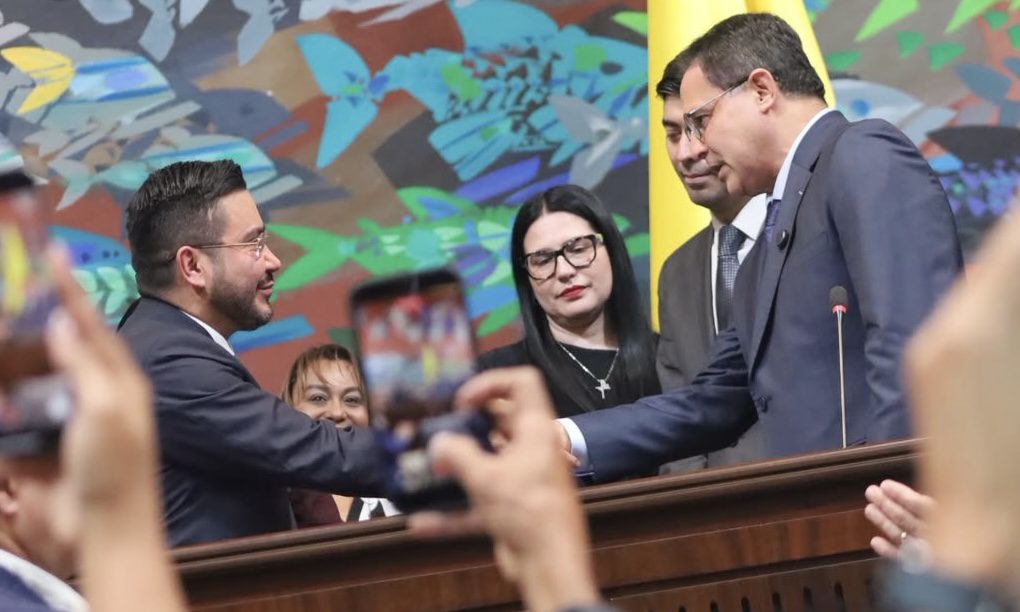
Colombia Elects New Comptroller General to Oversee Public Spending and Government Finances
Posted On August 20, 2026
Comment: Off
Tag: Cambio Radical, Centro Democratico, Colombia´s Congress, Colombia´s House of Representative, Colombia´s new comptroller general, Colombia´s Senate, contraloria general de la republica, Gustavo Petro, Jorge Eliécer Laverde, pacto historico, Partido Conservador, Partido de la U, Partido Liberal, Procuraduría Regional de Risaralda, Rodrigo Lara Restrepo, salvación nacional, Senate’s Sixth Committee
Colombia’s Congress elected Jorge Eliécer Laverde on Wednesday, August 12, as the country’s new comptroller general for the 2026-2030 term, a key position within the state’s oversight system responsible for monitoring the management of public resources, including those administered by President Abelardo de la Espriella’s government.
The election took place during a joint session of the Senate and House of Representatives, with 269 of the 286 members of Congress participating: 95 senators and 174 representatives. The other 17 lawmakers either did not attend the session or abstained from voting.
Laverde, a lawyer with ties to the Partido Liberal, had served since 2015 as secretary of the Senate’s Sixth Committee, which handles matters related to public services, transportation, education, communications and technological development.
He will now lead the Contraloría General de la República, Colombia’s highest fiscal oversight body, for four years. His main responsibilities will include overseeing the management of public funds and assets, determining fiscal liability when resources are misused and pursuing proceedings aimed at recovering state funds.
“We will adopt global standards to pursue assets and fight corruption anywhere in the world. We will be the home of transparency and a technical institution at the service of the Colombian people,” Laverde said after his election.
“I will defend all citizens under an unwavering premise: zero political persecution, zero impunity. The Contraloría will not be a political weapon, but it will have all the resolve and authority necessary to punish, without distinction, anyone who touches public funds,” he added.
An election without direct government backing
Laverde’s candidacy received support from several parties backing the new government, although neither Salvación Nacional, De la Espriella’s party, nor the executive branch directly participated in selecting the candidate.
The president and his interior minister, Rodrigo Lara Restrepo, chose to remain on the sidelines to avoid becoming involved in another political dispute with the opposition after the executive branch suffered a defeat in the election of the Senate president at the beginning of the new legislative term.
Lara publicly acknowledged the government’s decision not to participate in the comptroller general election and urged its allies not to strike deals with or support the Pacto Histórico, which he described as an “opposition party and enemy of the government.” A similar situation occurred during the election of the Senate president, when the government lost because of an alliance between the Centro Democrático and the opposition Pacto Histórico, led by former President Gustavo Petro.
Laverde’s candidacy, however, ultimately drew support from different political sectors.
Before the vote, the Centro Democrático, Partido Liberal, Partido Conservador, Partido de la U and Cambio Radical issued a joint letter saying Laverde possessed “the highest professional, technical and personal qualifications to exercise this important responsibility,” backed by “a recognized career, extensive experience and deep knowledge of public affairs.”
Even the Pacto Histórico, the main left-wing opposition force led by former President Gustavo Petro, announced its support for Laverde hours before the vote.
“Our decision responds to the need for an independent, transparent Contraloría that firmly defends public resources,” the congressional bloc said on Facebook.
A key position in the system of checks and balances
Although Laverde received the backing of parties allied with the executive branch, his election also puts Colombia’s system of separation of powers and checks and balances to the test.
The Contraloría General de la República is the state’s highest fiscal oversight body, primarily responsible for ensuring that public resources and assets are managed efficiently and transparently and for determining liability when they are misused.
Its oversight extends to resources administered by the different branches of government, including the executive branch headed by De la Espriella, as well as Congress and the judiciary. The election of the comptroller general is therefore particularly sensitive for any administration because the officeholder must exercise fiscal oversight over the national government throughout the four-year term.
The election takes on additional significance in the current political landscape: Although the new government has allies in Congress, no political force holds a sufficient majority on its own, requiring agreements among different parties to secure major legislative and institutional decisions.
Before joining Congress, Laverde worked as a judicial attorney at the Procuraduría Regional de Risaralda and served as a member of the Caldas Departmental Assembly, in his home department.
His more than a decade working inside Congress has given him extensive knowledge of how the legislative branch operates. Since 2015, he had served as secretary of the Senate’s Sixth Committee, a position from which he participated in the consideration of initiatives involving some of the country’s major areas of public policy.
That career now presents a significant shift in responsibilities: After more than 10 years working within Congress, Laverde will lead one of the institutions responsible for overseeing the use of public resources, including those administered by the same branch of government where he previously worked.