Previous Story
Colombia Tops 24 Million Non-Resident Visitors as Tourism Eclipses Coal and Coffee
Posted On August 9, 2026
Comment: Off
Tag: air connectivity, banco de la republica, bogotá, brazil, coal, coffee, colombia, Colombia Destinos de Paz, Colombia tourism 2026, dane, Diana Marcela Morales, Economic Development, El País de la Belleza, employment, Foreign Exchange, foreign visitors, Foro Internacional de Turismo, Gustavo Petro, hospitality, hotels, international air travel, mexico, MinCIT, Ministry of Commerce Industry and Tourism, non-resident visitors, PDET municipalities, regenerative tourism, services exports, Tourism, tourism infrastructure, travel and tourism, united states, value added
Tourism Overtakes Coal and Coffee as a Top Colombian Export Earner
Colombia recorded more than 24 million non-resident visitors during the current presidential term and generated close to $34.43 billion USD in foreign exchange from travel through December 2025, figures released by the Ministry of Commerce, Industry and Tourism (Ministerio de Comercio, Industria y Turismo, or MinCIT) show. The ministry says tourism has become one of the country’s largest sources of foreign exchange, surpassing traditional export sectors such as coal and coffee.
“Today, Colombia demonstrates that it can also generate wealth from its biodiversity, its cultural heritage, the quality of its services and the talent of its people.” -Diana Marcela Morales, Former Minister of Commerce, Industry and Tourism
The figures were presented during the Foro Internacional de Turismo: Colombia, un destino por explorar (International Tourism Forum: Colombia, a Destination to Explore), held in Bogotá on July 15. The event brought together tourism associations, business leaders, academics and government officials to discuss the sector’s performance and future, including regenerative tourism, artificial intelligence, smart mobility and innovation in visitor experiences.
Promoted under the campaign Descubre la Diversidad de Colombia, El País de la Belleza (Discover the Diversity of Colombia, the Country of Beauty), the ministry reported that more than 24 million non-resident visitors arrived during the administration of President Gustavo Petro, representing a 109% increase compared with the previous equivalent period. Of those arrivals, 14.8 million were foreign visitors.
According to the Banco de la República, Colombia’s central bank, tourism generated approximately $34.43 billion USD in foreign exchange through December 2025, exceeding revenue from coal and coffee exports. Tourism has also become the country’s largest services export, with 57% of services export earnings coming from the sector.
“For decades, much of the country’s capacity to generate foreign exchange was tied to the export of raw materials,” Former Minister of Commerce, Industry and Tourism Diana Marcela Morales said. “Today, Colombia demonstrates that it can also generate wealth from its biodiversity, its cultural heritage, the quality of its services, the talent of its people and the confidence that millions of people place in choosing the country as a destination. Tourism expresses, perhaps like few other sectors, that transition toward a more diversified economy with greater added value.”
Employment has also expanded alongside visitor growth. Figures from DANE (Departamento Administrativo Nacional de Estadística, Colombia’s National Administrative Department of Statistics) show that accommodation and food service activities supported approximately 1.8 million jobs in February 2026, a 15% increase compared with the same period in 2019. During 2025, the sector accounted for 4.4% of Colombia’s national value added.
International demand has continued to grow during 2026. In the first quarter, more than 368,000 international airline tickets were sold with Colombia as the destination, representing a 16.7% increase over the previous year. The largest source markets were the United States, Brazil and Mexico.
During the first two months of 2026, approximately 10 million passengers traveled through Colombia’s airports, an 8% increase across domestic and international traffic. Between January and March, the country received 1.58 million non-resident visitors.
The government has also expanded tourism investment beyond major destinations. MinCIT reported that infrastructure projects—including trails, docks, boardwalks and gastronomic plazas—have reached 699 municipalities, representing 63% of Colombia’s territory. According to the ministry, 207 municipalities received tourism investment for the first time.
The ministry also said tourism initiatives now cover all 140 municipalities included in Colombia’s Programas de Desarrollo con Enfoque Territorial (Development Programs with a Territorial Focus, or PDET), a post-conflict development framework for areas historically affected by armed conflict. Through its Turismo para una Cultura de Paz (Tourism for a Culture of Peace) strategy, more than 999 businesses have joined the Colombia Destinos de Paz (Colombia Peace Destinations) certification.
“Unlike other economic activities, whose benefits tend to concentrate in specific production centers, tourism generates value precisely where a country’s natural, cultural and historical heritage is located,” Morales said. “It is a bridge that connects different cultures and brings opportunities to intermediate municipalities, strengthens rural economies, energizes small businesses and creates incentives to conserve what makes each territory unique.”
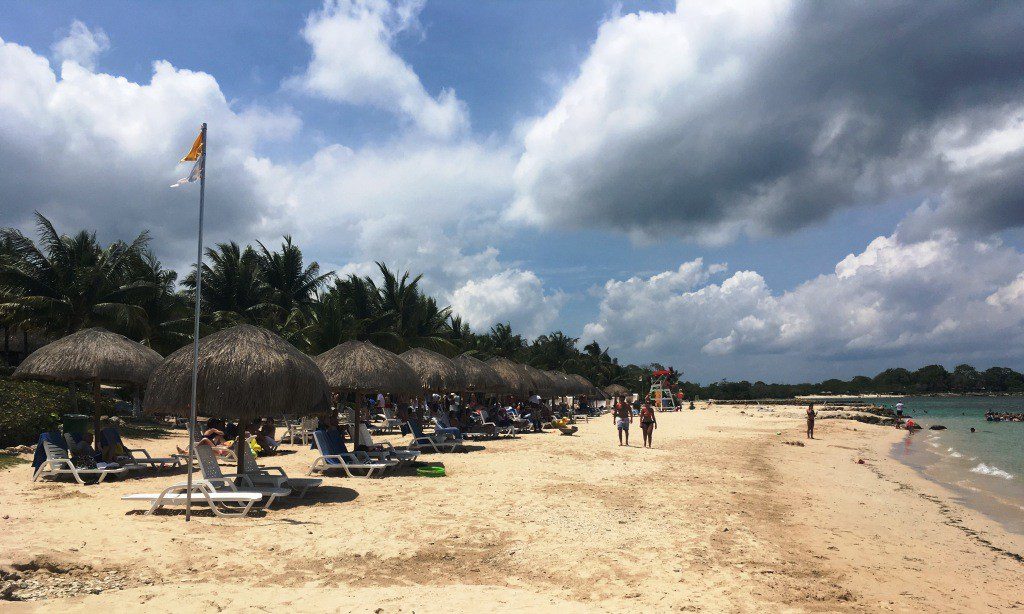
Headline Photo: Beachside in Barú, Colombia (photo by Loren Moss)