Previous Story
The Next Battle After the Election: Courts, Citizens and Presidential Power in Colombia
Posted On June 9, 2026
Comment: Off
Both Iván Cepeda of the Pacto Histórico coalition and Abelardo de la Espriella of the Salvación Nacional movement would face significant governability challenges if elected Colombia’s next president in the June 21, 2026, runoff election.
While much of the political debate has focused on each candidate’s ability to build congressional majorities, governability will also depend on other institutional and political factors, including the role of the Constitutional Court, judicial oversight mechanisms and the capacity of their respective political bases to mobilize public support.
Beyond legislative alliances and governing coalitions, Colombia’s next president will have to navigate a complex system of checks and balances as well as a highly polarized society, where government decisions are likely to face scrutiny from the country’s highest courts and pressure from competing social and political groups.
The role of the Constitutional Court
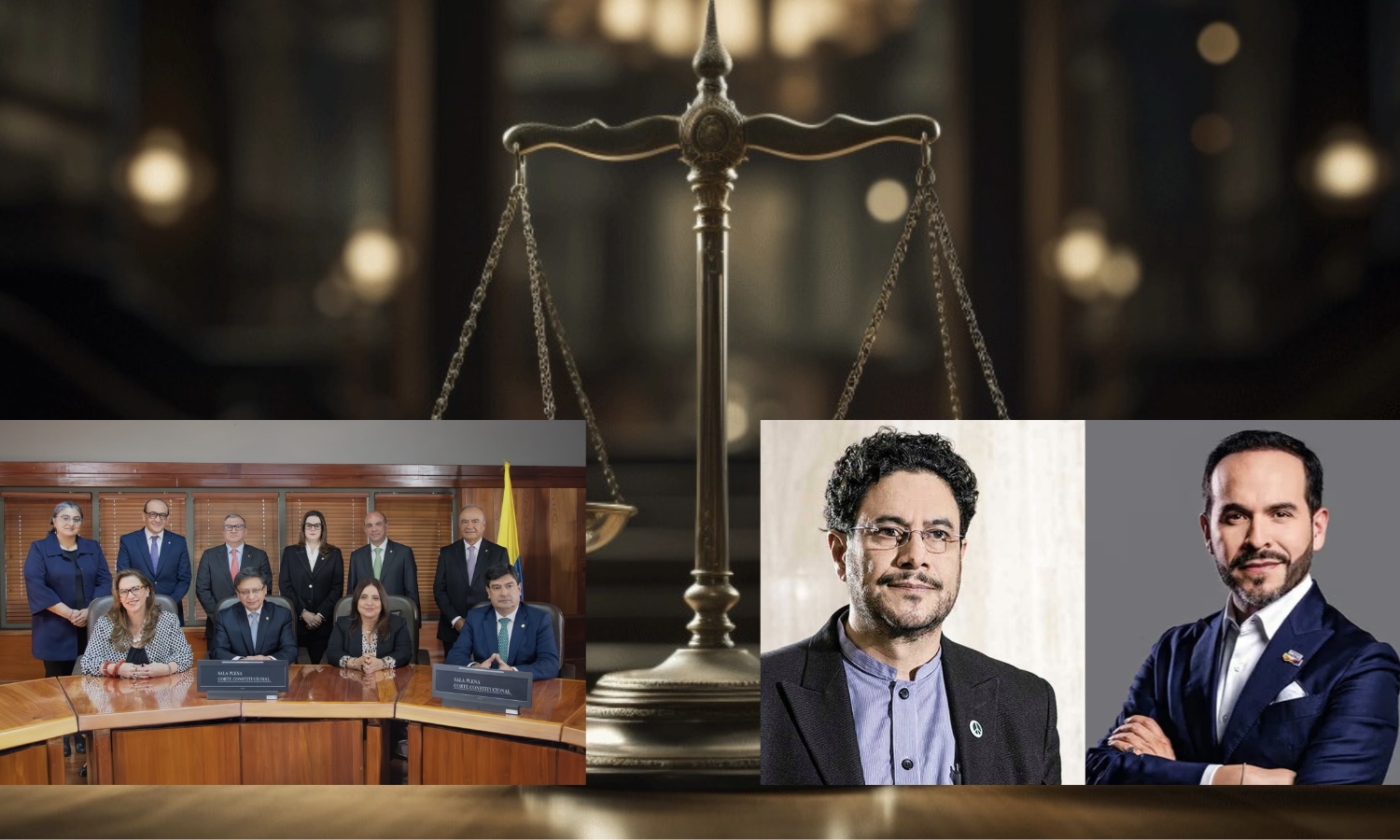
Colombia’s Constitutional Court is composed of nine justices elected by the Senate for eight-year terms from slates submitted by the Supreme Court, the Council of State and the president.
The court is currently viewed as having a predominantly progressive orientation, a factor that could favor Cepeda, particularly because he would have the opportunity during his term to nominate candidates for future vacancies, adding to justices appointed during Petro’s presidency.
Several vacancies are expected during the next presidential term, allowing the incoming president to participate indirectly in the renewal of part of the court. However, no president controls the court’s composition on their own or can guarantee its rulings.
Recent experience also demonstrates that legislation approved by Congress may later face constitutional review. Several reforms promoted by Petro’s administration have encountered judicial scrutiny, particularly pension reform, which remains under review by the Constitutional Court and has also faced setbacks before the Council of State.
Recent experience also demonstrates that legislation approved by Congress may later face constitutional review. Several reforms promoted by Petro’s administration have encountered judicial scrutiny, particularly pension reform, which remains under review by the Constitutional Court and has also faced setbacks before the Council of State.
Governing a divided country
Beyond institutional dynamics, the next president will have to govern a politically fragmented society. The concentration of votes around two ideologically opposed candidates reflects a deeply divided electorate.
One of the major questions will be the role of citizen mobilization. Given the country’s political fragmentation, whoever wins will likely face strong opposition that could manifest itself through demonstrations, protests and sustained social mobilization.
In that context, issues such as control over security forces, an area generally associated with De la Espriella’s platform, and the capacity to mobilize social movements, often linked to Petro and Cepeda’s political base, are likely to remain important factors.
At the same time, the president retains significant tools of power, particularly the ability to set budget priorities and direct government action through executive decrees, appointments and public policies.
Presidential decrees provide considerable flexibility in implementing policy initiatives, although any administration must still contend with judicial oversight, including constitutional review by the courts and legal challenges brought before bodies such as the Council of State.
The government also controls the national budget and public spending priorities, which can shape the future of social programs such as subsidies for farmers, people living in extreme poverty and older adults, or, alternatively, increase funding for the military and police.
A political system that imposes constraints
Regardless of who wins the June 21 runoff, the next president will govern within a system of checks and balances that regulates both the functioning of government and any attempt to modify laws or the Constitution, regardless of political ideology.
The next administration will therefore operate within an institutional framework that limits the concentration of power and requires continuous negotiation among political actors.
In addition, Colombia’s Constitution explicitly prohibits presidential reelection and limits each term to four years, a factor that reduces the likelihood of far-reaching structural changes without sustained legislative and judicial support.