Previous Story
EPM Warns of El Niño Risk as Colombia Faces Drought Pressures
Posted On June 20, 2026
Comment: Off
Utility says Hidroituango will help Colombia weather expected drought conditions while reservoir expansion progresses
Medellín-based utility EPM is urging Colombians to reduce electricity and water consumption as forecasts point to a severe El Niño weather phenomenon that could affect the country through early 2027.
In two recent statements, EPM General Manager John Maya Salazar warned that the probability of El Niño exceeds 90% and said both the intensity and duration of the event could place pressure on Colombia’s water reservoirs and hydroelectric generation system.
El Niño is a naturally occurring climate pattern marked by the warming of surface waters in the central and eastern Pacific Ocean. This shift in ocean temperatures can disrupt normal weather systems around the world. In Colombia, El Niño typically reduces rainfall and leads to drier-than-average conditions that can strain reservoirs and reduce the country’s ability to generate hydroelectric power.
“We have a very high probability, more than 90%, of an El Niño phenomenon, and a very high probability that it will be severe both in intensity and duration,” – John Maya Salazar
Maya called on Colombians to adopt more responsible consumption habits, emphasizing that water and electricity rationing can only be avoided if households and businesses reduce unnecessary consumption.
“The rational use of energy and water is the only way to avoid rationing,” he said.

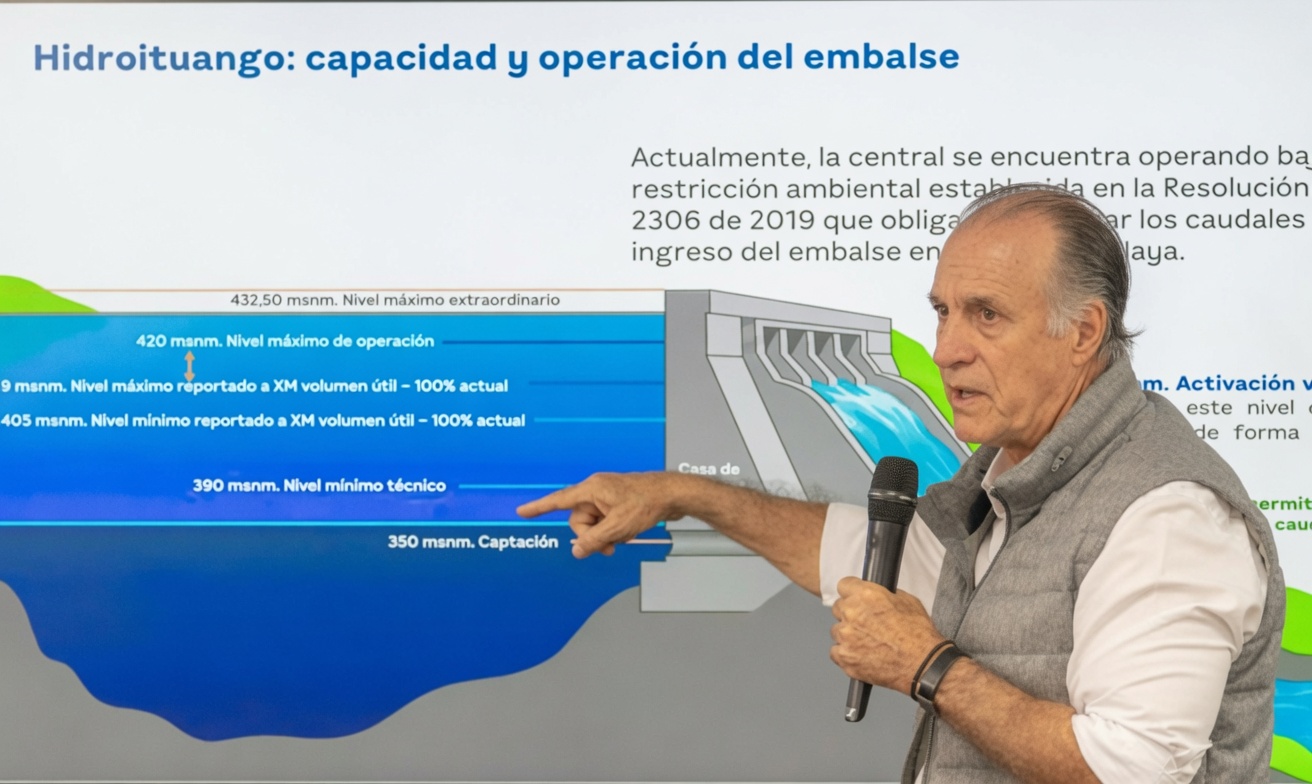
Image courtesy EPM – (translated by Finance Colombia)
Recent reports from IDEAM, Colombia’s national weather agency, and XM, the national grid operator, show that reservoir levels feeding the country’s hydroelectric system have dropped significantly as Colombia enters what forecasters are calling a potentially severe El Niño cycle. Authorities say that if dry conditions continue, they could put extra pressure on electricity generation and water supplies in several regions.
Hydroelectric generation supplies the majority of Colombia’s electricity, making reservoir management a critical issue during periods of below-average rainfall.
Maya also addressed EPM’s plans to increase the operating level of the Hidroituango reservoir to its design elevation of 420 meters above sea level.
According to Maya, EPM’s original environmental license permits operation at the 420-meter level. However, restrictions imposed following the project’s contingency events limited operations to a lower elevation. With those restrictions lifted, EPM is now carrying out the environmental work required before gradually increasing the reservoir level.
“We are complying with regulations and environmental requirements,” Maya said, as he rejects suggestions that EPM would raise the reservoir before completing required vegetation removal and forestry management activities.
The company expects that work to be completed by September, after which reservoir levels can begin increasing in accordance with environmental regulations.
Raising the reservoir level would give the system more room to maneuver when dry conditions hit during El Niño, which would help support power generation if rainfall stays low.
Maya is an electrical engineer with nearly four decades of professional experience who assumed leadership of EPM on January 1, 2024. He previously served as Executive Vice President of Projects and Engineering and Executive Vice President of Business Management at the Medellín-based utility.
The combination of conservation efforts and increased reservoir capacity forms part of EPM’s strategy to maintain energy security during what could become one of Colombia’s most challenging climate periods in recent years.
Above photo: EPM General Manager John Maya Salazar shares the utility’s recommendations on water and electricity consumption.. (Photo: EPM )