Previous Story
Invest Pacific and IDB Invest Present a Five-Part Waste and Clean Energy Study in Cali
Posted On October 21, 2026
Comment: 0
Tag: 2026 Colombia earthquake, Alcaldía de Cali, bagasse, biomass, buenaventura, Buga, cali, Cámara de Comercio de Cali, chocó, Circular Economy, cogeneration, colombia, construction and demolition waste, Deuman, ecopetrol, eje cafetero, el niño, energy transition, European Union Global Gateway, Fiscalía General de la Nación, foreign direct investment, Gobernación del Valle del Cauca, IDB Invest, IDEAM, Inter-American Development Bank, invest pacific, Juan Carlos Castro Lozano, lng, Mauricio Concha Rivera, natural gas imports, pereira, plastics recycling, ProPacífico, puertos inversiones y obras, pyrolysis, Regasificadora del Pacífico, renewable energy, San José del Palmar, Sergio Cabrales, Sociedad Portuaria El Cayao, solar photovoltaic, sugarcane, Sustainable aVIATION fUEL, ungrd, valle del cauca, Valle Verde
Study Covers Construction Debris, Pyrolysis and Solar Capacity
Invest Pacific and IDB Invest presented the results of a five-part study on circular economy and renewable energy in Cali on Wednesday, October 21, 2026, at a forum titled Oportunidades en Economía Circular, Residuos de Construcción y Energías Limpias (Opportunities in Circular Economy, Construction Waste and Clean Energy), running from 8 a.m. to noon. The work was carried out by Deuman, a sustainability consultancy with offices in Chile, Peru, Paraguay, the Dominican Republic and Ecuador, and financed by IDB Invest, the private-sector arm of the Inter-American Development Bank Group. Invest Pacific said in announcing the forum that it is the first regional study of circular economy and renewable energy focused on Cali and Valle del Cauca.
Its five components, as the agency describes them, are a projection of Valle del Cauca’s electricity and thermal energy demand through 2050, an analysis of cogeneration potential, an assessment of solar photovoltaic capacity, a prefeasibility study for a construction and demolition waste recovery plant, and a prefeasibility study for a chemical plastics recycling plant using pyrolysis.
Rubble From August Gives the Waste Component Its Urgency
Invest Pacific ties the construction and demolition waste component to the magnitude 7.4 earthquake that struck on August 10, 2026, with its epicenter at San José del Palmar, in Chocó. Cali and other parts of Valle del Cauca were among the areas damaged, alongside the Eje Cafetero (Coffee Axis), where Infobae reported collapsed buildings in Pereira. The Unidad Nacional para la Gestión del Riesgo de Desastres (National Disaster Risk Management Unit, UNGRD) counted 314 dead, 4,437 injured and 262 missing, with direct impact across 471 municipalities in 15 departments, as of August 31. It reported 147,464 families and 262,154 people affected as a separate figure, according to the government’s Urna de Cristal (Glass Ballot Box) portal.
Mauricio Concha Rivera, Invest Pacific’s acting executive director, named reconstruction in the announcement as one of three pressures behind the forum’s timing.
“Companies’ decarbonization targets, the high dependence on imported gas — intensified by the El Niño phenomenon — and the reconstruction the region faces after the earthquake demand real diversification of energy sources and of waste recovery.” — Mauricio Concha Rivera, acting executive director, Invest Pacific
The Gas Squeeze Runs Through Valle del Cauca
Imported gas now covers 41% of Colombian consumption, energy sector expert Sergio Cabrales told the Mercado de Energía Mayorista (Wholesale Energy Market) congress, Portafolio reported on October 14. He said the price of gas arriving through the Sociedad Portuaria El Cayao regasification plant has risen 79%, to $24.97 USD per million BTU, and projected a 124 gigaBTU-per-day supply deficit by March 2027 if no new regasification capacity enters service.
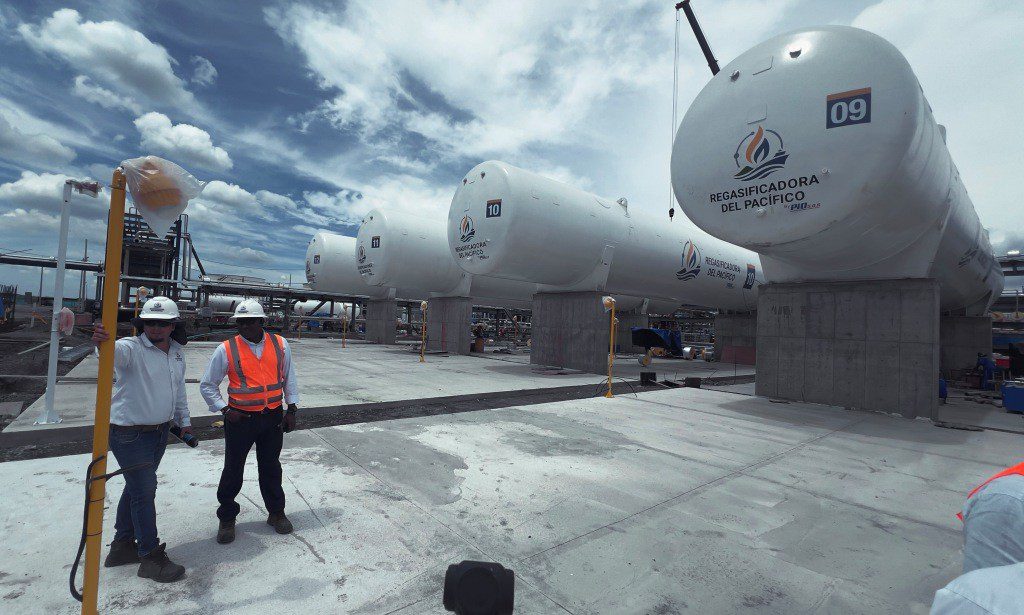
Some of that capacity is being built in Valle del Cauca. Ecopetrol (BVC: ECOPETROL; NYSE: EC) contracted 60 million cubic feet per day of capacity at the Regasificadora del Pacífico, which is to receive liquefied natural gas at Buenaventura and regasify it at Buga. Finance Colombia reported on October 5 that the plant’s first phase will deliver up to 90 million cubic feet per day, that awardee Puertos, Inversiones y Obras S.A.S. plans to begin commercial operation in the second half of November, and that Ecopetrol has asked the Fiscalía General de la Nación (Attorney General’s Office) to investigate how the contract was awarded.
The El Niño conditions Concha cites are now official. IDEAM, the Instituto de Hidrología, Meteorología y Estudios Ambientales (Institute of Hydrology, Meteorology and Environmental Studies), confirmed the phenomenon’s presence in Colombia on October 8 at strong to very strong intensity, and put the probability at 83% that it holds that intensity at least through March 2027. Portafolio reported on October 8 that because Colombia depends on hydroelectric generation, a prolonged dry spell can pressure reservoir levels. The government’s response plan, due before December 31, lists fuel and gas availability and thermal plant dispatch among its four work streams.
The Study Grew Out of an IDB Invest Technical Cooperation
The research traces back to a technical cooperation arrangement with IDB Invest. The agency’s 2025 annual report describes it as covering prefeasibility studies for a chemical plastics recycling plant and a construction and demolition waste recovery plant, plus a study of the department’s energy demand — three components, where the forum announcement describes five. The report said a consulting firm had been selected and execution had begun in 2025, and put the results after the first quarter of 2026. It does not disclose what that cooperation cost; it values all the technical assistance the agency received during 2025, including European Union Global Gateway support for a separate sustainable aviation fuel study, at $140,000 USD in total.
Invest Pacific Puts the Forum Under Its Valle Verde Strategy
Invest Pacific presents the event as a product of Valle Verde, the strategy it uses to promote the department as a destination for low-carbon business. Concha said Valle del Cauca has the most sustainable energy matrix in the country, with more than 97% renewable energy and more than 90% of generation from biomass.
The agency’s 2025 annual report puts electricity generation in the department at 97% renewable for that year, with sugarcane bagasse cogeneration at 13% of the total and solar at 6%. The 90% biomass figure refers to a national share rather than the department’s own mix: Juan Carlos Castro Lozano, then Invest Pacific’s executive director, wrote in an August 2026 El País column that the region is responsible for more than 90% of national energy generation from biomass, and the agency’s website puts that national share at approximately 94%, alongside a 2022 generation chart.
The agenda lists 15 experts and splits between keynote presentations and panel discussions of case studies, which Invest Pacific says will let attendees weigh the study’s findings against projects already under way in the department. The forum carries institutional backing from the Gobernación del Valle del Cauca (Valle del Cauca Governor’s Office), the Alcaldía de Cali (Cali Mayor’s Office), the Cámara de Comercio de Cali (Cali Chamber of Commerce) and ProPacífico.
A New Executive Director Inherits the Agenda
Invest Pacific, which describes itself as the foreign investment promotion agency for the Colombian Pacific, is a nonprofit created in 2010 that marked its 15 years in 2025. The number of foreign-capital companies operating in Valle del Cauca tripled over that period, from 85 in 2010 to more than 260 in 2025, according to the annual report, which also records exports by those companies rising from $585 million USD in 2010 to $854 million USD in 2024.
Concha was named acting executive director in an announcement on October 6, 2026, after Juan Carlos Castro Lozano left the executive director post following three years in the job. He was the agency’s director of investments when the board named him, and it has set no timeline for a permanent appointment.
Headline photo: Construction continues at the Regasificadora del Pacifico in Buga, near Cali (photo: Loren Moss)