Previous Story
Ecopetrol Replaces Five Vice Presidents Amid Broader Government-Driven Overhaul
Posted On September 4, 2026
Comment: Off
Tag: abelardo de la espriella, Adrian Santiago Coral Pantoja, Álvaro Iván Saavedra Barón, Ana Carolina Ríos Junco, board of directors, bogotá, César Loza, colombia, consejo nacional electoral, Corporate Governance, Diana Marcela Jiménez Rodríguez, ecopetrol, Energy Sector, Felipe Trujillo López, Fiscalía General de la Nación, Gustavo Petro, isa, ivan cepeda, Jaime Andrés García Cuello, Joaquín Gutiérrez, Juan Carlos Hurtado Parra, Julián Fernando Lemos Valero, Juliana Perdomo Valencia, Luis Felipe Henao, Miguel Ángel Cortés Angarita, Oil and Gas, Ricardo Roa Barragán, Ricardo Rodríguez Yee, Sandra Lucía Rodríguez Rojas, union sindical obrera
Move follows Ricardo Roa’s scandal-clouded exit as president
Ecopetrol S.A. (Ecopetrol) (BVC: ECOPETROL; NYSE: EC) is replacing five vice presidents, the company said in a statement, continuing an executive overhaul that has moved in step with Colombia’s change of government and the corruption-clouded exit of former President Ricardo Roa Barragán. The Board of Directors adopted the changes at a meeting on Thursday, August 27, 2026, and all five outgoing executives will hand off their duties by August 30, with internal candidates from the same divisions taking over on an acting basis starting August 31.
Sandra Lucía Rodríguez Rojas, corporate vice president of Territorial Transformation and HSE since August 2024, will be succeeded on an acting basis by Miguel Ángel Cortés Angarita, a senior environmental management professional in the same area. Jaime Andrés García Cuello, vice president of Administration and Services since September 2024, will be replaced by Álvaro Iván Saavedra Barón, the unit’s hydrocarbons supply manager. Diana Marcela Jiménez Rodríguez, corporate director of Institutional Relations and Communications, hands the role to Juliana Perdomo Valencia, a senior communications specialist in the same office. Julián Fernando Lemos Valero, corporate vice president of Strategy and New Business, gives way to Adrian Santiago Coral Pantoja, the area’s hydrocarbons new business manager. And Felipe Trujillo López, vice president of Refining and Industrial Processes since January 2025, is succeeded by Ana Carolina Ríos Junco, a senior process engineer in the same vice presidency.
Ecopetrol said the arrangements are temporary assignments while it runs formal selection processes for each position, and that it will announce permanent appointments “in due course.” In its statement, the company thanked the departing executives for their leadership and results and wished them success in their next professional steps.
The reshuffle is the latest step in a broader leadership turnover that began with Roa’s July 30 exit as Ecopetrol’s president after more than three years in the job. Colombia’s Fiscalía General de la Nación (Attorney General’s Office) said in February it would charge Roa over two separate matters: violating campaign spending limits during Gustavo Petro’s 2022 presidential campaign, which Roa managed, and trafficking in influence tied to his purchase of a Bogotá apartment prosecutors say cost $1.8 billion COP. Colombia’s Consejo Nacional Electoral (National Electoral Council) had already ratified a $5.922 billion COP sanction against the 2022 campaign in April for spending-limit violations exceeding $5.3 billion COP combined across both election rounds, ordering Roa, the campaign’s treasurer and its internal auditor to pay it, and referring the matter to prosecutors. The Fiscalía filed a formal accusation over the apartment purchase on June 9, alleging the payments moved through a company controlled by a retired police colonel, Juan Guillermo Mancera, to a seller linked to oil and gas investor Serafino Iacono. Roa has denied wrongdoing and has said he intends to remain in Colombia to answer the proceedings.
In farewell remarks on July 30 reported by Infobae, Roa apologized to Ecopetrol’s staff, saying he “deeply regretted that the personal matters of the human being that is Ricardo Roa had been the focus of this organization’s attention.” He added that the controversy had “kept us from showing the real achievements and results we accomplished during this time.”
Juan Carlos Hurtado Parra has served as Ecopetrol’s acting president since July 31 while a headhunting firm runs a formal search for a permanent successor. Martín Ravelo, a leader of the Unión Sindical Obrera (USO), Ecopetrol’s main oil workers’ union, told Semana that President Abelardo De la Espriella told union leaders his close adviser, Joaquín Gutiérrez, was a strong candidate for the post, though the choice formally rests with the board.
De la Espriella took office August 7, days after narrowly winning a June 21 runoff against left-wing Senator Iván Cepeda, and has moved quickly to reshape Ecopetrol’s governance, which his government has called a priority. Luis Felipe Henao now chairs the nine-member board, and six governors of oil-producing departments recently backed the continued board membership of Ricardo Rodríguez Yee, a holdover from the previous administration, according to El País. The government plans to propose a new board slate on September 15 alongside a bylaw reform that would let it replace most of the board’s remaining seats while keeping Henao, Rodríguez Yee and worker representative César Loza in place, Infobae reported.
The Colombian government holds about 88.5% of Ecopetrol’s shares, which is why the fight over its board and leadership carries weight well beyond the company itself. Ecopetrol employs more than 19,000 people, produces more than 60% of Colombia’s oil and gas, and controls most of the country’s pipeline, logistics, and refining network, alongside major petrochemical and gas-distribution businesses. Its 51.4% stake in ISA extends its reach into power transmission, Colombia’s real-time grid operator, XM, and the Barranquilla-Cartagena highway concession, while its own upstream operations reach the United States’ Permian Basin and Gulf of Mexico, Brazil, and Mexico, and, through ISA, power transmission in Brazil, Chile, Peru, and Bolivia, road concessions in Chile, and telecommunications.
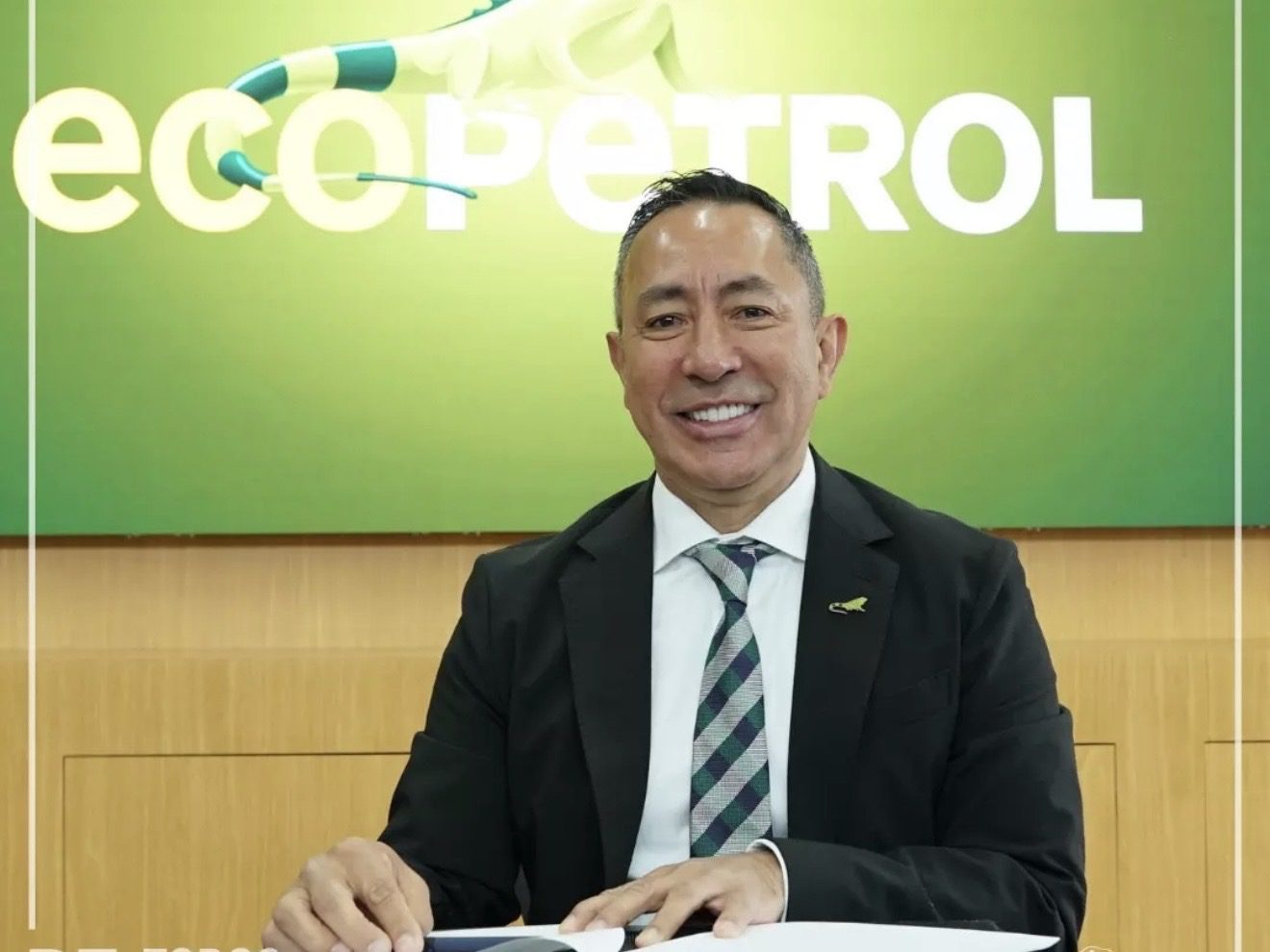
Headline photo: Ricardo Roa during his inauguration as President of Ecopetrol, April 2023. Photo courtesy of Ecopetrol.