Previous Story
United States Pledges $1 Billion in Security Assistance to Colombia’s New de la Espriella Government
Posted On August 9, 2026
Comment: Off
Tag: abelardo de la espriella, Bilateral Prosperity Dialogue, cali, Coca Eradication, colombia, cucuta, drug enforcement administration, ecopetrol, el niño, Gustavo Petro, ivan cepeda, Lista Clinton, Mario Díaz-Balart, narco-terrorism, ofac, Sanctions, security assistance, Shield of the Americas, Terry Cole, Todd Blanche, Trump administration, united states, us congress
Washington ends the Petro-era rupture on inauguration day
As Abelardo de la Espriella took the oath of office as Colombia’s president on August 7, the US Department of State announced that Washington intends to provide $1 billion USD in security assistance to his new government, capping a stunning reversal in a bilateral relationship that a year earlier had produced sanctions against a sitting Colombian president, a revoked visa, and a call from the presidential palace for American soldiers to disobey their commander-in-chief.
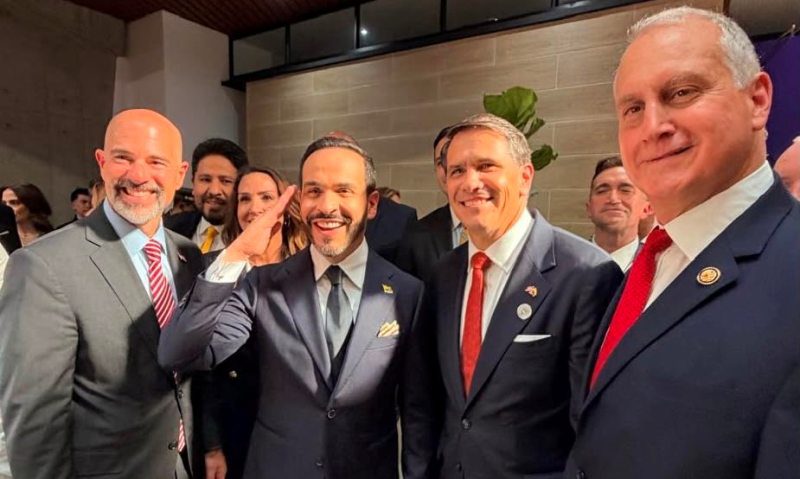
A US Presidential Delegation led by Acting Attorney General Todd Blanche represented the United States at de la Espriella’s August 7 inauguration in Cali, a city in Colombia’s conflict-scarred southwest that hosted the ceremony instead of the traditional venue in Bogotá. In a statement titled “A New Era in U.S.-Colombia Relations,” the State Department said the delegation “demonstrates US commitment to reinvigorating the US-Colombia relationship and deepening of our shared security and economic partnership,” and that the $1 billion package is intended “as a cornerstone of this renewed partnership.”
A delegation built around security and counternarcotics
Secretary of State Marco Rubio did not travel to Cali, but the delegation Washington sent was heavy with counternarcotics and security officials, according to ColombiaOne and Local 10 News. Alongside Blanche, the group included Drug Enforcement Administration (DEA) Administrator Terry Cole; US Representative Mario Diaz-Balart of Florida; Sara Carter, director of the Office of National Drug Control Policy; Hugo Guevara of the US Embassy in Bogotá; Cliff Sims, national security adviser to Vice President JD Vance; Viviana Bovo of the State Department’s Bureau of Western Hemisphere Affairs; Joseph M. Humire, deputy assistant secretary of war for Americas security affairs; and Chris Jarvis of Joint Task Force Vulcan, which targets transnational criminal organizations.
“Yesterday was the start of a new friendship and partnership working as a team in the fight against drug trafficking and furthering our relationship in countering threats to our national security and public safety,” Blanche wrote in a statement carried by Local 10 News.
Cole struck a similarly pointed tone. “DEA is ready to stand shoulder to shoulder with Colombia again,” he said in a statement cited by Local 10 News. “We will hunt down those who profit from cocaine, corruption, violence, and terror. There will be no safe haven, no protected trafficking route, and no immunity for those who poison our communities.”
“We will hunt down those who profit from cocaine, corruption, violence, and terror. There will be no safe haven, no protected trafficking route, and no immunity for those who poison our communities.” — DEA Administrator Terry Cole
From the “Clinton List” to a $1 billion pledge
The turnaround stands in sharp contrast to where the relationship stood barely 10 months earlier. On October 24, 2025, the US Treasury’s Office of Foreign Assets Control (OFAC) added outgoing President Gustavo Petro to its Specially Designated Nationals and Blocked Persons List — known in Colombia as the Lista Clinton (Clinton List), after the 1995 executive order that created it — under Executive Order 14059, which targets foreign persons involved in the global illicit drug trade. OFAC simultaneously designated Petro’s wife, Verónica Alcocer; his son, Nicolás Petro; and his interior minister, Armando Benedetti, according to a Federal Register notice of the action and Finance Colombia’s own reporting at the time. It marked the first time OFAC had designated a sitting, democratically elected head of state of a country long considered a close US ally.
The sanctions followed a September 15, 2025, presidential determination naming Colombia a “major drug transit country or major illicit drug producing country” that had “failed demonstrably” to meet its counternarcotics obligations — the first time Colombia had been placed on that list in more than 25 years.
Relations deteriorated further that same September, when Petro, addressing a pro-Palestinian rally near the United Nations General Assembly in New York, told a crowd: “I ask all the soldiers of the United States’ army, don’t point your rifles against humanity,” and urged them to “disobey the orders of Trump.” The State Department revoked his visa within hours, saying on social media that Petro had “urged US soldiers to disobey orders and incite violence,” according to CBS News. Petro dismissed the punishment, writing on social media that “international law grants me immunity to go to the UN and that there should be no reprisals for my free opinion, because I am a free person,” and noting that as a dual Colombian-European citizen he did not need a US visa, according to Al Jazeera.
Tensions eased only gradually. Petro traveled to Washington for a meeting with President Trump on February 2, 2026, in what CNN described at the time as a shift “from clash to dialogue” after a year of confrontation. Petro remained on the SDN list, and was still lobbying for his own removal from it as late as early July 2026, when he asked Trump by phone to lift the designation on him and his family — a request Trump said he would look into, according to ColombiaOne.
An election fought over the US relationship
De la Espriella, a 48-year-old lawyer and political outsider known to supporters as “El Tigre,” defeated Historic Pact candidate Iván Cepeda in a June 21 runoff, a race Trump endorsed publicly. Petro initially alleged the vote had been manipulated, a claim dismissed by international observers and Colombia’s electoral authorities before he conceded, according to Al Jazeera. The run-up to the inauguration was marked by violence, including a truck bombing near a police station in Cúcuta on August 1 that wounded eight police officers and three civilians, six days before de la Espriella took office, according to Al Jazeera. No group claimed responsibility; dissident factions of the demobilized FARC, the National Liberation Army (ELN), and the Clan del Golfo criminal group are all active in the border region. Security was tightened further ahead of the ceremony itself, held under armored vehicles, soldiers, and vehicle checkpoints in Cali, according to Al Jazeera.
At his swearing-in, de la Espriella broke with Petro’s negotiated-peace strategy toward armed groups, declaring that “the option of dialogue is completely exhausted” and pledging to “relentlessly defeat narco-terrorism.” He also committed Colombia to joining the Shield of the Americas, the US-backed regional counter-cartel coalition that grew out of a March 2026 summit hosted by the Trump administration, and pledged to strengthen state-run Ecopetrol (NYSE: EC) and pursue “responsible and sustainable fracking” to shore up the country’s oil and gas reserves.
Security package now, economic dialogue to follow
Under the State Department’s framework, the $1 billion package — which still requires action by the US Congress — is aimed at strengthening Colombia’s security forces against Foreign Terrorist Organizations and Transnational Criminal Organizations, expanding coca eradication and cocaine interdiction, freezing and prosecuting the finances behind armed groups, tightening border-security coordination, and rebuilding state presence in territory once controlled by armed groups.
The State Department said the two governments will also launch a Bilateral Prosperity Dialogue aimed at stabilizing Colombia’s economy, strengthening its energy sector, and exploring critical mineral investment, alongside efforts to connect Colombian small and medium enterprises in agribusiness, manufacturing, and tech services to US buyers and supply chains. Washington also committed to contributing to relief funds for potential El Niño-related flooding and drought, to modernizing Colombia’s digital, port, and energy infrastructure, and to advancing bilateral cooperation on civil nuclear energy.
Congressional approval of the $1 billion security package remains the first test of whether Friday’s pledges translate into disbursed assistance — and of how durable the “new era” proves once the inauguration goodwill fades.