Previous Story
Political Tensions Between Petro and Bolivia’s President Trigger Diplomatic Expulsions
Posted On May 22, 2026
Comment: Off
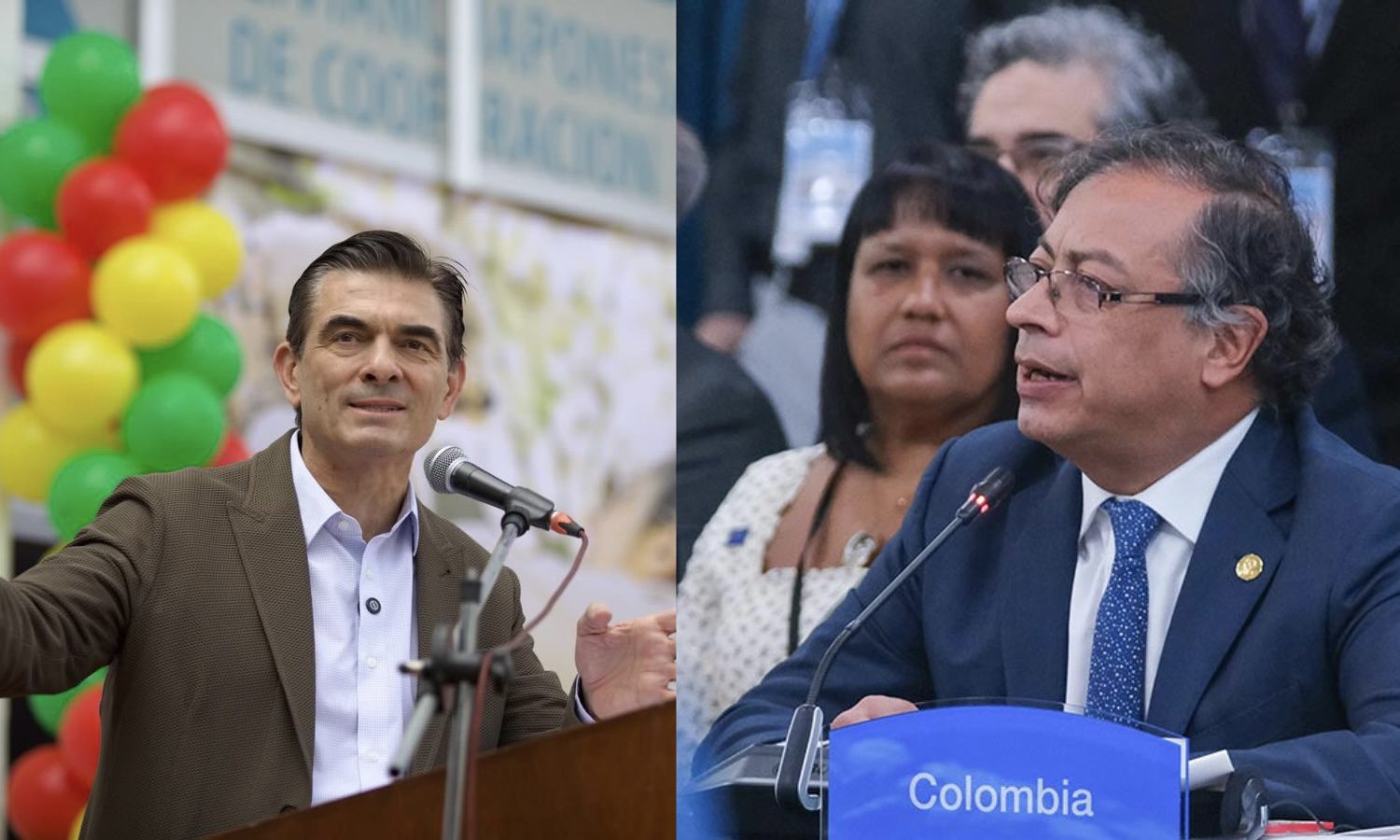
Colombia and Bolivia intensified a diplomatic crisis this week after mutually expelling representatives from their respective embassies, amid growing political tensions between Colombian President Gustavo Petro and Bolivian President Rodrigo Paz Pereira.
The tensions began May 20, 2026, when Bolivia’s Foreign Ministry announced the expulsion of Colombia’s ambassador to La Paz, Elizabeth García Carrillo, after describing remarks made by Petro regarding Bolivia’s political crisis as interference in the country’s internal affairs.
“The decision responds to the need to preserve the principles of sovereignty, noninterference in internal affairs and mutual respect among states, fundamental pillars of international coexistence and diplomatic relations between sovereign nations,” Bolivia’s Foreign Ministry said in an official statement.
One day later, Colombia’s Foreign Ministry, headed by Rosa Yolanda Villavicencio, responded by expelling Bolivia’s chargé d’affaires in Bogotá, Ariel Percy Molina Pimentel, under the principle of diplomatic reciprocity.
“The Ministry of Foreign Affairs of the Republic of Colombia, considering the recent decision adopted by the Government of the Plurinational State of Bolivia regarding the permanence of Colombia’s ambassador (…) was compelled, on the basis of reciprocity, to declare the termination of the functions of Mr. Ariel Percy Molina Pimentel,” Colombia’s Foreign Ministry said, citing Article 9 of the 1961 Vienna Convention on Diplomatic Relations.
The Colombian government clarified that the measure does not imply a formal break in diplomatic relations between the two countries, adding that “Colombia remains willing to support, always at the request of the Bolivian government, initiatives in favor of peace, political dialogue, institutional channels, citizen participation and the observance of human rights and fundamental freedoms.”
Origin of the dispute
Bolivia’s decision followed a message posted by Petro on X on May 18, in which he said that “Bolivia is experiencing a popular uprising,” referring to the political and social crisis affecting the Andean country.
For the past three weeks, Bolivia has faced protests and road blockades led by supporters of former President Evo Morales, who oppose the current administration and are demanding the resignation of President Rodrigo Paz Pereira.
The protests have also unfolded as Morales faces judicial proceedings over alleged crimes related to human trafficking and child sexual abuse, while also refusing to appear before judicial authorities.
The Bolivian government interpreted Petro’s remarks as a violation of the principle of nonintervention in domestic affairs.
Bogotá, however, rejected that interpretation and said its officials had not sought to interfere in Bolivia’s internal politics.
Colombia “categorically rejects any interpretation attributing to its authorities an interest or intention to interfere in Bolivia’s internal affairs,” the Colombian Foreign Ministry said, while reiterating its commitment to sovereign equality, nonintervention, self-determination of peoples, peaceful settlement of disputes and respect for territorial integrity.
A politically sensitive moment for both governments
The diplomatic tensions come as Rodrigo Paz Pereira, who took office in November, faces social unrest, road blockades and domestic criticism over his administration.
Meanwhile, Petro is approaching the end of his term in Colombia amid a highly polarized electoral climate. The Colombian president is seeking to preserve the continuity of his political project through the election of a successor in presidential elections whose first round will take place May 31, with the next president set to take office on August 7, 2026.
Although neither government has announced additional measures, the exchange of expulsions marks the highest level of diplomatic tension between Colombia and Bolivia in recent years.