Previous Story
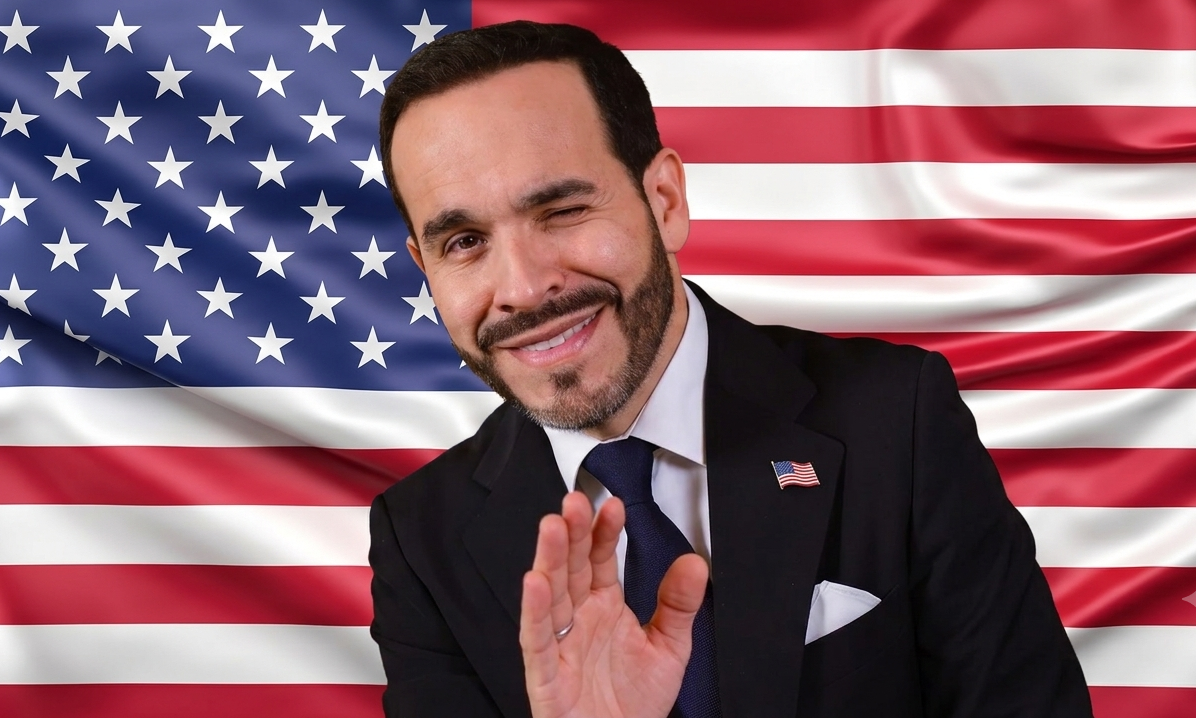
Will Colombia Elect Its First US Citizen President?
Posted On June 13, 2026
Comment: Off
Tag: 2026 Colombian presidential election, abelardo de la espriella, Article 191, Casa de Nariño, colombia, colombia elections, Constitutional Court, council of state, dual nationality, Germán Calderón España, Gustavo Petro, ivan cepeda, jose manuel restrepo, Latin America politics, Mauricio Gaona, naturalization, pacto historico, Ramiro Bejarano, Rodrigo Uprimny, runoff, Stella Conto Díaz, triple nationality, US citizenship
While opponents seek to invalidate de la Espriella’s candidacy, current President Gustavo Petro is also an Italian citizen.
Abelardo de la Espriella, the conservative outsider who led the first round of Colombia’s presidential election and now heads into a June 21 runoff against leftist senator Iván Cepeda, has put an unusual question on the table: could Colombia, for the first time, elect a president who is also a citizen of the United States?
De la Espriella holds three nationalities. He was born in Colombia — making him Colombian by birth — inherited Italian nationality through his maternal grandparents, and obtained US citizenship by naturalization in February 2023, according to La Silla Vacía. It is that third passport, not the mere fact of multiple nationalities, that has triggered a constitutional debate which could shadow the campaign to its final day.
More than thirty jurists, academics, and constitutionalists — among them, La Silla Vacía reported, former Council of State president Stella Conto Díaz, Álvaro Echeverri, Ramiro Bejarano, Leopoldo Múnera, and Rodrigo Uprimny — signed a statement warning that his US citizenship could amount to an “incompatibility” with the presidency. Their objection is specific. Colombian naturalization in the United States requires an oath in which new citizens declare they renounce “absolutely and entirely” all allegiance to any other state of which they have been subjects. There, the signatories argue, lies a tension between that oath and the duties a Colombian head of state must perform — a concern they tie to the Constitutional Court’s own references to “potential conflicts of national loyalty.”
“Constitutional disqualifications are not discovered. They are expressly established or, simply, they do not exist.” — Mauricio Gaona, constitutional lawyer
The debate turns on what the Constitution actually requires. Article 191 states that to be president a person must be Colombian by birth, a citizen in exercise, and over 30 years of age. As campaign legal adviser Germán Calderón España told La FM, those are the only three conditions, and none excludes a Colombian by birth who holds a second nationality. Disqualifications, he argued, must be expressly written into the Constitution or the law rather than inferred. Calderón also said the campaign was facing what he called a “tutelatón” — an estimated 30 tutela constitutional-rights petitions a day from allies of the Pacto Histórico, Cepeda, and President Gustavo Petro.
Constitutional lawyer Mauricio Gaona reached the same conclusion in a published legal opinion, reported by Infobae. Gaona wrote that dual nationality is legally valid, that holding simultaneous legal duties to more than one state is possible, and that US naturalization — including its allegiance oath — “does not create a constitutional disqualification to exercise the Presidency of the Republic of Colombia.” He grounded the analysis in the Constitution, Law 43 of 1993, US nationality law, and US Supreme Court rulings including Afroyim v. Rusk (1967), Kawakita v. United States (1952), and Vance v. Terrazas (1980), as well as the US State Department’s position that “U.S. law does not require a U.S. citizen to choose between U.S. citizenship and another nationality.”
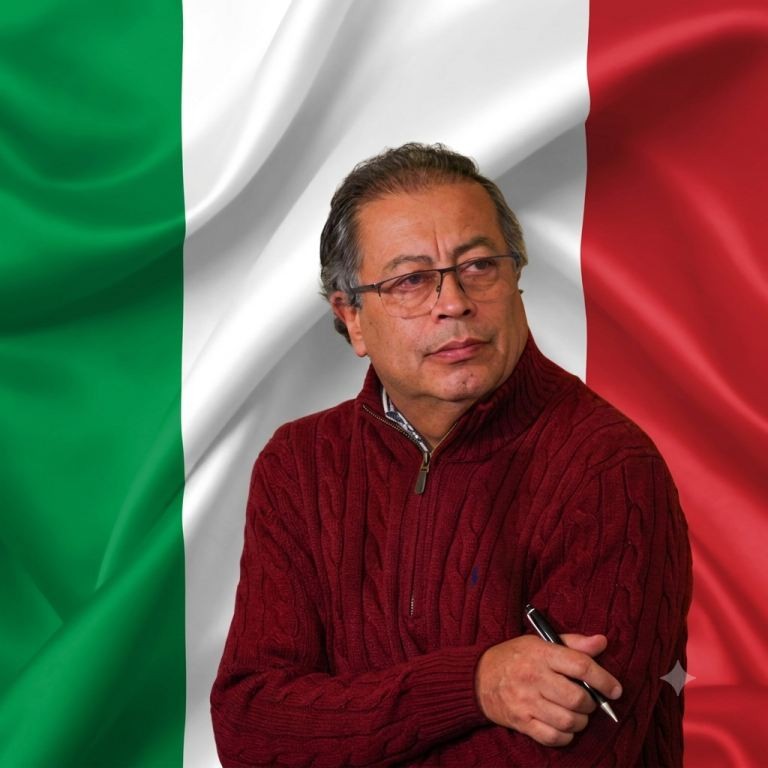
Current Colombian President Gustavo Petro is also an Italian citizen.
Gaona pointed to Article 191’s silence as decisive: the text, he wrote, does not require exclusive nationality, the absence of foreign citizenship, prior renunciation of another nationality, or a certificate of exclusive loyalty. He acknowledged that some specific posts — those tied to national security, intelligence, or classified information — can carry dual-nationality restrictions, but said any such limit must be expressly established. “Constitutional disqualifications are not discovered,” he wrote. “They are expressly established or, simply, they do not exist.”
The campaign has pointed to a sitting precedent: Petro himself holds Italian nationality, which he acquired through family descent, has openly acknowledged, and has cited as letting him travel to the United States without a visa; the US Treasury’s sanctions listing on the Colombian president records an alternate Italian citizenship, and in September 2025 he publicly weighed renouncing it in protest over the war in Gaza. The comparison has limits, however, and they cut to the heart of the dispute: Petro’s Italian citizenship — like De la Espriella’s own Italian nationality, which no one contests — was acquired by descent, without an oath. The critics’ argument rests specifically on the renunciation oath sworn in US naturalization, a step neither Petro’s nor De la Espriella’s Italian status involved.
There is also a political irony the candidate’s opponents have seized on: De la Espriella has built much of his campaign on overtly nationalist imagery, including the Colombian flag and the national soccer team’s jersey — symbols a tribunal ordered him to remove from his campaign within 24 hours, La Silla Vacía reported. His wife drew attention shortly before the first round when she suggested the family might move to Italy if he lost, a remark she later softened.
For now, the candidacy stands. The Fifth Section of the Council of State rejected a lawsuit seeking to strike De la Espriella from the ballot over his triple nationality, finding that the registration was not subject to that form of judicial review, La Silla Vacía reported. Whether the broader incompatibility argument ever reaches a definitive ruling — and from which court — remains unresolved.
The stakes are concrete for a country whose largest trading and security partner is the United States. De la Espriella, who campaigns as an admirer of US President Donald Trump and whose running mate is former finance minister José Manuel Restrepo, would bring an openly Washington-friendly posture to the Casa de Nariño; Cepeda would broadly continue the foreign policy of the Petro government. Voters return to the polls on June 21. If De la Espriella wins, the question of a president who also answers, at least on paper, to a second flag will move from the seminar room to the presidential palace.