Previous Story
What Jumps Out: The Nagging Question
Posted On July 4, 2026
Comment: Off
Tag: @ivanduque, #Abelardo, #ColombianElections, #ColombianPolitics, #ColombiaPolitics, #CongressColombia, #Election2026, #FarRightPolitics, #GustavoPetro, #LatinAmerica, #LatinAmericanPolitics, #PolicyAnalysis, #PoliticalAnalysis, #SouthAmerica, #TheTiger, #WhatJumpsOut, antioquia, barranquilla, colombia, democracy, elections, governance, medellin, populism, trump
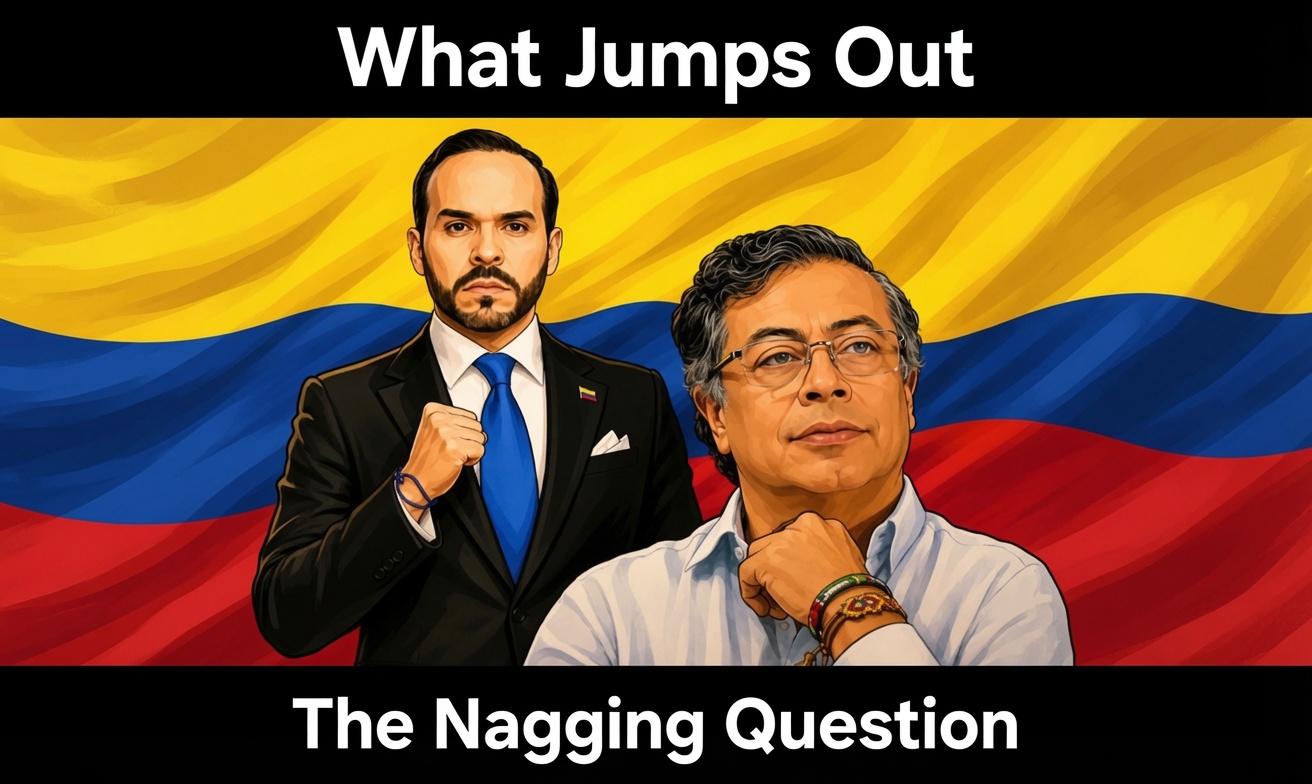
A few hours after the polls closed, the votes were counted and Tiger Abelardo was declared the next President of Colombia. The streets of Medellín are packed with celebrating paisas, energized by the idea of the far right returning to power. And they have every right to celebrate because without them, his hopes of power would be dust.
The overall poll was much closer than most expected, 49.7%–48.7%, a difference of just 250,000 votes out of a total of 26 million — almost 25% higher turnout than in 2022, which is great news for democracy. However, Antioquia, where Medellín lies, delivered the victory as he won the province by 1 million votes. Just as importantly, he lost in nearly every other major city in Colombia — including his hometown of Barranquilla.
Combining the slim margin of victory with his struggles in many parts of Colombia raises questions about what he can achieve over the next four years.
As I watched the feral campaign in Medellín while reading Abelardo’s ambitious election manifesto, one question has nagged away:
“Who will end up most disappointed — the supporters of Petro in 2022, or those of Aberlardo in 2026?”
Before Petro came Iván Duque, where there were few expectations and he lived down to them spectacularly. Petro himself benefited from those lost years, getting elected on the promise of changing the lives of the masses forever. Although he achieved several things toward that end, his supporters were largely disappointed, primarily due to his inability to administer.
Will Abelardo suffer the same fate? It could well happen.
He has no political party, will need to horse trade in Congress, and, more concerningly, many parts of Colombia do not want him. Even the huge vote in Antioquia was arguably not for him but for local boy, Vice President José Manuel Restrepo – and for arguably the first time we have a vice president who has genuine power and can provide checks and balances to any radical behaviour.
I have mentioned before the chaos of Duque’s last 12 months in office and the street protests that dogged his reform process. Given his lack of geographical reach, Abelardo would be well advised to tread carefully when trying to roll back reforms. Petro/Cepeda have lost the presidential battle, but 12.7 million votes suggest they are more than prepared for a war if the Tiger pushes too hard on his reform agenda.
The first skirmish of that war could occur if Abelardo follows through with his threat to declare 70 Trump-style decrees on day one in August.
Setting all that aside, Colombia has reconfirmed its status as South America’s preeminent democracy with a record turnout, minimal reports of fraud, even fewer incidents of violence, and paper results delivered in less than 120 minutes.
It only remains to buy the popcorn, sit back, and watch the fun starting in August.
My regards,
Roops