Previous Story

Strong Peso Pushes Cartagena’s Hotel Occupancy to a Three-Year Low
Posted On September 8, 2026
Comment: Off
Tag: Alejandro Rojas, anato, Aval Asset Management, banco de bogota, banco de la republica, bocagrande, bolivar, cartagena, Centro Histórico, colombia, colombian peso, cotelco, dane, Edilson Posada Bermúdez, Exchange Rate, Foreign Tourism, getsemani, hotel occupancy, Islas, Juan David Ballén, manga, Norte, paula cortes calle, pie de la popa, RevPAR, Tourism, trm
Foreign Visitors Retreat as the Peso Hits 2019 Highs
Cartagena’s hotel occupancy fell to 65.04% in July 2026, the lowest reading for the month in three years, according to the monthly report from Cotelco’s Cartagena and Bolívar chapter, based on its Sistema de Información Hotelero (Hotel Information System, SIH). The decline came as Colombia’s historically strong peso made the city measurably more expensive for the foreign travelers who make up most of its hotel guests, according to national economists and industry groups. The July figure is down from 69.08% in July 2025 and 68.63% in July 2024, reversing last year’s gain and marking the weakest July in the three-year comparison the chapter tracks.
Revenue per available room, the metric hoteliers watch most closely because it combines both occupancy and rate, told a starker story than occupancy alone. Cartagena’s July RevPAR fell to $349,429 COP, down 11.5% from July 2025’s $394,713 COP and below the July 2024 level of $357,995 COP as well, making it the lowest of the three years measured. Average daily rates held up better, easing to $537,271 COP from a July 2025 peak of $571,376 COP but still running 3% above July 2024’s $521,601 COP.
The occupancy decline traces almost entirely to foreign visitors. Cartagena’s hotels hosted 42,786 international guests in July 2026, down 10.8% from 47,950 in July 2025 and 11% from 48,097 in July 2024. Domestic guest arrivals moved the opposite direction, rising 5.5% to 29,811 from 28,262 a year earlier. The shift pulled foreign travelers’ share of Cartagena’s hotel guest mix down to 59% in 2026 from 62.91% in 2025, the lowest share the chapter has recorded in its three-year comparison.
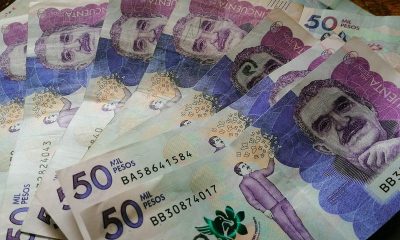
The currency move behind that shift has been unusually large. The Colombian peso strengthened to its firmest levels against the dollar since April 2019 during July 2026, according to Banco de la República (Colombia’s central bank), whose Tasa Representativa del Mercado (Representative Market Rate, TRM) tracks the peso’s value against the dollar. Alejandro Rojas, senior economist at Banco de Bogotá (BVC: BOGOTA), put the year-over-year revaluation at roughly 20%, which combined with local service-sector inflation running near 10% — driven in part by this year’s minimum-wage increase — to raise the effective cost of a Colombia trip for a foreign visitor by close to 30%, he said in an interview with Bloomberg Línea. Rojas said national hotel revenue, tracked by the Departamento Administrativo Nacional de Estadística (National Administrative Department of Statistics, DANE) through its Encuesta Mensual de Alojamiento (Monthly Lodging Survey), fell 3.6% year over year in December 2025 and deteriorated further to a 6.9% decline by May 2026. Nationally, nonresident visitor arrivals fell 1.6% between January and May 2026 compared with the same period of 2025, according to Anato, Colombia’s national association of travel and tourism agencies, cited by La República.
“The peso’s strength against the dollar is having a direct effect on the dynamics of tourism,” Anato president Paula Cortés Calle told Bloomberg Línea. “While it favors Colombians’ travel abroad, it also takes away Colombia’s competitiveness as a destination for international travelers compared to other countries in the region.” Cortés Calle added that Colombia still has a strong tourism offering and good air connectivity, and that the challenge is strengthening international promotion and competitiveness to convert those strengths into growth in inbound tourism.
“The peso’s strength against the dollar is having a direct effect on the dynamics of tourism.”
— Paula Cortés Calle, president, Anato
Not every analyst treats the currency as decisive on its own. Juan David Ballén, director of economic and market research at Aval Asset Management, told Bloomberg Línea that the dollar has weakened globally this year and that the peso has appreciated by more than the global average, but that currency movements alone are unlikely to redirect Colombia’s tourism trend unless the appreciation proves large and sustained. Improving security conditions and a strengthening tourism offering, he said, could offset some of the relative cost increase.
Cartagena’s year-to-date numbers show the deterioration is broader than a single month. Accumulated occupancy from January through July 2026 fell to 63.08%, down from 70.19% over the same period in 2025 and, notably, below the 67.97% recorded in 2024 — the first time in the three-year series that year-to-date occupancy has fallen under the 2024 baseline. Accumulated RevPAR fell for a second consecutive year, to $379,436 COP from $402,337 COP in 2025 and $432,821 COP in 2024, even as accumulated average daily rates recovered somewhat to $601,540 COP from $573,176 COP in 2025.
The decline was not evenly spread across the city. Centro Histórico y Getsemaní, Cartagena’s walled colonial core, absorbed the steepest drop, with July occupancy sliding to 46.45% from 56.73% in 2025 and 57.88% in 2024. The Islas zone fell to 59.61% from 68.50%. The high-rise Moderna district and the Norte zone held up better, slipping only modestly to 72.26% and 67.22%, respectively. Pie de la Popa y Manga was the lone zone to improve, rising to 69.66% from 65.41% in 2025.
Regionally, Cotelco’s Cartagena and Bolívar chapter posted 50.79% occupancy in June 2026, the most recent month for which chapter-to-chapter comparisons were available, placing it third among four Caribbean and insular chapters — behind Magdalena’s 58.55% and San Andrés y Providencia’s 54.03%, and ahead of only Atlántico’s 49.83%. Nationally, Cartagena and Bolívar ranked second among the five chapters Cotelco compared, trailing only Bogotá’s 53.47% and ahead of Atlántico, Antioquia’s 48.43% and Valle del Cauca’s 46.90%.
The Cartagena and Bolívar chapter is led by board president Edilson Posada Bermúdez, general manager of the Hotel Almirante Cartagena.
Headline photo: Cartagena Colombia – photo credit Loren Moss