

















Infrastructure pivot frees up $1.3 billion USD for shareholders
Frontera Energy Corporation (TSX: FEC) (OTCQX: FECCF) reported first-quarter 2026 net income from continuing operations of $13.1 million USD and adjusted EBITDA of $28.5 million USD, as the Calgary-based company moves to close the sale of its Colombian exploration and production portfolio to Parex Resources Inc. (TSX: PXT) and reposition itself as a standalone Colombian infrastructure company anchored by its pipeline and port assets.
Total revenues from continuing operations were $26.8 million USD in the first quarter, compared with $26.9 million USD in the fourth quarter of 2025 and $25.1 million USD in the first quarter of 2025. Net loss for the period, including discontinued operations, was $15.4 million USD, reflecting a $28.5 million USD net loss from the Colombian E&P assets now classified as held for sale.
“In total, this strategy will have unlocked approximately $1.3 billion of capital for investors.” — Gabriel de Alba, Chairman of the Board, Frontera Energy Corporation
The Parex transaction
On April 30, 2026, Frontera shareholders approved a plan of arrangement under which Parex Resources, through a wholly-owned subsidiary, will acquire all of Frontera’s Colombian upstream business — including its oil and gas exploration and production assets, a reverse-osmosis water-treatment facility, and a palm-oil plantation. The transaction carries an enterprise value of $750 million USD. The cash purchase price consists of $500 million USD payable at closing, subject to customary adjustments, plus an additional $25 million USD contingent payment tied to specified development milestones to be achieved within 12 months of closing.
At the same shareholder meeting, investors approved a reduction of Frontera’s capital account of up to $647 million CAD (approximately $470 million USD) to fund a return of capital to shareholders from the net proceeds of the transaction. The Supreme Court of British Columbia issued its final order approving the arrangement on May 4, 2026. Closing remains subject to the satisfaction of remaining conditions and is expected in May 2026.
Chairman Gabriel de Alba said the company would retain roughly $50 million USD of cash to support growth opportunities at the remaining infrastructure business, including an LNG regasification project being developed in partnership with Ecopetrol (NYSE: EC) (BVC: ECOPETROL). “In total, this strategy will have unlocked approximately $1.3 billion of capital for investors,” de Alba said.
ODL pipeline drives cash flow
Frontera holds a 35 percent equity interest in the Oleoducto de los Llanos (ODL) crude oil pipeline, which connects the Rubiales, Quifa, Caño Sur, Llanos-34, and other production blocks to the Monterrey and Cusiana stations in the department of Casanare. ODL’s share of income contributed $14.2 million USD to Frontera in the first quarter, compared with $15.1 million USD a year earlier, with the year-over-year decline reflecting higher depreciation, amortization, and operating costs.
ODL transported 233,875 barrels per day in the first quarter of 2026 at an average tariff of $4.70 USD per barrel, compared with 236,387 barrels per day at $4.73 USD per barrel in the first quarter of 2025. The pipeline declared $185 million USD in total dividends, of which $64.7 million USD is net to Frontera. The company expects to receive those distributions during 2026 in installments of approximately 40 percent in the second quarter, 35 percent in the third quarter, and 25 percent in the fourth quarter.
Long-term debt at Frontera totaled $167.8 million USD at the end of the first quarter and is expected to decline to approximately $131 million USD by year-end 2026, primarily through scheduled amortizations and cash-sweep mechanisms tied to ODL cash flows. From May 2025 through December 2026, long-term debt is expected to fall by more than $100 million USD.
Puerto Bahía expands cargo mix
Puerto Bahía, the multipurpose maritime terminal located in Cartagena adjacent to the Bocachica access channel and near the Reficar refinery, generated $12.7 million USD in revenue in the first quarter of 2026, compared with $10.0 million USD in the same period a year earlier. The 150-hectare facility comprises a hydrocarbons terminal with nominal capacity of 2,672,000 barrels and a general cargo terminal. Frontera holds a 99.97 percent equity interest in the port.
General cargo growth offset weaker liquids volumes. The general cargo terminal handled 38,067 roll-on/roll-off (RORO) units in the first quarter, more than double the 18,223 units handled a year earlier, alongside 3,851 twenty-foot equivalent units (TEUs) of containerized cargo, up from 1,256 TEUs in the first quarter of 2025. Break-bulk volumes declined to 25,216 tons/m³ from 41,198 tons/m³. RORO dwell times shortened from 40 days to 31 days year over year.
The liquids terminal handled 36,937 barrels per day in the first quarter of 2026, down from 51,579 barrels per day a year earlier. Ecopetrol volumes accounted for 26,273 barrels per day, Frontera-related volumes for 7,389 barrels per day, and other third-party volumes for 3,275 barrels per day. The company attributed the decline mainly to lower third-party throughput and the absence of certain trading flows.
Operating costs at the port rose to $7.6 million USD in the first quarter from $5.0 million USD a year earlier, driven by increased infrastructure maintenance in the liquids terminal and higher cargo volumes in the general cargo facility.
LPG and LNG projects advance
Puerto Bahía’s liquefied petroleum gas (LPG) project began initial operations in March 2026, providing capacity to handle up to 10,000 tons per month. The terminal is targeted to become fully operational during the first quarter of 2028. Capital expenditures during the first quarter totaled $1.0 million USD, including $0.4 million USD for major tank maintenance and $0.3 million USD for the LPG project.
The company is also advancing an LNG regasification project at Puerto Bahía in partnership with Ecopetrol, intended to support Colombia’s domestic gas supply as domestic production declines. Frontera is also pursuing expansion of containerized cargo operations.
Discontinued operations
Following the execution of the arrangement agreement, the Colombian E&P assets are now classified as discontinued operations under IFRS 5. Colombian production averaged 36,700 barrels of oil equivalent per day in the first quarter of 2026, comprising 25,394 barrels per day of heavy crude, 8,653 barrels per day of light and medium crude combined, 5,706 thousand cubic feet per day of conventional natural gas, and 1,652 barrels of oil equivalent per day of natural gas liquids. That compares with 39,010 barrels of oil equivalent per day a year earlier.
The operating netback from the discontinued Colombian operations was $41.79 USD per barrel of oil equivalent in the first quarter of 2026, compared with $34.22 USD per barrel of oil equivalent in the first quarter of 2025, supported by a higher Brent reference price of $78.38 USD per barrel against $74.98 USD per barrel a year earlier.
Frontera retains exploration and development interests in Guyana through subsidiaries that include CGX Energy Inc. (TSXV: OYL), which is not part of the Parex transaction. The company’s go-forward portfolio will be anchored by the ODL pipeline stake and Puerto Bahía, with the infrastructure business generating approximately $77 million USD of distributable cash flow in 2025, according to the management information circular dated March 30, 2026.
Above photo courtesy Frontera Energy Corporation.
Proposal would reset how banks weigh social and climate costs
The Superintendencia Financiera de Colombia (SFC) has presented a proposal to create a national system of socio-environmental prices that supervised financial institutions would apply when evaluating and analyzing private and public development projects in Colombia. The regulator argues that the country’s financial system faces the challenge of financing projects that generate long-term social returns, not only private profitability.
The proposal was unveiled in Bogotá on May 14, 2026, during the forum Precios socioambientales: una herramienta para la inversión sostenible en Colombia, hosted at the regulator’s headquarters. Participants included Superintendent of Finance César Ferrari; Daniel Schydlowsky, professor at the Hebrew University of Jerusalem; Raúl Castro, professor at the Universidad de los Andes; Andrés Vera, technical vice president of Asobancaria; Ricardo Lara Manzano, director of infrastructure and energy for the Andean region at IDB Invest; and Andrés Trejos, economic studies coordinator at the SFC.
Ferrari noted that the methodology, also known as “shadow pricing,” gained prominence during the second half of the twentieth century before falling out of favor, and is now resurfacing globally as social and environmental dynamics increasingly affect business and the financial system. “The concept of ‘shadow prices’ is regaining importance because we are seeing the effects of climate change on the economy and on competition in business across all sectors,” Ferrari said.
“The concept of ‘shadow prices’ is regaining importance because we are seeing the effects of climate change on the economy and on competition in business across all sectors.” — César Ferrari, Colombian Superintendent of Finance
Schydlowsky explained that shadow prices measure the value of goods and services when market failures distort interest rates, exchange rates, or fiscal balances. The approach is designed to correct for the gap between observed market prices and the true economic and social cost of resources.
What the SFC is proposing
Trejos argued that social project evaluation provides a technical basis for discussing the relevance of investment initiatives in the context of public policy and the financial system, and helps select projects that raise social welfare with economic efficiency and environmental sustainability. “It is possible to prioritize projects beyond private profitability, incorporating general social welfare and, in particular, environmental sustainability,” he said.
The SFC’s proposal to build a socio-environmental pricing system for Colombia includes estimates of the social valuation of six productive factors and fundamental variables: labor, public revenue, investment, foreign exchange, carbon, and the social discount rate.
Under the proposed framework, projects would receive more favorable evaluation if they are labor-intensive — especially when they absorb idle or underemployed workers — if they generate or save foreign exchange through expanded exports or efficient import substitution, if they strengthen public revenue and the state’s capacity to provide public goods and regulation, or if they reduce carbon footprint or deliver net benefits in climate mitigation and adaptation.
The proposal does not yet carry the force of regulation. The SFC presented the framework as a methodology for supervised entities — including banks, insurers, and pension fund managers — to incorporate into their internal project evaluation processes alongside conventional financial analysis.
Headline photo: The installation of more than 886 solar systems benefiting 4,000 users. Photo credit: One Inversión Social.
Q1 visitor count tops 1.58 million as Mexico push targets World Cup
Non-resident visitor arrivals to Colombia grew 6.7% in March 2026 compared to the same month of the previous year, and the country received 1,584,378 non-resident visitors during the first quarter, according to figures from Migración Colombia processed by the Ministerio de Comercio, Industria y Turismo.
In March alone, 541,720 non-resident visitors entered the country. Of that total, 419,150 were foreign non-resident visitors, representing 5.3% year-over-year growth, while the cruise segment recorded 58,186 passengers, a 41.2% increase over the same month in 2025.
For executives and investors evaluating Colombia’s tourism, hospitality, and aviation sectors, the data indicate continued recovery in international arrivals and a measurable expansion of cruise traffic, two segments that directly affect hotel occupancy, retail spending in coastal cities such as Cartagena and Santa Marta, and the pipeline of inbound foreign exchange.
“Colombian tourism is going through a significant period of international expansion. Colombia is recording sustained growth in visitor arrivals while strengthening its connectivity and expanding its presence in strategic markets,” said Diana Marcela Morales Rojas, Minister of Commerce, Industry and Tourism.
Air connectivity figures
According to the Aeronáutica Civil de Colombia (Aerocivil), 4,483,077 passengers were transported on scheduled flights in February 2026, a 9.4% increase compared to the same month of the prior year. International arrivals grew 11.9% while domestic traffic increased 7.3%.
Between January and February 2026, scheduled flights moved 9,906,749 passengers, an 8.2% increase over the same period in 2025. The figures reflect ongoing expansion in commercial aviation capacity into Colombian airports, including the principal international gateways in Bogotá, Medellín, Cartagena, and Cali.
Mexico airport campaign tied to World Cup
Following Colombia’s participation as guest of honor at the Tianguis Turístico de México, the Ministerio de Comercio, Industria y Turismo signed an agreement with more than 20 Mexican airports to display the country’s “Descubre la Diversidad de Colombia, El País de la Belleza” campaign during the FIFA World Cup season.
The campaign will run in terminals operated by the Mexican federal government, including airports in Mexico City, Toluca, Tulum, and Cancún. The Mexican market represents one of the larger sources of regional intra-Latin American travel and is expected to see elevated transit volumes during the World Cup, which Mexico will co-host with the United States and Canada in summer 2026.
“Colombia is positioning itself as an increasingly visible and competitive destination in international markets. These alliances allow us to expand the country’s presence in strategic global venues, increase visitor arrivals, and continue positioning tourism as an engine of economic development for the regions,” Morales Rojas said.
The ministry indicated that Colombia’s presence at the Tianguis Turístico also produced bilateral conversations on expanding air connectivity and promotional cooperation with Mexican tourism operators, though specific route announcements or carrier commitments tied to the agreement were not disclosed.
Above photo: Mexico pavilion at the 2015 ANATO Vitrina Turistica trade show in Bogotá (photo: Loren Moss)
Tenth US conviction under joint US-Colombia child exploitation offensive
A federal jury in the Southern District of Florida convicted Ramon Arellano Sandoval, 65, of Antioch, Tennessee, on charges of attempted sex trafficking of a minor and attempted production of child sexual abuse material involving a 14-year-old victim residing in Medellín, Colombia. A US federal district judge subsequently sentenced Arellano Sandoval to 30 years in federal prison, according to Alcaldía de Medellín Mayor Federico “Fico” Gutiérrez, who confirmed the sentence on May 21, 2026.
The case, prosecuted by the US Attorney’s Office for the Southern District of Florida under case number 24-cr-20519, represents the tenth conviction obtained under a joint US-Colombia enforcement initiative targeting foreign nationals who travel to Medellín to sexually exploit minors. Three other US citizens previously sentenced in connection with the program include Stefan Correa and Manuel Poceiro, who each received life sentences, and Mohamed Anaswed, who received 21 years in federal prison.
According to court records and evidence presented at the February 24 trial, Arellano Sandoval exchanged thousands of text and video messages with the victim, who was 14 years old at the time, and who lived in a rural area near Medellín. Prosecutors presented evidence that the defendant knew the victim’s age, repeatedly solicited sexually explicit videos from her, directed her to produce illicit material in exchange for electronic payments, and traveled to Colombia to engage in commercial sex with her.
“The evidence showed that this defendant pressured a child to create sexually explicit videos and even traveled overseas to abuse her. That conduct is predatory, criminal, and intolerable.” — Jason A. Reding Quiñones, US Attorney, Southern District of Florida
The jury found Arellano Sandoval guilty of attempted sex trafficking of a minor, which carries a maximum sentence of life in federal prison, and attempted production of visual depictions of the sexual exploitation of a minor, which carries a maximum sentence of 30 years.
“The jury’s verdict delivered justice for a 14-year-old victim who was targeted and exploited by a 65-year-old man who knew exactly what he was doing,” said US Attorney Jason A. Reding Quiñones for the Southern District of Florida. “The evidence showed that this defendant pressured a child to create sexually explicit videos and even traveled overseas to abuse her.”
The investigation was conducted by Homeland Security Investigations (HSI) Miami under Special Agent in Charge José R. Figueroa, with operational support from HSI Colombia. Assistant US Attorneys Tim Farina and Camille Smith handled the prosecution. On the Colombian side, the arrest and evidence collection involved the Alcaldía de Medellín, the Policía Nacional through its Dirección de Protección y Servicios Especiales (DIPRO), the Fiscalía General de la Nación, and Migración Colombia.
“La justicia no tiene fronteras cuando se trata de proteger a nuestros niños, niñas y adolescentes,” Gutiérrez wrote on his X account, referring to cross-border judicial cooperation in cases involving the exploitation of minors. The mayor indicated the administration would continue pursuing similar prosecutions, stating that any foreign national traveling to Medellín to exploit minors would be pursued until obtaining a conviction, including in their country of origin.
‼️La justicia no tiene fronteras cuando se trata de proteger a nuestros niños, niñas y adolescentes.🚨Otro condenado más.
Ramón Arellano Sandoval, de 65 años de Estados Unidos, fue sentenciado a 30 años en prisión federal de ese país, por los delitos de intento de explotación… pic.twitter.com/mepkNuOURX
— Fico Gutiérrez (@FicoGutierrez) May 21, 2026
The Arellano Sandoval case follows a similar prosecution earlier in 2026 against Michael Jaime Inofuentes, also a US citizen, who was sentenced by the US District Court for the Eastern District of Virginia to 18 years in federal prison. Court evidence in that case established that Inofuentes sexually abused a 15-year-old in Medellín and paid for encounters in hotels, resulting in a pregnancy in early 2024. The investigation, triggered by a complaint from the victim’s mother to Colombian authorities, led to Inofuentes’s arrest in Miami. Prosecutors introduced WhatsApp conversations, financial transfers, and the defendant’s own admissions, which included statements that he had fathered other children in Colombia under similar circumstances. Related court documents and additional case information are available through the US District Court for the Southern District of Florida at www.flsd.uscourts.gov and through the PACER system at pacer.flsd.uscourts.gov under case number 24-cr-20519.
More than 400 combatants would be concentrated in the new zones as negotiations continue in Doha, Qatar
President Gustavo Petro is moving forward with the creation of temporary concentration zones, known as Zonas de Ubicación Temporal (ZUT), for members of the Estado Mayor Conjunto del Ejército Gaitanista de Colombia (EGC), also known as the Clan del Golfo, the country’s largest drug trafficking armed group, in a renewed effort to advance his Total Peace (Paz Total) policy just days before Colombia’s presidential elections on May 31, 2026.
According to an official statement from Colombia’s presidency, the ZUTs would initially allow the concentration of more than 400 combatants while parallel negotiations continue over a possible peace agreement with the Colombian government, although no preliminary agreements have yet been reached.
The temporary concentration zones would function as designated areas where combatants suspend armed activities while participating in talks with the government and preparing for a potential reintegration into civilian life.
According to the government, the zones would remain in effect until December 31, 2026, meaning their future would ultimately depend on Colombia’s next president, who will take office on August 7, as well as on the broader future of the Total Peace policy.
Colombia’s most powerful criminal organization
The Clan del Golfo is considered by specialized organizations, including the Fundación Ideas para la Paz (FIP), to be Colombia’s most powerful criminal structure.
According to the organization, the group has nearly 10,000 armed members and operates in multiple strategic regions linked to drug trafficking, illegal mining and territorial control.
The US government has designated the group a transnational terrorist organization, while President Donald Trump previously warned of possible US military actions in Colombian territory over security and narcotics concerns, comments that sparked diplomatic tensions with Petro’s administration.
Institutional clash over arrest warrants and extradition requests
The ZUT proposal comes amid tensions between Colombia’s executive branch and the Attorney General’s Office over the legal conditions required to move the process forward.
The Office of the High Commissioner for Peace requested the suspension of arrest warrants against 29 Clan del Golfo members, including 13 individuals subject to extradition requests, among them Jobanis de Jesús Ávila Villadiego, alias “Chiquito Malo,” the group’s top leader.
Attorney General Luz Adriana Camargo rejected the request, citing legal limitations regarding individuals sought by foreign authorities.
Following the refusal, Petro publicly defended the process in a message on X. “I have been clear that, in the early stages of the process, individuals facing extradition do not participate,” the president wrote, denying any intention to suspend extradition orders unless there is “an advanced peace process, as established by law.”
Amid the controversy, the Clan del Golfo itself issued a statement accepting that individuals facing extradition requests would not initially participate in the temporary concentration zones.
“As an unequivocal demonstration of political will and coherence, the Joint High Command of the Gaitanista Army of Colombia accepts, in good faith, that access to the Temporary Concentration Zones will be limited to combatants who are not subject to extradition requests by any foreign government,” the group said.
The group added that the decision seeks to “remove any shadow of doubt” over the process and prevent extradition disputes from obstructing negotiations.
The presidency later highlighted that the EGC accepted the government’s conditions for concentrating fighters in Tierralta, Córdoba, and in the municipalities of Belén de Bajirá and Unguía, Chocó. According to the government, combatants and commanders are expected to begin entering the zones on June 25.
Criticism over timing
The initiative has sparked criticism because of its timing, arriving just days before presidential elections and during a government transition period.
Ombudswoman Iris Marín warned that the process creates uncertainty over how armed groups might interpret the political transition.
“The move toward those zones creates expectations among armed groups in the middle of an electoral context and government transition. It is impossible for disarmament to happen before August 7, 2026, so how do armed groups interpret that in an electoral context?” Marín said in a video shared on social media.
Marín clarified, however, that Colombia’s Constitution grants the president authority to pursue peace negotiations, meaning concerns center not on the legality of the initiative itself but on its political timing.
Negotiations between the Colombian government and the Clan del Golfo have been underway since 2025 in Doha, Qatar, which has quietly hosted talks between both parties. According to official sources, the ZUTs are intended as confidence-building measures and humanitarian relief for communities affected by the group’s violence.
*
Photo: Colombian government representative Álvaro Jiménez shakes hands with Clan del Golfo spokesperson Luis Armando Pérez in the presence of Qatar’s Minister of State for Foreign Affairs, Mohammed bin Abdulaziz bin Saleh Al-Khulaifi, in Doha on September 18, 2025, at the start of peace talks. Photo shared by Colombia’s Office of the High Commissioner for Peace.
Colombia and Bolivia intensified a diplomatic crisis this week after mutually expelling representatives from their respective embassies, amid growing political tensions between Colombian President Gustavo Petro and Bolivian President Rodrigo Paz Pereira.
The tensions began May 20, 2026, when Bolivia’s Foreign Ministry announced the expulsion of Colombia’s ambassador to La Paz, Elizabeth García Carrillo, after describing remarks made by Petro regarding Bolivia’s political crisis as interference in the country’s internal affairs.
“The decision responds to the need to preserve the principles of sovereignty, noninterference in internal affairs and mutual respect among states, fundamental pillars of international coexistence and diplomatic relations between sovereign nations,” Bolivia’s Foreign Ministry said in an official statement.
One day later, Colombia’s Foreign Ministry, headed by Rosa Yolanda Villavicencio, responded by expelling Bolivia’s chargé d’affaires in Bogotá, Ariel Percy Molina Pimentel, under the principle of diplomatic reciprocity.
“The Ministry of Foreign Affairs of the Republic of Colombia, considering the recent decision adopted by the Government of the Plurinational State of Bolivia regarding the permanence of Colombia’s ambassador (…) was compelled, on the basis of reciprocity, to declare the termination of the functions of Mr. Ariel Percy Molina Pimentel,” Colombia’s Foreign Ministry said, citing Article 9 of the 1961 Vienna Convention on Diplomatic Relations.
The Colombian government clarified that the measure does not imply a formal break in diplomatic relations between the two countries, adding that “Colombia remains willing to support, always at the request of the Bolivian government, initiatives in favor of peace, political dialogue, institutional channels, citizen participation and the observance of human rights and fundamental freedoms.”
Origin of the dispute
Bolivia’s decision followed a message posted by Petro on X on May 18, in which he said that “Bolivia is experiencing a popular uprising,” referring to the political and social crisis affecting the Andean country.
For the past three weeks, Bolivia has faced protests and road blockades led by supporters of former President Evo Morales, who oppose the current administration and are demanding the resignation of President Rodrigo Paz Pereira.
The protests have also unfolded as Morales faces judicial proceedings over alleged crimes related to human trafficking and child sexual abuse, while also refusing to appear before judicial authorities.
The Bolivian government interpreted Petro’s remarks as a violation of the principle of nonintervention in domestic affairs.
Bogotá, however, rejected that interpretation and said its officials had not sought to interfere in Bolivia’s internal politics.
Colombia “categorically rejects any interpretation attributing to its authorities an interest or intention to interfere in Bolivia’s internal affairs,” the Colombian Foreign Ministry said, while reiterating its commitment to sovereign equality, nonintervention, self-determination of peoples, peaceful settlement of disputes and respect for territorial integrity.
A politically sensitive moment for both governments
The diplomatic tensions come as Rodrigo Paz Pereira, who took office in November, faces social unrest, road blockades and domestic criticism over his administration.
Meanwhile, Petro is approaching the end of his term in Colombia amid a highly polarized electoral climate. The Colombian president is seeking to preserve the continuity of his political project through the election of a successor in presidential elections whose first round will take place May 31, with the next president set to take office on August 7, 2026.
Although neither government has announced additional measures, the exchange of expulsions marks the highest level of diplomatic tension between Colombia and Bolivia in recent years.
Colombia’s National Liberation Army (ELN) guerrilla group announced Wednesday, May 20, 2026, a unilateral ceasefire ahead of the country’s presidential election and said it would not interfere in the voting process, whose first round is scheduled for May 31.
According to a statement released by the insurgent group, the ceasefire will begin at 12:00 am on May 30 and remain in effect until 12:00 am on June 2, with the stated objective of respecting Colombians’ “free right to vote.”
“The National Liberation Army informs the Colombian people of its respect for the free right to vote and its noninterference in the current electoral process, and for that purpose will carry out a unilateral ceasefire during the May 31 voting day,” the ELN said in the statement.
The organization also said it instructed all of its armed units to suspend offensive military operations against state security forces during the announced period.
“The ELN National Directorate instructs all combat units not to conduct offensive military operations against the State’s Armed Forces,” said the guerrilla group, which is designated as a terrorist organization by both the United States and the European Union.
“The ELN National Directorate instructs all combat units not to conduct offensive military operations against the State’s Armed Forces,” said the guerrilla group, which is designated as a terrorist organization by both the United States and the European Union.
Announcement follows renewed violence
The announcement comes amid worsening security conditions in several regions of Colombia and one day after a massacre in the northeastern department of Norte de Santander that Ministry of the Interior suspect was carried out by the ELN.
The armed group also referred to recent military operations ordered by President Gustavo Petro in municipalities including Ábrego, Tibú and other areas of the Catatumbo region, a strategic border zone with Venezuela marked by territorial disputes, illegal economies and the presence of multiple armed groups.
In its statement, the ELN claimed that military bombings carried out May 9, 2026, in Tibú “fell into empty territory” and said the organization suffered no casualties.
“We want to clarify to national and international public opinion that the bombings carried out by the Military Forces under the direction of Gustavo Petro against the ELN on the night of May 9 resulted in neither deaths nor injuries on our side,” the group said.
However, recent military operations and violence in Norte de Santander have left multiple victims. Among them was Freiman David Velásquez, a social leader from the Association for Peasant Unity of Catatumbo (Asuncat), who was killed despite having a government protection scheme in place.
“Total Peace” policy faces renewed challenges
The ELN, founded in 1964 and considered Colombia’s oldest active guerrilla organization, has engaged in several rounds of peace negotiations with the Colombian government over recent decades.
Under Petro’s administration, the group participated in negotiations under the government’s “Total Peace” (Paz Total) policy, an initiative designed to pursue simultaneous talks with multiple illegal armed organizations.
However, according to Colombia’s Government Peace Delegation, the process has repeatedly stalled amid kidnappings, armed attacks, targeted killings and territorial violence linked to the guerrilla group, reducing prospects for a negotiated settlement in the short term.
According to figures cited by the Foundation for Peace and Reconciliation (FIP), the security crisis in conflict-affected region of Catatumbo (Norte de Santander) has left at least 166 people dead, including six signatories of Colombia’s peace agreement and 10 minors, as well as 19 members of the security forces killed.
The organization also reported that nearly 92,000 people have been forcibly displaced from their homes as violence escalates across several regions of the country.
The ELN’s announcement comes less than two weeks before a presidential election marked by high political polarization, security concerns and fears over potential disruptions to voting in regions historically affected by Colombia’s armed conflict.
More about Colombia´s presidential elections? Read Colombia’s Presidential Race Marked by Polarization, Divided Right and Absence of Debates by Finance Colombia.
Colombia’s top court says sexual activity involving minors constitutes sexual exploitation
Colombia’s Supreme Court established a legal precedent by ruling that sexual relations involving payment or any form of compensation with minors must be considered sexual exploitation rather than a transaction or “service,” even when the victims appear to have consented.
The ruling was issued May 6, 2026, by the Criminal Cassation Chamber of the Supreme Court through decision SP287-2026, in a case involving the sexual abuse of four minors by a foreign citizen. The court overturned a lower-court acquittal and convicted the defendant of abusive sexual acts with a minor under the age of 14.
“The Court held that any person under the age of 18 who is sexually used by an adult in exchange for money, goods or any type of benefit must be considered a victim of sexual exploitation,” the ruling states. It also clarified that those who pay for sexual access to minors should not be described as “clients” or “users,” but rather as “direct sexual exploiters, exploiters through prostitution, or demand-side perpetrators.”
The court argued that even when minors appear to consent, the relationship cannot be considered a valid commercial exchange but rather a form of violence whose criminal responsibility is unavoidable.
“Accordingly, any person under 18 years of age who is used for sexual purposes by an adult, in exchange for any kind of remuneration or benefit, must be considered a victim of sexual exploitation due to their status as a specially protected subject,” Article 52 of the ruling states.
A ruling with precedential implications
Although the decision applies to a specific case, legal experts say it establishes an important precedent for future judicial interpretations.
Colombian analyst María Cristina Hurtado told LA FM Radio that the ruling is “a historic decision that sets a clear precedent (…) the sexual exploitation of children and adolescents is not sex work but sexual crime (…) this is a third-instance criminal ruling, meaning it is final.”
The ruling does not amend Colombia’s criminal code or create new legislation, but it strengthens the interpretation of existing laws and could become a reference point for future judicial decisions and legislative debates.
The Supreme Court also challenged the language commonly used to describe such conduct. According to the ruling, referring to those who pay for sexual access to minors as “clients” normalizes exploitative relationships.
“A person who gains sexual access to a child or adolescent through compensation is not merely a user of a service, but the first link in the chain of exploitation,” the court said.
Debate over sexual exploitation and “sex work”
Legal specialists emphasized, however, that the ruling does not mean all prostitution is automatically considered sexual exploitation under criminal law.
Valentina Gómez, a legal analyst at Externado University of Colombia, said that “it would not be rigorous to claim that this latest ruling resolved, in a general and definitive way, the labor debate surrounding so-called ‘sex work.’” However, she said it does raise an important warning about legal categories that may normalize relationships shaped by inequality, discrimination or violence.
“The ruling does not hold that all prostitution automatically constitutes sexual exploitation in criminal terms; its decision concerns a specific case of commercial sexual exploitation involving children and adolescents,” Gómez said.
The Supreme Court was emphatic in stating that, when minors are involved, there is no room for interpreting valid consent.
“When it comes to children and adolescents, there is no space to speak of valid consent in cases of sexual exploitation. In such cases, the law is not dealing with an economic activity or an exchange relationship, but with a serious violation of fundamental rights,” the SP287-2026 ruling states.
Legal framework in Colombia
Colombian law imposes severe penalties for crimes related to sexual exploitation, particularly when minors are involved.
These include pimping involving minors, commercial sexual exploitation of minors, human trafficking, inducing prostitution and child pornography, with prison sentences ranging from eight to 25 years depending on the offense and the age of the victims.
Refining margin surge cushions revenue drop amid leadership void
Ecopetrol S.A. (NYSE: EC, BVC: ECOPETROL) reported first-quarter 2026 consolidated revenues of 28.6 trillion COP, a decline of 8.7% from 31.4 trillion COP in the year-earlier period, as lower crude oil prices and reduced hydrocarbon production compressed the top line for Colombia’s state-controlled oil and gas company. Against that backdrop, a marked recovery in refining margins and disciplined cost management lifted EBITDA by 1.5% to 13.5 trillion COP, yielding a 47% EBITDA margin and partially offsetting the revenue headwind. At the Q1 2026 average exchange rate of approximately 3,700 COP per USD, the quarter’s revenues translate to roughly $7.73 billion USD and EBITDA to approximately $3.65 billion USD.
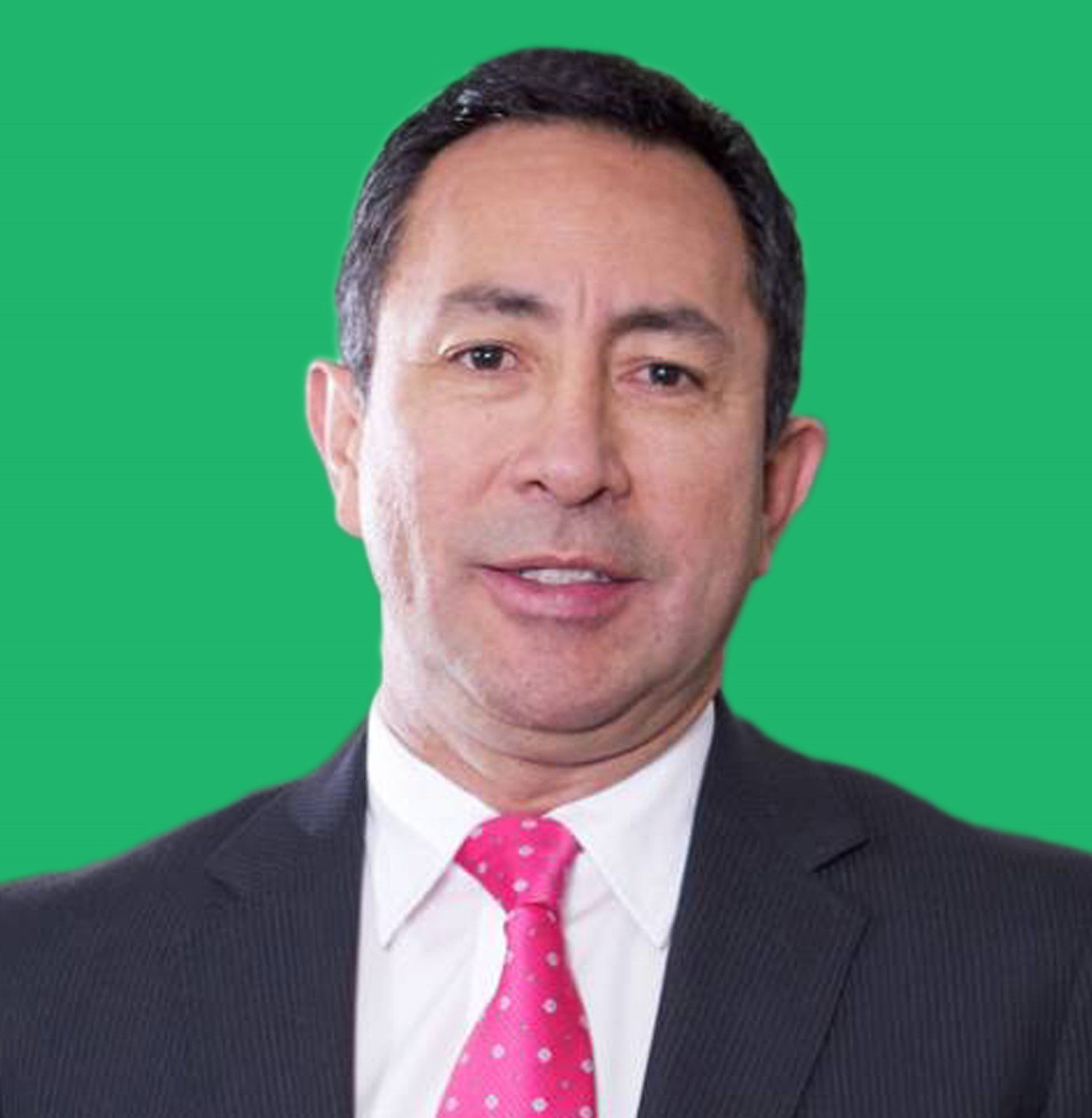
Embattled Ecopetrol CEO Ricardo Roa was appointed to the position by Colombian President Gustavo Petro after managing his political campaign. (photo: Ecopetrol)
Net income for the quarter reached 2.9 trillion COP (approximately $784 million USD), down 7.7% year-over-year, reflecting the combined drag of lower revenues, a sharply elevated effective tax rate of 37.1%, and a one-time charge of 1.2 trillion COP for the impuesto al patrimonio — Colombia’s government-mandated wealth levy on large corporations established to fund post-disaster reconstruction measures. The company is also subject to a 10% income tax surcharge applicable for fiscal year 2026, which is embedded in the reported effective rate. The aggregate tax burden absorbed a disproportionate share of operating improvement relative to prior periods, limiting the flow-through of refining gains to the net income line.
Total hydrocarbon production averaged 725.2 thousand barrels of oil equivalent per day (kboed) in Q1 2026, below the 745 kboed recorded in the 2025 annual average cited by management during the March 2026 general shareholders’ meeting. Domestic crude output represented the largest component at approximately 520 thousand barrels per day (kbd). Ecopetrol’s Permian Basin operations in the United States contributed 91.8 kbd, underscoring the continued strategic importance of the international segment. Gas production continued a multi-year declining trend that poses a medium-term domestic supply challenge; management has sought to address this partially through regasification capacity additions at Puerto Bahía and on the Pacific coast, expected to come online in the second half of 2026 with a combined contribution of up to 430 billion BTU per day.
The refining segment delivered the quarter’s most pronounced operational outperformance. Ecopetrol’s domestic refineries, led by Refinería de Cartagena, processed 417.5 kbd of crude throughput. The integrated refining margin rose to $17.3 USD per barrel, a 60% improvement over the same quarter of 2025, driven by favorable differential pricing between domestic crude benchmarks and refined product values alongside ongoing operational efficiency improvements. The Comisión de Regulación de Energía y Gas (CREG) and the Ministerio de Minas y Energía remain central to the regulatory framework governing downstream margins over the medium term.
The balance sheet carries significant structural and contingent risk items of direct relevance to institutional credit and equity holders. Gross debt stood at 108.1 trillion COP (approximately $29.2 billion USD), representing a leverage ratio of 2.3 times trailing EBITDA — a level that leaves limited room for further deterioration before debt covenants or rating agency thresholds become binding. Ecopetrol holds a receivable of 4.2 trillion COP (approximately $1.14 billion USD) from the Fondo de Estabilización de Precios de los Combustibles (FEPC), a government fuel price stabilization mechanism that represents a claim on the Colombian treasury with timing and recovery risk. A dispute with the Dirección de Impuestos y Aduanas Nacionales (DIAN) over value-added tax assessments totals 12.26 trillion COP (approximately $3.31 billion USD) in aggregate, of which 10.22 trillion COP relates to Ecopetrol’s consolidated operations and 2.04 trillion COP to Refinería de Cartagena. Both cases are under administrative and judicial review; no provisions have been recognized in the financial statements pending resolution, but the potential liability represents a material contingency relative to the company’s quarterly net income.
On the corporate development front, Ecopetrol disclosed three significant transactions during or following the quarter. The company agreed to acquire producing assets from Gran Tierra Energy (NYSE: GTE, TSX: GTE) for $92.4 million USD, adding Colombian upstream production inventory in basins where both companies have operated. In Brazil, Ecopetrol launched a tender offer for shares of Brava Energia (BVMF: BRAV3) at 23 BRL per share, seeking to expand its footprint in that country’s oil and gas sector. And in a transaction that would reshape the mid-size independent landscape in Colombia, the company reached an agreement to acquire Parex Resources (TSX: PXT) for $250 million USD; Parex is a Colombia-focused producer with a complementary asset base across the Llanos and other producing basins. Collectively, the three transactions signal that Ecopetrol’s capital allocation strategy under the current government continues to favor upstream consolidation despite the elevated leverage profile.
The exploration portfolio generated positive news announcements. The Copoazú-1 exploratory well, drilled in Colombia’s Llanos foothills region, was confirmed as a commercial discovery, adding to the domestic reserve base. The Sirius offshore project advanced through the Consulta Previa process — a legally mandated prior consultation with indigenous and Afro-Colombian communities required before development of projects in or near their territories — reaching a milestone in community engagement that brings the project closer to formal development sanction. The Agencia Nacional de Hidrocarburos (ANH) oversees the licensing framework within which both projects operate.
“Ecopetrol is listed on the New York Stock Exchange; we are governed by the strict regulations of US federal agencies. Agencies like OFAC and the SEC could intervene in the company and could even accelerate the payment of financial obligations, which would be extremely grave for Ecopetrol.” — Martín Ravelo, President, Unión Sindical Obrera (USO)
The ISA transmission segment, managed through Ecopetrol’s majority stake in ISA — Interconexión Eléctrica S.A., contributed stable regulated cash flows during the quarter. ISA completed 46 transmission reinforcement works across its Latin American concession portfolio. The segment also completed the acquisition of 100% of IE Madeira in Brazil, consolidating its position in that country’s power grid interconnection infrastructure. ISA further submitted a competitive bid for the Río Bueno–Puerto Montt high-voltage transmission line concession in Chile, demonstrating the group’s appetite for long-duration, inflation-linked infrastructure assets across the Andes region. For institutional investors evaluating Ecopetrol as a blended hydrocarbons-and-infrastructure holding, ISA’s consistent cash generation provides partial diversification from crude price volatility, though it does not insulate the consolidated entity from headline governance risk.
The most consequential variable for the investment thesis over the near term is Ecopetrol’s prolonged governance crisis. At the company’s general shareholders’ meeting on March 27, 2026, held at the Corferias convention center in Bogotá, minority shareholders loudly heckled president Ricardo Roa — with audible shouts of “¡Fuera, fuera!” reverberating through the hall — as debate over his leadership erupted into open confrontation. The meeting approved a dividend of 121 COP per share for minority holders and a 4 trillion COP distribution to the Colombian government as majority shareholder, payable in two installments by June 30, 2026. Despite the financial business conducted, governance overshadowed the proceedings.
Roa faces two separate judicial proceedings. The Fiscalía General de la Nación formally charged him in connection with alleged influence peddling related to the purchase of an apartment in northern Bogotá — charges he has denied. Separately, the Consejo Nacional Electoral (CNE) is examining whether campaign spending limits were violated during President Gustavo Petro’s 2022 presidential campaign, which Roa managed — an investigation that Finance Colombia has covered in detail. Angela Maria Robledo, Chair of the Board of Directors, defended the board’s decision to retain Roa at the March assembly, citing the constitutional presumption of innocence. However, four of the nine board members had already formally recorded their support for his removal at that point, exposing a divided governance structure at a time when strategic and operational decisions require unified leadership.
The Unión Sindical Obrera (USO), which represents approximately one-third of Ecopetrol’s workforce, issued a production strike ultimatum timed to a March 30 board meeting. Martín Ravelo, president of the USO, framed the leadership crisis explicitly in terms of US regulatory risk: “Ecopetrol is listed on the New York Stock Exchange; we are governed by the strict regulations of US federal agencies. Agencies like OFAC and the SEC could intervene in the company and could even accelerate the payment of financial obligations, which would be extremely grave for Ecopetrol.” Ravelo further warned that the company’s outstanding international debt — which he placed at approximately $30 billion USD and which is exacerbated by elevated interest rates — left Ecopetrol exposed to potential covenant triggers or early repayment demands in a scenario where the Securities and Exchange Commission (SEC) or the Office of Foreign Assets Control were to take enforcement action.
Following sustained pressure from the USO, minority shareholders, and opposition political figures, Ecopetrol’s board approved an extended leave of absence for Roa beginning April 7, 2026. Under the arrangement, Roa used accrued vacation through May 27, followed by 30 calendar days of unpaid leave beginning May 28, extending his absence through the end of June — a period encompassing Colombia’s presidential first round on May 31 and a potential runoff on June 21. Juan Carlos Hurtado Parra, the company’s executive vice president of hydrocarbons and designated first alternate to the presidency since November 2025, was appointed acting president. Hurtado Parra holds an MBA in International Oil and Gas and brings more than 28 years of energy sector experience to the acting role, having previously served as vice president of exploration, development, and production.
The political calendar creates a structural transition risk that sits above the operational and financial results as the primary concern for long-duration investors. Colombia’s incoming government, to be inaugurated August 7, 2026, is widely expected to appoint a new Ecopetrol board and select a new company president. That transition may bring material shifts in strategic priorities — including the pace of upstream investment, the approach to the FEPC receivable recovery, the trajectory of energy transition spending, and the capital allocation balance between the hydrocarbons segment and the ISA infrastructure platform. The Ministerio de Hacienda y Crédito Público and the Ministerio de Minas y Energía will both play key roles in establishing the post-election policy framework under which Ecopetrol operates. Institutional investors holding exposure to Ecopetrol via NYSE: EC or BVC: ECOPETROL must weigh Q1’s genuine operational improvement — most visibly in refining margins and EBITDA stability — against a governance and policy transition risk profile that is unlikely to be resolved before the August handover.
Ecopetrol’s Cartagena refinery (photo courtesy Ecopetrol)
Tariff headwinds compress Tecnoglass margins despite record Q1 sales
Tecnoglass, Inc. (NYSE: TGLS) reported first-quarter 2026 revenue of $249.0 million USD, a 12.0% year-over-year increase and a first-quarter record for the Barranquilla, Colombia-based window and architectural glass manufacturer. Despite the top-line growth, net income fell to $31.9 million USD, or $0.71 per diluted share, from $42.2 million USD, or $0.90 per diluted share, in the same period of 2025, as elevated US aluminum costs linked to import tariffs, mandatory minimum wage increases in Colombia, and a strengthening Colombian peso combined to compress gross margins by 540 basis points to 38.5%.
Multi-family and commercial revenues rose 20.4% year-over-year, driven by continued activity across key markets including geographies beyond Florida, which has historically dominated the company’s US revenue mix. Single-family residential revenues were relatively flat on a year-over-year basis, with management attributing the result to the timing of order conversion into revenue rather than underlying demand, noting that order growth in the segment remained positive into April 2026. On a geographic basis, the US accounted for $237.1 million USD, or approximately 95% of total revenues, up 11.6%. Colombia generated $7.5 million USD, up 17.2%, and other international markets contributed $4.4 million USD, up 27.3%.
Gross profit declined to $95.8 million USD from $97.5 million USD in Q1 2025 despite the higher revenue base. The company cited an unfavorable revenue mix driven by a greater proportion of installation-related revenue, higher raw material costs — with US aluminum tariffs representing an incremental headwind of approximately $6.4 million USD in the quarter — higher salary expenses resulting from annual minimum wage adjustments in Colombia, and the effect of a stronger Colombian peso on costs incurred locally. Pricing actions and operating leverage on higher volume partly offset these pressures.
“We see a clear path to fully offsetting the impact of tariffs in 2027, when full-year pricing across both businesses and incremental automation savings are expected to be realized.” — Santiago Giraldo, Chief Financial Officer, Tecnoglass
Selling, general, and administrative expenses rose to $50.9 million USD, or 20.4% of revenues, from $42.5 million USD, or 19.1%, in Q1 2025. The increase reflected higher personnel costs from annual salary adjustments, peso appreciation, and higher transportation and commission costs tied to revenue growth. The period also included a one-time charge of $2.9 million USD related to Colombia’s *impuesto al patrimonio*, a government-imposed wealth tax levied on large corporations to fund measures addressing recent climate-related events in the country.
Adjusted EBITDA — which excludes non-cash foreign exchange gains and losses, the bad-debt provision, non-recurring charges, and equity-method adjustments related to the company’s joint venture in Vidrio Andino with Saint-Gobain (EPA: SGO) — came in at $61.5 million USD, or 24.7% of total revenues, compared to $70.2 million USD, or 31.6%, in Q1 2025. Adjusted net income was $34.6 million USD, or $0.78 per diluted share, versus $43.1 million USD, or $0.92, in the prior-year quarter.
Cash provided by operating activities was $6.7 million USD, a significant decline from $46.9 million USD in Q1 2025, driven in part by a deliberate build-up of US-sourced aluminum inventories — up $34.3 million USD in the quarter — as part of the company’s tariff mitigation strategy. Capital expenditures of $17.3 million USD reflected scheduled payments tied to previously announced capacity and automation projects. During the quarter, Tecnoglass returned $16.5 million USD to shareholders through share repurchases and paid $6.7 million USD in cash dividends. As of May 7, 2026, approximately $92.5 million USD remained available under the current share repurchase program. The company ended the quarter with total liquidity of approximately $425.0 million USD, comprising $91.1 million USD in cash and cash equivalents and more than $330.0 million USD in revolving credit facility availability, against total debt of $200.3 million USD.
The company’s order backlog reached a record $1.36 billion USD at quarter-end, up 19.1% year-over-year, extending multi-family and commercial pipeline visibility into 2027. Tecnoglass cited continued expansion of its dealer network and showroom footprint as supporting geographic diversification and market share gains, with vinyl product lines identified as an incremental growth driver broadening the company’s addressable market.
José Manuel Daes, chief executive officer, commented on the results: “First quarter results were in line with our expectations, with resilient performance across our key metrics reflecting the continued strength of our vertically integrated business model despite a dynamic cost environment. Demand for our product offerings remains strong, as demonstrated by another quarter of record backlog and healthy order activity, with momentum continuing into the second quarter. Our previously announced pricing actions are now in place, and the broad-based nature of industry cost pressures supports our confidence in executing these increases while preserving our competitive positioning.”
Christian Daes, chief operating officer, addressed the tariff response and the company’s assessment of a potential US manufacturing presence. “Our pricing initiatives and cost mitigation efforts are well underway, including logistics improvements, further automation across our operations, and ongoing supply chain optimization,” he said. “We are also advancing our assessment of a proposed US manufacturing initiative, with a well-located site identified and significant state and local incentives secured that strengthen the project’s potential economics if we decide to move forward based on market demand.”
Santiago Giraldo, chief financial officer, reaffirmed full-year 2026 guidance and outlined the company’s tariff offset timeline. “Based on our strong execution to start the year, we are reiterating our full year revenue outlook in the range of $1.06 billion to $1.13 billion USD and Adjusted EBITDA outlook in the range of $225 million to $245 million USD,” Giraldo said. “This reflects the impact of the recently implemented 10% tariff on finished aluminum window imports as previously disclosed, which is expected to be partly offset in 2026 through pricing actions effective on orders from early May forward, with additional efficiency initiatives from logistics optimization and automation underway and expected to begin contributing benefits by year end. We see a clear path to fully offsetting the impact of tariffs in 2027, when full-year pricing across both businesses and incremental automation savings are expected to be realized.”
On the corporate structure front, Tecnoglass’ board of directors has approved a plan to redomicile the company from the Cayman Islands to the United States, subject to shareholder approval. If approved, the redomiciliation is expected to be completed during Q2 2026. The company stated that the move is intended to simplify its organizational and regulatory structure, improve the tax efficiency of dividend distributions, and expand its potential investor base to include funds and accounts limited to US-domiciled securities. Tecnoglass will retain its Miami, Florida headquarters following the change.
Separately, the company is conducting a feasibility study for a potential new US manufacturing facility. A site meeting project specifications has been identified and substantial state and local tax credits have been secured. The proposed facility is described as highly automated and intended to support future growth while also improving lead times, reducing transportation costs for certain markets, enhancing supply chain efficiency, and enabling the company to compete for Buy America-eligible projects and rapid-turnaround contracts. Tecnoglass expects to complete the purchase of land for the potential facility during Q2 2026, at an estimated cost of $20 million to $25 million USD to be financed through available credit facilities. The company noted that the land purchase does not constitute a commitment to proceed with construction, which would occur in phases contingent on demand, market conditions, and return profiles. The company’s 5.8-million-square-foot vertically integrated manufacturing complex in Barranquilla, Colombia, would continue to serve as its primary production base.
Above photo: Tecnoglass facilities in Barranquilla
 Empleobilingue.com

- Director/a de operaciones para hotel, restaurante y discoteca 1626320364.60 - Medellín, Medellin, Antioquia, Colombia
- Coordinador/a de calidad para La Unión 1626483143.1 - La Unión, Antioquia, Colombia
- Desarrollador fullstack - Bogotá, Bogota, Colombia
- Technical Analyst - Remote
- PIM Administrator - Ecommerce - Remote (Bogotá, Bogota, Colombia)
- Auxiliar de gestión humana y bienestar para Girardota 1626060072.28 - Girardota, Antioquia, Colombia
- Marketing Strategist
- Trainer Manager - Bogotá, Bogota, Colombia
- Tolemaida UH- 60 Inspector - Bogotá, Bogota, Colombia
- Virtual Assistant - Team Lead - Remote
Contact Us

