

















Colombia did something unprecedented last night. By a hair-thin margin, it elected a political outsider with no political party of his own, a man who came from completely outside the traditional political power bases. No doubt Abelardo de la Espriella had support; powerful figures and moneyed interests were behind him, but that is not a criticism or a conspiracy theory. The business community, from small shopkeepers to tycoons, has been fed up with the last four years of improvisation and worsening security.
Barring any post-election drama, President-elect de la Espriella will take over a very divided country, and if he is smart, he will understand that he was the first choice of only a minority of the electorate. He will have a choice. He can govern for the small hard core, or he can be a conciliator.
Colombia has a nasty history of political violence, going back to the country’s founding. The person most Colombians see as the founder of the nation, Colombia’s George Washington figure, Simón Bolívar, barely escaped with his life during what was known as the Septembrine Conspiracy, which was born out of a conflict in visions for the new country. For most of the country’s history, the hostility between the Conservatives and the Liberals, the two primary political parties for most of Colombia’s history, manifested itself with bullets every bit as much as with ballots. Even though Colombia has, for almost all of its history, been a real democracy; the country has had only one military strongman dictator, and even he tried to be something of a reformer; violence has always had a hand in politics.
“With less than half the vote, the only mandate he holds is for an inclusive, conciliatory approach.” — Loren Moss, Finance Colombia
I once was at a talk in Medellín, years ago, where the businessman Chris Daes was asked, “When will Colombia advance?” “When we learn to stop hating each other,” he said.
Last night, after the election results were announced, police stations in Kennedy and Bosa, low-income neighborhoods in the southwest of Bogotá, were attacked. Why? The police hadn’t done anything. Riot police were called out to Puerto Rellena in Cali after roads were blocked by Cepeda supporters. In Medellín, some supporters of the president-elect turned up with bats and clubs outside Plaza Mayor, one of the city’s main public squares, probably supporters of de la Espriella, and let me emphasize that this is my guess, but no violence was reported.
Outgoing President Gustavo Petro called for calm, but also complained about US President Donald Trump’s open support of de la Espriella, forgetting that just months ago he was in the US and called for the US military to turn against its own government. Petro and the losing candidate, Senator Iván Cepeda, have said that while they acknowledge the preliminary vote count, they will not concede until an official final count, and they are calling for a scrutiny of the ballots.
So what happened here?
Three weeks ago, Colombia held the first round of presidential voting. The early favorite, Paloma Valencia of the right-wing establishment Centro Democrático party, backed by former president Álvaro Uribe, came in third, behind the right-wing outsider Abelardo de la Espriella and the ally of outgoing president Gustavo Petro, Senator Iván Cepeda of the leftist Pacto Histórico (Historic Pact). In Colombia there is an open first round, which can field many candidates, but the top two vote-getters advance to a final round unless one candidate clears 50% plus one.
Most people thought Cepeda would come in first with a unified left, but de la Espriella came in first, Cepeda second, and Valencia third. My take on this is very clear: Colombians were saying that they reject Gustavo Petro’s collectivist socialist experiment, but that they also reject Álvaro Uribe as the flag-bearer for the right. A sort of “we don’t like them, but we don’t like you either.”
So what happened in the past three weeks? Exactly what I expected. The outgoing president’s political machine moved to mass mobilization: get the buses out, get the affinity groups, such as indigenous leaders and unions, to mobilize. Something interesting happened: a government worker I know in immigration was told, and convinced, that she would lose her job if de la Espriella won. Her union told her this, of course. Cepeda and Petro’s movement has counted on its ability to mobilize people through group affiliation, working through organized structures to get out the vote. It was very effective, but not quite enough.
On the other hand, the split vote between Paloma Valencia and Abelardo de la Espriella came together, sort of, but not in a coordinated fashion. There was no real way to mobilize lukewarm people who were not already behind one of those two candidates. The business community had largely already opposed the Petro-Cepeda project, but it does not have the same mobilization machinery in place.
There will be time for a lot more journalism on this, but I want to get this initial reporting out quickly. Beyond that dynamic, what other factors came into play? Several:
- The outgoing president ran his administration like a game of thrones, or some kind of reality show. On average, he was bringing in a new cabinet minister every three weeks. It was nonstop drama and intrigue, and Cepeda’s message of “stay the course” ran up against that.
- Then there was the treatment of Vice President Francia Márquez. Petro used her to try to win the Afro-Colombian vote, but once they were elected, they tried to sideline her and treat her as a token. She rebelled against that and has called out her own administration for its corruption and racism. Over the past four years, Márquez has actually seemed more serious than Petro, who has a habit of crazy talk. By picking Aída Quilcué, Cepeda made it look like more of the same, and, fair or not, it made Quilcué look like a token candidate. Maybe it isn’t fair, but you can blame the Petro administration for creating that environment.
- Uribe’s first candidate choice, Senator Miguel Uribe Turbay (no relation), was assassinated on the orders of, according to Gustavo Petro’s own attorney general, the Segunda Marquetalia, a FARC dissident structure co-founded by Jesús Santrich, who was on his way to being extradited to the United States until that was allegedly blocked by Iván Cepeda’s efforts. Whether or not it is fair, for a lot of people in Colombia this is emblematic of Cepeda’s nurturing approach to the guerrilla groups, which have been growing stronger under the Pacto Histórico’s dialogue-first approach.
- The current administration is stained with several corruption scandals: the UNGRD scandal, in which money meant to bring water to poor, isolated families in the deserts of La Guajira was robbed for a political bribery fund; the ongoing scandals around Ricardo Roa and state petroleum company Ecopetrol (NYSE: EC), where Roa has been charged over alleged campaign-spending violations; the fiasco over the printing of Colombian passports; and a move that really angered the paisas (people of Antioquia and Medellín), the appointment of indicted former mayor Daniel Quintero to a government position supervising the finances of the country’s health system. Here you have a man with something like 40 counts of indictment for corruption, though let me be clear, he has not been convicted yet, and you appoint him to supervise the finances of the country’s primary health system? Usually when people are facing charges, they say something like “I am innocent, but I will resign to focus on clearing my name.” This one went full steam ahead. That undoubtedly cost votes among those who prioritize clean government.
- Cepeda’s running mate, Aída Quilcué, who never went to college, accused graduates of Colombia’s best universities of having “only learned to steal the people’s money.” She tried to walk that back after her statement blew up, but the damage was done. She was clearly attacking people who attended private universities in Colombia, many of which have no elite pretensions and specialize in educating low-income students.
What do I think will happen?
Assuming the vote count is not overturned, de la Espriella will take over the executive branch with no political machinery in Congress, so he will have to negotiate to get anything done. This is not a situation like El Salvador or Venezuela, where you come in and take over the whole government. To its credit, Colombia has strong institutions. Had Cepeda won, he would have come in with the largest bloc of legislators in Congress and might have found it relatively easy to push through his agenda. With de la Espriella, not so much, and I think this is a good thing. Personally, I like divided government as a concept, because it encourages moderation, consensus, and negotiation.
I expect the guerrilla groups to try to seize the initiative, and I expect their violence to increase in the short term as they try to assert their authority. Longer term, I think they are worse off, and they know the military will be after them soon, so they will make what hay they can while the sun shines. Expect them to try to “punish” the country for electing the candidate most hostile to them, a pattern that has already mocked the outgoing government’s “Total Peace” strategy.
Outgoing President Gustavo Petro will not shut up once out of office. He will become a full-time presence on social media and make as much noise as possible in opposition to the incoming administration. Unlike former President Juan Manuel Santos, Petro will be more like Álvaro Uribe, who has remained addicted to the spotlight, to influence, and to the thrill of power. In places where there is a tradition of former presidents ceding the spotlight, he won’t follow it. Petro will take every opportunity to travel around the world and throughout Colombia to speak, as he is entitled to, and to fashion for himself the role of dear father of the oppressed.
Petro and Cepeda and their movement will, if not explicitly then tacitly, reactivate the primera línea (front line), the aggressive activist youth street movement, not a formal organization, that mobilizes, sometimes peacefully and sometimes violently, against whoever opposes the Pacto Histórico. Last night we already saw violence in the low-income areas of Bogotá, and we saw riot police called out in Cali. It is not always that someone gives an order to go out and protest, even though there have been accusations of exactly that, for example against Petro ally and senator Gustavo Bolívar.
Colombian law says the runner-up in the presidential election gets a seat in the Senate, so Cepeda will return to the Senate, where he will lead the opposition. He already has a bloc of some 30 legislators behind him and is a Senate veteran, so he will be a very powerful voice.
What do I hope will happen?
I hope de la Espriella will have a plan to lift up the poor and the marginalized, and Colombia has plenty. He says he will govern for all the people, and I hope so. This was a very polarized election. People who feel excluded from opportunity largely voted for Cepeda and now feel they have lost. De la Espriella has a window of opportunity to do what he said in his election-night speech and govern for all Colombians. I hope he understands that, with less than 50% of the vote, the only mandate he has is for an inclusive, conciliatory approach.
His administration is inheriting a fiscal mess, as the current government has run up the debt. I hope that, along with Vice President-elect José Manuel Restrepo, they can properly manage this and navigate Colombia’s economy through rough times. Because the government will need to find dollars to make these debt payments, the peso will eventually fall, unless the US does something stupid to wreck its own currency. The opposition will try to blame the new administration for this, even though they planted the seeds for these fiscal weeds that will soon sprout.
I hope Colombia becomes safer for Colombians, and that the guerrilla groups, the mafias, and the drug traffickers shrink. It may be utopian to think they will be eliminated in four years, but my hope is that Colombia becomes safer, especially for poor Colombians, who are by far the primary victims of these groups. In recent years, unlike in the old days, the rich have been largely insulated from the depredations of guerrillas and extortionists, but the poor continue to suffer. So I hope de la Espriella goes after these groups, but in a way that respects and protects human rights, something Uribe failed to do during his time in power, leading to many innocent people becoming victims not just of the guerrillas, but of state violence. I sincerely hope, and will be watching closely, that the state becomes a protector of the poor rather than a victimizer of them. Many poor Colombians suffered under Uribe’s watch, and many continue to suffer under the current Petro government, which has simply not protected them from the depredations of groups like the ELN, the Clan del Golfo, and the FARC dissidents.
People to watch
- Armando Benedetti. The interior minister has been Petro’s consigliere, but he also seems to hold some kind of strange power over Petro. The US government, or in other words Donald Trump, placed him on the Clinton List, which will complicate his life personally and professionally once he is out of office.
- Daniel Quintero. The former Medellín mayor is already battling serious corruption charges, and while he found a friend in Gustavo Petro, that protection will no longer be there. There will be no place for him in the incoming government, and he still has to face all these charges. With no power to protect his allies, many of them also indicted, will they turn on him and spill the frijoles?
- Álvaro Uribe. No doubt pleased, he didn’t get his first choice, which was his own candidate, but he and de la Espriella clearly share a fondness, and their families go way back. De la Espriella’s father was a Liberal Party supporter of Uribe, and Uribe rewarded him with a juicy notary appointment decades ago.
A win for the business sector
Objectively, this is a win for the business sector. Business groups like Fenalco and ANDI have expressed their support for de la Espriella, and he has expressed his explicit support for the petroleum and mining sectors. I just don’t see any major businesses or trade groups that came out in support of Cepeda. Certainly Cepeda and Petro have support from individual businesspeople, but as organized industry groups, I just haven’t seen it anywhere.
Anecdotes
The polls closed barely twelve hours ago, and overnight I tried to gather the opinions of a few people. This is not a scientific poll, and to be clear and fair, Finance Colombia is a business-oriented publication, and I simply know a lot more businesspeople and entrepreneurs than I know community organizers and militant activists. So this is not any kind of objective sample; it is simply personal feedback gathered the very night of the election:
- A member of the Wayúu community in La Guajira told me they went for Cepeda, so they are not pleased.
- In a split family, both spouses professionals from humble backgrounds, the husband, a labor lawyer who contracts with the government, went for Cepeda, but his wife, a middle manager at a bank, went for de la Espriella.
- A psychologist who originally voted for Sergio Fajardo in the first round told me she voted blank, because she saw both candidates as extremists, a left-wing extremist versus a right-wing extremist, and she was disgusted at her country’s polarization.
- A police officer commented to me, “Better this loco than the other loco,” meaning he would take de la Espriella but considered both of them crazy. I think this is a common sentiment; it was not an endorsement of one so much as thinking the other was the worse option.
- A domestic worker told me she voted for de la Espriella, hoping he will take action against rising crime and violence.
- There were pro-Cepeda protests and some street violence in the mostly poor southwest of Bogotá, but there were celebrations in parts of the north of the city, and in the high-income El Poblado area of Medellín the celebrations looked like Colombia had just won the World Cup. Even where I live, in a rural area about an hour from Medellín, you could hear spontaneous car parades and firecrackers all through the night.
- Small businesspeople and Colombian investors I know have, to a person, been celebrating.
The most important takeaway, and something Colombians should be proud of, is that they have just held a peaceful, free, and fair election. Not every country can do that. A lot of hard work remains, and a lot can still go wrong. Count on Finance Colombia to bring you timely updates and analysis.
Abelardo de la Espriella won Colombia’s June 21 presidential runoff, narrowly defeating leftist senator Iván Cepeda in one of the closest contests in the country’s history. According to the preliminary count (preconteo) published by the Registraduría Nacional del Estado Civil, with virtually all polling tables reported the conservative lawyer took 12,959,542 votes (49.66 percent) to Cepeda’s 12,708,712 (48.70 percent) — a margin of about 250,800 votes, or 0.96 percent — on turnout of roughly 63.6 percent. The Registraduría’s preliminary count is not legally binding, and the official judicial count (escrutinio) that certifies the result was still under way; Cepeda himself noted that the preconteo “is not yet official or binding.”
The geography of the vote split along familiar regional lines. De la Espriella ran strongest in the Andean interior and the eastern plains, winning the departments of Antioquia, Santander, Cundinamarca, Meta, Casanare and Arauca, and posting lopsided margins in cities such as Medellín (819,285 to 421,839), Cúcuta (306,536 to 76,069) and Bucaramanga (229,851 to 117,895). Cepeda carried Bogotá (2,235,514 to 1,933,243), the Pacific and southern departments of Chocó, Cauca, Nariño, Caquetá and Putumayo, and the major Caribbean coastal cities — including Cali, Cartagena, Santa Marta and Barranquilla (375,178 to 309,652), the very city where de la Espriella delivered his victory speech.
Speaking before supporters at Barranquilla’s “Ventana al Mundo,” the president-elect used that address to pivot quickly from the language of the campaign to the language of governing — framing his win less as a partisan triumph than as a national mandate, and laying down early markers on security, the economy, and Colombia’s posture toward the rest of the world.
“This victory does not belong to one man, it does not belong to a party, it does not belong to a region,” he told the crowd. “This victory belongs to all of Colombia.”
A message of conciliation
The most insistent theme of the speech was reconciliation. De la Espriella repeatedly addressed Colombians who did not vote for him, presenting unity as a constitutional obligation rather than a courtesy.
“I am going to govern for all Colombians — for those who voted for me and for those who chose another candidate,” he said. “There will be no victors and no vanquished, there will be no retaliation, there will be no persecution, because in a democracy there are no irreconcilable enemies; there are compatriots who think differently, who think differently, but who have exactly the same rights as we do.”
Citing Article 188 of the Constitution, which holds that the president symbolizes national unity, he said he would assume that role “as a sacred mandate.” To those who opposed him, he added: “This is your victory too, because democracy works precisely when the people decide freely… Your rights, even if you did not vote for me, will be respected. Your opinions will be heard. You will never have to fear for thinking differently.”
He also pledged to earn trust through performance: “My purpose will be to earn your trust with results, not with speeches; with deeds and works, not with promises; with consistency and not with excuses.”
Inclusion across regions and groups
De la Espriella wove a deliberately inclusive geography through the speech, invoking Colombia’s regions and communities one by one. He described a homeland “of all religions… of all ancestral communities, of all young people, of all grandparents, of all entrepreneurs, of all journalists, of all peasant farmers” — “one homeland of all, for all, and built by all.”
In a passage that named nearly every corner of the country, he reached explicitly toward historically peripheral regions: “We are all the lullaby of the Pacific. We are all the grandeur of the Andes. We are all the strength and magic of the Caribbean. We are all the vastness of the plains… We are all the majesty of the Orinoco region… We are all the life of the Amazon. We are all the beauty of our island region.”
His closing call to action was addressed to “the young, the peasant farmers, the women, the business owners, the workers, the soldiers, the police, the mothers, the grandparents, Colombians in general, inside and outside our land” — a list that paired rural and working-class Colombians with the diaspora, whom he singled out elsewhere as “decisive” to the result.
“I am going to govern for all Colombians — for those who voted for me and for those who chose another candidate. There will be no victors and no vanquished.” – Abelardo de la Espriella, president-elect
Crime, security, and the rule of law
The speech’s hardest edges were reserved for crime and security — the area where de la Espriella signaled the sharpest break with the outgoing government. He vowed to restore state authority across the whole of the national territory.
“There will be no zones off-limits to the State. There will be no criminals who are immune and untouchable. There will be no organizations above the Constitution and the law,” he said. Addressing “the drug traffickers, the terrorists, the kidnappers, the extortionists, the corrupt who steal the people’s resources,” he declared: “I notify you tonight that Colombia once again has a government and a State.”
Crucially for the rule-of-law framing, he placed that crackdown inside constitutional limits: offenders “will be pursued without respite within the framework of the Constitution and the laws of the Republic… Because true peace is not born of impunity. True peace is born of justice.” He promised the armed forces and police a president who would back and protect them from his August 7 inauguration onward, arguing that “there is no liberty without security.”
A plan of action built on institutional restraint
On governance, de la Espriella presented himself as “a man formed in the law, respectful of the independence of the branches of power, of the Congress and of the high courts,” and promised “an absolutely democratic government and a guarantor of liberty and of our institutions.”
He sketched a “new order” defined by self-imposed limits on executive power: a Congress “able to legislate without pressure from the government,” mayors and governors steering their territories “with the national government as an ally,” and a judicial branch “respected and its decisions obeyed without hesitation, in its full autonomy.” For investors accustomed to weighing institutional stability, the emphasis on predictable, rules-based government was among the speech’s clearest signals.
The economy: recovery without “magic solutions”
De la Espriella was candid about the fiscal inheritance, describing “a nation that is divided, battered, in debt” and one “that demands reconstruction.” He pointedly declined to over-promise: “I am not going to promise miracles, I am not going to deceive the people with magic solutions. Colombia’s national recovery will demand work, sacrifice, discipline, and perseverance.”
He named the health system as a specific priority — “a health system that does not let our people die” — and tied anti-corruption to economic credibility, pledging to “govern with zero corruption, with no room for petty politics, to become again what we ought to be: a respected nation.” The broader economic vision he had invoked earlier was one of “a nation of property owners, of opportunities, of progress for all.”
Foreign relations: a values-based realignment
De la Espriella’s foreign-policy signals pointed toward a clear realignment with democratic and Western partners. “Colombia is once again a firm, reliable, and respectable democracy,” he said. “We will once again take our place among the free nations.”
He drew an explicit line on partnerships: “We are going to strengthen our relations with all the countries that respect democracy. We will not have relations with countries that do not respect liberty and the rule of law.” Colombia, he said, would be “a serious partner, a loyal ally, and a firm voice in defense of liberty on this continent” — language that suggests warmer ties with the United States and like-minded democracies and a cooler stance toward authoritarian-leaning governments in the region.
A pro-growth agenda
For a business audience, the speech bundled several reassuring signals: respect for the independence of Congress and the courts, an explicit anti-corruption and rule-of-law commitment, a security agenda framed as restoring state authority, sober acknowledgment of the debt burden rather than populist spending promises, and a foreign policy oriented toward stable democratic partners. Set against the conciliatory tone toward opponents, the overall message was one of continuity of institutions paired with a change of direction on security and governance.
De la Espriella closed on the note that ran through the address — unity as the country’s path forward: “Today a single Colombia is born, determined to be greater, more joyful, more prosperous, more secure.”
Quotations from the president-elect are drawn from his victory address as delivered in Barranquilla and translated from the original Spanish. Vote totals reflect the Registraduría Nacional’s preliminary count (preconteo) as of the morning of June 22, 2026, and remained subject to the official escrutinio.
Headline photo: Colombian President Elect Abelardo de la Espriella (left) and Vice President Elect José Manuel Restrepo (photo: Twitter screen capture)
Petro and Cepeda suspended the initiative as they seek to win centrist voters ahead of the runoff
The citizen committee promoting the convening of a National Constituent Assembly in Colombia announced the suspension of its signature-gathering campaign and the withdrawal of the initiative, in a move that comes during the final stretch of the presidential race and could benefit ruling-party candidate Iván Cepeda’s efforts to attract centrist voters ahead of the June 21 runoff election.
The decision was announced June 4 in a statement signed by Armando Wouriyu Valbuena, spokesperson for the committee leading the initiative, who said the measure resulted from a “process of collective reflection on the national situation and the political moment the country is experiencing.”
President Gustavo Petro publicly supported the decision.
“I support the decision made by the citizen committee for the National Constituent Assembly to suspend the signature-gathering process,” Petro wrote on X.
The president added that “the constituent assembly had no objective other than improving the living conditions of the Colombian people and finally guaranteeing their fundamental rights.”
The proposal had initially been included among political initiatives associated with the ruling coalition and appeared in preliminary versions of the government platform of Iván Cepeda, the Pacto Histórico candidate who will face far-right contender Abelardo de la Espriella in the presidential runoff.
The decision to withdraw the initiative comes as Cepeda’s campaign seeks to expand its electoral support among moderate and independent voters, many of whom have viewed the prospect of constitutional reform with caution and, in some cases, concern.
A recurring idea in Colombian politics
Although the proposal has recently been associated with President Petro and left-wing sectors, the idea of convening a Constituent Assembly has been supported at different times by political leaders from nearly every corner of Colombia’s political spectrum.
Petro himself promoted the idea during the 2022 presidential campaign but later moderated his position after signing a public commitment encouraged by political figures including Claudia López and Antanas Mockus. In that agreement, he pledged not to pursue constitutional changes of that nature during his presidency.
The event became known nationally because Petro signed the so-called “12 Commandments” on a marble plaque, a symbolic gesture that helped build a broad political consensus and secure the support needed to win the presidency.
The debate over constitutional reform, however, predates Petro by decades.
One of the most notable examples involves former President Álvaro Uribe, who today ranks among the most vocal opponents of a constituent assembly promoted by the current administration.
During his presidency, a constitutional amendment allowed immediate presidential reelection. Later, after Colombia’s Constitutional Court and various political sectors blocked some of his initiatives, Uribe proposed a Constituent Assembly focused on reforming the judicial branch.
In 2012, during a forum in Washington, he argued that a constituent assembly limited to judicial reform could respond to public demands at the time.
Three years later, in 2015, and now from the opposition, Uribe again proposed a constituent assembly restricted to reviewing the peace accords negotiated between the government of Juan Manuel Santos and the Revolutionary Armed Forces of Colombia, or FARC, with the aim of modifying aspects of the process.
In 2020, several lawmakers aligned with Uribismo, including Paloma Valencia, who recently finished third in the first round of the presidential election, again proposed a constituent assembly to reform the judicial system and review aspects related to the Special Jurisdiction for Peace, or JEP.
The proposal came after Colombia’s Supreme Court ordered Uribe’s preventive detention as part of an investigation into alleged witness tampering, a case that originated from complaints filed by current presidential candidate Iván Cepeda.
De la Espriella also supported the idea in the past
The concept of a constituent assembly has not been foreign to Abelardo de la Espriella, the current far-right presidential candidate.
During a 2017 interview on the local program Semblanzas con Toño Sánchez Jr., De la Espriella defended convening a Constituent Assembly to reform sectors such as justice and health care, while redefining structural aspects of the Colombian state.
“What must be promoted is the elimination of that (…) through a new strong-handed government that repeals that farce by decree and convenes, through the most expeditious legal means, a Constituent Assembly that reforms justice, reforms health care and lays the foundations for a more equitable system for those who are less favored within society,” he said, referring to the elections held that year, which were ultimately won by Iván Duque of the Centro Democrático party.
During the 2026 presidential campaign, however, De la Espriella adopted a completely different position and declared himself firmly opposed to a constituent assembly, associating the proposal with the political left and with Cepeda, his opponent in the runoff.
At a campaign-closing rally in Medellín before the first round of voting, he argued that Colombia’s Constitution should be defended “with tooth and nail” and questioned any attempt to modify it through a constituent assembly promoted by the government.
Why does a constituent assembly remain so controversial?
The controversy surrounding a Constituent Assembly is not solely a matter of who proposes it. It is also linked to the place occupied by the 1991 Constitution in Colombia’s political history.
The current Constitution emerged from a citizen movement known as the “Seventh Ballot,” (Séptima Papeleta) a mobilization that brought together people from different ideological backgrounds to replace the Constitution of 1886.
The current Constitution emerged from a citizen movement known as the “Seventh Ballot,” (Séptima Papeleta) a mobilization that brought together people from different ideological backgrounds to replace the Constitution of 1886.
For many Colombians, the process represents one of the most important moments of democratic consensus in the country’s recent history.
As a result, any effort to amend it tends to generate strong reactions, both in support and in opposition.
In addition, political leaders from different ideological traditions have often turned to the idea of a constituent assembly during periods of high popularity or when they encounter institutional obstacles to advancing particular reforms. This has contributed to a perception that the mechanism can be used to alter rules that certain political sectors find inconvenient.
The intense political polarization that has characterized Colombia since the early 2000s has also complicated efforts to build broad consensus around constitutional reform. The first round of the presidential election once again reflected that division, with less than a 3% gap separating the two leading candidates.
A debate likely to continue
Although the initiative has been withdrawn for now, the debate is far from over.
Colombian law establishes a complex procedure for convening a Constituent Assembly, requiring citizen participation, congressional involvement and approval by a significant number of voters at the ballot box. Under the current electoral roll, that threshold would exceed 12 million votes.
In a deeply fragmented political environment, achieving that level of consensus appears difficult in the short term. Yet recent history demonstrates that the idea periodically resurfaces across the ideological spectrum whenever political conditions change.
For that reason, even after the suspension of the current signature-gathering effort, discussion of a possible constitutional reform is likely to remain part of Colombia’s political debate, regardless of who wins the presidency on June 21 and who ultimately leads the opposition to the next government.
Utility says Hidroituango will help Colombia weather expected drought conditions while reservoir expansion progresses
Medellín-based utility EPM is urging Colombians to reduce electricity and water consumption as forecasts point to a severe El Niño weather phenomenon that could affect the country through early 2027.
In two recent statements, EPM General Manager John Maya Salazar warned that the probability of El Niño exceeds 90% and said both the intensity and duration of the event could place pressure on Colombia’s water reservoirs and hydroelectric generation system.
El Niño is a naturally occurring climate pattern marked by the warming of surface waters in the central and eastern Pacific Ocean. This shift in ocean temperatures can disrupt normal weather systems around the world. In Colombia, El Niño typically reduces rainfall and leads to drier-than-average conditions that can strain reservoirs and reduce the country’s ability to generate hydroelectric power.
“We have a very high probability, more than 90%, of an El Niño phenomenon, and a very high probability that it will be severe both in intensity and duration,” – John Maya Salazar
Maya called on Colombians to adopt more responsible consumption habits, emphasizing that water and electricity rationing can only be avoided if households and businesses reduce unnecessary consumption.
“The rational use of energy and water is the only way to avoid rationing,” he said.

Image courtesy EPM – (translated by Finance Colombia)
Recent reports from IDEAM, Colombia’s national weather agency, and XM, the national grid operator, show that reservoir levels feeding the country’s hydroelectric system have dropped significantly as Colombia enters what forecasters are calling a potentially severe El Niño cycle. Authorities say that if dry conditions continue, they could put extra pressure on electricity generation and water supplies in several regions.
Hydroelectric generation supplies the majority of Colombia’s electricity, making reservoir management a critical issue during periods of below-average rainfall.
Maya also addressed EPM’s plans to increase the operating level of the Hidroituango reservoir to its design elevation of 420 meters above sea level.
According to Maya, EPM’s original environmental license permits operation at the 420-meter level. However, restrictions imposed following the project’s contingency events limited operations to a lower elevation. With those restrictions lifted, EPM is now carrying out the environmental work required before gradually increasing the reservoir level.
“We are complying with regulations and environmental requirements,” Maya said, as he rejects suggestions that EPM would raise the reservoir before completing required vegetation removal and forestry management activities.
The company expects that work to be completed by September, after which reservoir levels can begin increasing in accordance with environmental regulations.
Raising the reservoir level would give the system more room to maneuver when dry conditions hit during El Niño, which would help support power generation if rainfall stays low.
Maya is an electrical engineer with nearly four decades of professional experience who assumed leadership of EPM on January 1, 2024. He previously served as Executive Vice President of Projects and Engineering and Executive Vice President of Business Management at the Medellín-based utility.
The combination of conservation efforts and increased reservoir capacity forms part of EPM’s strategy to maintain energy security during what could become one of Colombia’s most challenging climate periods in recent years.
Above photo: EPM General Manager John Maya Salazar shares the utility’s recommendations on water and electricity consumption.. (Photo: EPM )
Donald Trump, having waited to see which way the land lies after Round One, has unsurprisingly thrown his support behind Tiger Abelardo.
Before we start, I will caveat this short note with my belief that neither run-off candidate on June 21 will prove a solution to Colombia’s issues. The talk of the cafes and bars is that these are the weakest second-round choices in recent memory, and we’ve had some poor ones. Their failings are numerous and are perhaps highlighted by the zealots on both sides of this uber-polarized situation, competing ever harder to throw mud at the other side. Some of the TV advertising is frankly nauseating.
This is more a quick chat about where Donald Trump’s own personal moral compass lies. We already saw with the pardon he granted to convicted former Honduran President Hernández, who was serving 45 years for drug and weapons offenses, that he is more than capable of looking past his own self-proclaimed values on drugs if the offender shares the same political persuasion.
Abelardo will, of course, be delighted that his hero and role model has backed him. He appears to share a scary number of his values and numerous other positions, including withdrawal from institutions such as the United Nations. However, others wonder if it might prove as much of a hindrance as a help, but that remains to be seen on June 21.
The irony (carried over from Hernández) lies in Trump’s support of Abelardo, a week after the extradition to the US of Alex Saab, a mega drug lord allied to Nicolás Maduro, to finally meet his judgment day. Saab is a very inconvenient truth for Abelardo, as he was the man who mounted a vociferous defense of one of Colombia’s most notorious criminals – and Saab is far from the only drug lord he has defended. Of course, there is the argument that everyone deserves a just defense, especially if they have bottomless riches; again, that is a decision for one’s personal conscience.
Finally, last week, we had Washington’s War Ministry announce the sinking of yet another speedboat allegedly laden with drugs, although as yet there has been no proof despite 60-plus such attacks at the cost of more than 200 lives. Again, we are reminded of Washington’s incoherent attitude toward drug cartels – an attitude heavily dependent on one’s political beliefs.
God Bless The Donald.
Steel, plastics and petrochemicals among sectors targeted under proposed trade policy
Colombia’s Ministry of Commerce, Industry and Tourism (Ministerio de Comercio, Industria y Turismo, MinCIT) has published a draft decree introducing what it calls “smart tariffs,” a proposed system that would adjust import duties based on the level of domestic production within each industrial chain.
The proposal would replace Colombia’s traditional structure of broadly applied tariff rates, which are largely shaped by World Trade Organization commitments and multiple free trade agreements, with a more segmented approach tied to supply-chain conditions inside the country. In practice, tariff levels would vary depending on how much of each industrial chain is already supplied by domestic producers.
Colombia’s current tariff regime is relatively open by regional standards, with differentiated rates shaped by trade agreements and product classifications, but without a systematic mechanism linking duties to domestic production capacity. The proposed framework represents a change toward a more interventionist industrial policy approach, where tariffs are used not only for trade regulation but also for production steering.
The draft applies to a list of products where domestic production already exists. This includes steel, wood, plastics, metalworking, and petrochemicals. Under the proposal, higher tariff levels would apply to finished goods in sectors where Colombia has established industrial capacity and inputs essential to production chains could face reduced or zero tariffs.
For example, intermediate goods or components in industries where Colombia has limited production capacity could be exempted if they are considered essential for manufacturing export-oriented goods, particularly in textiles and apparel.
The Ministry said the framework was developed through technical discussions with industry associations and private-sector representatives, who provided input on supply-chain constraints, production bottlenecks, and competitiveness challenges across different sectors.
“Smart tariffs do not start from a uniform logic toward international trade, but from a reading of the country’s productive capacities and the needs of each value chain,” – Diana Morales Rojas, Minister of Commerce, Industry and Tourism.
Rising Imports and Industrial Policy Pressure
The proposal comes at a time when Colombia has seen growth in imports of manufactured goods, especially in industrial inputs and finished consumer products. Data shared by the National Administrative Department of Statistics (DANE) shows that imports of manufactured goods have remained important in Colombia’s trade balance. This reflects both domestic demand and limited local production in certain value chains.
Industry Perspective
The National Business Association of Colombia (ANDI) has previously warned that any tariff redesign must balance industrial protection with cost competitiveness for downstream manufacturers that rely on imported inputs.
The organization has supported efforts to strengthen domestic production but has also cautioned that higher input costs could affect export competitiveness in sectors such as textiles, automotive components, and processed foods.
Government Position on Smart Tariffs
Minister of Commerce, Industry and Tourism Diana Marcela Morales Rojas said the measure is designed to make tariff policy more responsive to industrial realities rather than applying uniform rules across sectors.
“Smart tariffs do not start from a uniform logic toward international trade, but from a reading of the country’s productive capacities and the needs of each value chain,” said the minister.
She added that the system is intended to support sectors where industrial capacity can expand and improve access to strategic inputs used in manufacturing processes.
The draft decree has been published for public comment before moving forward in the regulatory approval process.
Above photo: Cartagena skyline viewed from the harbor. (Photo: [Pe-sa] / Wikimedia Commons
MinTIC opens daily cyber reports for the election weekend
Colombia’s Ministry of Information and Communications Technologies (MinTIC) will publish daily reports on the cybersecurity work being carried out around the June 21 presidential runoff, posting the summaries at the end of each day on its account on X, formerly Twitter.
The reports cover the activities of the entities that make up the Cyber Unified Command Post (Puesto de Mando Unificado Cibernético, or PMU), among them MinTIC, Colombia’s Cyber Emergency Response Group (ColCERT), the Policía Nacional, and other bodies involved in monitoring and protecting the country’s digital infrastructure. MinTIC said the aim is to strengthen institutional transparency and keep the public informed about the cybersecurity capabilities activated to support the electoral process.
“Our commitment is to report in a timely and transparent way on the actions being taken to protect this coming Sunday’s elections. These reports will allow citizens to learn about the work we are doing through the Cyber Unified Command Post to prevent risks, respond to any contingency, and promote a digital conversation based on verified information,” said Carina Murcia, the minister of information and communications technologies.
According to MinTIC, the PMU maintains continuous monitoring of platforms, digital services, and strategic technology infrastructure, working with national entities and telecommunications operators. The published information will also describe actions taken to prevent incidents, counter disinformation, and promote safe digital environments.
The reports will include recommendations to the public on preventing digital violence and avoiding the spread of false or misleading information. MinTIC said it will post one report per day through Saturday, and on Sunday it will publish updates every hour starting at 8:00 a.m.
The runoff follows the May 31 first round, in which no candidate won an outright majority. It pits leftist senator Iván Cepeda against conservative candidate Abelardo de la Espriella, with the winner due to take office on August 7.
UPB in Medellín, Colombia marks 53 years of its ethnoeducation teaching degree
More than 600 students from indigenous, Afro-descendant, and campesino communities across Colombia have arrived at the EcoCampus of the Universidad Pontificia Bolivariana (UPB) in Medellín for the in-person phase of the Licenciatura en Etnoeducación, the university’s ethnoeducation teaching degree.
The residency is run in partnership with the Instituto Misionero de Antropología (IMA). Students come from communities including the Awá, Embera, Kogui, Tikuna, and Wayuu peoples. UPB said more than 26 languages are represented among the participants, who take part in projects that focus on teaching their languages, traditions, cultural practices, and their communities’ own systems of governance.
“Through this degree program, the Universidad Pontificia Bolivariana generates a real impact in the territories. We are proud to offer professional training to indigenous, Afro-descendant, and campesino teachers who, because of the geographic conditions of their communities, face greater barriers to accessing higher education.” — Olga Lucía Arbeláez Rojas, coordinator of the Licenciatura en Etnoeducación, Universidad Pontificia Bolivariana
Participants come from departments including Cauca, Putumayo, Amazonas, Vichada, Guainía, Chocó, Sucre, Córdoba, and Antioquia, along with students from Venezuela and Kenya.
UPB is marking 53 years of the Licenciatura en Etnoeducación, which it describes as a program that has brought higher education to communities far from major urban centers and now counts more than 5,000 graduates.
The model combines academic work carried out in the students’ home territories with intensive in-person sessions in Medellín. Each semester, students travel to the UPB EcoCampus to strengthen skills, share experiences, and consolidate knowledge they later apply in their communities.
“Through this degree program, the Universidad Pontificia Bolivariana generates a real impact in the territories. We are proud to offer professional training to indigenous, Afro-descendant, and campesino teachers who, because of the geographic conditions of their communities, face greater barriers to accessing higher education,” said Olga Lucía Arbeláez Rojas, coordinator of the program.
The degree integrates anthropology, linguistics, pedagogy, and the social sciences, training students to work as promoters of ethnodevelopment and community-led change in their own regions.
According to UPB, graduates of the program work as teachers, cultural managers, farmers, and directors of community organizations, and some serve as mayors, councilmembers, and secretaries of education in different regions of the country.
More information about the program is available on UPB’s ethnoeducation page.
How to dodge inflated charges and the currency-conversion trap
Let me give you some advice for visiting Colombia. Honestly, most of it applies almost anywhere, so I hope you find it useful wherever you travel.
One of the things I love about Colombia is that it is a genuinely polite society. People here aren’t just nice, they’re polite — and usually, even when they’re not feeling nice, they’re still polite. But there are a couple of credit card traps worth knowing about before you go. They aren’t common, and I don’t want to be alarmist, but they do happen, especially in tourist-trap areas where the person ringing you up figures they will never have to face you again. Think the tourist zones of Cartagena, the Zona T in Bogotá, or Parque Lleras in Medellín — places with plenty of drinking and carousing.
First, some good news. Colombia is actually ahead of the US on everyday card acceptance: even small shops and restaurants take cards and have tap-to-pay readers. And unlike in the US, where a server often disappears into the back with your card, here they bring the reader to your table, or you step up to the counter where the machine is. You rarely lose sight of your card, which is more secure. But here are the two scams.
Scam No. 1: the wrong amount entered on the reader. This one is on the merchant. They punch in some random, inflated amount — not your actual bill — and count on you tapping your card without glancing at the screen. Making it worse, many machines in Colombia don’t print a paper voucher. In my experience the Home Center hardware chain and the Jumbo grocery chain are both notorious for that. I’m not accusing them of anything shady — I shop at both — but I like a printed voucher so I can confirm everything matches what we agreed.
“Before you tap, make sure the amount on the reader is correct. Politely ask to verify it. That’s all.” — Loren Moss, Finance Colombia
If you’re charged the wrong amount, your only recourse is to go back and chase it down once you notice, which might be the next day. By then the same staff may not be working, or the place may still be closed from the night before. This matters even more with a debit card than a credit card: with debit you don’t have the same protections, and once the money leaves your account it can be very hard, or impossible, to get back.
The fix is simple. Before you tap, make sure the amount on the reader is correct. If they try to take the card from your hand, politely ask them to show you the amount they entered first. That’s all it takes.
Scam No. 2: dynamic currency conversion. This one really gets under my skin, and it’s run by the card networks and ATM operators, not the shop. At the register or the cash machine, they “kindly” offer you a choice — pay or withdraw in Colombian pesos, or in your home currency, such as US dollars or euros. Choose your home currency and they hit you with a lousy exchange rate plus a commission, usually around 7%. It’s right there on the screen. You’re paying roughly 7% for absolutely nothing. The industry calls this dynamic currency conversion, and you should always decline it.
The numbers add up fast. Pull $2 million COP out of an ATM — roughly $550 USD right now — and selecting dollars can cost you up to $60 USD extra. That’s $60 USD handed over for free. Always choose to be charged in pesos, the local currency.
Here’s the nuance: that money goes to the banks, not to the cashier or the ATM attendant, so don’t take it out on the person in front of you. Many readers don’t even offer the trick and simply charge in pesos — the gas station in my neighborhood is like that, and I love it. But when the option does come up, the reader literally flashes a message telling the clerk to “hand the machine to the customer.” A lot of them ignore it because they’re rushing, cycle through, and hit “dollars” without asking. So always check your voucher and confirm they didn’t.
This has happened to me at least three times. Once, at a Papa John’s (NASDAQ: PZZA), the cashier was hammering the buttons. “Cóbrame en pesos,” I told him, firmly, because he didn’t look like he was paying attention. He ignored me and charged the dollar rate anyway. I insisted he reverse it. He didn’t know how and didn’t have the authorization, so he had to call his manager for the codes. It took 20 minutes while the carry-out line backed up — but that was his mistake, not mine.
Another time, at a mini-Carulla in Bogotá — Carulla is a nice grocery chain — the cashier never even asked and charged me in dollars. Same drill: I made him reverse it. He had to wake his manager up by phone, because he had neither the authority nor the know-how. That one took 40 minutes. He tried to send me back the next day; absolutely not — your mistake, you fix it now. He swore the machine never asked about pesos or dollars, so after he voided the charge, we ran it again slowly, step by step. Sure enough, right there on the screen: “dollars or pesos?” He’d simply ignored it. He learned something that day, the hard way. Stand up for your rights.
A related tip: if you travel internationally, don’t use a card that charges foreign transaction fees. There’s no good excuse for it. Bank of America (NYSE: BAC), for instance, charges them on its debit cards unless you carry a very high balance, so I don’t use them abroad. For debit, I like the Charles Schwab (NYSE: SCHW) checking account card, but there are others — your credit union may offer a good deal, and credit unions exist worldwide (in Colombia they’re called cooperativas). For credit, I use the JPMorgan Chase (NYSE: JPM) Sapphire Reserve: strong travel benefits and, crucial for me, no foreign transaction fee. If you don’t need the premium perks, the Sapphire Preferred is a solid travel card too. Nobody pays me to say this, and they are not a sponsor — these are just cards I use personally. If you use my referral link, I might earn a few airline miles as a thank-you.
Has anything like this happened to you? What’s the worst rip-off you’ve run into while traveling? I once wrote about a literal tourist trap in Medellín — a bar in Parque Lleras that was kidnapping and extorting foreign tourists, slapping absurd tabs like $500 USD on a few drinks and refusing to let people leave until they paid. They finally got busted. Tell me your stories in the comments, on YouTube or on our channels on Facebook, LinkedIn, and Instagram.
One last thing. Beyond the usual “like and subscribe” — which does tell the platform you want more of this — I’d ask you not to trust the algorithm. Some ornery politician, whether it’s Uribe or Petro here in Colombia, or Donald Trump or Xi Jinping, could get annoyed and pull strings to get a creator de-platformed. You’ve surely seen it happen, where a YouTuber or podcaster simply vanishes. So please also subscribe to our newsletter; the link is below. I’ll never share your email — we’ve been in business for over a decade, and we never have and never will. For Finance Colombia, just go to FCSubscribe.com.
I’m Loren Moss, publisher of Finance Colombia. Thank you, and be kind, be safe, and stay smart.
A short-term rental condominium model courts Colombian & other international buyers.
Loren Moss, founder and publisher of Finance Colombia, spoke with Alicia Lamadrid Paysse, vice president of development sales at Cervera Real Estate, the Miami-based firm that has exclusively handled the sales and marketing of more than 120 South Florida condominium towers since the family company was founded in 1969.
Cervera is the exclusive sales and marketing team for two condominium projects developed by Lefferts Development in North Beach, a fast-growing neighborhood at the northern end of the city of Miami Beach. The first, 72 Park, was completed in 2025; the second, PALMA Miami Beach Residences, is a 14-story, LEED Gold-certified building under construction at 600 71st Street. Both are permitted for short-term rentals — a rarity on Miami Beach — allowing owners to occupy their residences and rent them out while away. PALMA’s one- and two-bedroom turnkey units start in the $630,000s USD.
For Colombian buyers, long among the most active Latin American investors in South Florida, the model pairs a US-dollar asset with rental income. According to Cervera, buyers from Colombia account for roughly 6% of sales at 72 Park. In the conversation that follows, Lamadrid Paysse discusses Miami’s transformation into a global city, the tax and lifestyle factors drawing international capital, and what sets North Beach apart. The interview has been lightly edited for clarity and formatting.
Finance Colombia: I’m here with Alicia Paysse of Cervera Real Estate. Cervera is a major real estate firm based in the Miami area, world famous. You have some very impressive developments — high-end developments, accessible developments, and we’ll get into that — throughout Miami. But your track record, if I remember correctly as a former Miami resident, goes back over 50 years. First of all, welcome to this interview. Thank you for making time for us. Really honored to have you, and welcome to Finance Colombia.
Alicia Lamadrid Paysse: Thank you so much. It’s great to be talking to you today. And it’s great that you have lived in so many places and are so familiar with Miami and our exciting market. It’s changed a lot, so having your kind of perspective, I think, helps put it into context. But yeah, you’re right.
I work with a family company that was founded by my grandmother over 50 years ago, in 1969. We’ve been working with developers, handling the sales of condominiums, since essentially the start of the company. Over the lifetime of the company, we’ve represented over 130 condominium buildings in South Florida, and probably over 72,000 condo units in pre-construction sales. So it’s a pretty big trajectory in our little pocket of South Florida, because we’re just a Miami-based company.
Finance Colombia: It’s really fascinating when I think about visiting Miami as a kid back in the ’70s, and also visiting places like Miami Beach, which was this little sleepy — I don’t want to say retirement community, but it just had this kind of funky, bohemian vibe. It was really just a laid-back, sleepy place compared to the changes it went through in the ’80s and ’90s, with the influx of immigration really giving Miami a vibrant personality.
And then there’s the Miami of today. Even down here in South America, we might say that Bogotá is the capital of Colombia and Washington is the capital of the US, but Miami is the capital of Latin America. What kind of changes have you really seen in the evolution of the market — not just from an economic standpoint, but the types of development, and the reasons and motivations behind the growth of Miami as a real estate destination, both from an investment standpoint and a residential one?
Alicia Lamadrid Paysse: We’ve seen a lot of change. The city has grown tremendously. I think the greatest accelerator to the change we’ve seen in Miami, both economically and in the types of developments, was the pandemic. The pandemic really opened a lot of people up to having more work-from-home flexibility. People started coming to Miami to see what it was like to live here, because you could be outside when everywhere else you couldn’t — it was too cold. People fell in love with the place, and that drove a huge amount of interest.
“Now, wealthy international people are seeing Miami as one of the big cities in the world.” — Alicia Lamadrid Paysse, Cervera Real Estate
In Colombia, one of the things we have to explain to our international buyers who are interested in Miami real estate is that not all states have equal tax policy. This is an ‘aha!’ moment for a lot of Latin American buyers, when they realize that the highest earners in markets like Manhattan, or certain cities in California, can pay around 10% more on top of the federal income tax.
That really makes a lot of people see why there’s a natural incentive to move to Miami, and the pandemic accelerated it. We’ve seen huge industry moving here, and huge employers — and huge numbers of those employers’ workers — moving as well.
In the Miami I was born and raised in, you didn’t have the staff of a company buying $10 million USD houses. There weren’t $10 million USD houses back then; they didn’t even exist when I was growing up. The top of the market — whatever the price was — was made up of the entrepreneurs who started their businesses, or CEOs, very high-level people. These were not a 35-year-old who works at Citadel and is an employee. He might be brilliant, and I’m sure he makes a lot of money for the company, but he’s still an employee. We didn’t have those kinds of banks. We didn’t have that level of economy, with those types of jobs where people could make that much money in a job.
That shift has led to a completely different type of real estate inventory that people are looking for. The level of luxury and the price point keep elevating, because people want that turnkey service experience. The type of people being attracted to this market are more and more discerning, more and more high-level. We’re seeing a tremendous number of entrepreneurs, and people with international jobs who travel a lot for technology businesses or growth roles, also coming to Miami.
Finance Colombia: I think you’re right. Anecdotally, I can think of a couple of friends of mine who run a publicly traded company that trades in the US — they just moved from Barranquilla to Miami. And Miami is becoming more and more attractive.

The 72 Park project on Miami Beach (photo: Lefferts)
Think about Colombia, for example, and a situation with volatility. By the time this comes out, we’ll have had — on Sunday — the first round of the presidential elections. We may have four more years of what we could call a far-left ideology in power; we may not. There will probably be a runoff in June. But there is a lot of uncertainty. No matter what happens, and no matter who someone supports, there is a lot of uncertainty. The debt has exploded, and Colombia is going to see increasing demand for dollars, because it needs to pay back dollar-denominated debt in the coming years.
All of this uncertainty creates a situation where people are looking for, at minimum, a hedge. They need to say, ‘It’s not prudent to keep all of my assets in a way that can rapidly depreciate.’ And it’s generally good to diversify across borders when we talk about real estate.
You touched on taxation. In the United States, my own brother just moved to Florida from Ohio, primarily because of the tax burden — because when you’re in that top tax bracket, even in a relatively moderate state like Ohio. Look at what just happened in Washington State, where they passed a tax targeting people with substantial assets. Starbucks (NASDAQ: SBUX) announced it was moving headquarter operations to Tennessee. We’ve seen companies leave California for Texas. You mentioned Citadel — they went from New York to Miami.
I remember when Miami was not — back in the day, you had Ryder (NYSE: R), Assurant (NYSE: AIZ), and Burger King as just about the only major company headquarters in Miami. That’s changed drastically, because now, when you’re talking about ‘Silicon Beach’ and these kinds of initiatives, it really has changed the investment environment for Miami.
I know a lot of the investors — and your entire sales team is perfectly competent to work with domestic buyers, but also with the language and cultural skills to work with buyers from places far beyond Latin America. When I was in Miami, this was a surprising thing — people don’t realize I became partially fluent in Russian. You have all of these people who, if you look at the instability there, are moving, not just from an investment standpoint, but also looking for somewhere they can continue to live a good life and contribute to their local society. What are the motivations you see when you talk to the international investor? Is it a place to live? Is it an economic hedge? What are the prime movers, not to use a pun, when people look at real estate opportunities in Miami?
Alicia Lamadrid Paysse: All of this we’ve discussed has positioned Miami as a very important global city. Before, Miami was — I don’t want to say a joke, but in the ’90s no one took Miami seriously as an economic force. Even if we had a lot of international banks here, that was just a tiny grain in the beach of the US economy.
Now, when you look at the city and the environment, and you talk about the politics — I don’t want to talk about politics too much, but one of the large drivers that brings people to Miami, over and over, has been politics. Even recently, with the whole comment the mayor of New York made about the gentleman at Citadel, personally naming him — it was something so crazy that you see people feeling like they’re a target. People feel safe in Miami. So one of the big things that drives people here is safety. Another is culture.
Miami’s a place where people want to do things. Miami’s not a place where people say, ‘My gosh, can you believe the car that flashy person is driving?’ You see this person and this car, and they say, ‘Good for you.’ It could be your entire savings for a weekend of fun, or it could be your fifth car — it doesn’t really matter. People here are happy to see other people happy and having a good time, and that’s a big thing.
When you look at investment, the other day I actually heard somebody say, ‘I’m looking at diversifying in real estate, and I’m between New York, London, and Miami.’ That’s an unimaginable sentence just 10 years ago. Now, wealthy international people are seeing Miami as one of the big cities in the world, which has changed the fabric of the place I live tremendously. It’s a completely different place, and I think it has a great future ahead.
People are looking at that future and seeing how much room there is for evolution. When you look at prices in New York and London, and you still see the relative value Miami offers — with an incredible quality of life, safety, excellent climate, better taxes, and so on — people really do see a long runway for appreciation, for a city to continue to grow and become more expensive, and for more people to keep moving here. The other competitors we have in terms of industry, in our own country, are kind of attacking and alienating the job creators, and we’re saying, ‘Come here, please.’ So there’s more and more opportunity being created.
Finance Colombia: I agree, and I’ve seen the vibrancy of the city. Like I said, I’ve had lifelong ties to Miami — my dad was born there. I grew up a Dolphins fan because of him. Now I’m a Buckeye, and people at the Hurricanes don’t like that very much.
One of the things I’ve seen is how neighborhoods and areas develop. Brickell is already well developed. I see they’re going to build a new hotel out on Brickell Key, and I saw an advertisement the other day for a property in Aventura, and some of the big high-rises up along Sunny Isles Beach. One of the things you all are doing that’s really interesting is in North Beach. People outside of Florida don’t realize that Miami Beach is a separate city from Miami. North Beach hasn’t been left behind — there are some nice developments already, some very high-end residences — but it hasn’t been the flashy, internationally known area. LeBron James from Akron, Ohio, didn’t say he was going to take his talents to North Beach; he said South Beach.
But you’re doing an interesting development there. The model, and the way the property can be monetized by its owners, is compelling — and I looked at the entry price point. It’s not cheap, but it’s not the tallest condo in Brickell saying, ‘Hey, our efficiency started at $20 million USD.’ I’m really intrigued, because I looked at that and said, ‘I can afford that’ — and I’m a journalist. So tell us about the motivations behind these new developments, and why North Beach?
Alicia Lamadrid Paysse: Our developer in North Beach really had a long view. He acquired land very early on and had been involved in different areas of Miami Beach over the history of the city. They saw a great opportunity — the last area of Miami Beach really yet to be developed. And they were able to get something done that has been totally transformative: they got the area approved, with certain provisions, for short-term-rental condominiums.

Living room in 72 Park (image: Lefferts)
So you have these developments. We’ve just delivered the first one, 72 Park, and we’re in the process of selling the second, PALMA — both just two blocks from the beach, on Miami Beach proper, that allow you to rent the residences short term. You can use it when you want and rent it when you want, and essentially cover your expenses in large part, if not generate an income, depending on how much you use it. This is something that doesn’t really exist on Miami Beach.
There’s been such a strong movement by the hotel lobby to block short-term rentals that there are no real short-term-rental properties. So when they created a legal framework for the building requirements, the developer was finally able to deliver such a building. Now there’s a great opportunity.
There may be a lot of short-term-rental buildings coming online in the city of Miami itself, but there is no area with more tourism than Miami Beach. Miami is a very global city — we talked about the economic trajectory, the bright future. But there’s just something about when the ocean meets the sand and you have this beautiful beach experience that’s unlike anything else. People love the beach. That gives you the chance to have something very unique in a little pocket of a city where everybody wants to be. And that’s the other thing —
Finance Colombia: I’m sorry to interrupt — I didn’t mean to step on you, but you made me think of something. One of the other advantages North Beach has is that you’re close to the party, but you’re not in the party.
I remember working right there in the heart of South Beach. I didn’t live on Miami Beach, but the office of the company I worked for was there, and at night it’s a nonstop party. It’s one thing if you visit — if you visit, you’re going to love that. But if you’re living there, you may want to get to the party sometimes, and the nice thing about North Beach is that you’re very close to it. You can take public transportation, the bus, a scooter — you’re right there. But you can also sleep at night; there’s some peace and quiet, a reasonable amount. You’re not out in the country, you’re still in the heart of it all, but you’re not in the nightclub district.
Alicia Lamadrid Paysse: Yeah. And as everything ages — those hotels are aging too — there’s nothing like something new and fresh and clean, not full of older hotels packed with tourists. The beach is a completely different scene. You go to the beach in North Beach and it’s wider, the sand is longer, and you’re not competing with thousands of people whose hotel is right there and who just walk to the beach, so you’re completely inundated with tourists.
In the North Beach area, there aren’t many hotels; it’s a more residential area. You go to the beach and there’s space — you can have a conversation without anyone overhearing, you can relax. It’s really nice. The area is changing very dramatically, but more for long-term users, more residential. There are two rental buildings going up for people to live in full time, so the community continues to grow and have that neighborhood vibe.
And here’s a detail I think is compelling. If you look at a map of Miami Beach, it’s pretty skinny. It gets wider south of about 23rd, and wider again north of 63rd. Between roughly 25th and 60th, it’s a very skinny strip — Collins and Indian Creek — with no space to develop a neighborhood. But the North Beach area, north of 63rd up to about 79th, is wider. So you have a Publix, space for stores, yoga studios, coffee shops — a lot of pedestrian benefits you don’t get farther south. It’s a really unique location, and it’s creating this wonderful little community. We’ve already seen new restaurants open. You can totally see how, over the next couple of years, it will keep evolving and probably become one of the most popular areas on the beach.
Finance Colombia: Now tell me more specifically about the development. I believe it’s called PALMA. Let’s talk about the nuts and bolts, not to mix metaphors — the starting price, the configurations, one-bedrooms, three-bedrooms, efficiencies. Tell me about the property itself. Is it already built? Is it under construction? What’s it going to have in terms of amenities, and which market segments do you think it would be most attractive to?
Alicia Lamadrid Paysse: PALMA is a boutique building of 121 units, which I think is really nice when you’re looking at a property of this type. It’s only one- and two-bedrooms — we’ve had the most demand for that type of residence. When you’re talking about something that isn’t really a hotel, but more of a short- or medium-term stay — people who may want to come for a week, three weeks, but not forever — the building starts from just $630,000 USD today.
So you have price points that let you own a fully finished and furnished one-bedroom on Miami Beach, just steps from the beach, for $630,000 USD — which, like you were saying, is extremely attractive, especially when you consider you can rent the property when you’re not using it. By the nature of it being a short-term-rental-permitted building, you’re not really going to see end users buying there; it’s more transient-oriented. So it’s been people looking at it as a second home or an income-producing rental property.
You have wonderful amenities — and especially in our neighborhood, a very wellness-focused building, from cold plunge to infrared sauna to a gym and an outdoor area where you can grill. Across the street you basically have a wonderful tennis facility, the Miami Beach Tennis Center. Right next to the beach you have beach tennis, volleyball, and an incredible boardwalk you can run on, if you like to run when you’re not being chased — which many people here seem to like.
You also have a growing restaurant scene in the area. You have Bal Harbour just a few minutes away, with incredible shopping. And then other malls — Aventura Mall isn’t far, because we’re in North Beach, and the Design District is basically just across the causeway. So it’s a really exciting location. Excluding our penthouse, our price ranges run from about $630,000 USD to just under $2 million USD.
Finance Colombia: Wow. Like I said, I was surprised when I saw that, because I know what Miami real estate prices are like. I almost thought it was a typo, so it’s really encouraging.
And also the legal structure you mentioned around short-term rentals — because a lot of people do that informally, but we’ve seen a backlash, with condo and homeowners associations, and cities that want tax revenue. To have the safety of doing it the right way is important, because you don’t want to mess around and do things under the table when you’re talking about a property that might be over $1 million USD within a few years of buying it. So that’s encouraging.
Now, the last thing I want to touch on is another thing that surprised me. As I was preparing for this, I saw in your statistics that something like 6% of the buyers you already have are from Colombia. Colombia already has a strong presence in South Florida, especially throughout the metro area — we always like to be out in Doral and Sweetwater, but really everywhere. Why do you think this property, or what is it, has caught the attention of buyers and investors with ties to Colombia?
Alicia Lamadrid Paysse: I think the ability to rent it out short term is a big part of it. The Colombian buyer has a lot of experience in Miami — for the most part, they’ve been buying here for decades, and have owned different types of properties, or have friends and family who have. So having the flexibility of not just a second home, but also something that can generate rental income, has been very popular with Colombian buyers who see it as a quasi-investment, and not something they’re going to move into directly.
I don’t know if it’s timing or the stars aligning, but there seems to be a lot of interest from Colombia recently. We’ve had some really successful trips over there in the past six months. So it’s an interesting time. And we’re expecting many, many Colombians to visit us soon with the World Cup — so hopefully that will be a new wave of Colombian buyers, on the days between games, coming to buy themselves a place here in South Florida.
Finance Colombia: Absolutely. Is there anything you wanted to touch on that I neglected to mention or ask about?
Alicia Lamadrid Paysse: When you mentioned the neighborhood evolution, and when we started talking about North Beach — Miami is really becoming a city of neighborhoods. I think there probably isn’t another neighborhood, and I know them pretty well, that has such a great combination of proximity. You’re really close to everything: not far from the airport, close to the city, extremely close to the beach and to amenities, because this neighborhood has really built-in amenities. I mentioned the tennis center, the beach volleyball, the beach tennis. That’s not something to be taken lightly.
It also has a community center on Normandy, about 15 minutes away walking, and a public golf course. So you have a lot of access to things — and access in Miami is, every day, more and more difficult. To give you that kind of resort lifestyle at PALMA without having to pay resort prices is something I think will give people a reason to come back, both guests and owners who want to use it as a second home. Having that access to all of those benefits, so close to their doorstep, really gives them the best of the Miami lifestyle, in a neighborhood with a great future for further valuation long term as well.
Finance Colombia: Now, you’re a full-service brokerage. So even aside from PALMA — people might want to see PALMA, or somebody might say, ‘That’s great, but if I came back to Miami, I like Weston,’ which is kind of way out there. That’s what some people like about it. I’m not trying to go party anymore; I did that back in the ’90s.
So people can contact you all, because you have competence throughout the entire South Florida area. Is that correct — not just on the beach, or a particular condo property?
Alicia Lamadrid Paysse: That’s right. We have just under 400 agents in our company, and over seven branch offices in different markets, so we have agents all around the city. We work with people with different goals all the time. Obviously, we have a huge focus on development sales.
When people are looking at condominiums, especially today, new is a huge advantage, because of some of the condo law that came in reforming things after the tragedy in Surfside. Buildings now have to fund reserves and have the financial wherewithal to make major renovations when necessary, as opposed to deferring improvements because of cost-cutting. Buying into a building that has all of that financial planning from day one is a huge advantage, and it’s why, when people are looking at condominiums, they’re mostly looking at new developments. So PALMA is really, I think, one of the best options out there.
But for people who have different needs — maybe they want a house, or a different area, like you mentioned — we absolutely are available and happy to help.
Finance Colombia: How can interested buyers or investors — potential residents or buyers — get in touch with you or with the organization if they want to gather more information?
Alicia Lamadrid Paysse: We have a very robust website with access to a list of all of our agents, and people can filter by language. So if you need someone who speaks a particular language, you can filter and see which agents can help. Our main office is in Brickell, with a robust group of agents. If you call our main office with a particular niche you’re looking for help with, they can point you in the right direction. And of course, I’m always happy to help with the matchmaking, if necessary, between a member of our company and a potential buyer. So there are multiple ways.
Finance Colombia: Absolutely. And of course, we’ll include your contact information. You’ve been very generous with your time — I really appreciate it. It’s an honor to speak with you. Like I said, I’ve known about the organization going back 20 years, from my time in Miami, and you have a sterling reputation. That’s important, because, sadly, there are so many flim-flam artists running around South Florida — any place with an attractive lifestyle tends to see that, whether it’s Las Vegas, Los Angeles, or Miami. So it’s important to work with reputable people, and an organization with a reputation. I haven’t had personal dealings with you, but your reputation speaks for itself. Thank you so much for your time. We’ll certainly stay in touch.
Alicia Lamadrid Paysse: Thank you so much for your time, and for inviting us to speak with you today. You take care.
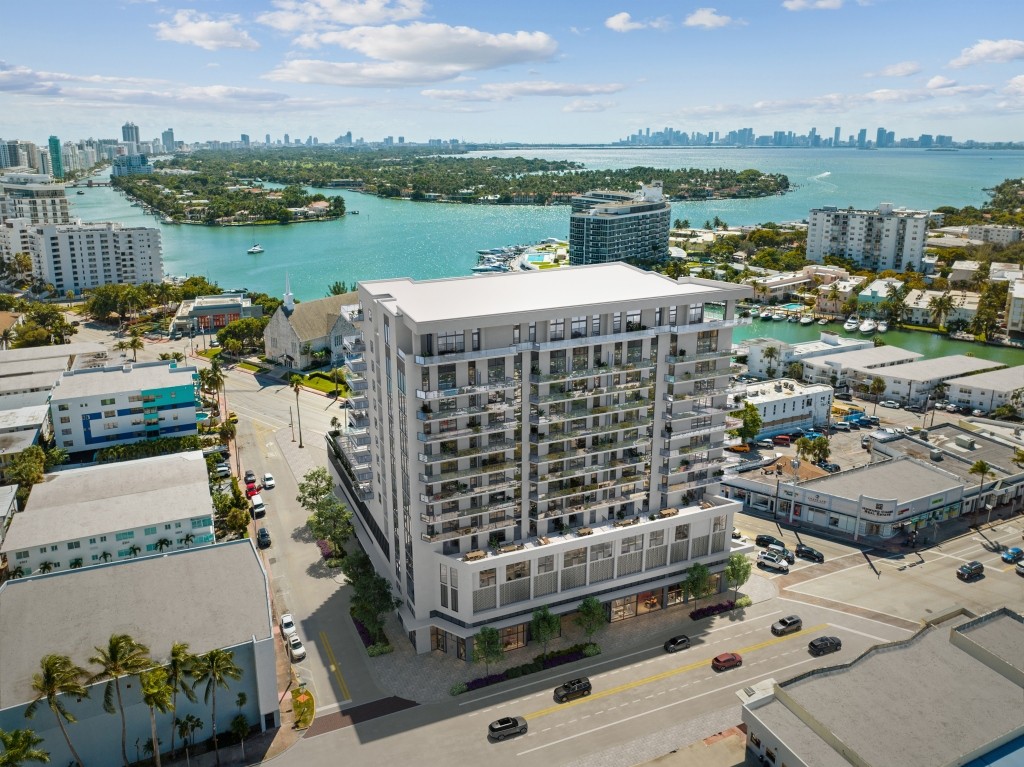
Palma Miami Beach Residences rendering (credit Lefferts)
 Empleobilingue.com

- Director/a de operaciones para hotel, restaurante y discoteca 1626320364.60 - Medellín, Medellin, Antioquia, Colombia
- Coordinador/a de calidad para La Unión 1626483143.1 - La Unión, Antioquia, Colombia
- Desarrollador fullstack - Bogotá, Bogota, Colombia
- Technical Analyst - Remote
- PIM Administrator - Ecommerce - Remote (Bogotá, Bogota, Colombia)
- Auxiliar de gestión humana y bienestar para Girardota 1626060072.28 - Girardota, Antioquia, Colombia
- Marketing Strategist
- Trainer Manager - Bogotá, Bogota, Colombia
- Tolemaida UH- 60 Inspector - Bogotá, Bogota, Colombia
- Virtual Assistant - Team Lead - Remote
Contact Us

