Previous Story
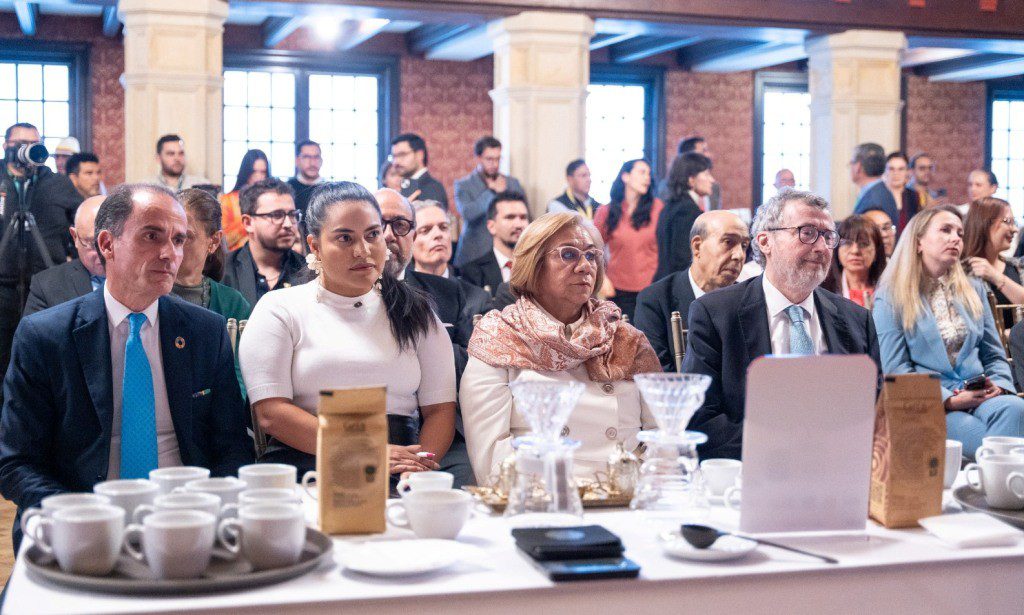
Colombia’s Foreign Ministry Presents Coffee and Cacao Export Strategy to Bogotá Diplomatic Corps
Posted On May 18, 2026
Comment: Off
Tag: Agencia de Desarrollo Rural, agro-exports, barcelona, bogotá, cacao, cacao exports, Café Social, Cancilleria, china, coffee exports, colombia, Colombia agriculture, Colombia Compra Eficiente, Colombia Exports, Colombia foreign policy, Colombia Nos Une, Departamento Nacional de Planeación, diplomatic corps, diplomatic missions, DNP, Economic Diplomacy, Escuela Nacional del Café, ethnic communities, Gloria Cuartas Montoya, HOTELEX Shanghai, international trade fairs, Ministerio de Relaciones Exteriores, Natalia Irene Molina Posso, peace agreement, peacebuilding, post conflict, Rosa Yolanda Villavicencio Mapy, rural development, Ruta del Café y Cacao, SENA, servicio nacional de aprendizaje, small producers, specialty coffee, trade promotion, Unidad de Implementación del Acuerdo de Paz, value-added agriculture, women producers
Colombia’s coffee-cacao export push generates 100+ tons in foreign sales
Colombia’s Ministerio de Relaciones Exteriores convened ambassadors, international organizations, agricultural producers, and strategic partners in Bogotá on May 15, 2026, to present the Ruta del Café y Cacao, a government-led strategy that uses the diplomatic network to connect Colombian specialty coffee and cacao producers directly with international buyers, importers, and distributors. The session was organized in coordination with the Departamento Nacional de Planeación (DNP), Colombia Compra Eficiente, and the Servicio Nacional de Aprendizaje (SENA), with additional participation from the Agencia de Desarrollo Rural and the Unidad de Implementación del Acuerdo de Paz.
Between 2025 and 2026, the Ruta del Café y Cacao has participated in international trade fairs and multilateral venues in Asia, the Americas, and Europe, generating more than 1,200 commercial contacts and exports exceeding 100 tons. The strategy is coordinated through Colombia Nos Une, a directorate within the Ministerio de Relaciones Exteriores that oversees relations with Colombian communities and commercial networks abroad.
“This strategy is not limited to the promotion of a product. It is a tool of economic diplomacy, productive inclusion, rural development, and peacebuilding.” — Rosa Yolanda Villavicencio Mapy, Minister of Foreign Relations of Colombia
Foreign Minister Rosa Yolanda Villavicencio Mapy used the event to outline the government’s rationale for embedding agricultural trade promotion into foreign policy. “From the Ministry of Foreign Relations, we want economic diplomacy to translate into concrete results for the territories,” she said. “Foreign policy must have the capacity to open opportunities, connect markets, and contribute to the productive development of our communities.” She added that the strategy extends beyond product promotion: “It is a tool of economic diplomacy, productive inclusion, rural development, and peacebuilding.”
Natalia Irene Molina Posso, director general of the Departamento Nacional de Planeación, presented the Café Social program as a related mechanism designed to strengthen small agricultural producers. The initiative links public procurement policy with territorial development and small-scale coffee farming, creating demand channels within Colombia’s public sector for domestically produced specialty coffee.
Gloria Cuartas Montoya, director of the Unidad de Implementación del Acuerdo de Paz, addressed the relationship between coffee and cacao production and post-conflict territorial transformation. “You have all the entities that have been working on the implementation of the Peace Agreement and in the new processes being carried out, so that territorial peace finds in these two [commodity] lines paths of enormous value and projection,” she said. Cuartas also referenced recent engagement in Barcelona, where business operators and organizations expressed interest in awareness-building activities around Colombian coffee and cacao, citing the social and community dimensions behind those products.
A central element of the event was the participation of producers and associations from multiple regions of Colombia, convened by the Ministerio de Relaciones Exteriores through the Colombia Nos Une directorate. The participants included cooperatives and producer groups led by women, former combatants who signed the 2016 Peace Agreement, ethnic communities, and victims of the armed conflict. These groups presented their productive and commercial operations directly to diplomatic delegations attending the event.
The session also included a guided coffee tasting led by SENA’s Escuela Nacional del Café, during which attendees sampled specialty coffee varieties and received information on production processes and the characteristics that differentiate Colombian coffees participating in the Ruta del Café y Cacao. The tasting segment was designed to give diplomatic representatives direct exposure to the product profiles of the producers involved in the strategy.
Photo courtesy of Ministry of Foreign Relations of Colombia