Previous Story
Companies Cannot Be Sustainable While the Systems Around Them Are Not
Posted On November 17, 2026
Comment: 0
Tag: colombia, community development, corporate social responsibility, esg, Fundación Granitos de Paz, impact investing, inequality, latin america, local suppliers, Mónica Gil Ryan, One Inversión Social, One Social Investment, patient capital, philanthropy, social investment, social sustainability, strategic philanthropy, sustainability reporting
Why Did We Ever Treat Social Impact as a Separate Conversation?
A company can reduce its carbon emissions, improve its energy efficiency, publish an ambitious ESG report and still operate in a society where millions of people have no real opportunity to thrive. That contradiction should make us uncomfortable.
For years, sustainability conversations have been dominated by environmental targets, climate commitments and the transition to cleaner business models. These priorities are essential. But they are not enough. The question we need to ask today is whether our understanding of sustainability has kept pace with the complexity of the world we operate in.
Because a business does not exist outside society. It depends on people, institutions, communities, public trust and a degree of social stability that no company can guarantee on its own.
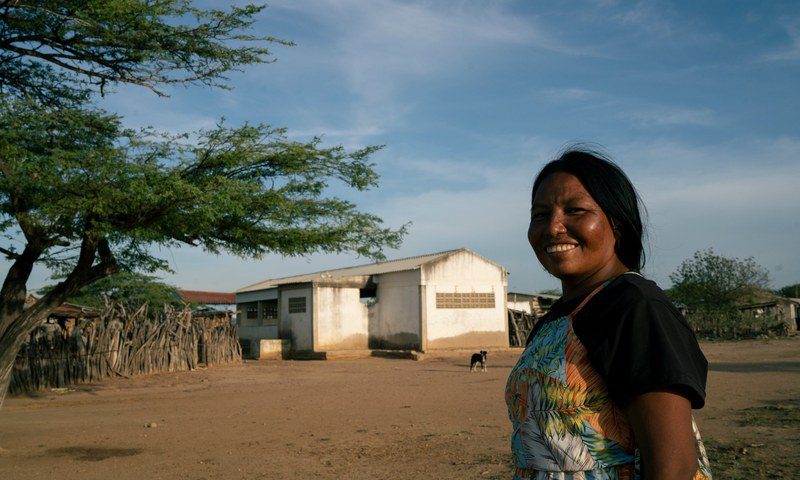
(Photo courtesy ONE Social Investment)
Sustainability is no longer just an environmental question. It is a systemic one. Consider what happens when inequality limits access to education and employment. When violence forces communities to abandon their homes and livelihoods. When institutions lose credibility, public trust erodes and entire populations feel excluded from the economic system.
These are not issues that belong exclusively to governments or social organizations. They shape the environments in which companies hire, invest, produce, innovate and grow.
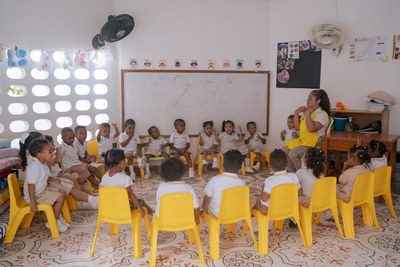
A business may have an excellent environmental strategy, but what does its long-term resilience look like if the communities around it lack economic opportunity? What does responsible investment mean in a territory where insecurity prevents local businesses from operating? And how sustainable is a model of growth that creates value for some while leaving others permanently outside the equation?

(Photo courtesy ONE Social Investment)
These questions deserve a place in every serious conversation about ESG.
Environmental, social and governance frameworks have helped businesses identify risks, improve accountability and communicate their commitments. But the social dimension can become the weakest part of the equation when it is reduced to donations, volunteering days or a handful of indicators in an annual report.
Social sustainability demands more than good intentions. It requires understanding the conditions that allow people and communities to participate in, contribute to and benefit from economic development.
It means looking beyond the number of beneficiaries reached and asking whether their circumstances have changed. Beyond the number of jobs created and asking who can access them. Beyond community investment budgets and asking whether capital is strengthening local capabilities or simply funding isolated interventions.
It also means acknowledging that inequality and violence are not external to the economy. They affect productivity, supply chains, talent, investment decisions and the capacity of territories to develop. They can undermine years of economic progress and make even the most carefully designed business strategy vulnerable.
(Photo courtesy ONE Social Investment)For companies operating in Colombia and across Latin America, this is particularly relevant. The region’s social and economic realities cannot be separated from its investment opportunities. Communities are not merely stakeholders to be consulted after a project has been designed. They are part of the context that determines whether development can take root and endure.
This is where social investment and strategic philanthropy have an important role to play.
“Communities are not merely stakeholders to be consulted after a project has been designed.” — Mónica Gil Ryan
At One Inversión Social, we believe that resources can generate greater value when they are directed toward the people and organizations closest to the challenges being addressed. Local leaders understand their territories in ways that external actors often cannot. Community organizations have built relationships, knowledge and trust that take years to develop. Yet these actors frequently lack access to the flexible, patient capital needed to strengthen their work and sustain results.
The answer is not to replace technical expertise with empathy, or measurement with intuition. We need both.
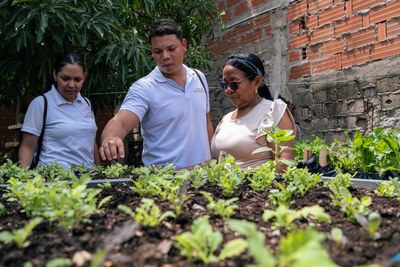
Two people in Fundación Granitos de Paz shirts go over seedling beds with a woman at a walled garden plot. (Photo courtesy ONE Social Investment)
Evidence, accountability and clear objectives matter. So do listening, local knowledge and the humility to recognize that the people experiencing a problem must have a meaningful role in shaping its solutions.
This combination changes how we think about investment. Instead of asking only which intervention can produce the fastest measurable result, we begin to ask which conditions need to change for that result to last. Instead of funding disconnected projects, we look for opportunities to strengthen the relationships, institutions and capabilities that make progress possible over time.
For the private sector, this approach has practical implications. It can mean integrating local suppliers into value chains, expanding access to decent employment, investing in skills development, building partnerships with community organizations and supporting initiatives that address the underlying causes of exclusion. It can also mean assessing social risks early, listening to affected communities and being transparent about the consequences of business decisions.
None of this suggests that companies can solve inequality or violence alone. They cannot, and they should not be expected to replace the responsibilities of the state. But they can choose whether their operations reinforce existing barriers or contribute to more inclusive economic systems.
That choice is part of sustainability.

(Photo courtesy ONE Social Investment)
The next step in the ESG conversation is not to abandon environmental commitments. It is to understand that environmental progress, economic resilience and social cohesion are deeply connected. A transition that ignores the people who bear its costs will struggle to be fair or durable. An investment that overlooks the realities of its surrounding community may underestimate its own risks. And a sustainability strategy that cannot account for how value is distributed is an incomplete one.
Perhaps we should stop asking whether social impact belongs in the sustainability agenda. The more useful question is why we ever treated it as a separate conversation.
The future of business will depend not only on how efficiently companies use resources, but also on the societies in which they operate and the relationships they help build. This calls for a broader understanding of value — one that recognizes that long-term performance cannot be detached from human well-being, trust and the ability of communities to shape their own future.
For business leaders, investors and philanthropists, the invitation is to look beyond the indicators that are easiest to measure and examine the systems those indicators are meant to represent.
Because sustainability is not simply about protecting the planet on which we do business. It is also about helping build societies in which people can live with dignity, communities can flourish and prosperity has a chance to last.
If we want businesses to be sustainable, we must also ask whether the systems around them are.
Let’s continue the conversation. If you believe capital and business leadership can help build more inclusive, resilient societies, I invite you to connect with me. Follow my work and reflections on social investment, philanthropy and systemic change, and reach out if you see an opportunity for us to build something meaningful together.
Follow the conversation:
LinkedIn: Mónica Gil Ryan
Instagram: @monicagilryan
All photos courtesy ONE Social Investment