Previous Story
Manuel Fernández Ariza Takes Over Bancóldex After 20 Months Under an Interim President
Posted On October 21, 2026
Comment: 0
Tag: abelardo de la espriella, Adolfo Meisel Roca, atlantico, Banco de Comercio Exterior de Colombia, banco de la republica, Bancoldex, barranquilla, Barranquilla Cómo Vamos, bond issuance, Cámara de Comercio de Barranquilla, Caribe Exponencial, colfuturo, colombia, Comité Intergremial del Atlántico, Confecámaras, credit guarantees, Development Bank, development finance, Eduardo Verano de la Rosa, Effio Consulting, Efraín Cepeda Tarud, executive appointments, Fernando Isaza Gutiérrez de Piñeres, fng, fondo nacional de garantias, Fundación para el Desarrollo del Caribe, Fundesarrollo, Gota a Gota, grupo bicentenario, impact investors, Javier Díaz Fajardo, José Alberto Garzón Gaitán, Key Metrics, labeled bonds, Manuel Fernández Ariza, Mario Suárez Melo, Máster IA, Mauricio Gómez Amin, MinCIT, Ministerio de Comercio Industria y Turismo, mipymes, MSMEs, Prosperidad Social, SME lending, superintendencia financiera, Transmetro, universidad de los andes, Universidad del Norte, University of Illinois Urbana-Champaign, Weildler Guerra
New chief inherits a $5 trillion COP bond authorization
Manuel Fernández Ariza, who had led the Cámara de Comercio de Barranquilla (Barranquilla Chamber of Commerce) since February 2020, has taken office as president of Bancóldex, Colombia’s state-owned business development bank, the Ministerio de Comercio, Industria y Turismo (MinCIT, Ministry of Commerce, Industry and Tourism) announced on October 13, 2026. His arrival ends a stretch of more than 20 months in which the bank was run by an acting president.
Bancóldex’s board of directors chose Fernández Ariza unanimously at a session on September 18, according to La República and Portafolio. His name had surfaced nearly two months earlier. On July 24, La República reported, citing journalist Darcy Quinn of La FM, that he would be named to the post, although the government had not made an official announcement at that point. About three weeks before that report, President-elect Abelardo de la Espriella had named Fernández Ariza the ad honorem technical lead of the transition process at MinCIT, La República reported.
Fernández Ariza replaces José Alberto Garzón Gaitán, the bank’s vice president for legal affairs and general secretary, who took charge on an interim basis when Javier Díaz Fajardo stepped down in February 2025 after six years as president, Valora Analitik reported at the time. Díaz Fajardo had completed his second term and was not eligible for a third. Finance Colombia covered the bank’s 2017 leadership change, when Mario Suárez Melo was named president.
MinCIT framed the appointment as part of President de la Espriella’s agenda to boost economic activity, strengthen the country’s productive base and create development opportunities in the regions, and said Bancóldex will work with the ministry on financial solutions suited to companies’ needs. Commerce, Industry and Tourism Minister Mauricio Gómez Amín said in the ministry’s statement: “Bancóldex is a strategic ally so that Colombian companies can grow, innovate and compete on better terms. We want access to financing to translate into more investment, productivity and employment, and for development opportunities to reach micro, small and medium-sized enterprises and the regions.”
The Bank He Inherits
Bancóldex was created in 1991 as a national sociedad anónima de economía mixta (mixed-capital corporation) and is supervised by the Superintendencia Financiera (Financial Superintendency). The national government holds 99.72% of its shares through Grupo Bicentenario, the holding company of the state’s financial conglomerate, according to the bank’s 2024 annual report. Bancóldex works mainly as a second-tier lender, channeling funds through banks, cooperatives and other financial intermediaries, and since 2020 it has also lent directly to small and medium-sized companies.
Bancóldex disbursed more than $4.8 trillion COP (about $1.5 billion USD) in 2025 and ended the year with assets of $9.9 trillion COP (about $3.1 billion USD), according to its 2025 management report. Its loans reached more than 97,000 companies, and its loan portfolio grew 12% to $5.9 trillion COP (about $1.9 billion USD), according to the record of decisions from its March 27, 2026, shareholders’ meeting.
At the same meeting, shareholders authorized Bancóldex to issue up to $5 trillion COP (about $1.6 billion USD) in bonds through the primary market. Valora Analitik reported in March 2026 that the program contemplated maturities of one to 15 years and a focus on impact investors, and Garzón Gaitán told the outlet that the bonds would be labeled and that the bank would activate the program depending on market conditions.
A Career Built in Barranquilla
Fernández Ariza, a Barranquilla native whose full name is Manuel Tercero Fernández Ariza, earned his economics degree at Universidad de los Andes and a master’s degree in public policy at the University of Illinois Urbana-Champaign. He received a Colfuturo loan-scholarship in 1998, according to Portafolio.
Portafolio reports that he started as a research assistant at the Fundación para el Desarrollo del Caribe (Fundesarrollo), an economic and social research center for Colombia’s Caribbean region, and became its technical director about two and a half years later, and that he took part in editing and writing Políticas para reducir las desigualdades regionales en Colombia (Policies to Reduce Regional Inequalities in Colombia) with Adolfo Meisel Roca and Weildler Guerra, a book published in 2007 in the regional economics collection of the Banco de la República, Colombia’s central bank. He later served as secretary of finance for the department of Atlántico during Governor Eduardo Verano de la Rosa’s first administration and spent about five years as manager of Transmetro, the mass transit system of the Barranquilla metropolitan area. He also worked at the Departamento Administrativo para la Prosperidad Social (Administrative Department for Social Prosperity), held senior roles at the consulting firms Key Metrics and Effio Consulting, and has taught economics and political science at Universidad del Norte. MinCIT’s statement adds that he directed the Barranquilla Cómo Vamos program and chaired the board of Confecámaras, the national confederation of chambers of commerce.
At the chamber, MinCIT credits him with programs to widen access to credit, promote internationalization and raise business productivity through digital tools and artificial intelligence, including Máster IA and Caribe Exponencial. According to the ministry, the number of services the chamber provided to businesses rose from 6,371 in 2019 to a projected 81,000 by the end of 2026. The chamber’s board unanimously elected Efraín Cepeda Tarud as his successor, Forbes Colombia reported on October 7. Cepeda Tarud chaired the chamber’s board from 2019 to 2021 and had served since 2020 as executive president of the Comité Intergremial del Atlántico (Atlántico Inter-Guild Committee).
Priorities at the Bank
MinCIT said Fernández Ariza will prioritize access to financing, productivity and the internationalization of companies, with particular attention to micro, small and medium-sized enterprises (MSMEs) and the regions. The ministry said the bank will promote financial instruments tailored to different sectors and regions to support technology adoption, innovation, productive modernization and access to new markets. Fernández Ariza said he has worked closely with business owners of different sizes and sectors and knows the barriers they face in financing their projects.
“From Bancóldex, we want to help close those gaps, mobilize resources toward productive investment and support companies in their processes of transformation, innovation and internationalization.”
— Manuel Fernández Ariza, president of Bancóldex
A Second Appointment at the FNG
On October 14, a day after the Bancóldex announcement, MinCIT said that Fernando Isaza Gutiérrez de Piñeres had taken over as president of the Fondo Nacional de Garantías (FNG, National Guarantee Fund), which provides guarantees that help MSMEs obtain formal credit. Isaza Gutiérrez de Piñeres, an industrial engineer who studied at Universidad del Norte, was previously Barranquilla’s secretary of transit and road safety and, like Fernández Ariza, a manager of Transmetro, according to the ministry. MinCIT said Isaza Gutiérrez de Piñeres’ priorities include expanding the FNG’s presence in the regions and reducing dependence on informal lending among people and businesses, including the practice known as gota a gota (drip by drip).
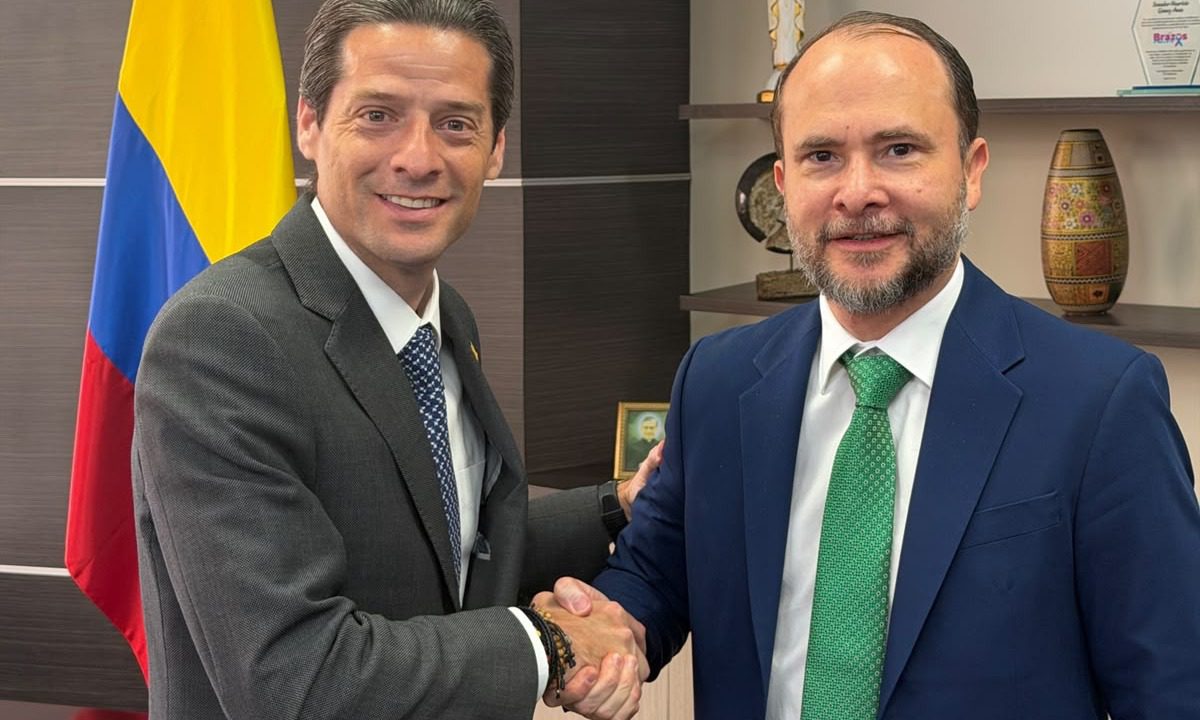
Headline photo: Commerce, Industry and Tourism Minister Mauricio Gómez Amín (left) and Bancóldex President Manuel Fernández Ariza. (Photo courtesy MinCIT)