Previous Story
Colombia’s Inflation Rises to 6.29% as Services Drive September Price Gains
Posted On October 12, 2026
Comment: 0
Tag: airfares, banco de la republica, bancolombia, bank of the republic, bvc, Camila Caballero Mercado, Central Bank of Colombia, colombia, Colombia Economy, colombia inflation, colombian peso, consumer price index, core inflation, Core-15, cpi, dane, education, el niño, food inflation, food prices, goods prices, Grupo Cibest, household inflation, indexation, inflation, inflation forecast, inflation target, interest rate hike, interest rates, Jose Luis Mojica, Laura Clavijo, minimum wage, monetary policy, National Administrative Department of Statistics, nyse, perishable foods, peso appreciation, potatoes, regulated prices, Rent, services inflation, Tomatoes, tuition, Valentina Guáqueta Sterling
Sticky Price Pressures Point to a Longer Restrictive Rate Path
Colombia’s annual inflation rate rose 5 basis points to 6.29% in September 2026. Consumer prices climbed 0.37% during the month, above the 0.29% typically recorded for September, according to the September 2026 Inflation Analysis published October 8 by Bancolombia‘s Economic, Industry & Market Research Area. The report said the monthly figure was the highest for a September since 2023. Services contributed 20 of the month’s 37 basis points, or 53% of monthly inflation by Bancolombia’s calculation, and the bank’s economists identified the pass-through from indexation, together with strong demand, as the main drivers of the rise in inflation so far this year.
Bancolombia is the Colombian banking subsidiary of Grupo Cibest (NYSE: CIB; BVC: CIBEST, PFCIBEST). The report was signed by Valentina Guáqueta Sterling, inflation and central bank analyst; Camila Caballero Mercado, intern; Laura Clavijo, chief economist; and José Luis Mojica, macroeconomic manager.
The Departamento Administrativo Nacional de Estadística (National Administrative Department of Statistics, DANE) published the September figures on October 7. Prices have risen 5.74% so far this year, according to DANE. The monthly reading came in slightly below the consensus forecast of 0.39%, according to Bancolombia, and close to the bank’s own estimate. The annual rate was the highest since July 2024 and extended an upward trend that began in February, La Silla Vacía reported. That climb paused in July, when annual inflation dipped to 6.03% from 6.14% in June, according to DANE data compiled by Grupo Cibest. In August, annual inflation stood at 6.24%, as Finance Colombia reported last month. The Banco de la República (Bank of the Republic), Colombia’s central bank, targets inflation of 3%, within a range of 2% to 4%.
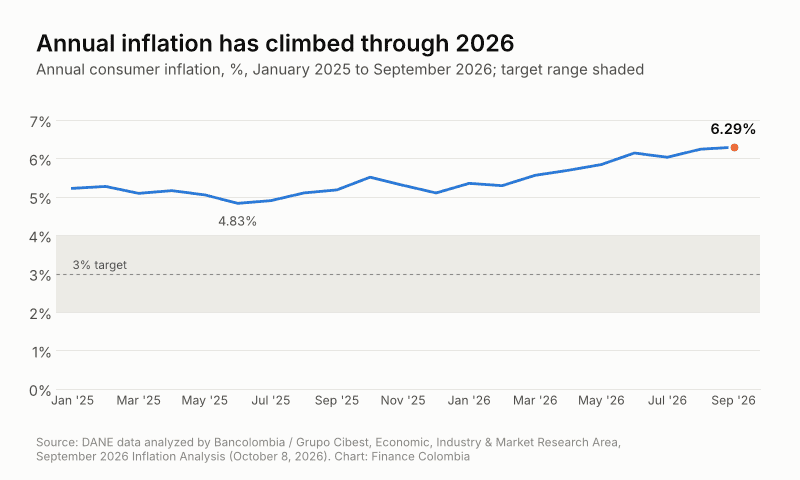
Colombia’s annual consumer price inflation compared with Banco de la República‘s 2% to 4% target range. (Chart: Finance Colombia, based on Grupo Cibest data)
Rents, Airfares and School Transportation Lead Services
Annual services inflation rose for a second consecutive month to 7.19%, its highest level since November 2024, on a 0.38% monthly increase that compared with a historical September average of 0.24%, according to the report. Bancolombia’s economists linked the increase to continued price adjustments tied to the minimum wage increase and to indexation to the previous year’s inflation. Colombia’s minimum wage rose 23% this year to $1,750,905 COP a month. Price pressures were concentrated in labor-intensive categories and in those subject to annual adjustments, the report said, citing monthly increases in imputed rent (0.48%), actual rent (0.46%), passenger air transportation (12.25%), school transportation (3.29%) and meals at table-service restaurants (0.13%). Movie theaters and live entertainment, travel packages, vehicle insurance, intercity, rural and international transportation, and private dental services made the smallest contributions.
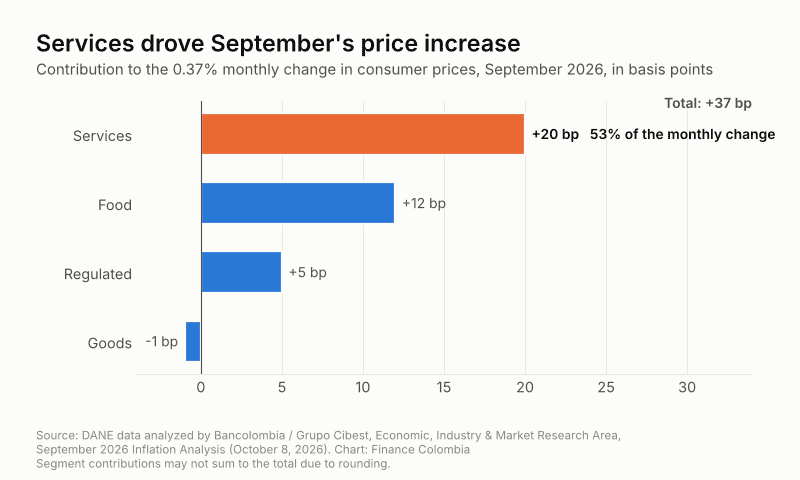
Contribution of each segment to Colombia’s 0.37% monthly inflation in September 2026, in basis points. (Chart: Finance Colombia, based on Grupo Cibest data)
Perishable Food Prices Jump
Annual food inflation rose from 6.13% to 6.79% after a 0.79% monthly increase, well above the September historical average of around 0.27%, according to the report. Under Bancolombia’s classification, food prices have risen 8.05% so far this year. The report attributed the increase mainly to higher prices for perishable foods amid pressures related to El Niño and higher costs. Annual perishable food inflation accelerated to 14.14%, led by fresh vegetables and legumes, potatoes, tomatoes, eggs and fresh fruit. Processed food inflation eased to 4.45%, its lowest level since February 2025, while prices fell for dried legumes, coffee, poultry, pork, and fish and seafood products. DANE’s bulletin shows potato prices up 7.29% and tomato prices up 10.47% in September.
Regulated Prices and Goods Ease
Annual inflation in regulated prices eased for the first time since February, from 6.77% to 6.69%, although it remains above the 5.99% average recorded in 2025, according to the report. Regulated prices rose 0.30% in the month, below the historical September average of 0.52%. Higher tuition for preschool, primary and secondary education, along with higher prices for vehicle fuels and water and sewer services, made the largest contributions. Lower gas and electricity rates and softer increases in waste collection and mandatory vehicle-related fees helped temper the category’s increase.
Goods inflation fell 41 basis points to 2.97%, its lowest level since January, according to the report. Goods prices declined 0.08% in the month, the first negative monthly reading since October 2024, compared with a historical September average of 0.27%. Lower prices for new and used vehicles; gold, silver and jewelry; women’s clothing; audio and video equipment; and personal care products drove the decline, while beer and shandy, household cleaning and maintenance products, uniforms, oral care products, and pharmaceutical and dermatological products posted the largest increases among goods. The report said the appreciation of the Colombian peso helped ease pressure on the prices of imported goods. The peso weakened 2.9% against the US dollar in September but closed the month at 3,307.50 COP per dollar, compared with an average of 4,053 COP in 2025, according to Bancolombia’s monthly foreign exchange report of October 6. Finance Colombia reported in September on Bancolombia’s estimate of how much the peso’s rally has restrained inflation.
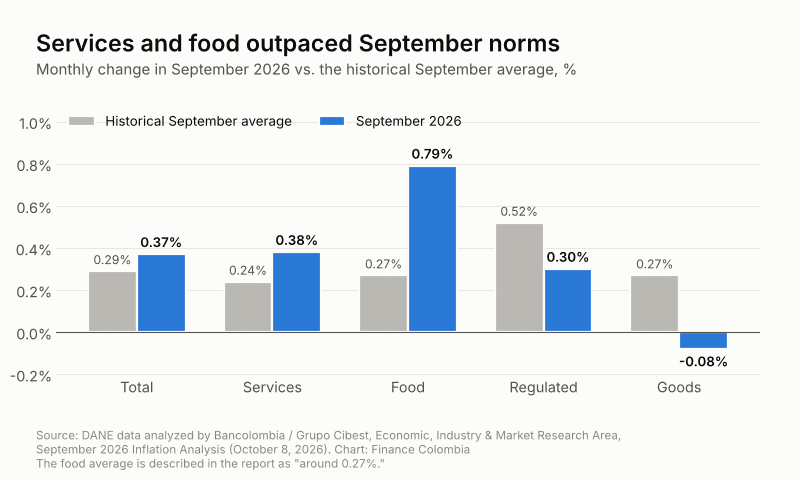
Monthly price change in September 2026 by segment compared with the historical average for September. (Chart: Finance Colombia, based on Grupo Cibest data)
Core Measures Ease but Stay Elevated
Core inflation measures now average 6.1%, a level last seen in 2024, according to Bancolombia. Under the central bank’s traditional classifications, the Core-15 measure stood at 6.40% in September, inflation excluding food at 6.22% and inflation excluding food and regulated items at 6.07%, according to the report’s figures. Inflation excluding food declined for the first time in seven months, although it remains above 6.0%; it had reached 6.30% in August, according to Bancolombia’s previous monthly analysis. Bancolombia’s economists said the readings, taken together, show that underlying inflationary pressures are persistent.
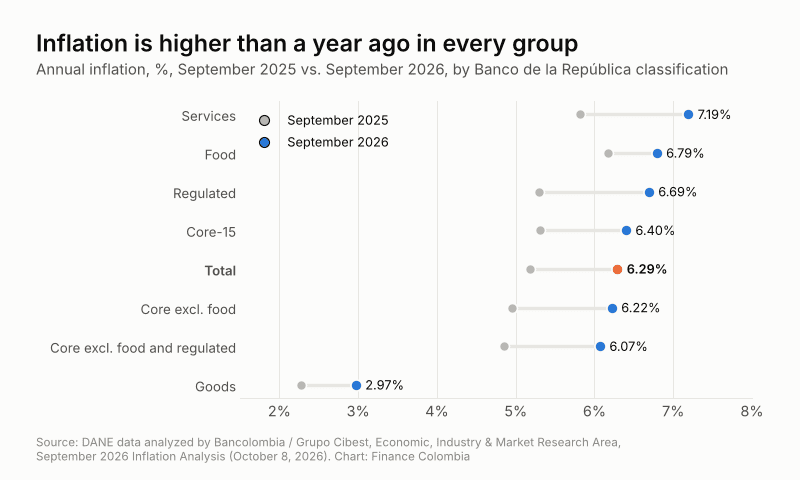
Annual inflation by category and core measure in September 2025 and September 2026. (Chart: Finance Colombia, based on Grupo Cibest data)
Restaurants, Health and Education Top DANE’s Annual Rates
By spending division, DANE’s figures put annual inflation highest in restaurants and hotels at 9.44%, followed by health at 7.79%, education at 7.49%, furniture and household goods at 6.75%, and food and non-alcoholic beverages at 6.74%. Clothing and footwear recorded the lowest rate, at 3.12%. Education posted the largest monthly increase, at 1.43%. By income level, prices for poor households rose 0.41% in September, compared with 0.32% for high-income households, according to DANE. Over 12 months, however, inflation for poor households, at 6.14%, remained below the 6.32% recorded for high-income households.
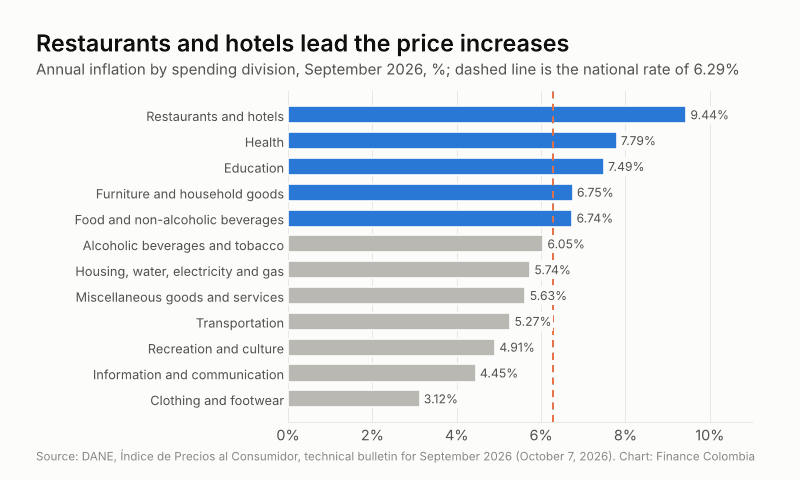
Annual inflation by spending division in September 2026; the dashed line marks headline inflation of 6.29%. (Chart: Finance Colombia, based on DANE data)
Bancolombia Holds Its 6.7% Year-End Forecast
Bancolombia said September’s acceleration confirms that convergence toward the inflation target will be slow, and it reiterated its forecast that inflation will end 2026 at 6.7%. The central bank’s board raised its benchmark interest rate by 25 basis points to 12.25% on September 30 in a split vote, with four directors voting for the increase, two voting to hold and one voting for a 50-basis-point increase.
“A faster return to the central bank’s 2%-4% inflation target range will therefore require maintaining a restrictive monetary policy stance for an extended period.”
— Bancolombia Economic, Industry & Market Research Area, September 2026 Inflation Analysis
Bancolombia expects upward price pressures to persist over the coming months, driven by high indexation, rising labor costs, risks from regulated prices and the impact of El Niño during the second half of 2026. The report said the peso’s appreciation has partially offset higher domestic costs. The bank’s economists added that they believe “the pass-through from the minimum wage increase to goods prices is not yet complete, suggesting that some of these pressures could continue to feed into prices gradually during the final quarter of the year.”
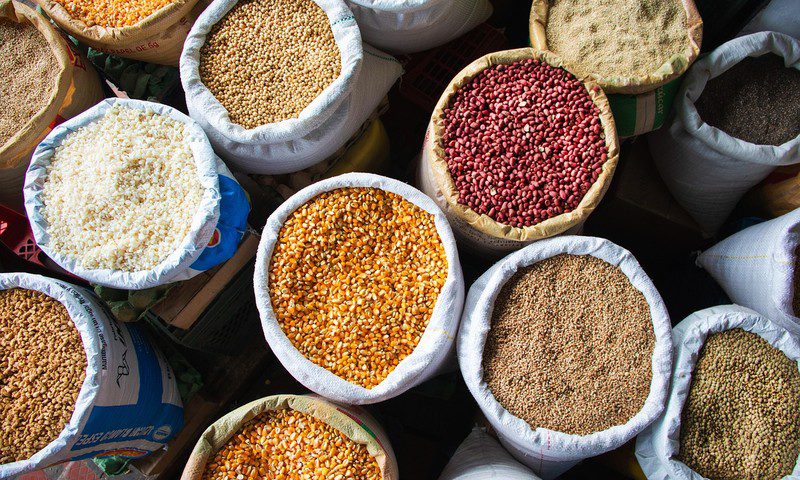
Headline photo: Beans, corn and other grains for sale at a market in Colombia. (Photo: Image by catamejia18 from Pixabay)