Previous Story

Colombia’s Supreme Court Rules Deadly Force to Defend Property Exceeds Legitimate Self-Defense
Posted On July 13, 2026
Comment: Off
Tag: abigeato, boyaca, castle doctrine, cattle theft, Colombia Supreme Court, Colombian criminal law, Corte Suprema de Justicia, defense of property, doble conformidad, exceso en la legítima defensa, homicidio simple, hurto de semovientes, legítima defensa, Ley 2197 de 2022, Luis Alberto Reyes Buitrago, Myriam Ávila Roldán, prisión domiciliaria, property rights, ramiriqui, rural security, self-defense, stand your ground, Tribunal Superior de Tunja
Property may be defended, but not with a life, the court holds
Colombia’s Corte Suprema de Justicia (Supreme Court of Justice) has upheld the homicide conviction of a Boyacá landowner who shot and killed two men on his rural property, but slashed his sentence from 23 years to four years and four months after concluding he had acted in exceso en la legítima defensa (excess of self-defense). The July 1 ruling, written by Justice Myriam Ávila Roldán for the court’s Sala de Casación Penal (Criminal Cassation Chamber), offers one of the clearest recent statements of how far Colombians may go in defending their property — and where that right ends.
The case dates to the night of May 12, 2014, when Luis Alberto Reyes Buitrago found brothers José Fernando and José Danilo Caro Caro on “Chorro Blanco,” his cattle property in the vereda (rural hamlet) of Potreros, in Ramiriquí, Boyacá. Reyes fired on the two men, killing both, then turned himself in the following morning, handing over the firearm — which he was not licensed to carry — and stating that he had shot “to defend his patrimony.”
The path to the Supreme Court was unusually long. A trial court in Ramiriquí acquitted Reyes in 2018, citing reasonable doubt. In April 2024 the Tribunal Superior del Distrito Judicial de Tunja (Tunja Superior District Court) reversed that decision, convicting him for the first time of simple homicide on two counts and imposing 276 months — 23 years — in prison. Because Colombian law guarantees anyone convicted for the first time on appeal a further review, known as doble conformidad (double conformity), Reyes was able to challenge the conviction through an impugnación especial (special appeal), placing the matter before the high court.
“The economic patrimony cannot be placed before, or equated with, the life of a human being.” — Colombia’s Corte Suprema de Justicia, Criminal Cassation Chamber (Justice Myriam Ávila Roldán, writing for the panel)
The Supreme Court reaffirmed that a valid claim of legítima defensa (self-defense) requires five elements: an illegitimate aggression, the absence of sufficient provocation by the defender, that the aggression be current or imminent, that the defense be necessary, and that the response be proportional. Crucially, the court held that self-defense is not confined to threats against life or physical integrity — it can also protect patrimonio económico (economic patrimony), correcting the Tunja tribunal’s narrower reading.
On the facts, the court found the first four elements satisfied. The victims’ unexplained nighttime presence on private land, in an isolated area with a documented history of hurto de semovientes (livestock theft), amounted to a real and imminent aggression against Reyes’s property that he was entitled to confront.
Proportionality was where the defense failed. Forensic evidence showed Reyes fired repeatedly — the two bodies bore four and three gunshot wounds, respectively, striking vital organs from multiple directions — while investigators found no firearms on the victims, only a screwdriver, and recovered a single shell casing at the scene, matching Reyes’s gun. Emptying a firearm into two people, the court held, went far beyond what was necessary to repel a threat to property.
“The economic patrimony cannot be placed before, or equated with, the life of a human being,” the chamber wrote, adding that the defense of property, even under real risk, “does not authorize the use of lethal force.” Because the killing began within a genuine defensive context but exceeded its limits, the conviction stands as an incomplete justification: guilt and unlawfulness remain, but the penalty is sharply reduced. Recalculating under Article 32 of the Penal Code, the court arrived at 51.66 months — four years and four months — and granted house arrest, subject to a bond of two monthly minimum wages, citing Reyes’s roots in the community.
For readers accustomed to US self-defense law, the decision maps onto familiar concepts while diverging on the central question. Colombia’s legítima defensa privilegiada (privileged self-defense) — a legal presumption favoring someone who repels an intruder entering their home or its immediate surroundings — functions much like the American “castle doctrine.” It did not apply here because the shooting occurred on open rural land rather than a dwelling, where Reyes did not live. Colombia also has no equivalent to US “stand-your-ground” statutes; its necessity requirement asks whether other reasonable options existed before force was used.
The sharpest contrast is over property itself. Most US states, like Colombia, bar deadly force to protect property alone. Texas is the notable exception: its penal code expressly permits deadly force against theft “during the nighttime” on one’s land when lesser measures would expose the owner to serious harm — nearly the exact scenario Reyes described. On comparable facts, Colombia’s highest court reached the opposite conclusion.
The ruling lands as security and the rule of law remain central to Colombia’s political debate, and as some sectors press to widen the presumption of self-defense for property owners. Congress moved in that direction with Law 2197 of 2022, which systematized privileged self-defense and codified a proportionality standard — but this decision, applying the law as it stood in 2014, signals that proportionality remains a firm ceiling on the force the law will excuse.
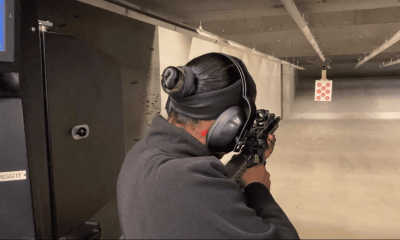
Above Photo © Loren Moss