Previous Story
Beyond the Political Clash: What the Suspension of Colombia’s Transition Meetings Means
Posted On July 9, 2026
Comment: Off
Tag: abelardo de la espriella, Colombia´s Presidential Inauguration, Colombia´s Presidential transition meetings, Colombia´s transition meetings, Colombia's Constitution, Colombia's General Disciplinary Code, Gustavo Petro, ivan cepeda, jose manuel restrepo, Law 1952 of 2019, Law 951 of 2005, miguel ceballos, Office of the Inspector General
De la Espriella suspends transition meetings with Petro administration after president questions election result
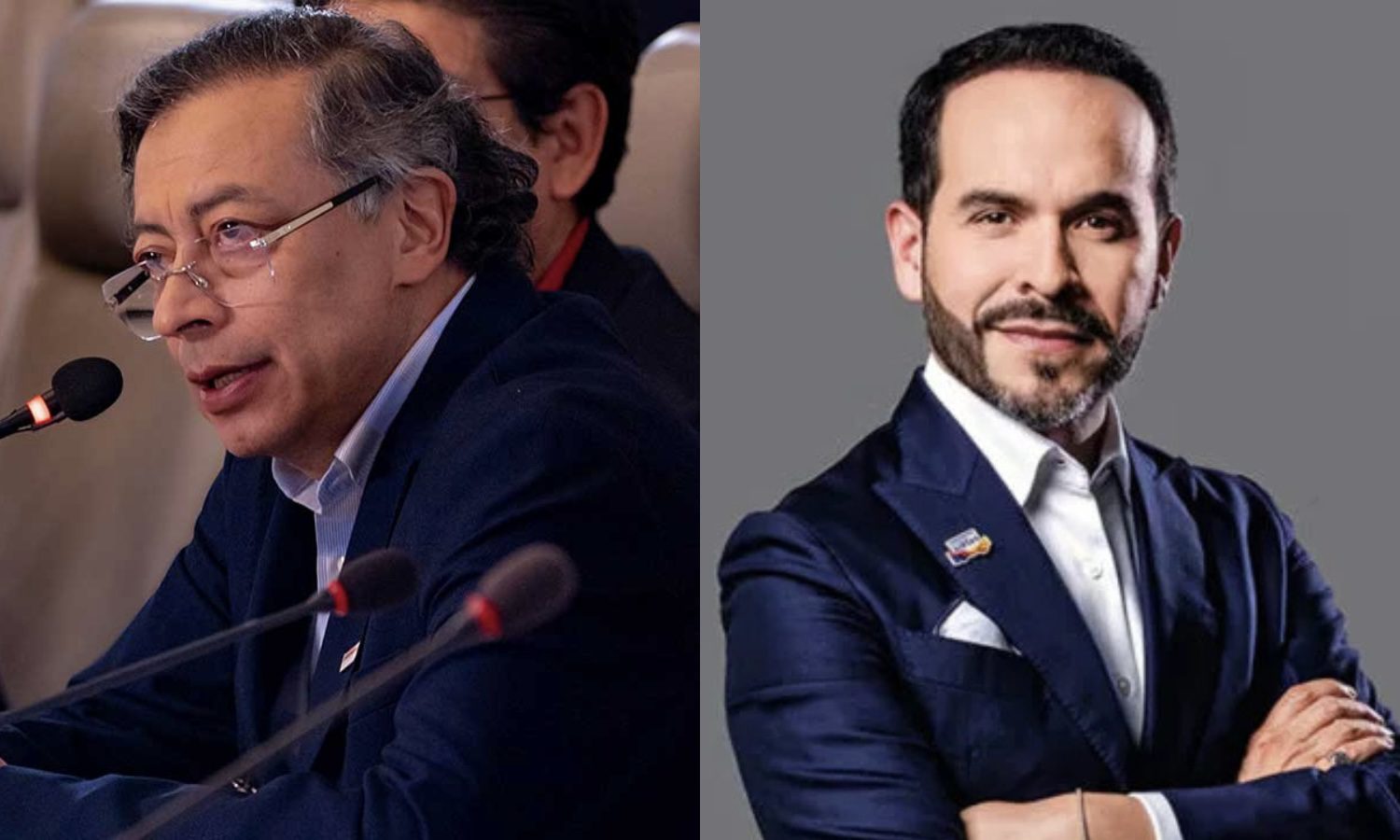
Colombian President-elect Abelardo de la Espriella (above right)ordered the suspension of transition meetings with the outgoing administration after President Gustavo Petro (above left) publicly challenged the legitimacy of his election victory in the June 21 runoff.
The decision does not cancel the formal transfer-of-power process, which is governed by Law 951 of 2005 establishing the general rules for the handover and receipt of public affairs and state assets. However, it does suspend the in-person and virtual technical meetings between the outgoing administration and the incoming government.
In a post on X, De la Espriella said he had instructed Vice President-elect José Manuel Restrepo to “immediately suspend the transition process” with the outgoing administration, which he described as “a corrupt government that is reaching the end of its term.”
“I could not allow the transition process to continue with a government that does not recognize the victory of this political project,” De la Espriella said when announcing the decision.
The move came after Petro wrote on X that “the president of Colombia does not recognize the legitimacy of the incoming government” and that “Abelardo did not win the election.” Petro also added that, in his interpretation and according to the will of the Colombian people, “the president is the philosopher Iván Cepeda,” comments that angered the incoming administration.
Does the transition remain a legal obligation?
Although the meetings between the two teams have been suspended, the formal transfer of information remains mandatory.
It is important to understand that Colombian law does not establish the procedures or methodology governing presidential transition meetings themselves. Consequently, in-person meetings such as those organized by De la Espriella and Petro are neither mandatory nor regulated by law. Rather, they are a political tradition developed over time to facilitate the exchange of information between outgoing and incoming administrations.
As a result, it is necessary to distinguish between the meetings and the transition process itself. The transfer of power is not a courtesy between governments or a discretionary political decision; it is regulated by law.
Law 951 of 2005 requires “outgoing public officials to deliver organized information regarding the matters, resources, programs and responsibilities under their authority to ensure transparency, administrative continuity and public accountability.”
The law requires the outgoing administration “to deliver reports, supporting documents and official records within 15 days after leaving office”. Incoming officials then have up to one month to submit observations, request clarifications or seek additional information.
The law requires the outgoing administration “to deliver reports, supporting documents and official records within 15 days after leaving office”. Incoming officials then have up to one month to submit observations, request clarifications or seek additional information.
This means that suspending the meetings does not eliminate the legal obligation to transfer information or prevent oversight institutions from reviewing potential failures to comply.
What is lost by suspending the meetings?
Although transition meetings are not expressly required by law, they serve an important practical purpose.
For the outgoing administration, they provide an opportunity to explain the status of public policies, advocate for the continuation of ongoing programs and document strategic decisions. For the incoming government, they facilitate the identification of administrative challenges, fiscal risks, contractual obligations and sector-specific priorities before taking office.
Without those direct exchanges, the incoming administration will rely primarily on written reports, official documents and alternative mechanisms for gathering information.
“Using the alternative means we have to gather that information, once we take office, we will have clarity regarding the figures we receive,” De la Espriella said.
Former High Commissioner for Peace Miguel Ceballos told Caracol Radio that “public officials leaving office are legally required to account for their administration and that incoming officials may record any concerns or objections in writing so they can later be reviewed by oversight authorities.”
No penalty for canceling meetings, but there are penalties for failing to transfer information
Colombian law does not establish a specific sanction for temporarily or permanently suspending transition meetings.
However, outgoing officials remain legally obligated to provide complete, accurate and timely information. If an agency or public official omits information, submits incomplete records or fails to fulfill reporting obligations, they could face disciplinary, fiscal or even criminal investigations, depending on the seriousness of the conduct.
Law 1952 of 2019, Colombia’s General Disciplinary Code, establishes that failing to properly hand over a public office constitutes a disciplinary offense. In such cases, the Office of the Inspector General may initiate disciplinary proceedings against the officials responsible.
Presidential inauguration will not be affected
Suspending the transition meetings does not prevent the president-elect from taking office or alter the constitutional timetable for the transfer of power.
Under Colombia’s Constitution, the incoming president must assume office on the scheduled date. From that moment, the new president will have full authority to appoint Cabinet members, issue instructions to state institutions and exercise the powers of the presidency.
The transition process therefore facilitates the administrative transfer of government but is not a legal prerequisite for the constitutional transfer of power.
De la Espriella is scheduled to be inaugurated on August 7, 2026. Petro himself confirmed that he will transfer power that day as required by law.
“The transition is before the people. It is a public handover by the government whose term ends at midnight on Aug. 6 because that was the mandate of the people, and I obey the people,” Petro said in a public statement.