Previous Story
Collective Mining Discovers New Tungsten-Enriched High-Grade Subzone 300 Meters Below Surface at Apollo
Posted On June 30, 2026
Comment: Off
Tag: (AuEq), APC-162, APC107-D5, APC160-D1, apollo system, ari sussman, breccia, caldas, cnl, collective mining, colombia, continental gold, copper, diamond drilling, Dollar target, drill results, gold, gold equivalent, gold mining, guayabales, mineral exploration, NYSE American, Pound Target, San Antonio, scheelite, silver, tsx, tungsten, WO3, zijin mining
Collective Mining (NYSE American: CNL; TSX: CNL) has reported results for eleven drill holes from its 2026 program at the Guayabales and San Antonio projects in Caldas, Colombia, headlined by the discovery of a new tungsten-enriched, high-grade subzone roughly 300 meters below surface at the Apollo system.
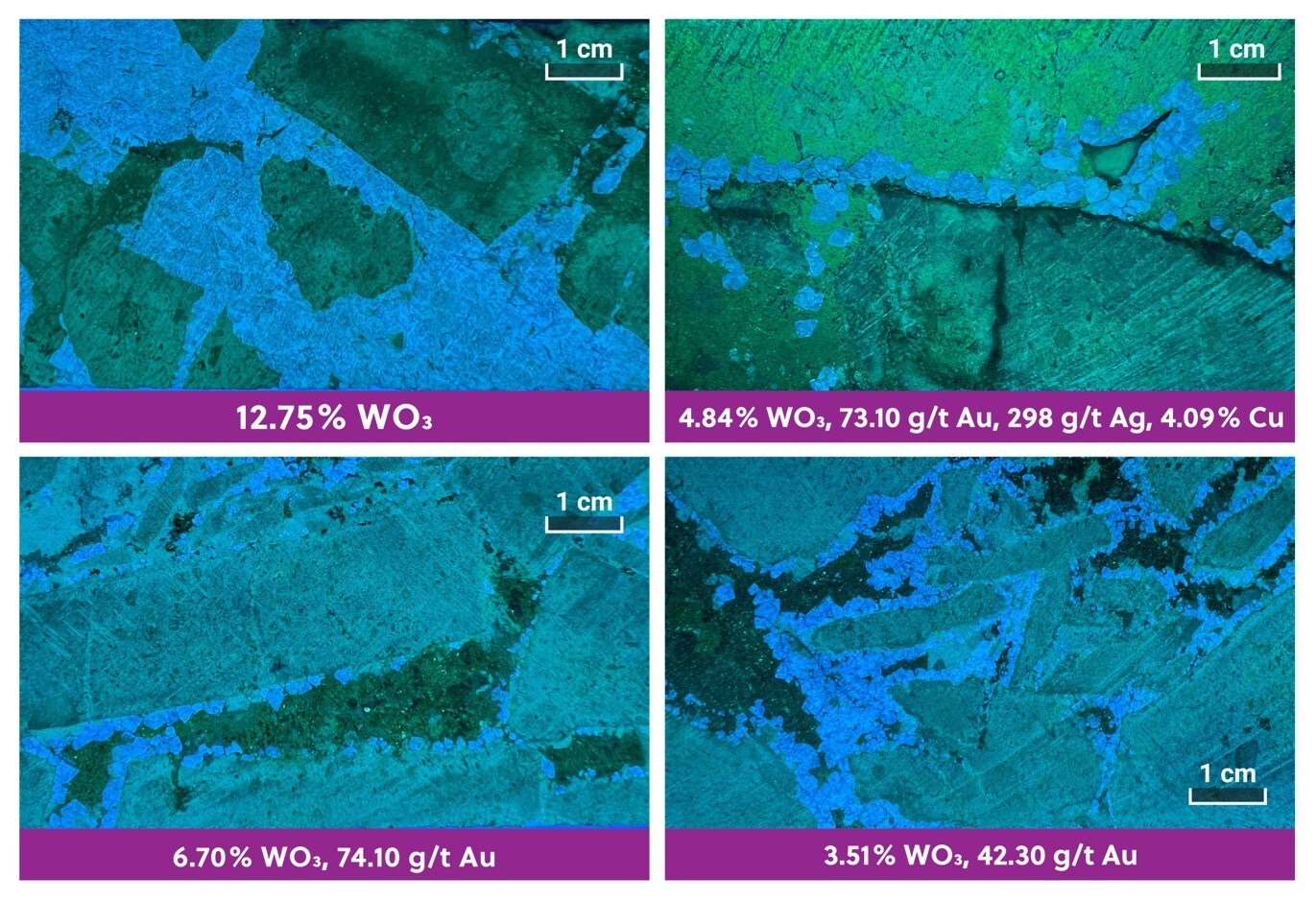
Drill hole APC-162, collared from Pad 31 and directed to the southwest, cut high-grade mineralization with observable coarse scheelite, chalcopyrite, and sporadic sphalerite and galena, returning 27.35 meters grading 37.55 grams per ton gold equivalent — 1.68% tungsten trioxide (WO3), 11.62 g/t gold, 54 g/t silver, and 0.43% copper — beginning approximately 300 meters below surface.
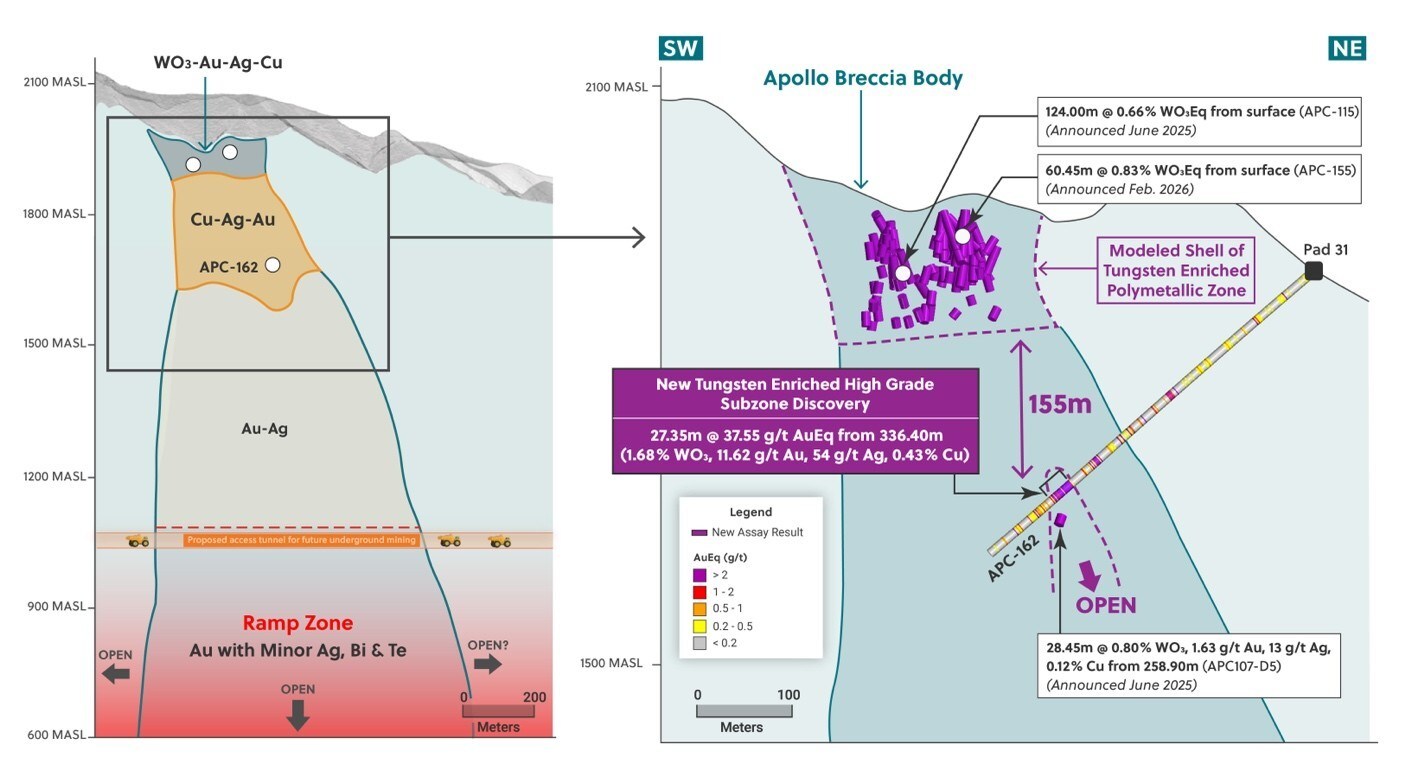
Figure 1: Section of the Apollo System Highlighting the new Tungsten Enriched Subzone Discovered 300 Meters Below Surface (CNW Group/Collective Mining Ltd.)
The hole was designed as the initial follow-up to test for an up-dip extension of a tungsten-rich interval first intersected in hole APC107-D5, which returned 28.45 meters at 0.80% WO3, 1.63 g/t gold, 13 g/t silver, and 0.12% copper. Together, the two holes define a new tungsten-enriched subzone that begins at approximately 300 meters below surface and is distinct and separate from the upper tungsten-rich zone, which covers the top 100 meters of the Apollo breccia body from surface. The new subzone remains fully open down-dip along the eastern contact margin of the Apollo breccia, with follow-up drilling expected to begin shortly.
“These results reinforce the exceptional scale and depth potential of the Apollo system,” said Ari Sussman, the company’s executive chairman. “The discovery of a new high-grade, tungsten-enriched subzone beginning 300 meters below surface, distinct from and well below the near-surface tungsten zone, demonstrates that Apollo continues to grow in both size and metal endowment with virtually every hole we drill. With 13 rigs turning and a fully funded 2026 program, we are well positioned to continue expanding the Apollo system in multiple directions.”
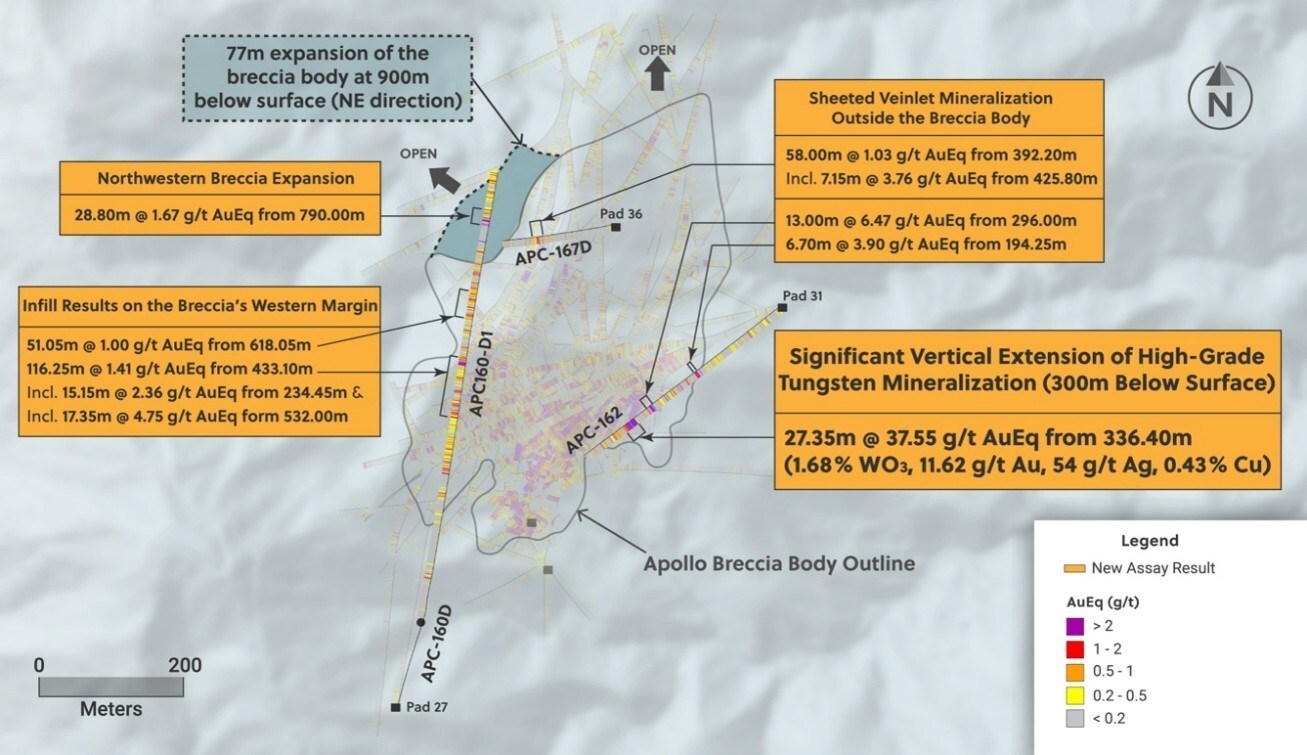
Figure 2: Plan View of the Apollo System Highlighting Drill Holes Announced in this Release (CNW Group/Collective Mining Ltd.)
A second hole, APC160-D1 — the initial directional hole collared from mother hole APC-160D at Pad 27 and directed north along the breccia’s western margin — extended the breccia body 77 meters to the northwest beyond its current outline at 900 meters below surface, intersecting 28.80 meters at 1.67 g/t gold equivalent. The same hole returned infill mineralization along the western margin, including 116.25 meters at 1.41 g/t gold equivalent from 647 meters below surface — with higher-grade cores of 15.15 meters at 2.36 g/t and 17.35 meters at 4.75 g/t — and 51.05 meters at 1.00 g/t gold equivalent from 800 meters below surface.
“The discovery of a new high-grade, tungsten-enriched subzone beginning 300 meters below surface, distinct from and well below the near-surface tungsten zone, demonstrates that Apollo continues to grow in both size and metal endowment with virtually every hole we drill.” — Ari Sussman, Executive Chairman, Collective Mining
Two further holes, APC-167D and APC-162, were drilled into diorite host rock north of and outside the main breccia body to improve confidence in the lower-grade halo mineralization surrounding it. Both intersected sheeted veinlet mineralization grading better than the company’s existing internal block model, with APC-167D returning 58.00 meters at 1.03 g/t gold equivalent from 418 meters below surface, including 7.15 meters at 3.76 g/t, and APC-162 returning 6.70 meters at 3.90 g/t gold equivalent from 223 meters and 13.00 meters at 6.47 g/t gold equivalent from 264 meters below surface. Four other holes — APC160-D2, APC169-D1, APC169-D2, and APC-173 — were exploratory in nature and did not intersect significant mineralization beyond thin, modestly grading individual veinlets.
Figure 3: Core Photos Under Ultra-Violet Light Illuminating Coarse Scheelite (Tungsten) in Drill Hole APC-162 (CNW Group/Collective Mining Ltd.)
The Apollo system anchors the Guayabales Project, where Collective has been drilling the high-grade Ramp Zone and, in late 2025, announced its 2026 drill campaign. The company first disclosed the high-grade Ramp Zone discovery in October 2024 and has since reported strong metallurgical recovery rates at Apollo.
At the separate San Antonio Project, four exploratory holes — SAC-36, SAC-37, SAC-38, and SAC-39 — were collared from Pad 15 and Pad 16 at the Dollar target, about 700 meters south of the deep porphyry discovery at the Pound target. Modest porphyry-related vein mineralization was encountered in two of the holes. SAC-36 returned 0.90 meters at 962 g/t silver, 0.98 g/t gold, 0.15% copper, and 0.58% zinc from 101.40 meters downhole, plus 2.00 meters at 14.15 g/t gold from 471.35 meters. SAC-39 returned 29.20 meters at 1.28 g/t gold, 11 g/t silver, and 0.30% zinc from 246.30 meters downhole, including 5.95 meters at 3.51 g/t gold and 1.03% zinc. The company said it is evaluating San Antonio to assess its exploration potential and define priority targets ahead of future fieldwork.
To date, Collective has completed 184,000 meters of diamond drilling across the Guayabales and San Antonio projects, including 120,000 meters at the flagship Apollo system. The company reported $113.3 million USD in cash as of March 31, 2026, and said it is fully funded for a 2026 program that envisions up to 100,000 meters of drilling. It currently has 13 diamond drill rigs operating across the Guayabales Project.
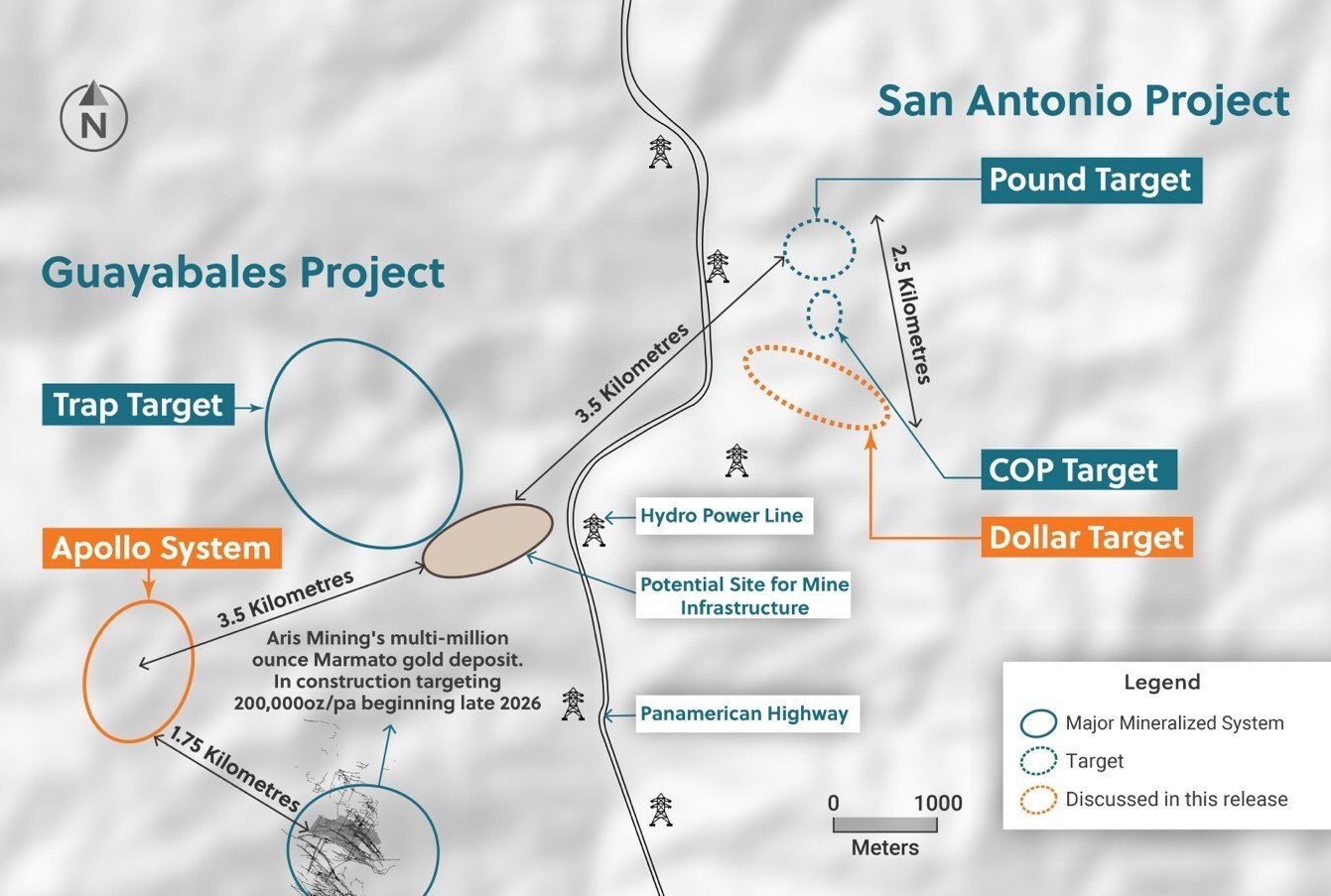
Figure 4: Plan View of the Guayabales Project Highlighting the Apollo System (CNW Group/Collective Mining Ltd.)
Gold-equivalent grades are calculated using metal prices of $3,000 USD per ounce of gold, $50 USD per ounce of silver, $5.00 USD per pound of copper, $1.35 USD per pound of zinc, and $90.72 USD per pound of WO3, with assumed recovery rates of 97% for gold, 85% for silver, 95% for copper, 85% for zinc, and 72% for tungsten. The company notes that the zinc recovery assumption is speculative, as limited metallurgical work has been completed to date, and that reported true widths are between 60% and 100% of the total intercept length, with uncut grades.
Collective Mining was founded by the team that developed and sold Continental Gold to Zijin Mining for approximately $2 billion USD in enterprise value. The company explores for gold, silver, copper, and tungsten in Caldas, where its two projects sit within an established mining camp that hosts ten fully permitted and operating mines. Management, insiders, a strategic investor, and close family and friends own 45.2% of the company’s outstanding shares. Collective Mining is listed on the NYSE American and the TSX under the symbol CNL.