Previous Story
Beyond Left and Right: Why a Constituent Assembly Remains So Controversial in Colombia
Posted On June 20, 2026
Comment: Off
Tag: abelardo de la espriella, alvaro uribe, Antanas Mockus, Armando Wouriyu Valbuena, Centro Democratico, claudia lopez, Colombia´s Supreme Court, Colombia's Constitutional Court, Constituent Assembly, farc, Gustavo Petro, ivan cepeda, Iván Duque, juan manuel santos, National Constituent Assembly in Colombia, pacto historico, paloma valencia, Petro´s 12 Commandments, Revolutionary Armed Forces of Colombia, Semblanzas con Toño Sánchez Jr., Special Jurisdiction for Peace
Petro and Cepeda suspended the initiative as they seek to win centrist voters ahead of the runoff
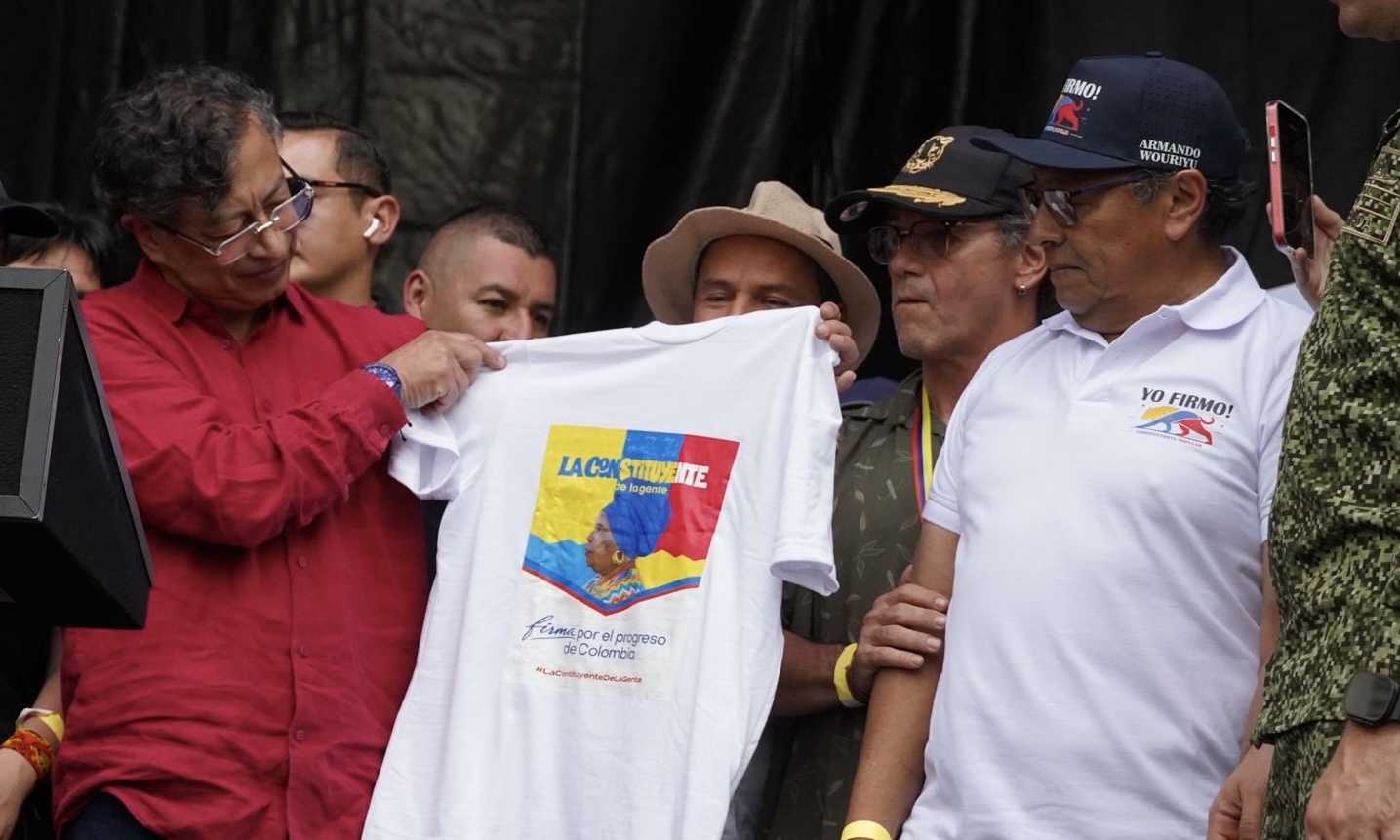
The citizen committee promoting the convening of a National Constituent Assembly in Colombia announced the suspension of its signature-gathering campaign and the withdrawal of the initiative, in a move that comes during the final stretch of the presidential race and could benefit ruling-party candidate Iván Cepeda’s efforts to attract centrist voters ahead of the June 21 runoff election.
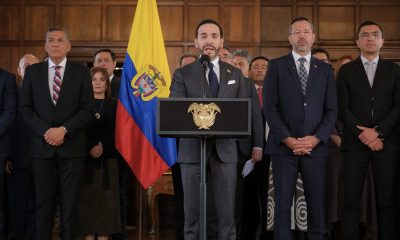
The decision was announced June 4 in a statement signed by Armando Wouriyu Valbuena, spokesperson for the committee leading the initiative, who said the measure resulted from a “process of collective reflection on the national situation and the political moment the country is experiencing.”
President Gustavo Petro publicly supported the decision.
“I support the decision made by the citizen committee for the National Constituent Assembly to suspend the signature-gathering process,” Petro wrote on X.
The president added that “the constituent assembly had no objective other than improving the living conditions of the Colombian people and finally guaranteeing their fundamental rights.”
The proposal had initially been included among political initiatives associated with the ruling coalition and appeared in preliminary versions of the government platform of Iván Cepeda, the Pacto Histórico candidate who will face far-right contender Abelardo de la Espriella in the presidential runoff.
The decision to withdraw the initiative comes as Cepeda’s campaign seeks to expand its electoral support among moderate and independent voters, many of whom have viewed the prospect of constitutional reform with caution and, in some cases, concern.
A recurring idea in Colombian politics
Although the proposal has recently been associated with President Petro and left-wing sectors, the idea of convening a Constituent Assembly has been supported at different times by political leaders from nearly every corner of Colombia’s political spectrum.
Petro himself promoted the idea during the 2022 presidential campaign but later moderated his position after signing a public commitment encouraged by political figures including Claudia López and Antanas Mockus. In that agreement, he pledged not to pursue constitutional changes of that nature during his presidency.
The event became known nationally because Petro signed the so-called “12 Commandments” on a marble plaque, a symbolic gesture that helped build a broad political consensus and secure the support needed to win the presidency.
The debate over constitutional reform, however, predates Petro by decades.
One of the most notable examples involves former President Álvaro Uribe, who today ranks among the most vocal opponents of a constituent assembly promoted by the current administration.
During his presidency, a constitutional amendment allowed immediate presidential reelection. Later, after Colombia’s Constitutional Court and various political sectors blocked some of his initiatives, Uribe proposed a Constituent Assembly focused on reforming the judicial branch.
In 2012, during a forum in Washington, he argued that a constituent assembly limited to judicial reform could respond to public demands at the time.
Three years later, in 2015, and now from the opposition, Uribe again proposed a constituent assembly restricted to reviewing the peace accords negotiated between the government of Juan Manuel Santos and the Revolutionary Armed Forces of Colombia, or FARC, with the aim of modifying aspects of the process.
In 2020, several lawmakers aligned with Uribismo, including Paloma Valencia, who recently finished third in the first round of the presidential election, again proposed a constituent assembly to reform the judicial system and review aspects related to the Special Jurisdiction for Peace, or JEP.
The proposal came after Colombia’s Supreme Court ordered Uribe’s preventive detention as part of an investigation into alleged witness tampering, a case that originated from complaints filed by current presidential candidate Iván Cepeda.
De la Espriella also supported the idea in the past
The concept of a constituent assembly has not been foreign to Abelardo de la Espriella, the current far-right presidential candidate.
During a 2017 interview on the local program Semblanzas con Toño Sánchez Jr., De la Espriella defended convening a Constituent Assembly to reform sectors such as justice and health care, while redefining structural aspects of the Colombian state.
“What must be promoted is the elimination of that (…) through a new strong-handed government that repeals that farce by decree and convenes, through the most expeditious legal means, a Constituent Assembly that reforms justice, reforms health care and lays the foundations for a more equitable system for those who are less favored within society,” he said, referring to the elections held that year, which were ultimately won by Iván Duque of the Centro Democrático party.
During the 2026 presidential campaign, however, De la Espriella adopted a completely different position and declared himself firmly opposed to a constituent assembly, associating the proposal with the political left and with Cepeda, his opponent in the runoff.
At a campaign-closing rally in Medellín before the first round of voting, he argued that Colombia’s Constitution should be defended “with tooth and nail” and questioned any attempt to modify it through a constituent assembly promoted by the government.
Why does a constituent assembly remain so controversial?
The controversy surrounding a Constituent Assembly is not solely a matter of who proposes it. It is also linked to the place occupied by the 1991 Constitution in Colombia’s political history.
The current Constitution emerged from a citizen movement known as the “Seventh Ballot,” (Séptima Papeleta) a mobilization that brought together people from different ideological backgrounds to replace the Constitution of 1886.
The current Constitution emerged from a citizen movement known as the “Seventh Ballot,” (Séptima Papeleta) a mobilization that brought together people from different ideological backgrounds to replace the Constitution of 1886.
For many Colombians, the process represents one of the most important moments of democratic consensus in the country’s recent history.
As a result, any effort to amend it tends to generate strong reactions, both in support and in opposition.
In addition, political leaders from different ideological traditions have often turned to the idea of a constituent assembly during periods of high popularity or when they encounter institutional obstacles to advancing particular reforms. This has contributed to a perception that the mechanism can be used to alter rules that certain political sectors find inconvenient.
The intense political polarization that has characterized Colombia since the early 2000s has also complicated efforts to build broad consensus around constitutional reform. The first round of the presidential election once again reflected that division, with less than a 3% gap separating the two leading candidates.
A debate likely to continue
Although the initiative has been withdrawn for now, the debate is far from over.
Colombian law establishes a complex procedure for convening a Constituent Assembly, requiring citizen participation, congressional involvement and approval by a significant number of voters at the ballot box. Under the current electoral roll, that threshold would exceed 12 million votes.
In a deeply fragmented political environment, achieving that level of consensus appears difficult in the short term. Yet recent history demonstrates that the idea periodically resurfaces across the ideological spectrum whenever political conditions change.
For that reason, even after the suspension of the current signature-gathering effort, discussion of a possible constitutional reform is likely to remain part of Colombia’s political debate, regardless of who wins the presidency on June 21 and who ultimately leads the opposition to the next government.