Previous Story
After Local Citizens Vote Against Open-Pit Mine, What Does the Future Hold for AngloGold Ashanti’s La Colosa Gold Mine in Colombia?
Posted On June 27, 2017
Comment: Off
Tag: anglo, anglo gold, AngloGold Ashanti, ashanti, colombia, gold, gold mine, La Colosa, mining, paul harris, rice
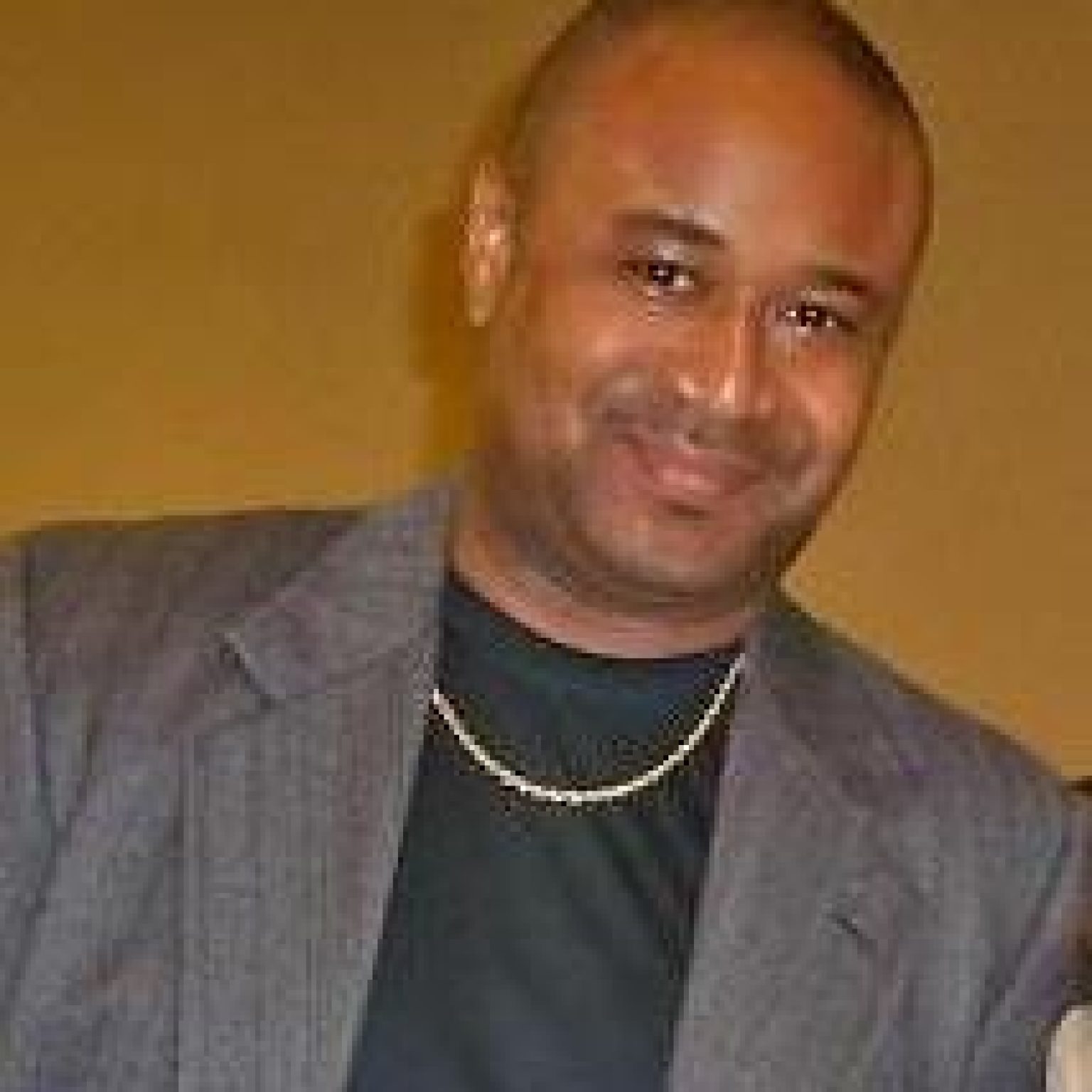
To add some clarity to the headline-making dispute, Finance Colombia Executive Editor Loren Moss recently sat down to talk with Colombian mining expert Paul Harris. In addition to being the organizer of the Colombia Gold Symposium, editor of the Colombia Gold Blog, and publisher of the Colombia Gold Letter, Harris serves as a consultant in Colombia on gold and copper mining, mining information analysis, and project identification, among other subjects.

Paul Harris is a mining consultant in Colombia, publisher of the Colombia Gold Letter, and organizer of the upcoming Colombia Gold Symposium.
Loren Moss: AngloGold Ashanti recently made global news because of its operations here in Colombia. A town where the company has operations, or where its have rights, voted 6,165 versus 76 to ban any mining activities, if I understand correctly, in the area where AngloGold had planned on making a large open-pit gold mine. What are the implications of that, and where are we now?
Paul Harris: The plan is to develop an open-pit gold mine that would certainly be the largest in Colombia. I think this vote has shown several things. One is that the company obviously hasn’t done a sufficient job of outreaching to local communities and key stakeholders to communicate what their plans are and how that could help local people and local development.
We did some back-of-the-envelope calculations. I think the project has got over 23 million ounces, and they’d be looking to produce over a million ounces a year. So — just using really back-of-the-envelope rough approximate calculations given the current gold prices — if that project was in production, the government would be receiving, in taxes and royalties, well over $400 million USD a year.
The government can do an awful lot with that kind of money, particularly given that it’s got a peace process to pay for, to develop a country. So, you’ve got a situation where 6,000 people are perhaps holding the whole country ransom. 6,000 people is far from being the majority of the voting population in that area, and they’re voting against the project.
What information are they using to make their decision to make their vote? AngloGold Ashanti hasn’t filed an environmental impact statement yet, and that’s the document that basically says to the government and the environmental authorities in Colombia what they plan to do, what the environmental impacts of that are likely to be, and the remediation or mitigation measures they’re going to put in place to counter those.
So, people were voting when there’s no real information yet in the public space about what they’re going to do. AngloGold Ashanti is a publicly traded company. It’s a very responsible company. It operates in various countries around the world. They are going to use state-of-the-art, current best-practice technology.
The people in Cajamarca, from what I read, their fears are about water. Potential competition for water resources or potential damage to water resources. Cajamarca has competing economic interests in terms of rice-growers. These are potentially the people that stand to suffer most.
Loren Moss: Rice is a water-intensive crop.
Paul Harris: It is, and if you look at how efficiently water is used there, or elsewhere in Colombia, it isn’t. People assume water is a free good. You drive anywhere in Colombia, you see places where the trucks can be washed — the water is just free-flowing. People do not use water efficiently. They do not conserve water. They consider it a free good.
Mining uses a tiny fraction of the available water source in Colombia. Agriculture uses dozens of percentage points of the available water sources. You’ve got these entrenched economic power structures, such as the rice-growers. But what’s their big issue? If you build a big mine, you’re going to have competition for labor, and mining is well known for being the sector that pays best, not just here in Colombia, but pretty much in any country in the world, mining pays best.
So, you’ve got these entrenched, economic, political powers that suddenly face potential increase in their costs. And bear in mind agriculture in Colombia is basically no different to serfdom. A lot of agriculture pays less than the minimum wage. People are almost indentured to the land. It doesn’t bode well for the people that own the means of production. So, I suspect, to a large extent, they’re one of the forces behind the campaign to stop La Colosa coming into production.
Loren Moss: Has AngloGold made a mistake in perhaps focusing their lobby and focusing their outreach on Bogotá — on the political sector — to the detriment of maybe being on the ground and starting off painting themselves as a protagonist rather than an antagonist? What could they have done better or differently? And now, is there a way for them to go in there and maybe fix the situation?
Paul Harris: I think in this instance, that’s a valid premise. AngloGold Ashanti has been in Colombia for over 10 years, and I think initially the senior management team they had in place really did focus its attention on the government in Bogotá, and to a certain extent ignored the local political scene, the mayors, and the governor. That failure to communicate outreach really early on has had quite a large ripple effect going forward.
The company, several years ago, called in new management, got rid of a lot of lawyers. Lawyers tend to see everything as a legal problem when mining really is a social thing. You may legally be right, but that’s almost a distraction — and that doesn’t matter. I remember years ago, AngloGold Ashanti threatened to sue the local government — I can’t remember if it was departmental or municipal — because the mining law said it has rights to do certain things and it wanted the local authorities to jump to it. You’ve got to let us do this, or we’re going to sue you.
Obviously, that antagonized and alienated all the local authorities and they put up their defensive shields. Lawyers see things as legal issues, but it’s a social issue. You’ve got to outreach, you’ve got to engage, you’ve got to show the shared benefit, you’ve got to paint the picture for the future.
Loren Moss: Sales. You’ve got to sell it.
Paul Harris: There was a management change a few years ago, and this management is much more focused on engaging with the local community, but once a negative environment has developed, it’s very difficult to repair that damage. It takes a lot of time, and a lot of time, and a lot of time. It needs a lot of openness, honesty and engagement.
AngloGold Ashanti has developed a lot of information to counteract some of the myths surrounding its project, but how deeply has that penetrated? That’s going to be a task that may take many years to get a level of understanding, to change people’s entrenched opinions. Once people’s opinions are entrenched, it is difficult to change them, particularly when they form their opinions on the absence of fact.
Now, AngloGold Ashanti does perhaps have a card up its sleeve here. It’s the 51% owner of the Gramalote Project here in Antioquia, which is permitted into production. It already has it environmental license. It’s a smaller project, but still a decent-sized one. So, one possibility is that AngloGold Ashanti could bring Gramalotte into production.
It’s also an open-pit gold project, so the company could show the people of Colombia, show the national government, show the people of Cajamarca and Tolima, that it can develop an open-pit mine responsibly. It can protect water sources. It can respect local communities and develop economic activities for local miners and farmers. It can, in short, have a very positive impact for the development of the region.
And then, the company can go back to Tolima and say “Look, we’ve done this responsibly. We’ve done it well. Give us the chance to do a similar thing with La Colosa for the benefit of everybody.”
Loren Moss: From your understanding of how mining works in Colombia, the legal framework for mining, what is your prognosis? There are a lot of unknowns, of course. But the local citizens have voted, and they said “No.” At least for those that participated, it was very overwhelming. And now we hear things that put the government in a bind because the government does not want to lose this major economic opportunity. But on the other hand they don’t want to look like they’re ignoring their own voting citizens. What are the possible solutions? Do you think there’s room to manoeuver, and where might we see things two years from now?
Paul Harris: Well, again I repeat: Did people really know what they were voting for? I would say no. But it has produced a situation. The courts in Colombia have said in their rulings that local communities must have a say. Local communities and municipalities must have a say in their land use and whether mining is part of that.
But the state is owner of the resources, which are administered by the Mining Ministry and the National Mining Agency. They’re the ones that implement policy.
So there is a bit of conflict of opinion or jurisdiction if you like. The national government has very much said that the jurisdiction is with us and that the local authority doesn’t have jurisdiction over such things. So, on the one hand you’ve got the national government being supportive of AngloGold Ashanti.
But secondly, I think it shows that government in general needs to work out a solution to bring both sides together, meaning the national government policy and local government participation. Whether that’s through a law or a decree, it’s for the government to establish a functioning mechanism that marries both the national government and the local government together. That, to me, would seem to be something that’s quite urgent to resolve.
We will see. Unfortunately, government policy here in terms of writing new law hasn’t been very successful or efficient in recent years. This is one of the reasons why the courts have stepped in to say “you can’t do this” and “you can’t do that.” But there’s definitely a need for clarity, and that’s got to come from government.
Loren Moss: You’re the CEO of AngloGold. What strategy do you employ to try to make sure that you get a positive outcome?
Paul Harris: A company like AngloGold Ashanti is a company that plays the long game. They’ve been here for 10 years. It takes a long time to find, explore and bring large deposits into production. If I was in charge, we would keep engaging the national government, and more importantly we would keep engaging the local government.
You know, times change. Opinions change. Elected officials change. You be a good corporate citizen, you do all the right stuff, you communicate honestly and openly. And as I mentioned previously, they’ve got the ability or the option of developing this other project as a means of showing people the “true mettle” of what they can do. Other than that, communicate, communicate, communicate. Invite where necessary, invite people to the projects, perhaps invite people to similar projects elsewhere to see how responsible mining companies run their operations.