

















Colombia has once again been recognized as the world’s leading destination for birdwatching due to having 1,558 species recorded and 12,007 checklists submitted during the Global Big Day, an event organized by the Cornell University Lab of Ornithology in the United States.
Photo: Hummingbird feeding in Bogotá’s Botanical Garden. (Credit: Jared Wade)
Colombia has now ranked first in the world every year since the inception of Global Big Day in 2015 with the exception of 2021.
Each year, Cornell University Lab of Ornithology, one of the world’s foremost institutions for birding and bird research, invites people from around the world to observe and record birds for a day. The goal is to gather important data on the distribution and abundance of birds on its eBird platform, which is crucial for conservation and scientific research.
By ranking first yet again, Colombia recorded more species than nearby biodiversity hotspots, such as Brazil, Peru, Ecuador, as well as global leaders like India.
Carmen Caballero, president of national investment promotion agency ProColombia, celebrated the honor.
“The outstanding performance of Colombia reflects our commitment to preserve natural wealth and consolidates our position as a world leader in birdwatching,” said Caballero. “We invite nature lovers to discover the magic of our landscapes and the extraordinary biodiversity of Colombia.”
The Colombian departments that stood out in the count were Antioquia, Meta, Valle del Cauca, Putumayo, and Cundinamarca, demonstrating the importance of biological diversity and conservation.
For this years’ event, ProColombia joined the US government’s USAID “Destination Nature” program to boost the bird count under the slogan “Gossip flies because birds have much to tell us,” a strategy that encouraged participation from both experts and enthusiasts during the event.
“It is excellent news to have once again ranked first in the number of bird species spotted during Global Big Day,” said Julián Guerrero, director of the USAID Destination Nature Program. “This not only shows that more people are joining these citizen science days supported by the program but also shows that Colombians are becoming aware of the importance of conserving our biodiversity and natural environments.”
Colombian exports (excluding the mining and energy sector) increased by 2.5% in the first three months of the year, bringing in $4.97 billion USD compared to $4.85 billion USD in the first quarter of 2023, according to the Ministry of Commerce, Industry, and Tourism (MinCIT).
In terms of volume, (non-mining and energy) exports grew by 10.5% in the quarter with shipments of 2.1 million tons. The first quarter of 2023 saw 1.9 million tons in exports.
The agricultural sector was among the best performers, per MinCIT.
Compared to the first quarter of 2023, export growth was led by: tilapia fillets (increase of 115.5%), bananas (84.9%), Tahiti lemons (60.3%), Hass avocados (34.7%), and sugar (17.5%).
Other notable growth was seen in cargo and passenger vehicles (up 74.4%), polyvinyl chloride (18.4%), and chocolates, candies and confectionery goods (3.3%).
In terms of locations, various regions within Colombia realized export growth, with the coffee-producing department of Risaralda experiencing by far the largest jump.
Though Risaralda only exported 4.1% of the national total, it outperformed its first quarter of 2023 figures by a staggering 69.2%. Antioquia, which accounted for 18.5% of the nation’s exports this quarter, saw year-over-year growth of with 4.8%.
In a policy change, Colombian airline Avianca has announced that all passengers younger than 15 years old will now be required to travel with a parent or duly authorized adult over the age of 18.
If that requirement is not met, the child will not be permitted to board, according to the Bogotá-based carrier.
The policy became official on May 15 for domestic and international flights operated by Avianca.
Tickets purchased before this date for children younger than 15 to fly alone, however, will still be honored, and arrangements won’t have to be accommodate the new rule.
“The airline recommends that all its customers confirm the requirements or authorizations necessary for the departure and entry of minors with the corresponding immigration authority of each country,” said Avianca in a statement. “In addition, we reiterate that the service of unaccompanied minors is not provided on any of our routes.”
The airline added that affected customers or others may reference its online help center for more information.
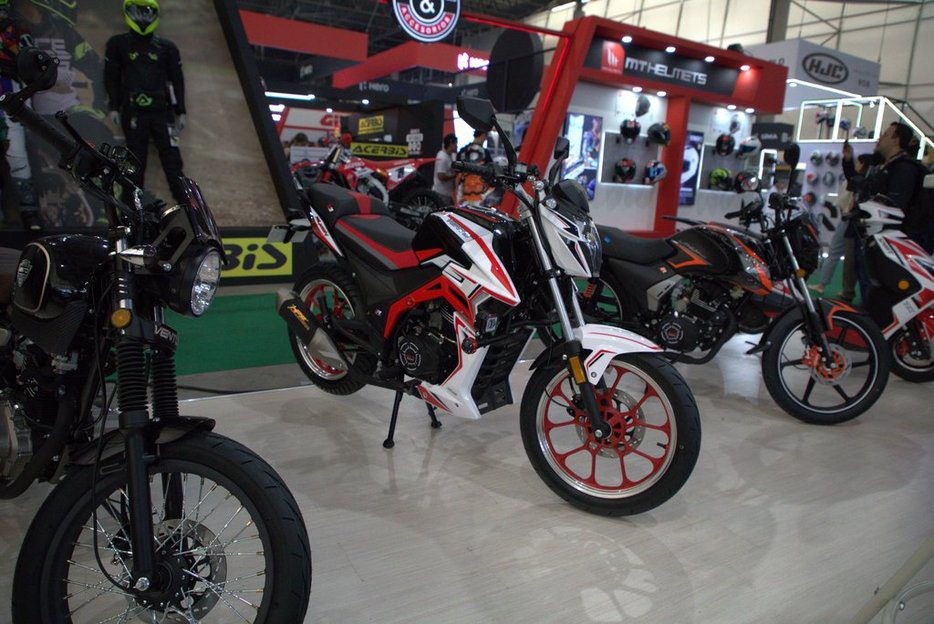
Feria de las 2 Ruedas 2024 (F2R) (2-Wheel Fair), the leading motorcycle event in Colombia, brought together a record 88,600 attendees in Medellín from May 2-5.
Participation in the 16th edition of the annual fair beat the previous high and included nearly 3,500 accredited members of the international business community from more than 40 countries, including most of Latin America, Japan, Australia, Saudi Arabia, Switzerland, India, Afghanistan, and more.
Of the 450 total exhibitors, 106 were international, including 12 first-time foreign exhibitors and a large presence of industry companies from Asia.
In terms of economic impact, F2R 2024 generated more than $20 million USD for the city, according to the Secretariat of Economic Development of Medellín, and helped facilitate upward of $60 million USD in sales, both between exhibitors in large-volume transactions and in sales to the general public who attended. More than 1,400 motorcycles were sold during the show, according to organizers.
Feria de las 2 Ruedas 2024 Highlights
The following is a rundown of some of the highlights, events, and educational sessions that took pace during F2R 2024 from the event’s organizers.
Academic events and connections
Around 25 academic and networking events were held at F2R 2024, consolidating the fair as a space for knowledge, competition and development, with the participation of more than 7,000 attendees. Castrol’s “Soy Tribu” Talk was the most visited, followed by the Leo Industries Workshop on Good Practices in Electrics for Motorcycles, the VI Update Seminar on Motorcycle Mechanics, the X Biker Women’s Forum, among other highlights.
(Photo credit: Loren Moss)
Sporting events brought together daring sportsmen and enthusiasts
The sporting events of F2R 2024 were an exciting spectacle that attracted elite athletes and motorcycle lovers. From stunts and techniques to competitions, these events highlighted talent and prowess in the world of two wheels.
Events such as the Stunt Nitrox Cup and the Stunt Betplay Festival, the acrobatics of Freestyle BMX, Flatland and the CRC – GW BikeTrial; and the GYMKHANA AKT competitions brought together more than 20,000 spectators who gathered to enjoy the action and adrenaline, creating a vibrant and passionate atmosphere at the fair.
Within the framework of the Stunt Cup championship, the winners were:
- High displacement category: first place – Pablo Zapata (Vocha); second place – Andrés Marín (Musingo); third place – Ángel Palacios (Chus Stunt)
- 2T expert category: first place – Neider Messino (Neiderstunt); second place – Cristian Zuluaga (Crz Stunt); third place – Yeimer Hernandez
- Rookie category: first place – Daniel Londoño (Thedannystunt; second place – Jhon Jairo Patiño (Kokostunt); third place – Luis Bernal (Bernal Stunt)
- Women’s category: first place – Angie Camargo (Mona Stunt); second place Veisy Salcedo (Veisy Stunt); third place Paulina Vélez
Product launches with the new Connection Gateway
In this space, 23 brands specializing in motorcycle parts, accessories, and equipment exhibited their product innovations and presented their launches through parades, shows and experiential shows.
Test Drive track
As part of F2R, more than 3,800 test drives were carried out on the Test Drive track, giving visitors the opportunity to experience first-hand the presentations and features of 51 motorcycle models.
Medellín’s Mayor’s Office and F2R supported entrepreneurs in the city
F2R 2024, along with the mayor’s office of Medellín, joined forces to promote the talent of local entrepreneurs, who have the vision and passion to create, innovate, and contribute to the economic growth of the city. Through programs and resources, they supported 10 entrepreneurs to promote products and services during the four days of the event.
Upcoming Events & Opportunities
F2R extends an invitation to participate in the next edition of the fair from May 15 to 18, 2025.
Likewise, you are invited to join the Expo 2 Ruedas in Bogotá later this year, from August 1 to 4, an event that results from the alliance between Prisma and Corferias that will be held with the aim of promoting the motorcycle industry and alternative mobility through exhibitions and innovative experiences.
(Photo credit: Loren Moss)
While the politicians have taken the gloves off and are back to their vitriolic, unhelpful best, the pension reform is slowly creeping through committees and votes in Colombian congress. There is a way to go. But perhaps, after months of chunterring, perhaps the pension fund administrators (AFPs) and others need to start preparing themselves for a new paradigm.
In another shift: El Niño who? The little boy has almost been forgotten already. Yesterday’s news. Reservoir levels, according to XM, are still only at 39.5%, but that is a long way above the 27% critical threshold seen previously, and all eyes are now on La Niña.
When it rains in Colombia, it really rains.
When pushed by colleagues about “rainy London,” I discovered that even in a normal weather pattern, Medellín receives 6x the rainfall of London. La Niña is a whole new level.
From Fedesarrollo, we saw data this week for an April improvement in retail confidence (15.3%) while industrial confidence (-3.4%) was little changed month-over-month. For choice, there was a better beat to the future outlook while both numbers were well up on April 2023. Last week we also saw a modest increase in consumer confidence (-11.4%) from the -13% in March. These numbers continue to move around month to month.
From the National Administrative Department of Statistics (DANE), we had the latest import data (March) and there was another decline of 18.8% to $4.8 billion USD. Across the board — from agriculture to manufactured goods to raw materials — there were sizable declines. And despite exports also struggling in March, the trade deficit improved to $686 billion US versus just over $1 billion USD 12 months ago. Again, this is a reflection of declining domestic demand.
READ MORE: Petro’s Reform Plans Stagnate as Colombia Sits at an Impasse
Ecopetrol was also in the news this week. Moody’s Ratings lowered its rating from ba3 to b1 and raised the outlook from negative to stable due to the increased debt requirements and cash flow situation. Reserves were also a slight concern. Also, Finance Minister Ricardo Bonilla made mention of increasing production to 1 million bpd — which would be a 30% increase from where we are today. We have heard this for years, since the days of former President Iván Duque and ex-Ecopetrol head Felipe Bayon, and it still seems fanciful. It would be most welcome news but Colombia, no doubt, but for several years now, the industry simply isn’t coming up with the new reserves it would require and needs to move on from the obsession with oil.
Never miss Rupert’s latest commentary
Follow him now on LinkedIn to see What Jumps Out
Celes, a Colombian AI platform for retailers, has closed on an investment round of $3 million USD led by Mexican company FEMSA Ventures. The Barranquilla-based firm says it will use the financing round, which brings its overall valuation to $12 million USD, to improve its product and expand in Latin America with a focus on Mexico.
The round included investments from MatterScale Ventures, Rockstart, Primeline Group, Wayra Hispam, Kuiper VC, NOA Capital, Storm Capital, Santiago Gómez from Simetrik and Fabián Carrillo from Cluvi.
According to Celes, which has it currently has clients in Colombia, Peru, Bolivia, Guatemala, Argentina, Ireland, and “is opening markets in Mexico.”
“The trust placed in us by FEMSA Ventures marks a pivotal moment in our journey towards the digitalization of the Latin American retail sector,” said Luis Ricardo Almanza, CEO of Celes, in a statement. “This investment not only validates our approach and solutions but also accelerates our mission to close the technology gap in the region, allowing us to offer our customers an unmatched competitive advantage.”
Celes frames its key value proposition around using artificial intelligence and data analysis with predictive models to “optimize inventories and replenishment in retail stores,” a dynamic that “translates into more efficient management, improved customer loyalty, and a more competitive pricing strategy.” For Latin American firms, the company says it can help them ramp up digitalization and “close the technological gap with global competitors.”
“Celes stands out as a promising solution to the inefficiencies faced by the supply chain of retailers and consumer goods companies,” added the company. “Its platform offers solutions to optimize inventory management and replenishment processes, addressing key needs in the retail industry. With a committed founding team that displays ambition, passion and discipline, Celes aligns well with FEMSA Ventures’ goals.”
Moody’s Ratings (Moody’s) yesterday downgraded Ecopetrol S.A.’s Baseline Credit Assessment (BCA) to b1 from ba3, which reflects its standalone credit strength. At the same time, Moody’s downgraded Ecopetrol’s long term issuer rating and senior unsecured ratings to Ba1 from Baa3 and changed the outlook to stable from negative.
Ratings Rationale
The downgrade of Ecopetrol’s BCA (a measure of the company’s intrinsic credit risk without support considerations) to b1 from ba3 and the ratings downgrade to Ba1 from Baa3 reflect a shift in the company’s financial policy as leverage has risen concurrently with the ongoing distributions of dividends and the coming implementation of an ambitious capital investment strategy spanning the next three years, which could erode the company’s liquidity position or lead to higher indebtedness. The downgrade also reflects the negative free cash flow posted in 2023 and Moody’s expectations that Ecopetrol will continue to register negative free cash flows by 2025.
Ecopetrol has been increasing debt levels in order to finance its expansion, including the acquisition of Interconexion Electrica S.A. E.S.P.’s (ISA, Baa2 stable). However, Moody’s acknowledges that capital investments have not resulted in a similar increase of the company’s EBITDA. Debt increased at a compound annual growth rate (CAGR) of 22% during the 2019-2023 period, while EBITDA has only grown at an 11% CAGR. Increasing debt has also led to a lower interest coverage of 8.3x in 2023 compared to the 12.6x of 2022. Given that Moody’s expects Ecopetrol to continue funding its ambitious capital spending plan through debt and due to the high interest rates environment, interest coverage will further decline to 7.3x, on average, for 2024 and 2025. Moody’s also recognizes that a number of Ecopetrol’s planned projects, particularly those involving natural gas, carry increased execution risk due to their location in deep-water offshore environments.
The downgrade also takes into account that Ecopetrol has been distributing a higher share of dividends compared to its current policy of 40-60% during the last 3 years, while increasing debt levels, demonstrating a more aggressive financial policy. The cash outflows have been partially compensated by the Government of Colombia’s (Baa2 stable) transfers to reimburse fuel subsidies. However, Moody’s recognizes that instead of reducing debt or strengthening the company’s liquidity position, available cash has been used for dividends.
Ecopetrol’s Ba1 ratings continue to reflect the company’s status as Colombia’s leading oil and gas producer, accounting for over 60% of the country’s production and close to 100% of the supply of oil products, as well its large power transmission business in Colombia and other countries in Latin America. Furthermore, Moody’s assumes high probability of support from the Government of Colombia and a moderate default dependence between the two entities; this assessment results in a three-notch uplift of Ecopetrol’s rating to Ba1 from its b1 BCA.
Ecopetrol’s liquidity position is adequate. During 2023, Ecopetrol registered a negative free cash flow position of $3.4 billion funded through a $3.8 billion increase of debt given its record capex investments. The company’s cash position as of December 2023 equaled $3.6 billion. Moody’s expects that in 2024 the company’s cash generation along with the Government of Colombia’s transfer to compensate fuel subsidies will be enough to cover mandatory cash obligations plus annual capital expenditures of about $6 billion, as per management’s guidance, and dividends. However, Moody’s expects that liquidity will be tight during the next two years per Moody’s expectation that capex will remain around $6 billion, and if dividend distributions continues to outpace the policy range. The rating action takes into account that while the company took an extended time to refinance 2023 and 2024 maturities, it has already refinanced 2025’s. The next significant debt maturity is in 2026 when $2.8 billion will become due.
Moody’s expects Ecopetrol’s financial obligations will continue to be supported by access to global and Colombian capital markets, and government support. Ecopetrol’s Ba1 ratings also take into consideration the solid and relatively stable cash flow from its power transmission company, Interconexion Electrica S.A. E.S.P. (ISA) and its midstream subsidiary, Cenit SAS, which includes Oleoducto Central S.A.
The stable outlook on Ecopetrol’s ratings reflects Moody’s view that its credit profile will remain mostly unchanged over the next 12-18 months. The stable outlook also reflects the stable outlook on the Government of Colombia’s sovereign rating.
Factors that could lead to a ratings change
An upgrade on Ecopetrol’s Ba1 ratings is unlikely over the next 12-18 months because Moody’s expects the company’s credit metrics to remain relatively stable. However, if the company manages to strengthen its financial policies and simultaneously demonstrates ability to register recurrent positive free cash flow, reduce financial leverage while growing production and keeping proved reserve life at least stable, its ratings could be upgraded. Specifically, its rating could be upgraded if the company’s Leverage Full Cycle Ratio remains at 1.5 times, which would indicate stable finding and development costs, and retained cash flow/net debt would have to be over 40% on a sustained basis.
A ratings downgrade could occur if there is a deterioration in Ecopetrol’s operating performance, including a significant decline of its reserve life on a sustained basis, or increasing liquidity risk or debt leverage from the current levels; or if retained cash flow/net debt declines to around 20%. In addition, because Ecopetrol’s ratings benefit from implicit support from the Government of Colombia, a negative action on the government’s rating or a change in Moody’s assumptions about government support could lead to a negative action on Ecopetrol’s ratings.
Profile
Ecopetrol, 88.5% owned by the Government of Colombia, is the largest integrated oil and gas company in the country. The company has three business segments, namely hydrocarbons, low-emission solutions and transmission and toll roads. Its gross production averaged close to 730 mboed and total assets amounted $65 billion on December 31, 2023.
ISA, headquartered in Medellin, Colombia, is an operating holding company with businesses in the electricity transmission, toll roads, telecommunications, and systems management sectors. The company holds direct and indirect ownership stakes in a portfolio of subsidiaries located in Colombia, Brazil, Peru, and Chile.
Frontera Energy Corporation (TSX: FEC) reported $97.2 million USD in quarterly earnings (operating EBITDA) earlier this month, an releasing the following comments from its key executives regarding the Candian oil company’s performance and upcoming outlook
Gabriel de Alba, chairman of the board of directors of Frontera Energy:
“Frontera’s focus remains centered on delivering on its strategic objectives and generating value for its stakeholders. Operationally, the company generated $97.2 million in quarterly Operating EBITDA, produced $25.7 million of Adjusted Infrastructure EBITDA, and maintained a robust balance sheet, finishing the quarter with a total cash balance of $182 million.
During the quarter, ODL declared a $157 million dividend ($54.9 million, net to Frontera), highlighting the strong cash generation capacity of this strategic infrastructure investment. The company also achieved an agreement in principle with Ecopetrol for the use of the company’s reverse osmosis water treatment facility (“SAARA”) under a two-year contract, a significant ESG and strategic milestone, for driving greater water disposal and crude oil production capacity at the Quifa block.
So far this year, the company has returned nearly $13 million of capital to our stakeholders, including $7.8 million in declared dividends, $4.1 million of common share repurchases and $1.5 million in buybacks of its 2028 unsecured notes. Moreover, the company, with support from Goldman Sachs, has launched a strategic alternatives process for its standalone and growing Colombian Infrastructure business, which may include a spin-off, a total or partial sale or other business combination.
The company will continue to consider future shareholder initiatives in 2024 and beyond, including potential additional dividends, distributions, or bond buybacks, based on the overall results of our businesses and the company’s strategic goals.”
Orlando Cabrales, chief executive officer of Frontera Energy:
“Frontera’s first quarter results were in-line with our expectations despite some unforeseen challenges. First quarter production declined approximately 3% on a quarter over quarter basis, impacted primarily by natural declines and well failures in our light and medium, and natural gas assets, temporary community blockades and delays related to strategic water disposal initiatives in the heavy oil assets partially offset by positive performance from our heavy oil assets.
Supported by another average daily production record at the CPE-6 block, we grew our heavy crude oil production during the quarter to approximately 23,400 bbls/d, a 2% increase over the prior quarter. Our heavy asset growth was driven primarily by higher field activity and investment as well as increasing oil production and water disposal capacity at both our Quifa and CPE-6 blocks and it could have been higher if community blockades and delays related to our strategic water disposal initiatives, including SAARA, had not taken place.
On the exploration side, we are excited about the spudding of our high impact Hydra-1 prospect on the VIM-1 block scheduled for June 2024.
We reiterate our production and capital guidance for 2024. Our 2024 drilling campaign started strong and continues to meet expectations. We expect improved production and profitability throughout the rest of the year as we advance our development portfolio in Colombia and Ecuador and increase water-handling infrastructure and facilities in CPE-6, as well as in Quifa after the agreement reached with Ecopetrol on SAARA.”
(Photo credit: Frontera Energy)
There is little news to start the week in Colombia — or at least much that is fresh (or particularly interesting). And the simple reason is that, 21 months into the government of Colombian President Gustavo Petro, we have hit a stalemate in terms of getting things done. Additionally, the economic blame game is in full throttle.
Once again, we are seeing the lack of a Colombian collective with everyone in it for themselves.
Photo: Colombian President Gustavo Petro (Credit: gustavopetro.com.co)
Petro is neither a pariah nor messiah. It is hard to argue against the need for change surrounding many of things he is trying to change, but his methodology has only further antagonized a ruling elite, who are opposed to changing the world order.
Remarkably, there are elements of Colombian society who seem comfortable with 3% of the population suffering from malnutrition, systemic corruption, and a constitution that fails to enshrine education as a citizen’s rights.
In terms of all the main reforms Petro has proposed — education, pension, labor, and health — changes are clearly needed. Yes, there is a need for debating and fine tuning the details, but in the end there are too many people with skin in the game to ever allow wholesale changes. Beyond that, trying to change the world in four years, was never going to work.
The economy is struggling — but not just because of confidence around Petro. A hostile Banco de la República has been almost negligent in reducing rates too slowly and not allowing the economy to breath. The private sector (in the shape of ANDI, FENALCO, and Asobancaria) has all said the same. The fact that Petro doesn’t inspire confidence, however, is a contributing factor.
Ratings agencies are demanding Petro balance the books — but then he is criticized locally for not easing the purse strings.
Finance Minister Ricardo Bonilla has mentioned increasing the debt level to inject money into the economy — but then he takes a beating.
Already, everyone is eyeing the 2026 elections, so it is hard to get anything done without favors — marmalade as they call it here — being called in. Alliances continue to shift around.
The country has arrived at a frustrating, irritating, and — frankly — boring moment. Additionally, the politicians are up to their usual game: “If you in investigate me, I will investigate you.”
I’d like to say this will all blow over soon. But to the Colombian elite, Petro represents, in their mind’s eye, an existential threat. And they are fighting hard to retain the power they have.
Never miss Rupert’s latest commentary
Follow him now on LinkedIn to see What Jumps Out
Colombian telecom operators should see modest improvement in their financial profiles in 2024 and 2025, according to a recent analysis from Fitch Ratings.
While free cash flow improvement, along with expected cost-cutting initiatives and a reduction in capital expenditures, will support these positive developments, the outlook for the telecommunications sector in Latin America remains negative for 2024 and “these potential gains are expected to be constrained by persistent competitive pressures within the sector,” wrote the New York-based ratings agency in their report.
A big overall constraint is the companies ongoing challenge to make a return on large 5G and fiber investments.
“Instrumental to maintaining credit profiles and debt trajectories,” stated Fitch, “is the ability of operators to defend market share while effectively navigating investment decisions and dividend disbursements, particularly in the face of the ongoing transition to 5G mobile networks and the roll-out of fiber-optic infrastructure.”
Empresa de Telecomunicaciones de Bogota (ETB), in particular, was noted as having a negative outlook, while Fitch has assigned a stable outlook to both UNE EPM Telecomunicaciones (UNE EPM) and Colombia Telecomunicaciones (ColTel).
“An improving financial profile has recently enabled UNE EPM to access local capital markets, issuing COP160 billion under its current bond program, which has further improved the company’s financial flexibility,” wrote Fitch Ratings.
Overall, the mobile market in the Andean nation “should continue to show significant pricing pressure as incumbent operators maintain promotional activity,” particularly given the jump in mobile penetration, per capita, from 135% in 2019 to 160% at the end of 2023.
On the broadband side, the market appears stable, but ETB is struggling to gain share, while ColTel “continues to outpace rivals with its superior FTTH network” and UNE EPM saw a slight drop in market share (from 20% to 18%) in 2023.
“Longer term, Fitch sees further growth potential in the fixed broadband space, given Colombia’s relatively low penetration rate of 17% per capita as of December 2023,” stated the agency. “However, a near-term deceleration in growth is expected, normalizing from higher levels seen during the pandemic. This is evidenced by a modest decline in total broadband accesses during 2H23, down from the peak levels seen in the 2Q23.”
 Empleobilingue.com

- Director/a de operaciones para hotel, restaurante y discoteca 1626320364.60 - Medellín, Medellin, Antioquia, Colombia
- Coordinador/a de calidad para La Unión 1626483143.1 - La Unión, Antioquia, Colombia
- Desarrollador fullstack - Bogotá, Bogota, Colombia
- Technical Analyst - Remote
- PIM Administrator - Ecommerce - Remote (Bogotá, Bogota, Colombia)
- Auxiliar de gestión humana y bienestar para Girardota 1626060072.28 - Girardota, Antioquia, Colombia
- Marketing Strategist
- Trainer Manager - Bogotá, Bogota, Colombia
- Tolemaida UH- 60 Inspector - Bogotá, Bogota, Colombia
- Virtual Assistant - Team Lead - Remote
Contact Us

