

















Collective Mining Ltd. (NYSE: CNL) (TSX: CNL) has announced the discovery of a high-grade vein system at it’s ME target and the completion of a gravimetric survey within the Guayabales Project in Caldas, Colombia. The survey identified seven new gravity anomalies with characteristics similar to the company’s Apollo system.
Drill hole MEC-2 at the ME target intersected a high-grade vein system, with assay results including 0.65 meters grading 534.0 grams per tonne (g/t) gold and 40 g/t silver from 274.5 meters downhole, and 0.90 meters grading 47.2 g/t gold from 291.8 meters downhole. The company has interpreted this intersection as high-grade vein leakage from a larger, mineralized breccia body.
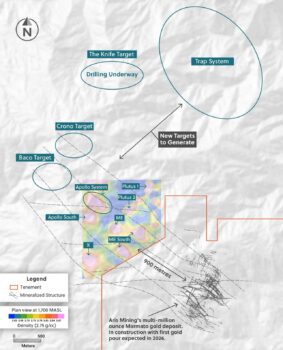
Figure 1: Plan View of the Guayabales Project Highlighting Northwest and East-West Mineralized Structures, Greenfield Targets Generated to Date and their Respective Locations from the Multi-Million Ounce Marmato Mine (CNW Group/Collective Mining Ltd.)
Following the initial results from a new gravimetric survey, drilling on hole MEC-3 at the ME target was halted due to the hole’s trajectory being outside an identified gravity high. Collective Mining has recommenced drilling at the ME target, focusing on the gravity high.
The gravimetric survey was conducted over a two-square-kilometer area of the Guayabales Project, encompassing the corridor extending from the Apollo system to the concession boundary of Aris Mining’s (TSX: ARIS) (NYSE-A: ARMN) Marmato mine. The survey’s effectiveness in identifying the Apollo system as a gravity-high, attributed to its concentration of breccia-hosted sulfides, supported its application to other areas.
The survey has identified seven new gravity anomalies with gravimetric features similar to Apollo. These include Apollo South, located southwest of Apollo; three anomalies within the ME target area; one in the X target area; and two in the Plutus target area. These new targets are characterized by gravity highs that originate at or near the surface and extend vertically to the survey’s depth limit.
Diamond drilling with two rigs has commenced to test the ME and X gravimetric high anomalies. Additional drilling is planned for the remaining gravity targets. The Apollo South anomaly, located 250 meters southwest of the Apollo system, is identified as a potential extension of the Apollo system. The X gravity anomaly, situated 1 kilometer south of Apollo, is slated for a maiden drill program targeting an outcropping mineralized breccia body.

Figure 2: Zoomed-in Plan View Highlighting the Seven New Gravimetric Anomalies and Assay Results for the High-Grade Vein System Discovered at the ME Target (CNW Group/Collective Mining Ltd.)
The ME and ME South gravity anomalies, located between 0.6 and 1 kilometer southeast of Apollo, are currently undergoing drilling at the ME anomaly. The Plutus 1 and 2 gravity anomalies, located up to 1 kilometer east of Apollo, are described as large and undrilled, with the Plutus 1 anomaly exhibiting continuity over 700 vertical meters. Previous surface sampling in the Plutus area indicated quartz diorite-hosted gold-copper porphyry mineralization.
Collective Mining currently operates nine drill rigs, with seven assigned to the Guayabales Project and two to the San Antonio Project, as part of its 70,000-meter drill program for 2025. Two additional deep-capacity rigs are being mobilized to the Guayabales Project to resume testing of the Ramp Zone within the Apollo system in Q3 2025. Approximately 128,000 meters of diamond drilling have been completed at the Guayabales Project to date, including 90,000 meters at Apollo. Assay results for 29 drill holes are currently pending.
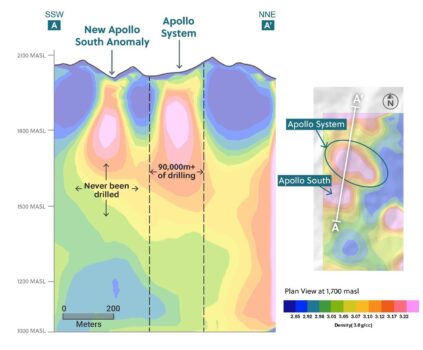
Figure 3: Section along Apollo, Highlighting the New South Apollo Anomaly Only 250 Metres from the Company’s Flagship Apollo System (CNW Group/Collective Mining Ltd.)
The company’s exploration strategy includes increasing the grade of the Apollo system through systematic drill testing of new sub-zones, expanding the Apollo system along strike and depth, and drilling less advanced or newly generated targets. The San Antonio Project also has an ongoing drilling campaign targeting a bulk-tonnage porphyry system.
Technical Details
Diamond drill hole MEC-2 was drilled northeast from Pad ME3, targeting a high-grade geochemical signature identified at the surface. The hole intersected a new high-grade vein system within porphyry quartz diorite and diorite, exhibiting crackle and brecciated textures with sulfides including chalcopyrite, pyrite, sphalerite, and galena.
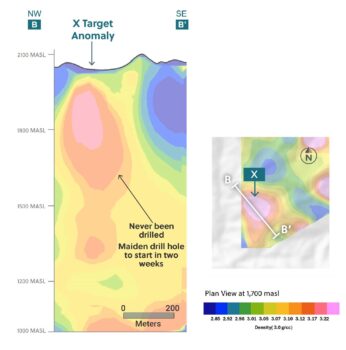
Figure 4: Section along the X Target Highlighting the New Gravity Anomaly Generated by the Survey (CNW Group/Collective Mining Ltd.)
The gravimetric geophysical program was executed by ARCE GEOFISICOS SAC in June 2025, covering 2 square kilometers with 414 stations on a 50-meter east-west by 100-meter north-south grid. The program aimed to detect high-density sulfide-bearing bodies similar to Apollo to a maximum depth of 800 meters. The method measures variations in the Earth’s gravitational field to identify anomalies associated with density changes in subsurface rocks.
Sample preparation and analysis were conducted at ALS laboratory facilities in Medellín, Colombia, and Lima, Peru. The company employs a quality assurance/quality control program, including the insertion of blanks, duplicates, and certified reference standards into the sample stream. True widths are estimated to be between 60% and 95%, and grades are uncut.
Table 1: Assay Results for Drill Holes MEC-2
| Hole # | From (m) |
To (m) |
Length (m) |
Au g/t |
Ag g/t |
| MEC-2 | 274.50 | 275.15 | 0.65 | 534.00 | 40 |
| and | 291.80 | 292.70 | 0.90 | 47.20 | 8 |
| True widths are between 60% to 95% and grades are uncut. |
The Tower target area, where three diamond drill holes were previously completed, did not encounter significant mineralization and is located in a gravity low according to the recent survey. Consequently, the Tower target has been deprioritized, and no further drilling is planned.
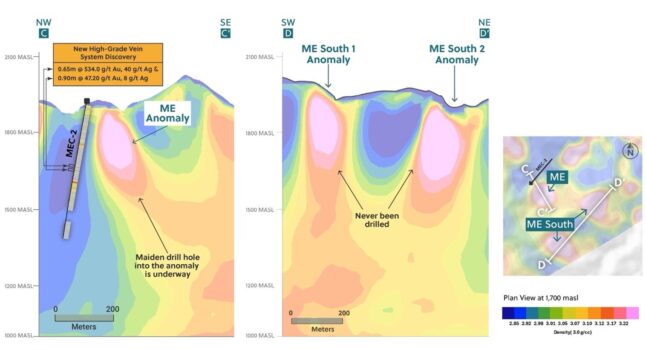
Figure 5: Section along Both the ME and ME South Anomalies Highlighting Three Large, Undrilled Gravimetric High Bodies (CNW Group/Collective Mining Ltd.)
Wholesale food prices in Colombia showed mixed behavior during June 2025, according to data reported by the Bulletin of Wholesale Prices of Agricultural Products issued by the Rural Agricultural Planning Unit (UPRA). While the downward trend continued in fresh fruits, pork, tubers, and processed foods, increases were observed in vegetables, grains, meats, eggs, and dairy products.
The prices of products such as carrots, beets, junca and bighead onions, broccoli, and green beans in pods increased by more than 10% driven by a lower supply from key regions such as Cundinamarca, Antioquia, Boyacá, and Nariño. In contrast, products such as cucumber, chocolo (corn), tomatoes, and green beans registered decreases, in some cases also greater than 10%.
In the group of fresh fruits, the price falls in mandarins, lemons, guava, oranges, pineapples, avocados, apples, soursops (guanabana), and bananas stood out. However, some tropical fruits such as tree tomatoes (tomatos de arból), mangoes, and passion fruit showed considerable increases, as did grapes, melons, and dragon fruits (pitaya).
“These price fluctuations respond to both climatic conditions and natural production cycles, which forces us to continue strengthening agricultural planning with data. We continue to advance in tools to anticipate these variations and better guide production and marketing in the territories,” said Dora Inés Rey, director of the UPRA.
In tubers, decreases were recorded in the native and black potato varieties, as well as in the arracacha. However, products such as bananas, yams, and cassava reported moderate increases, in line with their seasonal behavior. In meat, the prices of several cuts of beef, fish, and chicken increased slightly, while Dora Inés Rey presented a generalized, although moderate, reduction.
The behavior of egg prices was on the rise in all categories, and the same happened with artisanal cheeses. In grains and cereals, decreases were observed in products such as yellow corn and imported lentils, while beans such as red cargo and radical increased their price. Finally, among processed foods, increases were recorded in sugar, coffee, chocolates, and refined oils; while decreases were observed in flours, pastes, and mixed vegetable oils.
Pork. Photo credit: ludiarin from Pixabay.
In May 2025, the employed population in Colombia’s rural sector reached 4.8 million people; the highest figure recorded for this month in the last seven years, according to labor market results published by DANE. This represents a growth of 88,591 more people compared to the previous year, which is equivalent to 1.9% more.
This behavior occurs in a context of general improvement in the labor market. Nationally, the unemployment rate was 9%, representing a reduction of 1.3 percentage points from 10.3% in May 2024. In total, 23.6 million people were employed in the country, with a year-on-year increase of 596,741 people.
The agriculture, livestock, hunting, forestry and fishing branch was key in this performance. In May, this activity employed 3.5 million people, with an increase of 65,798 employed compared to the same month in 2024. With a share of 14.8% of the national total, it remains the second economic activity with the highest number of employed people in Colombia.
Overall, rural labor market indicators show positive signs. In May 2025, 56.3% of the working-age population in the rural sector was employed, an increase of 0.5 percentage points compared to the same month of the previous year. Likewise, the overall participation rate was 60.8%, higher by 0.7 percentage points, which reflects greater dynamism and willingness to participate in the labor market in rural areas.
In May 2025, the rural sector reached 4.8 million employed people; the highest level recorded for the month of May in the last seven years
The quarterly performance reinforces this trend. In the period March-May 2025, the rural unemployment rate was 7.2%, an improvement compared to the 7.6% recorded in the same quarter of 2024. The rural employed population grew by 119,055 (+2.5%), and agriculture, livestock, hunting, forestry, and fishing activity increased by 79,320 (+3.1%), representing 54.1% of total employment in rural areas.
Despite employment growth, informality remains the main structural challenge. Between February and April 2025, 84.7% of rural workers were in an informal condition, compared to 49.5% in the municipal capitals. In the specific case of agricultural activity, informality reached 86.3%, this being the economic activity with the highest proportion of informal workers in the country.
“The Colombian countryside is demonstrating its capacity to absorb labor; The challenge now is to improve the quality of employment. We need more formalization, more productive investment, and better working conditions so that the growth of employment translates into rural well-being,” said Dora Inés Rey, director of the UPRA.
Livestock. Photo credit: Leuchtturm81 from Pixabay.
The Ministry of Commerce, Industry and Tourism (MinCIT), through Fontur and in alliance with Entremar, announces the opening of a call for a training and facilitation program for labor linkage in the cruise industry, an initiative that seeks to strengthen the skills of Colombians to improve their access to job opportunities in international shipping companies.
In addition, this initiative strengthens the employability of the selected people through comprehensive and specialized training that will allow them to obtain the International Navigation Certificate.
It is important to clarify that the ministry does not offer direct jobs or guarantee hiring on cruise ships. Their role is to facilitate the training and accompaniment process, so that participants have the necessary tools and increase their chances of being hired. The final employment relationship will depend exclusively on the requirements of the shipping companies and the profile of each candidate, including their experience, resume, and performance in the selection processes.
The call, which will be open until July 26, is aimed at Colombians of legal age with a conversational level of English and experience or training in areas such as hospitality, tourism, gastronomy, nursing, first aid, aesthetics, swimming, rescue, among others. Those selected must comply with an intensive training process, medical exams, and be available to embark on international cruises for a minimum of three months.
Requirements to Participate
To be part of the process, applicants must meet the following requirements:
- Be a Colombian citizen over 18 years of age.
- Have a conversational level of English that allows them to interact in international contexts.
- Have education, training, or work experience in areas related to tourism services such as: gastronomy, medical and first aid services, customer service, cleaning services, recreational artists, photographers, administrative services, human resources, and finance.
- If shortlisted, you must present an occupational medical examination certifying fitness for work at sea (this examination is mandatory for embarkation processes, the cost of which is not included in the call for applications).
- Be willing to participate in complementary virtual and in-person training processes and accept occupational support, facilitated by Entremar, during the duration of the project.
Individuals who may not participate:
- Do not have complete documentation required in the call for applications, will not be eligible to apply.
- Have a criminal or immigration record that prevents them from working internationally.
- Have failed the medical examinations required to work onboard cruise ships, according to the cruise line’s standards.
- Have no availability to travel or remain on board for a minimum period of 3 months.
Selection Process
The first step is to apply on the Ministry of Tourism’s website:
Some of the documents that candidates must attach are: a resume in English, a PDF file containing educational and work experience certificates previously recorded on the resume, a document that meets the requirements of the position for which they are applying, and a legible copy of their ID on both sides in PDF format, among others.
Once registered, a document review phase begins to ensure that candidates meet the requirements. After this, the preselected candidates are summoned for interviews, which will be held in the following cities and on the following dates:
- Bogotá: Thursday, July 31.
- Cartagena: Friday, August 1.
- Medellín: Saturday, August 2.
- Sincelejo: Monday, August 4.
- Bucaramanga: Wednesday, August 6.
- Cali: Friday, August 8.
- San Andrés Islands: Saturday, August 9.
After the interviews, the preselected candidates are announced, and the candidates must submit medical examinations to finally enter a training and coaching phase. The cost of this course will be covered by the ministry through Fontur. After this phase, the International Navigation Certificate is processed, and upon obtaining it, the candidate is hired.
This process ensures that Colombians have the necessary tools to perform successfully in a high-level tourism environment, improving their career prospects and quality of life.
Cruise ship. Photo credit: susannp4 from Pixabay.
This column’s idea is to look for what is jumping out in Colombia, making a difference, and what should be on the radar.
This week little of that, so I will spare you another video with me basking in the sun of the UK.
Rosa Villavicencio, the new temporary foreign minister, is still trying to unravel the US situation in terms of both trade and political vitriol. Little progress this week.
Violence is still making headlines with the Gulf Clan (ex-Paramilitaries), ELN & FARC dissidents making unlikely bed partners as they fight for their share of the narcotics trade.
There are rumblings (only in a quiet news week) about Gustavo Petro looking to ban opinion polls ahead of next year’s elections. Frankly, does anyone on a global scale ever read them? Those locally, if you check the technical information, have long since been unreliable in methodology, inaccurate, and, added to this, the local press cherry-pick how they report them. Miguel Uribe, still struggling for his very life in the hospital, has risen from nowhere to top the most recent polls.
And that is about it. As ever, we have presidents, past and present, being accused of all manner of things, as well as the usual political shenanigans in congress, but I won’t waste your time.
Have a great Friday.
Regards.
Roops.
Never miss Rupert’s latest commentary.
Follow him now on LinkedIn to see What Jumps Out.
President Gustavo Petro. Photo credit: Presidencia de la República de Colombia.
Exports from the agricultural and agro-industrial sector recorded their best historical performance for this month in May 2025, with a growth of 26.7% in value and 10.7% in volume compared to the same month of the previous year. This behavior consolidates an expansion trend that reflects the capacity of Colombian agriculture to respond to international demand, generate foreign exchange and contribute to the rural economy.
During May, the country exported agricultural products for a total of $1.322 million USD, mainly driven by the increase in foreign sales of coffee, palm oil and avocado. In volume, 664,560 tons were shipped, confirming the sustained dynamism of the sector.
The accumulated behavior so far this year also broke records: between January and May 2025, exports totaled $6.401 million USD, 36.8% more than in the same period of 2024. In volume, the increase was 11.6%, with 2.84 million tons exported. In both cases, this is the highest value and volume recorded for this period since comparable information is available.
“The strengthening of agricultural exports is a sign of the productive potential of our country. These results are not accidental: they are the reflection of a field that is ordered, that innovates, and that connects with the markets. From the UPRA, we continue to promote planning with a territorial approach so that each hectare is used with technical criteria, generating more value and more opportunities for the regions,” said Dora Inés Rey, director of the UPRA.
Among the best-performing products were coffee, whose exports increased by $159.7 million USD (+59.9%), palm oil and palm kernel with an increase of $42.4 million USD (+53.6%), and avocado, which grew by $13.9 million USD (+65.4%). In volume, relevant increases were reported in exports of palm oil and palm kernel (+34.1%), sugar (+104.9%), and avocado (+65.4%).
This rebound is also observed in the annual trend: between June 2024 and May 2025, agricultural and agro-industrial exports grew 26.8% in value and 6.1% in volume compared to the same period of the previous year.
Coffee beans. Photo credit: Pexels from Pixabay.
Colombia continues to solidify its position as one of the most attractive destinations in Latin America for medical tourism, a sector that has shown consistent growth. According to data from ProColombia, medical tourism in the country was valued at $235 million USD in 2024, with projections estimating it will reach $287 million USD by 2027.
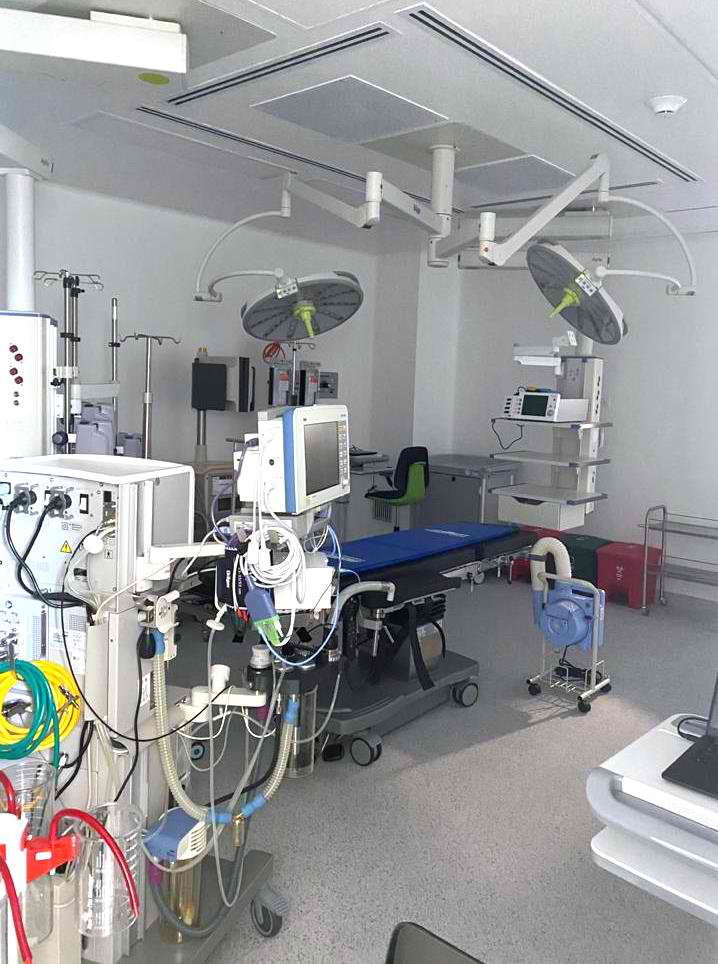
Cities like Bogotá, Cali, and Medellín lead the ranking of preferred destinations for those seeking high-quality medical and aesthetic services at competitive prices. Based on figures compiled by Cali’s city mayor’s office, between January and May 2024, Bogotá had received 3,951 medical tourists, followed by Cali with 3,331, and Medellín with 2,170. Other cities such as Barranquilla (553) and Cartagena (336) are also part of this growing phenomenon.
During the 44th Vitrina Turística de Anato Valle del Cauca (the region whose capital is Cali) announced a strategic plan to position itself as Colombia’s hub for medical tourism by 2027. The goal: attract 20% of all international patients coming to Colombia for medical treatment, a feasible target given current trends. Of the 3,331 medical tourists that Cali welcomed in the aforementioned period, 2,730 of whom were foreigners and 601 Colombian nationals living abroad. The majority of these visitors came from the United States, followed by the Netherlands, Panama, Ecuador, and Canada.
Cali boasts 3,912 registered healthcare providers (according to the REPS — Special Registry of Health Service Providers), ensuring a robust infrastructure to meet international demand. This strong institutional capacity has positioned Cali as a national and global leader in medical tourism.
Most international patients in Medellín come from the United States, Caribbean countries, Panama, the Netherlands, Spain, and Canada.
Meanwhile, Medellín broke records in 2024, serving 23,323 international patients (an average of 64 people per day), according to the Medellín Health City Cluster report by the Medellín Chamber of Commerce for Antioquia. This reflects a steady 14% annual growth since 2010. The city offers services in specialties such as ophthalmology, plastic surgery, cardiology, orthopedics, and gastroenterology, with total medical service revenues reaching $64.5 billion COP last year. The broader economic impact of medical tourism in Medellín, including lodging, transportation, and other spending, was around $45.5 billion COP.
“As a plastic surgeon, it is very gratifying to receive patients from abroad who come to experience Colombia and enjoy the benefits of our healthcare system. Every year, we successfully perform facial and body surgeries on patients who wish to improve some aesthetic aspects. The main challenge we face is the length of stay in Colombia. When it is less than 15 days, it makes follow-up body surgeries difficult. To this end, we have optimized the logistics of performing surgeries and the follow-up period so that we can guarantee maximum safety for our patients during the process,” said Dr. Tomás Feria Romero, a plastic surgeon based in Medellín, who is bilingual and equipped to perform complex aesthetic and reconstructive procedures.

Dr. Tomás Feria Romero, a plastic surgeon based in Medellín. (Photo credit: Dr. Tomás Feria)
“Surgery planning often begins six months or more in advance, through video call consultations, where we advise our patients on every detail to ensure an optimal experience. It is interesting to see how patients increasingly seek us out, not only for the benefit of the currency exchange but for the results we obtain and the Latin perspective of our results,” he explained.
Colombia’s position is further validated by global data. According to the 2024 report by the International Society of Aesthetic Plastic Surgery (ISAPS), Colombia ranks as the 13th country with the most plastic surgeons worldwide. Remarkably, 30% of procedures performed in Colombia are for foreign patients, the third-highest percentage globally, surpassed only by Tunisia and the UAE. The country ranks 10th globally in breast surgeries (85,920 procedures, representing 2.2% of the global total) and 9th in body & extremities aesthetic surgeries.
This momentum also makes Colombia an ideal destination for foreign investment in the healthcare sector. According to Newsweek’s World’s Best Hospitals 2025, Fundación Valle del Lili in Cali ranks 162nd globally, and Fundación Santa Fe de Bogotá ranks 244th. A total of 60 Colombian hospitals were included in the study. Additionally, Colombia stood out in the Latam Business Conference 2024 ranking of Best Hospitals in Latin America, which featured 11 Colombian institutions, including Fundación Santa Fe with a score of 94.4, making it the second-best hospital in Latin America among 36 evaluated institutions.
Multinational insurer SURA chose Rionegro, in the suburbs of Medellín, for Vaxthera, its groundbreaking new vaccine production facility, led by the renowned researcher, and University of Wisconsin Molecular Virologist Dr. Jorge Osorio.
Photo credit: Loren Moss.
Colombia’s regulatory strength further supports this growth. Its national regulatory agency, INVIMA, is recognized by the Pan American Health Organization (PAHO) as a Level IV authority. Additionally, INVIMA’s Physicochemical Laboratory for Pharmaceuticals and Other Technologies is on the World Health Organization’s (WHO) list of prequalified laboratories. The lab is certified for meeting Good Laboratory Practices (GLP) standards for analyzing medicines, cosmetics, dietary supplements, biologics, herbal products, and household hygiene products.
Colombia’s rise in medical tourism is a growing phenomenon that can be attributed to its advanced technology, world-class medical professionals, and lower costs compared to other countries, all without compromising international quality standards.

Multinational insurer SURA chose Rionegro, in the suburbs of Medellín, for its groundbreaking new vaccine production facility, led by the renowned researcher, and University of Wisconsin Molecular Virologist Dr. Jorge Osorio.
Headline photo: A patient preparing for an MRI procedure, courtesy Fundación San Vicente, Rionegro, Antioquia, Colombia
In May 2025, 654,252 tons of food entered the country’s main wholesale centers, the highest volume recorded since this measurement was systematically carried out (January 2013). The increase was 6.8% compared to the same month in 2024, consolidating a growth trend in the supply and availability of fresh and processed foods in the country’s cities.
This positive performance was reflected in 16 of the 23 cities with reference wholesale markets, with especially notable increases in Tibasosa (67.8%), Manizales (29.2%), Villavicencio (15.3%), Armenia (12.5%), Medellín (11.3%), and Bogotá (8.4%). Although there were reductions in some points, such as Ipiales (-25.4%) and Santa Marta (-22.8%), the national balance was largely positive.
By food groups, the greatest dynamism was in processed foods (15.3%), grains and cereals (12.8%), fish (10.2%), dairy products and eggs (9.2%) and tubers, roots and bananas (7.0%). Fruit (5.9%) and vegetables (4.4%) also increased. Only the meat group showed a slight decrease (-1.7%).
“This data confirms that the countryside is responding to the country’s food demand. To plan efficiently, we need to know what is coming, from where, and in what quantities. Technical monitoring of supply is key to guaranteeing food security and guiding production from rural territories,” said Dora Inés Rey, director of the UPRA.
In the group of vegetables, 180,620 tons entered, with outstanding behaviors in the supply of beans (33.9%), corn (32%), celery (19.4%), garlic (18.8%), cucumber (17%) and peppers (16.2%). Increases were also reported in carrots, onions, beans and other vegetables. On the other hand, the entry of green peas, cabbage, tomatoes, onions, pumpkins and lettuce decreased.
In the case of Cali, one of the main receiving cities, 42% of the volume of vegetables came from Valle del Cauca, followed by Nariño (22.8%), Bogotá (16.3%), Boyacá (14.3%) and Cauca (2%), evidencing the articulation between producing regions and urban markets.
Onions. Photo credit: moviedo from Pixabay.
To enhance MICE (Meetings, Incentives, Conferences, and Exhibitions) tourism in Bogotá, 56 local tourism service providers participated in a diploma course focused on this sector. The initiative aims to strengthen the industry by promoting trade, innovation, and business opportunities. Through the diploma program, participants will improve their competitiveness, sustainability, and innovation in event management.
The project is the result of collaborative efforts between the Ministry of Commerce, Industry, and Tourism, Fontur, Fenalco, the Bogotá Chamber of Commerce, and the Externado University of Colombia. MICE tourism boosts the local economy by attracting corporate, academic, and institutional visitors who participate in high-impact events, generating employment, and consumer spending, and increasing the destination’s reputation.
“Meeting tourism not only boosts the local economy, it also presents us to the world as a prepared, diverse, and sustainable country. Bogotá has everything it needs to consolidate itself as the epicenter of major events,” stated Diana Marcela Morales, minister of commerce, industry, and tourism.
Of the 56 tourism service providers who participated, 28 completed the Diploma in Comprehensive Event Management, aimed at officials and collaborators of companies and MSMEs in the tourism sector. During 120 hours of in-person training, provided by the Externado de Colombia University and the Meeting Professionals International (MPI) organization, attendees were trained in legal and financial aspects, event modalities, social responsibility, operations, evaluation, and sustainability. As an added value, they obtained the international “Meeting Essentials” certification.
Additionally, 28 other providers completed the Sustainable Event Management Course, which allowed them to strengthen their skills in responsible practices and learn strategies to mitigate the environmental impact of organizing meetings, conferences, fairs, and other events. This comprehensive approach provided them with tools to combine competitiveness with sustainability.
The project had an investment of $1.066 billion USD, 77% co-financed by the ministry through Fontur. This training provided specialized knowledge in sustainability, innovation, and new technologies applied to MICE tourism, to improve the job skills of stakeholders in the sector’s value chain.
As part of this training program, the MICE Congress was held during the second half of 2024, an academic event that brought together more than 400 national and international attendees, who shared innovative practices and policies to strengthen the events industry in Colombia.
These results were possible thanks to the institutional coordination between the public and private sectors and academia, in a joint effort to consolidate Bogotá as one of the leading MICE tourism destinations in Latin America.
MICE tourism—Meetings, Incentives, Conventions, and Exhibitions—is a specialized type of tourism that encompasses meetings, incentives, congresses, and exhibitions. Photo credit: MINCIT.
Medellín is preparing to host the 2025 Flower Fair, which will be held from August 1 to 10. This emblematic event, rooted in the silletero tradition, will unite citizens and visitors to enjoy more than 200 public and private activities. The city will be adorned with parades and diverse artistic expressions that will exalt the pride of being a paisa and strengthen the sense of belonging in every corner.
Mayor Federico Gutiérrez Zuluaga reaffirms his commitment to the silleteros and silleteras. In this way, 535 of them will update their wardrobe, marking a significant change not seen since 2017. This year, the updated attire includes pants and shirts for men, skirts, and blouses for women, as well as traditional accessories such as the cotizas, the paruma, the apron, the hat, and the kerchief. The investment was $336 million USD.
“Always remember that the Flower Fair is 100% public. The mayor’s activities are 100% public. There are more than 110 activities, and we will have the opportunity to be together again as a city. We will have our silleteros, who are the heart of this festival, who represent us, who represent those values, those customs. All our silleteros and the silleteros will wear new uniforms, all of them will wear new ones,” said Mayor Federico Gutiérrez Zuluaga.
Under the slogan “Medellín loves you, celebrating what we are,” the program invites attendees to enjoy five major parades. Among them are the 2nd edition of Avenida Primavera and the Classic and Antique Car Parades, the Chivas and Flores Parades, and the Heroes of the Nation Parade. For its part, the iconic Silleteros Parade celebrates its 68th edition this year and will feature 535 silleteros and silleteras marching, including five children with neurodiversity.
“Every year, we are adding more people with this theme of equality, with these themes of resilience and hope. We have children with this condition in the event, and five of them will be in the parade. This is a great step forward for equality and inclusion,” said Martín Atehortúa, a silletero from Santa Elena, who thanked the district for its willingness to ensure the well-being of the parade participants.

Medellín’s “Feria de las Flores” (Flower Festival) courtesy of Medellín Convention & Visitors Bureau.
The event will take place on Sunday, August 10, the day that marks the end of the Flower Festival. Each participant will wear a black ribbon in honor of the victims of the winter storm in the metropolitan area and throughout the country. The district administration will set up 44 grandstands with a total capacity of 22,000 people per parade, each with a capacity for 500 attendees. More than 50% of these spaces will be open to the public, ensuring greater inclusion.
In addition, a special space with a capacity for 50 people with reduced mobility will once again be available. The remaining grandstands will be marketed by the bureau to flower fair sponsors and tour operators. During the 10 days, musical stages will return with artistic programming in each of the 16 communes and five districts, a way to decentralize this event. These spaces are expected to have an approximate audience of between 10,000 and 40,000 attendees per stage. On the other hand, the inaugural concert will take place on Friday, August 1st, in the Obelisco area, with renowned artists who will be adding to the evening’s musical program, such as Jorge Celedón, Fernando González, and Jessi Uribe, among others.
Also, the Parque Cultural Nocturno (Night Cultural Park) in Plaza Gardel will feature a program of high-level performances. Each night will be filled with Colombian, Afro-Colombian, and bolero music, as well as a very special moment to pay tribute to the 50th anniversary of the Combo de las Estrellas. In addition, the Medellín National Trova Festival is now in its 19th year and will have its semifinals on August 1st and 2nd, in Parque de los Deseos.
The grand finale to select the King or Queen of Trova will be on Friday, August 8th, in Plaza Gardel. Other notable activities include: the Silleteritos Parade and Sancocho Festival in Santa Elena; the Silleteritos Parade in La Floresta; the Fair to the Rhythm of a Bike Parade; the Dog and Pet Walk; Flower Plazas; Fondas de Mi Tierra (My Land Feasts) at Juan Pablo II Airport; and Florecer: Orchids, Nature, and Traditions at the Botanical Garden; among other activities.
“We’re not just at the fair, we’re here all year round. In 2025, the sold-out stands will have the experience of visiting a silletero farm, to raise their profile and allow visitors to learn about them. We’re on the right track, and the silleteros are happy to be able to parade this year,” added Mauricio Londoño, president of the Santa Elena Silleteros Corporation (Cosse).
Finally, according to information from Colombian Immigration, between 55,000 and 60,000 international passengers are expected to arrive during the 2025 Flower Fair, of which at least 55% will be foreign visitors and non-resident Colombians.
Terminales Medellín estimates that land transportation passenger arrivals will range between 250,000 and 260,000. Furthermore, according to Cotelco, hotel occupancy could be between 77.0% and 81.0%, with an upward trend.
Above photo:Medellín’s Féria de las Flores. Photo credit: Loren Moss
 Empleobilingue.com

- Director/a de operaciones para hotel, restaurante y discoteca 1626320364.60 - Medellín, Medellin, Antioquia, Colombia
- Coordinador/a de calidad para La Unión 1626483143.1 - La Unión, Antioquia, Colombia
- Desarrollador fullstack - Bogotá, Bogota, Colombia
- Technical Analyst - Remote
- PIM Administrator - Ecommerce - Remote (Bogotá, Bogota, Colombia)
- Auxiliar de gestión humana y bienestar para Girardota 1626060072.28 - Girardota, Antioquia, Colombia
- Marketing Strategist
- Trainer Manager - Bogotá, Bogota, Colombia
- Tolemaida UH- 60 Inspector - Bogotá, Bogota, Colombia
- Virtual Assistant - Team Lead - Remote
Contact Us

