
















While there are now some notable Latin American “Unicorns,” the region has lagged behind others when it comes to developing a venture economy. Then still, within Latin America, Colombia has until recently punched below its weight in attracting venture dollars. This may be changing now, and some intrepid Venture Capital firms are betting on Colombian talent and the country’s technology infrastructure to produce results.
Htwenty Capital is one of those early stage venture firms. During a recent event organized by the City of Medellín’s investment promotion agency, ACI Medellín, Loren Moss, executive editor of Finance Colombia and Cognitive Business News was able to spend some time with the investment fund’s Platform Lead, Jimena Cortés to discuss the unique challenges—and opportunities that Colombia presents when it comes to funding and growing high potential startups.
Finance Colombia: I’m here with Jimena Cortés, who works with HTwenty Capital. What’s your role with HTwenty Capital?
Jimena Cortés: Sure, thank you very much for the invitation. I’m an investor for Spanish-speaking LATAM in HTwenty, and I also lead the platform efforts, that is, all the efforts we do post-investment for the portfolio.
Finance Colombia: Great, so HTwenty, my understanding is that it’s an early stage –it focuses on early stage seed, pre-seed, maybe Series A investments, really gets in early in the game. And then, you know, I did a little bit of homework, and you guys specialize in working closely, actively, with investors. Kind of holding their hand, serving a little bit more, you know, almost along the incubator route. Is that correct?
Jimena Cortés: Yes, in part, we’re an active fund, we’re super hands-on with our portfolio. A big, important part of our investment thesis is how we can generate value for our portfolio. That’s correct, we also enter in super early stages, it includes pre-seed also; pre-seed, seed, and pre-Series A is our sweet spot. And yeah, we have a really important network of advisors, super specialized in product, or on B2B acquisition, or technology. And we also have a playbook of partnerships and different stakeholders to help our portfolio, but we also strategically work along with them super closely.
Finance Colombia: Now, one interesting thing I noticed is that you guys have offices here in Colombia, in Mexico City, and Miami. You guys chose that geography as opposed to, let’s say, the traditional Silicon Valley or Boston or New York. Why?
Jimena Cortés: Yes, I think there are two answers to that question. The first one is that our thesis is a cross-border thesis, so we are super focused on creating this cross-border network, so companies from Colombia, Argentina, and Mexico can go to find operations in the US, but also from Colombia and Argentina to Mexico. So that’s an important part. And second, the ecosystem in Miami it’s growing in a really interesting way; it’s not the traditional Silicon Valley ecosystem, but we have a lot of second-time or third-time founders creating companies in Miami. So the ecosystem is getting pretty interesting, so we are making a bet on the Miami ecosystem.
“We invest in early stages. So basically, our sweet spot is pre-seed, seed, and pre-Series A.” – Jimena Cortés
Finance Colombia: Great. So speaking of here in Colombia, you’re Colombian, right?
Jimena Cortés: Yes, I’m Colombian.
Finance Colombia: So this has to be, you know, a point of personal pride that international venture capital firms are taking notice. What are the unique challenges compared to other Latin American locations like Mexico or Brazil? What are the unique challenges that Colombia faces when it comes to attracting venture capital?
Jimena Cortés: Yes, I think Colombia has done a pretty good job because we have a really good talent, technical talent, that is aiming to build interesting things. I think what’s more challenging is the exit ecosystem. Colombia has a small public or IPO system, so we have to look for other types of exits that are more in the private sector, and that’s how we attract these exits. Like in the US, there is a huge market on the M&A side. So I think the challenge here in Colombia is how we are going to exit to make the returns we expect, and how we also get into reasonable valuations.
Finance Colombia: Good point. I think that when we look at, for example, Colombian-listed companies, they tend to list –You know, I remember Tecnoglass, for example, a Colombian company. Now they’re based in Miami. They went from BVC in Bogotá to NASDAQ, then from NASDAQ to the New York Stock Exchange. When we look at the multilatinos, like here in Medellín, we have Grupo SURA, Bancolombia, Ecopetrol, and they’re all listed on the New York Stock Exchange. A lot of them also list in the BVC, maybe more for patriotism, I think, than anything else. So, because of that, it kind of precludes, to a large degree, going to a traditional domestic IPO because the capital markets or the demand for the securities aren’t there. Have you seen any companies, aside from obvious ones like, let’s say, Rappi, have you seen companies that have done international IPOs, that maybe it might be a company with Colombian roots, or other companies in your portfolio, Mexico, or elsewhere, that have gone the IPO route? Or is it more of, let’s look and get a strategic acquisition or private equity, or some other type of exit?
Jimena Cortés: Yeah. In this instance, we have not yet had any company that has made an IPO, either on their local market or in the US. We are looking more for private, targeted acquisitions strategically.
Finance Colombia: Now, looking at it from the entrepreneur standpoint, what type of venture, what type of founder, what type of entrepreneur should consider approaching HTwenty, and at what stage in their project?
Jimena Cortés : Sure. I think in early-stage VC, the founder and the founding team are the most important thing. So we focus on founding and building long-term relationships with these founders. We look for founders who are super technical, who have a lot of experience in the segment of the market they are approaching; we also value a lot the networking they can generate on the problem they are solving, and the obsession and passion for that particular problem, so they want to solve it. That passion that they feel about it.
We invest in early stages. So basically, our sweet spot is pre-seed, seed, and pre-Series A. We normally make tickets between 500,000 and 1.2 million. That’s our strategy. We look for equity ownership between 8% to 12% in these companies to build our long-term equity ownership for the ramp-up and the exits.
We have three main sectors we like to invest in. The first one is FinTech infrastructure. In LATAM, we have been focusing a lot on FinTech infrastructure because we see there’s a lot of gap in the technological infrastructure we have. For example, we invest in acquiring processing, in cross-border payments, in remittances, in collections, and public services. So we are going deeper into the infrastructure on the FinTech side. We think that through this infrastructure, with technology in this infrastructure, we can permeate the technological ecosystem in the region.
Second, we invest in verticalized SaaS, super focused on a particular value generation, like we have in restaurants, we have in inventory management, and other types of SaaS.
And AI. I think AI, of course, is a trending topic, but we are trying to understand how AI works as a backbone in the products and operations of our companies to make it more efficient and more productive. So with 30 people, you can do what you did three years ago, five years ago, you did with a hundred people.
Finance Colombia: Absolutely. And, you know, you’ve been generous with your time. It’s starting to get hot, the sun’s coming up here, I see that. I don’t want us to melt. But you know, I was looking at your website… You guys have some success stories that you’re pretty proud of that are still, of course, in the developmental stages. You mentioned the restaurant company that has restaurant SaaS software. Just mention maybe two or three of the companies that you guys have in your portfolio that are doing interesting things.
Jimena Cortés: Sure. For example, we have Felix Pago. That is a company that has recently closed its Series B with QED as a lead investor. So they have been doing really interesting things, growing at a really interesting pace. So we’re super excited about Felix Pago. We have also, from the Colombian side, Supra, which is working on cross-border payments and was the first investment made by Citibank New York here in LATAM. And we also have Akua, who is a founder from Medellín. They are building really interesting things in acquiring processing, and they closed the biggest pre-seed round in the region. So we’re excited about all the companies.
Finance Colombia: Congratulations. Much continued success, not just for you guys at HTwenty, but obviously for the Colombian entrepreneurial ecosystem. And what’s your website?
Jimena Cortés: Our website is www.htwenty.vc.
Finance Colombia: Thanks so much.
Jimena Cortés: Thank you.
Former Colombian President Álvaro Uribe Vélez has been sentenced to 12 years of house arrest by Judge Sandra Heredia, who found him guilty of bribery and procedural fraud. The sentence, a first-instance ruling, exceeds the nine-year prison term requested by the prosecution and includes a fine of 2,400 monthly minimum wages.
Judge Heredia’s ruling orders the immediate house arrest of Uribe at his rural property in Rionegro, Antioquia. The judge cited five primary reasons for her decision to impose immediate detention, noting the need to prevent the former president from committing new crimes and to reinforce the principle that all citizens are equal before the law. Heredia stated that allowing Uribe to remain free would send the wrong signal and that his actions had eroded public trust in Colombian institutions, necessitating a “strong and exemplary response.” She also pointed to what she described as maneuvers to delay the trial and concluded there was a significant risk that Uribe, due to his international recognition, might flee the country to avoid serving his sentence.
Uribe’s defense team, led by attorneys Jaime Granados and Jaime Lombana, has announced its intention to appeal the decision. Judge Heredia has granted the defense seven days to file the appeal. The case will then be reviewed by a three-judge panel at the Superior Tribunal of Bogotá, which will issue a final ruling. The case must be resolved by October 15, as the statute of limitations will expire on that date. A failure to issue a final decision by this deadline would result in the dismissal of the charges.
The Bribery and Witness Tampering Charges
The case against Uribe dates back to a long-standing legal and political dispute with Senator Iván Cepeda Castro of the Democratic Pole (Polo Democrático) party. The conflict originated in 2012 when Cepeda, then a congressman, was conducting investigations into alleged ties between Uribe and paramilitary groups. As part of his work, Cepeda interviewed former paramilitaries who claimed Uribe and his brother, Santiago Uribe, had connections to these groups. In response, Uribe accused Cepeda of witness tampering, alleging that the senator had offered benefits to inmates in exchange for false testimony. Uribe formally filed a criminal complaint against Cepeda with the Colombian Supreme Court of Justice.
The supreme court investigated both Uribe’s claims and Cepeda’s evidence. In 2018, the court dismissed the case against Cepeda, concluding that his actions were protected under his mandate as a legislator and that there was no evidence of coercion or bribery. Instead, the court found evidence that Uribe and his associates had engaged in witness tampering and bribery. Consequently, the supreme court initiated a criminal investigation against Uribe for procedural fraud and witness bribery.
The Supreme Court’s case was later transferred to the Attorney General of Colombia, which proceeded with the prosecution. According to the court’s recent ruling, the prosecution, led by prosecutor Marlene Orjuela, successfully demonstrated “beyond a reasonable doubt” that Uribe had instructed lawyer Diego Cadena to bribe and pressure witnesses.
Judge Heredia determined that Uribe had “instrumentalized” Cadena, an attorney known for representing narcotics traffickers, to solicit false statements from incarcerated paramilitaries. The objective was for these individuals to falsely declare that Cepeda had offered them legal and financial benefits in exchange for implicating Uribe in paramilitary activities. The court found that Uribe was aware of the false nature of the testimonies collected by Cadena and still authorized their submission to the court, which constituted the crime of procedural fraud.
The judge also specified three instances where Cadena, at Uribe’s behest, offered benefits to potential witnesses:
- Juan Guillermo Monsalve: Offered legal benefits.
- Carlos Vélez: Offered cash payments.
- Euridice Cortés (alias “Diana”): Offered cash payments.
The court did, however, acquit Uribe on a separate charge of simple bribery involving former prosecutor Hilda Niño, concluding that she had secured a prison transfer through legal channels rather than Uribe’s intervention. A charge related to ex-paramilitary Harlington Mosquera was also dismissed due to a lack of evidence.
Social Media Exchanges Escalate Following Uribe’s Conviction
The first-instance ruling against Álvaro Uribe has intensified long-standing political hostilities, with social media becoming a primary arena for public statements and counter-arguments. The day after the conviction, current Colombian President Gustavo Petro, a long-time political rival of Uribe, published a series of messages that were widely interpreted as references to the former president.
Petro’s posts alluded to Uribe without naming him directly:
“The landowner, legitimate heir of the Spanish feudal lord, ends up in years that are for rest and love, and grandchildren, imprisoned in his hacienda. The horse trots the hallways of the house, again and again, because the hidalgo cannot gallop out as he would like, perhaps, as the horse would like, to be free in the hills or the meadows of the plains.”
He added further:
“It is a time for rest; the warrior knows how to rest. It’s a time for freedom. No more hidalgos and landowners of fertile lands without producing food.”
Petro’s posts, which mentioned the 1975 novel The Autumn of the Patriarch by Gabriel García Márquez, prompted a response from the political party Uribe founded, the Centro Democrático (Democratic Center). The party’s official account replied to Petro:
“Calm down, President, no one asked you to write your autobiography in the form of an alcoholic soliloquy. How curious that you talk about haciendas, horses, slaves, and women who serve coffee, as if Colombia were the eternal stage of your class traumas and not a republic with real problems that you neither know nor want to solve. Are you talking about freedom? But you attack the press, justice, private property, investment, and even grandparents who retire in the countryside. Your idea of freedom is that of the confused commander, locked in his palace, hearing voices and believing himself to be the messiah. While children go hungry and the countryside remains unproductive (under your government, not the hidalgo’s), you drown in metaphors that not even your ministers understand.”
Senator Iván Cepeda also made a public statement on social media, criticizing what he claimed was an effort by Uribe’s allies to lobby the United States government.
“The infamous lobbying that the envoys of the first-instance convict, Álvaro Uribe Vélez, are doing in the USA seeks not only to weaken the judicial branch, but to generate sanctions for all Colombians if they fail to regain their impunity. It is, without a doubt, treason against the homeland.”
In response, Tomás Uribe, the former president’s son, wrote directly to Cepeda:
“Mr. Iván Cepeda Castro, I invite you to turn yourself in to the American authorities and seek an agreement in exchange for ratting out your FARC friends and revealing the cocaine routes and the political masterminds of drug trafficking. Dr. Cadena can help you with this.”
Cepeda later addressed this exchange in a media interview, challenging Tomás Uribe to take his allegations to the proper legal channels:
“If he has any complaint to make, let him file it, and if he wants, we’ll see each other in court, just as I did with his father.”
In a move that surprised market analysts, the Board of Directors of Colombia’s Central Bank, the Banco de la República, voted to maintain the benchmark interest rate at 9.25% for the third consecutive month. The decision, which defied consensus expectations of a rate cut, highlights the board’s growing concerns over a complex mix of domestic and international economic pressures.
The vote, taken during the board’s July meeting, was split 4-3, mirroring the division seen in June. Four members voted to hold the rate, while two favored a 50-basis-point reduction, and one advocated for a smaller 25-basis-point cut.
According to an analysis released by Bancolombia (BCOLO: BVC), the country’s largest commercial bank, the central bank’s cautious stance is rooted in “the complexity of external financing conditions, heightened uncertainty from global trade tensions, and the slow pace of monetary policy normalization in the US.”
Inflation Easing but Expectations Remain High
The board acknowledged the continued downward trajectory of inflation. The latest data from the National Administrative Department of Statistics (DANE) showed that the annual inflation rate fell by 23 basis points to 4.82% in June, the lowest level recorded since 2021. This deceleration was primarily driven by decreases in food and regulated prices.
However, core inflation, which excludes volatile food and energy prices, remains a sticking point. Core inflation held steady at 4.79%, and short-term inflation expectations, while stable compared to the previous month, are still above the central bank’s target range of 2% to 4%. Year-end inflation expectations for 2025 currently stand at 4.8%, with 12-month expectations rising slightly to 3.90%.
Fiscal Policy Concerns Weigh on Monetary Decisions
While not explicitly mentioned in the central bank’s official statement, Bancolombia’s analysis points to a significant underlying factor: the fiscal outlook. The investment bank noted that the central bank has “repeatedly warned about the impact of the fiscal situation on monetary policy.”
These concerns have been amplified by the recent presentation of the proposed 2026 national budget by the Ministry of Finance and Public Credit. The budget calls for a 6.5% increase in spending over the 2025 budget, reaching a total of $556.9 trillion COP. According to Bancolombia, this suggests an increase in primary spending based on optimistic assumptions of lower government interest payments and higher revenues, heightening “concerns over local fiscal uncertainty.”
Outlook: A Cautious Path Ahead
The decision to hold the rate steady introduces an “upward bias for the year-end policy rate,” according to the Bancolombia report, which suggests the rate could remain above 8.50%. The bank’s analysts expect the central bank to maintain a “cautious, data-dependent approach” in the coming months.
Key factors that will continue to shape the central bank’s decisions include persistent upward pressures on inflation from the planned minimum wage increase, elevated inflation expectations, the aforementioned fiscal uncertainty, and tight global financial conditions. While economic activity indicators show continued momentum, driven by a recovery in private sector domestic demand, the central bank appears to be prioritizing stability and a firm anti-inflationary stance in the face of a challenging and uncertain economic environment.
Banco de la República, the central bank of Colombia, in Bogotá. Photo credit: Banco de la República.
The Colombian government has announced a significant uptick in international tourist arrivals for June 2025, continuing a positive trend for the nation’s tourism sector. However, this reported success is shadowed by growing concerns over the capacity of the country’s main international airports to handle the influx, with travelers facing severe delays and official warnings of inadequate resources for immigration processing.
According to data from Migración Colombia, analyzed by the Ministry of Commerce, Industry and Tourism (MinCIT), Colombia saw 367,585 non-resident foreign visitors in June 2025. This figure marks a 2.1% increase compared to the 359,923 arrivals in June 2024 and a more substantial 12.2% rise from June 2023.
The United States remains the largest source of visitors, accounting for 31% of all arrivals. The government also highlighted significant year-over-year growth from other key markets in June, with a 23% increase in visitors from Brazil, 19% from Spain, and 11.6% from Mexico.
Bogotá’s El Dorado International Airport remains the primary port of entry, receiving 37.2% of international visitors. Medellín’s José María Córdova International Airport followed with 26%, and Cartagena’s Rafael Núñez International Airport accounted for 16.7%.
Despite a slight 1.9% decrease in overall air traffic in May 2025, international air travel grew by 5.8% compared to the same month in the previous year. Between January and May 2025, Colombian airports handled 22.3 million passengers, with 9.7 million on international flights, representing a 2.3% increase over the same period in 2024.
The hotel sector has also shown modest gains. According to the national statistics agency, DANE, hotel occupancy reached 47.3% in May 2025, a slight increase of 0.7 percentage points from May 2024. Bogotá led with a 58.7% occupancy rate, followed by San Andrés at 57.3% and Cartagena at 56.6%.
Infrastructure Under Strain
The celebratory tone of the government’s announcement is at odds with the reality on the ground at the nation’s key airports. As reported by Finance Colombia, the national government’s failure to adequately staff and resource Migración Colombia is leading to critical bottlenecks and processing delays of several hours for both arriving and departing passengers. This issue has become particularly acute at Medellín’s José María Córdova International Airport, which serves the country’s second-largest city and a major tourist hub. Read the full Finance Colombia article here: Medellín’s Mayor Says Colombian Government Ignoring Offers to Help Solve Overcrowding at International Airport.
These operational failures have prompted sharp criticism from prominent public figures, who warn that the country’s image and economic potential are being undermined.
Former Vice President Sounds Alarm Over Airport Crisis
In a strongly worded letter dated July 31, 2025, former Vice President and former Minister of Foreign Affairs, Marta Lucía Ramírez, addressed the heads of the Ministry of Foreign Affairs, Aeronáutica Civil (the Civil Aeronautics authority), and Migración Colombia, calling for urgent measures to address the “inefficiency, illegality, and discrimination in the immigration processes” at José María Córdova International Airport.

Former vice president Marta Lucía Ramírez. Photo: Twitter.
Ramírez highlighted that extensive queues and “unjustified delays” during the recent ColombiaModa fashion event created “operational trauma” and negatively impacted travelers’ experiences. She expressed deep concern that with Medellín’s world-renowned Feria de las Flores (Festival of the Flowers) approaching, a cornerstone of the region’s tourism calendar, the situation threatens the economic dynamism of the entire department of Antioquia.
The former Vice President’s letter underscores that as a member state of the International Civil Aviation Organization (ICAO), Colombia is obligated to provide agile, secure, and efficient immigration processes without discrimination. She pointed out the irony of the government’s efficient BIOMIG system for Colombian citizens, which, while commendable, creates a choke point for international tourists who are not eligible to use it.
Ramírez called for an immediate increase in immigration personnel, the implementation of new technologies to expedite passenger flow, and a guarantee of dignified and timely service for all visitors. She also noted that her call for more staffing comes as the immigration authority has recently seen two increases to its personnel roster.
The letter concludes with a warning that the persistent issues could be perceived as a “deliberate policy of the National Government to harm Antioquia,” a perception that she argues could damage institutional cohesion. The letter was also copied to the Ministry of Commerce, Industry and Tourism, the Ministry of Transportation, the Governor of Antioquia, and the Mayor of Medellín.
Below is the full (translated) text of former Vice President Marta Lucía Ramírez’s letter:
Marta Lucía Ramírez de Rincón, Bogotá, July 31, 2025
To: Rosa Yolanda Villavicencio Mapy, minister of foreign affairs of the Republic of Colombia
Brigadier General (r) José Henry Pinto Rodríguez, general director of the Civil Aeronautics Authority
Gloria Esperanza Arriero López, general director of Migración Colombia
Subject: Urgent request for measures to guarantee efficiency, legality, and non-discrimination in the immigration processes at José María Córdova International Airport for any flight arriving from abroad.
Copied to: Diana Marcela Morales Rojas, minister of commerce, industry, and tourism
María Fernanda Rojas, minister of transportation
Andrés Julián Rendón Cardona, governor of the Department of Antioquia
Federico Andrés Gutiérrez Zuluaga, mayor of Medellín
With the proximity of the Feria de las Flores, an emblematic event of the Paisa culture and great relevance for national and international tourism, I respectfully address Migración Colombia and the competent authorities to express our deep concern about the current conditions of the immigration process at the José María Córdova International Airport.
In recent weeks, extensive queues and unjustified delays have been reported, which affected attendance at ColombiaModa with multiple situations of delay, passenger discrimination, and inefficiency, evidencing the operational trauma in immigration controls.
This situation directly affects the experience of travelers, deteriorates the country’s image, and puts at risk the economic dynamism generated by tourism and business in Antioquia, a department that, like all others, needs and deserves the support of all institutions belonging to the national government, especially when it is the second source of tax revenue for the Nation.
As a member state of the International Civil Aviation Organization (ICAO), Colombia is committed to complying with the international standards established in the Convention on International Civil Aviation, signed in Chicago in 1944 and approved by Law 12 of 1947. These standards recommend that States guarantee agile, safe, and efficient immigration processes without any discrimination between foreigners and nationals arriving on flights from abroad, which must be anticipated and resolved, especially at airports with high passenger traffic.
Likewise, Decree 1294 of 2021 establishes that the Civil Aeronautics Authority must adjust its operation to ICAO procedures to ensure safe, efficient, and responsible civil aviation. Law 336 of 1996, in its article 2, states that the protection of users is an essential priority of the transportation system, and article 68 recognizes air transport as an essential public service. Additionally, Article 9 of Law 105 of 1993 underscores the obligation of authorities to guarantee efficiency and quality in the provision of public services, which includes immigration processes at international airports.
In this context, it is important to highlight that the BIOMIG system has proven to be an efficient and agile tool for the immigration control of previously registered Colombian citizens. Its operation has been exemplary and represents a model of modernization that must be maintained, promoted, and reinforced. However, by not being available to international tourists, a bottleneck is created in the lines intended for foreigners, which aggravates congestion and negatively affects the perception of the country as a pleasant tourist destination.
Therefore, we make an urgent call to Migración Colombia to:
-
-
- Reinforce its operation at the Rionegro airport by increasing personnel at immigration control points. Taking into account, among other things, that this institution has been the subject of two recent increases in its staff.
- Implement technologies that speed up the flow of international passengers, including, among others, expanding and promoting the use of systems such as BIOMIG for nationals and exploring similar alternatives for frequent foreign travelers.
- Guarantee efficient, dignified, and timely attention for all visitors, without distinction of nationality.
-
It is essential to prevent this situation from being interpreted as part of a deliberate policy of the National Government to harm Antioquia, a perception that could affect institutional cohesion and the complementarity between the different state institutions, as provided by the national constitution.
We trust in the commitment of the authorities to ensure that Colombia continues to be a welcoming, competitive, and respectful destination of international standards.
Sincerely,
Marta Lucía Ramírez de Rincón, former vice president of the Republic of Colombia, former minister of foreign affairs, former minister of foreign trade
Cartagena’s Rafael Nuñez International Airport is stretched beyond capacity, with passengers lacking adequate seating. Photo credit: Loren Moss.
The Colombian government, under President Gustavo Petro, has laid out its fiscal roadmap for the coming years, but the plan is facing significant headwinds and skepticism from independent analysis. The Ministry of Finance and Public Credit (Minhacienda)’s Medium-Term Fiscal Framework (MFMP) for 2025 outlines a strategy to navigate a complex economic landscape, but concerns are mounting about its viability, the country’s rising debt, and the potential for macroeconomic instability.
At the heart of the debate is the government’s fiscal plan and its ability to stabilize the nation’s finances. The Autonomous Committee for the Fiscal Rule (CARF), an independent body that monitors fiscal policy, has raised red flags, suggesting the government’s projections may be overly optimistic and its proposed measures insufficient to address the underlying fiscal challenges.
A High-Wire Act: The Viability of the Fiscal Plan
The Petro administration’s fiscal plan aims to fund its social programs while maintaining a semblance of fiscal discipline. However, the viability of this plan is a subject of intense debate. The government has activated an “escape clause” in the country’s fiscal rule, a move that allows for temporary deviation from deficit targets in exceptional circumstances. The government justifies this by citing the need to address social and economic challenges, including the lingering effects of the pandemic and global economic uncertainty.
Critics, however, argue that this move, coupled with what they see as unrealistic revenue forecasts, could exacerbate the country’s fiscal woes. The MFMP predicts a deficit that will only gradually decrease over the medium term, a pace that some economists believe is too slow to ensure long-term debt sustainability.
Economic Deterioration and Macroeconomic Instability
The primary risk of the current fiscal situation is a further deterioration of Colombia’s macroeconomic stability. A high and rising debt-to-GDP ratio, which now stands at a concerning level, is a key indicator of this risk. While the exact figure fluctuates, it is in the neighborhood of 60% of GDP. This is significant because a higher debt burden can lead to increased borrowing costs, not just for the government but for the private sector as well, crowding out investment and hindering economic growth.
The fiscal situation is a major contributor to this instability. A persistent deficit signals to investors that the country’s finances are not on a sustainable path, which can lead to capital flight, a weaker currency, and higher inflation.
Proposed Measures and Their Effectiveness
Minhacienda has proposed a series of measures to address the fiscal imbalance, including a combination of spending cuts and revenue-enhancing reforms. A key pillar of the government’s plan is a proposed tax reform, which aims to increase revenue by targeting higher-income individuals and corporations.
The effectiveness of these measures remains to be seen. The success of the tax reform will depend on its final design and its passage through a politically divided congress. Moreover, the proposed spending cuts could face strong opposition, particularly in a pre-election year, and may not be sufficient to close the fiscal gap.
The Human Cost: Impact on Colombia’s Poor
The fiscal challenges have a direct impact on the lives of ordinary Colombians, particularly the most vulnerable. While the government’s social spending programs are designed to alleviate poverty, a deteriorating fiscal situation could ultimately undermine these efforts.
If the government is forced to implement more drastic austerity measures in the future, it could lead to cuts in essential public services, such as healthcare, education, and social assistance programs. Furthermore, the macroeconomic instability associated with a high deficit and debt can lead to higher inflation, which erodes the purchasing power of the poor and exacerbates inequality.
Navigating a Treacherous Path: Debt Stabilization and the Road Ahead
To stabilize its debt, Colombia needs to implement a credible and sustainable fiscal consolidation plan. This would require a combination of realistic revenue projections, prudent spending, and structural reforms to enhance economic growth. The upcoming presidential election further complicates the picture, as politically difficult decisions may be postponed.
Looking ahead, several scenarios are possible:
- Best Case: The government successfully implements its fiscal plan, the tax reform generates the expected revenue, and the economy experiences a period of strong growth, leading to a gradual reduction in the debt-to-GDP ratio.
- Most Probable: The government struggles to fully implement its plan due to political opposition and optimistic revenue assumptions. The debt-to-GDP ratio remains elevated, and the country continues to face macroeconomic headwinds.
- Worst Case: The government’s fiscal plan proves to be unviable, leading to a debt crisis, a sharp economic downturn, and a significant increase in poverty and inequality.
The coming months will be critical for Colombia’s economic future. The government’s ability to navigate the complex fiscal landscape and implement a credible consolidation plan will determine whether the country can achieve sustainable and inclusive growth or faces a period of prolonged economic instability. The performance of key state-owned enterprises, such as the oil giant Ecopetrol (NYSE: EC, BVC: ECOPETROL), will also play a crucial role in the nation’s economic fortunes. The path forward is narrow and fraught with challenges, and the stakes for the Colombian people could not be higher.
Gustavo Petro at his 2025 Labor Day rally. Photo credit: Presidencia de la República de Colombia.
Bogotá has been selected to host the global celebration of World Cities Day on October 31, 2025, a United Nations commemoration highlighting the role of cities in advancing sustainable development.
This year’s theme is “People-Centered Smart Cities.” The announcement was made at a press conference in the Colombian capital, attended by representatives from the city and UN-Habitat.
World Cities Day is celebrated annually to recognize the achievements of cities in responding to the most pressing global challenges. It is estimated that by 2050, nearly 70% of the world’s population will live in urban areas, implying increased demand for adequate housing, services, infrastructure, and climate resilience, while raising important questions about social equity and inclusion.
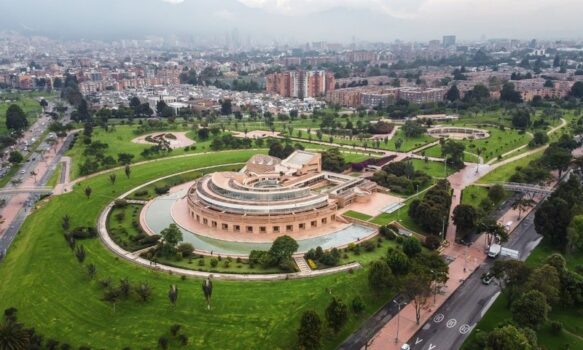
Bogotá. Photo credit: UN-Habitat.
“We are proud to celebrate World Cities Day 2025 in Bogotá, a city that exemplifies how innovation can serve people and communities. This is a moment to come together, recognize urban progress, and reaffirm our shared commitment to inclusive, sustainable, and people-centered cities,” said Anacláudia Rossbach, executive director of UN-Habitat.
“The global celebration in Bogotá will be a unique opportunity to foster international dialogue on people-centered smart cities, where technology and data serve to improve quality of life, strengthen citizen participation, and bring communities closer to adequate housing,” said Elkin Velásquez, regional director for Latin America and the Caribbean.
“For Bogotá, hosting World Cities Day is both an honor and a great responsibility. We will welcome the world with a city that puts people at the center and demonstrates that it is possible to build resilience, sustainability, and inclusion through trust and citizen participation,” said Carlos Fernando Galán, mayor of Bogotá.
Bogotá was selected for its efforts to integrate inclusion, resilience, and sustainability into urban development. The city has implemented policies that promote social inclusion, access to housing, sustainable mobility, and climate action, while adopting approaches that leverage data and citizen participation to improve public services and quality of life.
World Cities Day 2025 launch event, from Bogotá, Colombia
The 2025 edition of World Cities Day will be the second time the global celebration has been held in Latin America, following its commemoration in Quito in 2016 during Habitat III. Previous host cities include Shanghai, Yekaterinburg, Liverpool, Luxor, and Alexandria.
The event will bring together representatives from national and local governments, United Nations agencies, development partners, civil society, academia, and the private sector. Participants will share lessons learned, best practices, and practical approaches to strengthening cities’ role as drivers of sustainable development.
World Cities Day marks the close of Urban October, a month-long campaign led by UN-Habitat that mobilizes people and organizations worldwide to promote dialogue and action for more sustainable, inclusive, and resilient cities.
Photo credit: UN-Habitat
To strengthen security, order, and coexistence in Lleras Park, district authorities carried out an operation with more than 15 entities, including the Secretariats of Security, Coexistence, and Mobility, the National Police, the Army, Colombian Immigration, Interpol, the Fire Department, and various departments of the Mayor’s Office. The intervention included controls on individuals, establishments, and vehicles, as well as preventive measures, document verification, and a coordinated institutional presence.
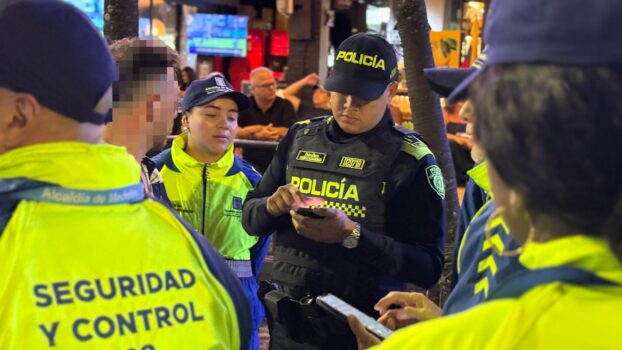
Authorities reinforce control in Lleras Park with an institutional presence. Photo credit: City of Medellín.
During the operations, 247 traffic tickets were issued, and 34 motorcycles, 16 private vehicles, and five taxis were immobilized. In addition, 10 commercial activities were temporarily suspended for regulatory violations. Firefighters inspected 12 establishments, and the Territorial Management and Control Unit inspected another seven. In the area of social distancing, 22 fines were issued for behavior contrary to Law 1801, and knives and psychoactive substances were seized.
Immigration checks were also carried out on 99 foreigners, and 12 fines were issued for violating the decree that penalizes the demand for sexual services. 12 minors, three of whom were transferred to the Protection Transfer Center (CTP), and institutional care was provided to four homeless residents. As part of the judicial response, three arrests were reported for crimes such as personal injury, violence against a public servant, and violations of Law 30.
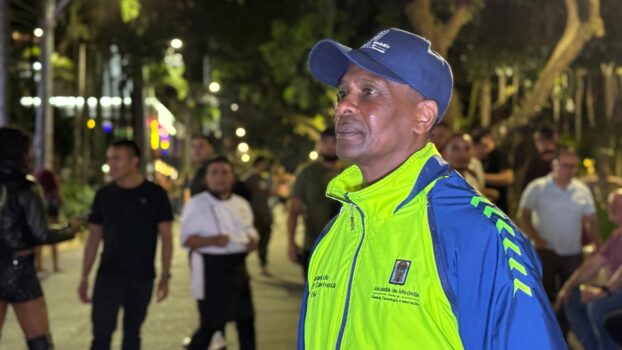
Medellín authorities in Lleras Park. Photo credit: City of Medellín.
The Mayor’s Office of Medellín reiterates its commitment to the protection and regulation of this tourist corridor, ensuring safe, orderly environments with permanent surveillance for residents and visitors.
Ciuadelela Digital Medellín, an initiative of Sapiencia, Medellín’s Post-Secondary Education Agency, is opening its fourth session of the year with a free and 100% virtual offering of courses aimed at strengthening digital, bilingual, entrepreneurship, and communication skills. The call for applications will be open from August 4 to 15, 2025.
Anyone 15 years of age or older who lives in Medellín, has basic knowledge of digital tools, and has a computer, tablet, or cell phone with an internet connection can apply and access this training opportunity from the comfort of their home. The registration process is carried out through the website arrobamedellin.edu.co.
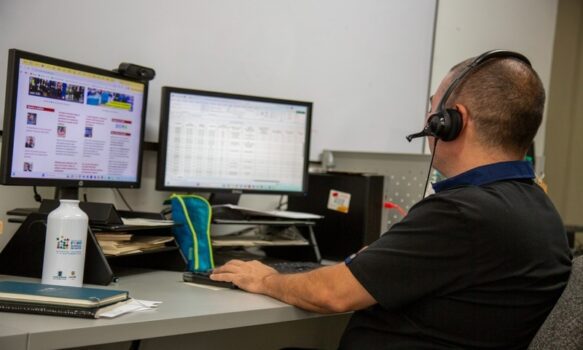
Applications can be made on the Ciudadela Digital Medellín website at arrobamedellin.edu. Photo credit: City of Medellín.
“With this call for applications, we seek to reach 8,000 beneficiaries and close gaps in access to knowledge. From the Mayor’s Office of Medellín, through Sapiencia, we want more citizens to be prepared for the challenges of the
Fourth Industrial Revolution and to take advantage of the real opportunities that the city offers in terms of employment and entrepreneurship,” said Sapiencia’s general director, Salomón Cruz Zirene.
Among the 15 courses offered, the following stand out: basic English for the tourism sector; Advanced Excel; Report Writing in Business and Organizational Contexts; Lean Startup; Video Game Design; Internet of Things (IoT) and Create Your Own Artificial Intelligence, among others.
“I invite you to be part of Medellín with all the courses, knowledge, meetings, and scholarships available in the city. It’s never too late to learn. Let’s not just say it’s too late to learn,” said Cristian “El Bicho” Álvarez, beneficiary of the Basic English for the Tourism Sector course. Registration will open from 12:00 p.m. on August 4 and
will close on August 15 at 4:00 p.m. Those interested should complete the online form and select their preferred option.
The courses will be held between August 20 and November 20, 2025, using a self-managed methodology through the Digital Citadel Medellín platform.
Photo credit: City of Medellín.
It’s impossible to escape the main news of the week, which was the conviction of ex-President Álvaro Uribe for witness tampering. Sentencing has yet to be carried out, and no doubt there will be an appeal — this is Colombia after all, which has a justice system that makes little sense to anyone.
Whilst many in Colombia think witness tampering is the least of Uribe’s offenses and liken it to Al Capone’s conviction for tax evasion, it is nonetheless a surprise, and a strong statement by the courts.
Conversely, we now have the extreme right crying foul about the rulings — this after weeks and months of bleating about the protection of the great institutions of Colombia, as Gustavo Petro criticized them on several fronts. The worm has apparently turned, and now social media is full of demands for freedom for Uribe and criticizing the legal system. Whilst predictably, the extreme Republicans in the US are already making noise, this is no ‘Free Nelson Mandela’ situation.
The issue again is polarization. We are still getting past the acidic attitudes surrounding the shooting of Miguel Uribe, and this won’t help as we move towards the 2026 elections.
Moving past politics, the Banco de la República — Colombia made what appears to be a perplexing decision to leave overnight rates unchanged at 9.25%. It was by a 4-3 majority, two voted for a 50bps cut. The reasons given were jumbled and included inflation concerns, even though there was a lower-than-expected reading just a few weeks ago.
Some analysts are suggesting it is due to the 2026 budget announced by Ministerio de Hacienda of $135 billion USD, an increase of 6.5% although $6.3 billion USD will be subject to a successful tax reform that has yet to be presented. This is perhaps bleeding into the central bank’s deficit concerns.
The Departamento Administrativo Nacional de Estadística — DANE Colombia reported that unemployment continues to drop. June saw a national level of 8.6% (the lowest June reading in a decade) and the urban number at 8.3% (10.2%) — the lowest on record for June. Jobs added over the past 12 months totalled 800,000. Positive stuff, and one of the reasons why financial poverty is at record low levels.
Finally, after all the bluster and threats, tariffs with the US were set at 10% — but let’s see how long before Donald Trump’s next tantrum.
Have a spectacular Friday.
Regards Roops.
Never miss Rupert’s latest commentary.
Follow him now on LinkedIn to see What Jumps Out.
Above photo: Secretary of Defense Donald H. Rumsfeld (left) listens as President Álvaro Uribe (right) speaks to a group assembled at the Colombian presidential residence on August 19, 2003. (Photo by TSGT Andy Dunaway, U.S. Air Force)
The Mayor’s Office of Medellín has publicly reiterated its offer to provide logistical and human resource support to the national government to alleviate severe delays in immigration processing at José María Córdova International Airport (MDE/SKRG), which serves the city. The offer comes as international travelers report wait times of up to six hours and the city braces for a significant influx of visitors for major annual events.

Medellin’s Mayor Federico “Fico” Gutierrez
According to the Mayor’s Office, Mayor Federico Gutiérrez has sent multiple formal communications since 2024 to the national immigration authority, Migración Colombia, and the Ministry of Foreign Affairs (Cancillería), urging them to increase staffing and operational capacity at the airport. To date, the national government has not provided a formal response to these requests.
A new letter was sent on July 21, 2025, again highlighting the city’s concern as it prepares for Colombiamoda 2025 and the Feria de las Flores (Festival of the Flowers). These two events are expected to draw tens of thousands of domestic and international tourists, placing further strain on the airport’s already overwhelmed immigration infrastructure.
The situation is critical given the region’s growing tourism sector, which saw over 1.8 million visitors in 2024. The city administration has stated that the current number of immigration officials is insufficient to handle the volume of travelers.
An immigration official with Migración Colombia but unauthorized to speak to the media on behalf of the immigration agency told FInance Colombia that the Petro administration refuses to authorize additional hires, meaning that there are no more than nine, and often as few as four immigration officers to handle both departures and arrivals.
As part of its proposal, the Medellín government has offered to provide resources to support processes such as the Biomig biometric registration system and to deploy personnel to guide travelers, particularly for services like passport claim processing. These measures are intended to create a more efficient and secure entry process in collaboration with the local tourism sector and business guilds.
José María Córdova International Airport is operated by the private concessionaire Airplan S.A.S., which has not issued a statement on the matter.
Headline photo:International Arrivals at José María Córdova International Airport (MDE/SKRG) outside of Medellín. Photo © Loren Moss
 Empleobilingue.com

- Director/a de operaciones para hotel, restaurante y discoteca 1626320364.60 - Medellín, Medellin, Antioquia, Colombia
- Coordinador/a de calidad para La Unión 1626483143.1 - La Unión, Antioquia, Colombia
- Desarrollador fullstack - Bogotá, Bogota, Colombia
- Technical Analyst - Remote
- PIM Administrator - Ecommerce - Remote (Bogotá, Bogota, Colombia)
- Auxiliar de gestión humana y bienestar para Girardota 1626060072.28 - Girardota, Antioquia, Colombia
- Marketing Strategist
- Trainer Manager - Bogotá, Bogota, Colombia
- Tolemaida UH- 60 Inspector - Bogotá, Bogota, Colombia
- Virtual Assistant - Team Lead - Remote
Contact Us

