

















Based on a civil lawsuit, Ricardo Roa, the current president of Ecopetrol (BVC: ECOPETROL; NYSE: EC), and Guillermo Alfonso Jaramillo, the minister of health, have had their assets and salaries embargoed over unpaid debts from the 2022 presidential campaign of Gustavo Petro’s political coalition, the Pacto Histórico. These allegations, according to a report by Colombian investigative journal “La Silla Vacia” (The Empty Chair).
The legal proceedings, initiated by a private aviation company, allege a failure to pay for aviation services rendered during the electoral period. The development also coincides with a separate ongoing investigation by the national electoral authority regarding campaign finance.
Legal and Financial Allegations
According to court documents from two civil courts in Bogotá, both Roa and Jaramillo face demands for unpaid debts totaling over $2.253 billion COP (approximately $575,000 USD) owed to Sociedad Aérea de Ibagué (Sadi). The company claims that the debt stems from air transport services provided to the Pacto Histórico’s presidential and Senate campaigns during February and March 2022.
Case Against Roa: The lawsuit against Roa, who served as the manager of the presidential campaign, alleges a debt of $1.109 billion COP. A Bogotá civil court admitted the claim in December 2024. Following Roa’s failure to respond, a judge ordered the embargo of his assets in January 2025. The measure applies to four properties registered in his name, including a $1.8 billion COP apartment purchased in late 2022. The court has authorized the auctioning of the properties to settle the debt.
Case Against Jaramillo: The second lawsuit is against Jaramillo, the Pacto Histórico’s senate campaign manager, for an alleged debt of $1.154 billion COP. In May 2025, a Bogotá judge ordered the embargo of Jaramillo’s salary as minister of health and a property co-owned with family members.
These legal actions are separate from a broader investigation by the Procuraduría General de la Nación, which has opened a preliminary inquiry into Roa regarding a potential conflict of interest related to purchasing the $1.8 billion COP apartment. The property was reportedly acquired from a company linked to the mining and hydrocarbon sectors, which fall under the purview of Ecopetrol, the state-controlled energy company Roa now leads.
Regulatory Scrutiny and Campaign Finance
The lawsuits add a new dimension to existing regulatory scrutiny of the campaign’s financial management. The Consejo Nacional Electoral (CNE), Colombia’s electoral authority, is currently reviewing a report that recommends sanctions against the Petro campaign for alleged violations of campaign spending limits.
The CNE’s investigation has also examined the Pacto Histórico’s transactions with Sadi. The report cites evidence of potential manipulation in the documentation of payments for air transport services. According to the investigation, the campaign submitted invoices from Sadi to the Dirección de Impuestos y Aduanas Nacionales (Dian) that were subsequently voided. The report suggests that these actions, which included a reduction in flight hours and the removal of initially billed concepts, may have been intended to avoid exceeding campaign finance limits.
Ricardo Roa, president of Ecopetrol. Photo credit: Ricardo Roa Barragan/X.
A significant majority of investors, 88%, believe that companies prioritizing ESG initiatives represent superior return opportunities compared to those that do not. Mining companies that proactively communicate the geological potential of their deposits in conjunction with their progress in environmental, social, and organizational governance, and performance (ESG) are more likely to withstand scrutiny, assess threats, and secure investment flows. This is indicated by the BlackRock World Mining Trust plc.
While BlackRock’s investment strategy does not exclusively prioritize ESG outcomes, it generally avoids investments where ESG risks have not been assessed or are significant. A company that has not invested adequately in integrating sustainability aspects may experience a disruption in its capital cycle and encounter challenges in its acquisition or merger plans.
The regulatory landscape in Colombia is following a similar trend. In 2021, the Superintendencia Financiera de Colombia published a technical document proposing a unified methodology for ESG reporting. The methodology for creating the report should be based on transparency, quality, and consistency of information.
The aim is to reduce the qualitative gap between large and small companies, not only for regulatory purposes but also to improve the social relationship and public perception of mining activity, and to boost the sector’s financial market.
The Superintendencia de Sociedades has established guidelines for incorporating international reporting standards into sustainability practices. These guidelines were published in External Circular 100-000010 on November 21, 2023. The circular indicates that it is recommended that the mining sector adhere to international standards for sustainability reporting. These reports should be published at least once a year for stakeholder information, as well as on the company website.
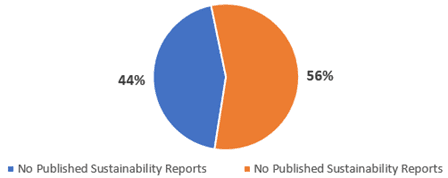
Figure 1. Percentage of disclosure of sustainability reports by mining companies in Colombia.
The Asociación Colombiana de Minería (ACM) is a professional association representing companies in the mining sector, including those engaged in exploration, production, and services. Of the 66 member companies, 95% have a website that communicates the company’s profile, corporate, investment, and interests to stakeholders.
Of the 52 companies engaged in mineral exploration or production, 44% report on sustainability under GRI or SASB standards. The majority of these companies focus on large-scale metallic minerals and coal. It is important to note that the majority of companies that do not publish sustainability reports are engaged in the production of industrial minerals (48%), followed by metals (34%).
It is evident that a significant proportion of companies, constituting 52%, that do not disclose Environmental, Social and Governance (ESG) information through official reports, do present relevant data on their websites. However, these companies are not adhering to the established national guidelines for the disclosure of such information.
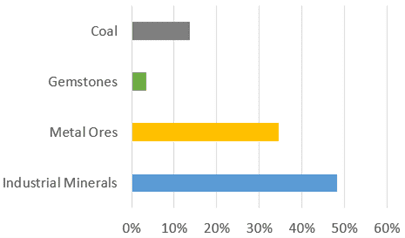
Figure 2. Non-report published mining companies segmented by mineral sector.
The remaining 48% of companies, primarily engaged in the production of industrial minerals, do not disclose ESG information to their stakeholders. These results indicate that there is still significant work to be done in Colombia for mining companies of all scales and the Colombian Mining Association to effectively communicate ESG targets with all stakeholders and regulators.
While the costs of preparing and disclosing a sustainability report may be considered high for small-scale junior production companies, mining associations can offer support and encouragement in the structuring of ESG-based reporting initiatives required by regulatory entities.
Environmental protection groups, some of which may have political interests, have taken advantage of the lack of proper information by introducing popular initiatives to prevent mining activities that could affect important investments in the short or long term.
The town of Buriticá in Antioquia has been the location of both legal and illegal mining. (Credit: Loren Moss)
Soma Gold Corp. (TSXV: SOMA), (WKN: A2P4DU), (OTC: SMAGF), a mining company with a focus on gold production in Antioquia, Colombia, has closed the first part of a non-brokered private placement, raising gross proceeds of approximately $15.513 million CAD. Additionally, the company has completed a conversion of $10 million CAD of debt into company equity under the same terms.
The transaction was structured through the sale of 13,489,566 units at a price of $1.15 CAD per unit. The offering was conducted under Canada’s Listed Issuer Financing Exemption (LIFE), a regulatory framework that allows publicly traded companies to raise capital more efficiently by reducing the extensive disclosure requirements of a full prospectus. The total raised includes a partial exercise of the “greenshoe option,” a common feature in stock offerings that allows a company to sell more shares than originally planned if investor demand is high.
A second tranche of the offering is anticipated as the company works toward the full exercise of this option. Both the placement and the debt settlement are pending final approval from the TSX Venture Exchange (TSXV).
Each unit sold in the offering consists of one common share of Soma Gold and one-half of one common share purchase warrant.
A warrant is a financial instrument that gives the holder the right, but not the obligation, to purchase a company’s stock at a fixed price (known as the “exercise price”) for a specific period. It is similar to a long-term call option. In this case, each whole warrant allows the holder to buy one additional Soma Gold common share at an exercise price of $2.00 CAD at any time within the next 36 months.
The warrants also include an Accelerated Exercise Provision. This clause stipulates that if Soma’s shares trade above $3.00 CAD for 30 consecutive days, the company can accelerate the expiry date of the warrants. Warrant holders would then have 30 days’ notice to either “exercise” their warrants (buy the shares at $2.00 CAD) or let them expire worthless. For the company, this provision is a mechanism to encourage the conversion of warrants into shares—and thus provide the company with additional cash—if the stock performs well.
“We are very pleased to have completed the first tranche of the LIFE Offering and are grateful for the continued support from both new and existing shareholders. The participation of various strategic investors further validates our long-term vision and growth strategy,” said Geoff Hampson, CEO of Soma Gold Corp.
Companies in capital-intensive sectors like mining often raise funds through private placements to finance growth without taking on additional interest-bearing debt. By issuing new shares and warrants, a company can secure capital for expansion, exploration, and operational needs.
Soma Gold has stated that the proceeds will be used for:
- Ongoing expansion of its milling operations.
- Installation of new ore sorting infrastructure.
- Accelerated exploration and development at its Nechi mine project.
- General working capital.
Simultaneously, the conversion of $10 million CAD of existing debt into equity units is a strategic move to strengthen the company’s balance sheet. This deleveraging process reduces liabilities and cash outflows that would otherwise be used for debt service payments.
In connection with the offering, Soma Gold paid approximately $930,780 CAD in cash commissions and issued 808,473 “finder’s warrants” to third parties who helped secure investors for the placement. These finder’s warrants have the same terms as the warrants included in the units.
El Limon Mine in Colombia. Photo credit: Soma Gold/X.
A tense standoff is unfolding in the rural hamlet of Nueva York, Guaviare, where community members have detained at least 33 soldiers from the Colombian National Army following a military operation that resulted in the death of a local civilian. The incident, which began on Sunday, August 24, has created a complex situation involving allegations of a summary execution, official denials, and the intervention of international human rights observers.
The situation escalated after an anti-insurgent operation by the military against a dissident faction of the former FARC, known as the Bloque Móvil Martín Villa. During the confrontation, local shopkeeper Ramiro Antonio Correa was killed under disputed circumstances, leading to outrage from residents who subsequently surrounded and detained the soldiers involved, demanding an explanation.
Conflicting Accounts of a Civilian Death
According to testimony from residents, the military operation began around 11:40 a.m. on Sunday. Correa was working in his store, “Las Gaviotas,” which a community member described as “a warehouse where groceries, sodas, and beers are sold.” When the firefight erupted between the army and dissident forces, Correa and seven other farmworkers sought refuge in a nearby house.
Residents allege that after the combat subsided, soldiers entered the house where the group was sheltering and ordered them to return to the store. It was then, they claim, that Correa was killed.
“Mr. Ramiro was the last one to enter of those who were there. Someone shot him. They killed him,” a local woman stated. “We are outraged because they killed him and, on top of that, they wanted to pass him off as a guerrilla. According to them, there were no dead civilians, but it turns out there was: it was him.”
The military also reported that the soldiers were being intimidated by drones, allegedly carrying explosives.
The community’s anger was further fueled when official reports of the operation did not initially account for a civilian death. The Ministry of Defense, led by Minister Pedro Sánchez, first announced the operation as a success, reporting that Willinton Vanegas Leyva, alias “Dumar,” a leader of the dissident group, and nine other combatants had been killed. Community members insist that Correa was wrongly included in that count.
The Attorney General’s Office (Fiscalía) is now investigating the death, according to a statement from the Military Forces Command.
Government Response and Mediation Efforts
In response to the soldiers’ detention, the government has asserted that the community is being manipulated by armed groups. Minister Sánchez claimed the action was instigated under coercion from alias “Yimmi Martínez,” another local FARC dissident leader. A separate official source attributed the order to an alias “Jimmy Parra,” a commander in the FARC’s Central General Staff (EMC).
Meanwhile, a high-level delegation has arrived in the area to negotiate the soldiers’ release. The group includes representatives from the UN Verification Mission in Colombia, the Ombudsman’s Office of Colombia (Defensoría del Pueblo), the Inspector General’s Office, and the OAS Mission to Support the Peace Process (MAPP-OEA). The military high command, including Admiral Francisco Cubides, commander of the Military Forces, is on-site to lead the negotiations.
The government has also prepared a “Plan B,” deploying reinforcements from the Marines, Army Special Forces, and the National Police’s Dialogue and Order Maintenance Unit (UNDMO) to the region in case a negotiated release is not achieved.
Admiral Cubides confirmed that the detained soldiers have their campaign rations and are hydrated, but described a tense environment where they were kept awake by bonfires lit around their position. The military also reported that the soldiers were being intimidated by drones, allegedly carrying explosives.
Johnny Casanova, the mayor of El Retorno, has called for a thorough investigation and urged officials to listen to the community’s version of events.
“We know that serious human rights violations have occurred, resulting in the regrettable loss of human life and affecting peasant and indigenous families in the region,” Mayor Casanova said in a dialogue with local radio station Marandua Stereo.
A statement from the Corps of Retired Generals and Admirals condemned the soldiers’ detention as a “direct attack on the State and its institutions” and called for the government to establish clear protocols to prevent such events. As of Wednesday morning, the soldiers remain held by the community, and negotiations for their release are ongoing.
Colombian soldiers. Photo credit: Alejoturola from Pixabay.
We have seen the long lists of pre-candidates appear, ready to seek the nomination for their party or faction. The chameleons are at work, morphing themselves into whatever personality is necessary to get on an election ticket. What is abundantly clear is that amongst the 20-25 raising their hands, none leaps out as a person who can take Colombia forward. Instead, we have those who have failed as administrators, others with the whiff of corruption on them, more who are under investigation, and above all, those who are only seeking office for self-serving purposes.
The tax reform ($4.5 billion USD) is due to be presented (dens of iniquity such as gambling, tobacco, alcohol, and the church are included) and will form an important component of the $149 billion USD total budget, albeit that the opposition is looking to trim it by over $10 billion USD, including the tax reform component. In short, the environment is hostile. The budget is seen as excessive by many, but of course, that depends on your political ideology. Those in government are looking to improve the lives of millions in Colombia who are the forgotten class, Orwell’s proletariat if you like, and that isn’t cheap. One problem, of course, is money; Colombia doesn’t have enough of it. The other is the March legislative elections, which means that the current congress is not going to vote for Christmas.
Taxes are an ongoing theme. Whilst they are set to hit a record collection of $70 billion USD, up 15% YoY, that is still almost $5 billion USD below the budget, and therein lies the problem. The DIAN is still working on thousands of overdue payments, and we are already discussing the 2026 reform. For those wondering why Gustavo Petro is undertaking a second tax reform, both Iván Duque and Juan Manuel Santos did the same.
For those at the back who are still wondering why, the Colombian tax system is broken. It doesn’t work, is open to abuse, is unfair, and invites evasion, especially by the elite.
Asobancaria was upstanding this week and also discussed the deficit issues, but they also emphasized four positive aspects of the economy. Lower inflation, which hits 4%, will trigger lower rates. Higher confidence—this week, Fedesarrollo reported improved industrial and retail levels for July to accompany the already reported consumer data. Lower unemployment and gradually improving investment levels.
Finally, are we seeing an oil romance? Canacol Energy Ltd has been the last Canadian standing for many a year; few understand why it wasn’t snapped up much earlier, given its natural gas assets. But the press is reporting that Ecopetrol is flirting with Canacol, whose stock price erupted on Thursday – whether it is a JV or equity purchase, I hope my old chum Charles drives a fearsome bargain after so many years supporting Colombia.
Have a wonderful Friday.
My regards.
Roops.
Never miss Rupert’s latest commentary.
Follow him now on LinkedIn to see What Jumps Out.
Capitolio Nacional (Photo: Oficina de Información y Prensa Cámara de Representantes)
Among the nine departments that have the most weight in the export basket of non-mining energy goods in Colombia, one stands out because it had the highest growth in the first half of the year.
This is Huila, which, although it represents 4.9% of that basket, its foreign sales of agricultural, agro-industrial, and industrial products registered a growth of 50% compared to the first half of the previous year.
In the first six months of this year, that region exported $624.2 million USD in non-mining energy goods, compared to $416.2 million USD the previous year.
The product that boosted foreign sales in this department was coffee. Huila exported $589.8 million USD of the grain between January and June and registered a growth of 67.3%, compared to 2024.
The export of fresh tilapia also performed well, $7.3 million, for an increase of 10.8%. And the traditional achiras, which a year ago did not register sales to the world, but in the first six months of this year were exported for a value of $64,525 USD.
The main destinations of Huila goods were: the United States, Canada, Belgium, Germany, and Japan.
Tilapia. Photo credit: 6809042 from Pixabay.
Collective Mining Ltd. (NYSE: CNL, TSX: CNL) announced assay results on August 20, 2025, for four diamond drill holes from its ongoing shallow drilling program at the Apollo system, part of the company’s multi-target Guayabales Project in Caldas, Colombia. The program is designed to define and expand the near-surface zone of mineralization.
Drill hole APC-134 yielded 183.70 meters at 3.01 g/t gold equivalent, from 37.30 meters downhole. The assay results for this interval included 0.86 g/t gold, 44 g/t silver, 0.83% copper, and 0.14% tungsten oxide (WO3).

Figure 1: Plan View of the Apollo System, highlighting Drill Holes Announced in this release (CNW Group/Collective Mining Ltd.)
Another hole, APC-136, intersected 37.15 meters at 7.05 g/t gold equivalent from 118.10 meters downhole, comprising 2.19 g/t gold, 89 g/t silver, 0.92% copper, and 0.73% tungsten oxide (WO3).
The company reports that the shallow drilling program is approaching its conclusion, with approximately six drill holes remaining. The drill intercepts have reportedly expanded the volume of the shallow mineralized area by about 5% and have filled gaps in the internal block model. Upon completion of this program, the average drill hole spacing is expected to be 35 meters from the surface to a vertical depth of 150 meters.
Collective Mining stated that a second large-capacity diamond drill rig has arrived at the Apollo site to test the Ramp Zone and is expected to begin operations within two weeks. The company has a total of eleven drill rigs operating as part of its fully funded 70,000-meter drill program for 2025. Eight of these rigs are at the Guayabales Project, while three are at the San Antonio Project.
Table 1: Assays Results for Drill Holes APC-132, APC-134, APC-135, and APC-136
| Hole # | From (m) |
To (m) |
Length (m) |
Au g/t |
Ag g/t |
Cu % |
WO3
% |
AuEq g/t* |
| APC-132 | 50.05 | 161.10 | 111.05 | 0.63 | 23 | 0.46 | 0.08 | 1.79 |
| APC-134 | 37.30 | 221.00 | 183.70 | 0.86 | 44 | 0.83 | 0.14 | 3.01 |
| Incl. | 98.70 | 130.55 | 31.85 | 0.95 | 51 | 0.99 | 0.34 | 4.12 |
| APC-135 | 25.70 | 90.50 | 64.80 | 2.39 | 17 | 0.13 | 0.18 | 3.32 |
| and | 124.60 | 174.00 | 49.40 | 0.94 | 66 | 0.45 | 0.02 | 2.44 |
| APC-136 | 28.70 | 60.10 | 31.40 | 2.41 | 24 | 0.33 | 0.13 | 3.55 |
| and | 118.10 | 155.25 | 37.15 | 2.19 | 89 | 0.92 | 0.73 | 7.05 |
To date, approximately 133,000 meters of diamond drilling have been completed at the Guayabales Project, including 93,000 meters at Apollo. The company has 25 drill holes awaiting assay results from a laboratory in Peru.

Figure 2: Plan View of the Guayabales Project, highlighting the Apollo Target Area (CNW Group/Collective Mining Ltd.)
Collective Mining also announced that assay results for two drill holes at the Knife target did not intersect significant mineralization, and as a result, the target has been removed from the company’s inventory of Greenfield targets at the Guayabales Project.
PROI has announced the appointment of Mauricio Ferro, a Colombian professional, as Global Director of Crisis Management at PROI, the world’s largest organization of independent public relations agencies.
PROI is recognized globally for leading innovation in methodologies and technological advancements within a rapidly evolving industry. In a world where constant adaptation is crucial — driven by the advent of Artificial Intelligence, the surge of fake news, bots, trolls, avatars, and other digital entities — PROI continues to set the pace for effective communication strategies across the globe.
Mauricio Ferro, an alumnus of CESA and the Darla School of Management Columbia, South Carolina, and mentee of Miguel Silva Pinzón, former Managing Director at Weber Shandwick and FTI, has been a leader within PROI, consistently consulted by C-Level executives of major corporations throughout Latin America, Spain, and the US for his expertise in strategic communication. His career spans over 25 years of delivering impactful insights and materials that support media and public relations efforts.
He has served as a trusted advisor to six ministers of state during a period when such roles commanded significant respect. Through his creativity and resourcefulness, Mauricio has helped shape the positioning and protect the reputation of hundreds of brands, companies, and organizations.
Earlier in his career, Mauricio founded Position Comunicaciones, pioneering social listening algorithms in Colombia. Coming from Microsoft, his natural affinity for technology enabled his team to adapt and parameterize Radian6 software in Spanish, positioning the agency as a regional leader. This innovation attracted multiple international companies seeking strategic partnerships.
In 2015, Edelman Worldwide acquired his agency, recognizing its innovative methodologies and technological edge, appointing Mauricio as the first Edelman President in Colombia.
In 2020, Mauricio launched his current venture, TANK, which has distinguished itself globally through advanced crisis management solutions and immersive training using hyper-realistic Virtual Reality technology — services that are unparalleled in Colombia and abroad. His participation in an expert panel in Stresa, Italy, convened by PROI, exemplifies his leadership and innovation on the international stage.
Today, TANK exports services to multiple countries in diverse sectors, including finance, technology, healthcare, and energy, driven by Mauricio’s innovative approach and Colombia’s top-tier development talent.
His contributions have been recognized internationally; he has been featured in Forbes USA, and in 2014, PRovoke Media named him among their “Innovators25” for pioneering industry innovations.
TANK’s portfolio includes AI-driven tools such as PRejavú, a virtual reality and AI platform for accelerated executive training, a predictive software that analyzes the potential impact of online posts and news, and an advanced digital media buying system optimized through AI and data analytics — all designed to reduce costs for clients and enhance lead targeting.
Mauricio emphasizes that TANK has invested over five years in AI development, well before the widespread recognition of ChatGPT’s capabilities. Since 2023, the full suite of products, now matured and proven, has been exported internationally, showcasing 100% Colombian technology.
In circumstances where companies face reputation and positioning challenges — from stock markets and extractive industries to technology and healthcare sectors — Mauricio’s strategic insights, rooted in extensive experience and data-driven analysis, prove invaluable. This has positioned TANK as one of the most innovative and trusted firms in the communications industry globally.
Global Director of Crisis Management at PROI, Mauricio Ferro. Photo credit: PROI.
With more than 290,000 attendees, Agroexpo 2025 became the most visited edition in the history of Colombia’s national agriculture fair. In its 25th version and after 50 years of experience, this agricultural event managed to break historical records of participation, surpassing the 262,608 visitors reached in 1981. The fair not only broke records but also reaffirmed its position as the most important showcase for Latin American agriculture. This event is organized by the International Business and Exhibition Center of Bogotá – Corferias and the National Union of Colombian Livestock Associations – UNAGA.
Doris Chingate, project manager of Agroexpo, highlighted that “This fair not only exceeded attendance expectations, but also confirmed that the heart of Colombian agriculture beats stronger than ever. Behind this historic fair, hundreds of hands made it possible: the logistics team, the producers, ranchers, entrepreneurs, engineers, technicians, veterinarians, designers, assemblers, commercial team, communications, service personnel, registration, security, box office, and all the collaborators of Corferias and allied unions. Each one left their soul so that the countryside would shine in the city. Today, more than 290,000 visitors can say that they lived an unforgettable Agroexpo.”

The Agroexpo 2025 Business Roundtable closed with more than 600 appointments between 214 exhibitors and 44 buyers from Latin America and the Caribbean. Photo credit: Agroexpo.
According to Daniel Espinosa, president of UNAGA, “Agroexpo 2025 has been an unprecedented celebration. This edition consolidates our fair as the most important meeting point between producers, entrepreneurs, guilds, and rural families from all over the country. Seeing thousands of people touring the pavilions, connecting with the land, learning, and dreaming of a stronger and modern future, is proof of the commitment we have to rural development. From the 27 livestock associations that belong to UNAGA, we celebrate the effort of all those who made it possible and reaffirm our pride in representing the productive heart of Colombia.”
A successful business roundtable
The Agroexpo 2025 Business Roundtable was also a resounding success, with total expected revenues exceeding $4.1 million USD (more than $16.700 million COP at the value of the current TRM). During July 15 and 16, more than 600 appointments were held between 214 exhibitors and 44 international buyers from 10 countries, including Argentina, Bolivia, Colombia, Costa Rica, Curacao, Ecuador, Panama, Peru, Dominican Republic, and Venezuela.
During the event, spot deals were made for $1.4 million USD, and commercial agreements for $2.78 million USD were projected to be carried out in the next 12 months. This balance demonstrates the export potential of Colombian agriculture and Agroexpo’s ability to promote the countryside with international markets.
A protected and guarded fair that takes care of each animal
Carlos Augusto Ríos Martínez, Cundinamarca sectional manager of the Colombian Agricultural Institute (ICA), highlighted, “As responsible for the country’s agricultural health, the ICA has had a decisive participation in Agroexpo 2025, as it does every year, guaranteeing the inspection, surveillance, and control of the entry and stay of animals and plants. At the close of the fair, we can give a piece of peace of mind: there was no risk situation.”
Ríos underscored the effort of the technical and veterinary team that operated in shifts from July 6 to 21, and stressed that a fair with the volume of entry and exit of animals, such as Agroexpo, requires intense logistical work.
He also highlighted the work of the team for the issuance of mobilization and plant health guides, especially in controls such as the prevention of the entry of restricted products, such as non-certified potatoes, due to diseases such as purple tip. “We still have lessons learned, but the balance is highly positive. From now on, we are working with the organizers to strengthen processes towards the next edition.”

Agroexpo 2025. Photo credit: Agroexpo.
On the other hand, the District Institute for Animal Protection and Welfare – IDPYBA carried out inspections throughout the fair to verify how the five fundamental freedoms of the animals present at Agroexpo 2025 were guaranteed.
These inspections focused on validating that all specimens were:
- Free of hunger and thirst;
- Free of discomfort;
- Free from pain, injury, or disease;
- Free to express natural behavior; and
- Free from fear and anguish. This rigorous monitoring was key to ensuring a dignified and respectful stay with animal welfare throughout the fair.
Auctions by Asocebú, UNAGA, and Fedegán
In total, the four auctions held during Agroexpo 2025 reached sales of $2.479 million COP, with a total of 163 lots offered. “These auctions reaffirm the solidity and projection of the Colombian livestock business, as well as the genetic quality of the specimens presented,” said Espinosa. They were carried out as follows:
Asocebú began on July 11, 2025, with “La Gran Reserva”, an auction where 50 lots were offered, focused on pasture specimens as breeders, levante females, and belly females, with the participation of breeders from all over the country. The day closed with more than $1 billion COP in sales.
On July 12, it was the turn for the “Great Auction of Specimens of Cabezal”, with 35 lots made up of animals that had been judged during the first week of the fair, many of them awarded, and that reached sales close to $700 million.
For its part, Fedegán, located in pavilion 4 and which had more than 60 commercial allies and an academic agenda dedicated to animal health, international markets, sustainability, and promotion of consumption, advanced in its auctions with the participation of cattle ranches such as Acres Farm, Hacienda la Ponderosa, and Hacienda Cuba, reaching high sales numbers.
On July 18, the “UNAGA – TVGAN Diamond Auction” was held in the Main Auditorium of Corferias, where more than 40 lots focused on meat specimens were offered. And the day closed with $337 million in sales. On Saturday, the 19th, it was the turn of the “Remate Estrellas de Fedegan,” where 38 batches focused on milk were offered, and the day closed with $442 million in sales.
A tour in numbers through the most historic version of the fair
The 25th edition had several exhibition areas, located throughout the fairgrounds: in pavilion 8, level 2, there were about 250 sheep of different breeds: hair, milk, materna, and meat breeds. In this space, 27 associated breeders participated, 10 pens with more than 50 producers.

Compared to the four auctions carried out by ASOCEBÚ, UNAGA, and Fedegán, it reached sales close to $2.479 million USD, with a total of 163 lots offered. Photo credit: Agroexpo.
Another of the places that captured the attention of the attending public was the stalls, which received in the first week horses from countries such as Switzerland and Holland, where the breeds specialized in heavy draft took the limelight. While for the second week of the Fair, trot horses and Paso Fino were the protagonists.
One of the events with the highest influx of the public was the “Copa Colombia Agroexpo 2025”, held from July 17 to 20, in which 532 specimens participated and four gaits were judged. The winners in each category were:
Track and gallop:
- Grand Champion: Neptune of Montesa
- Grand Champion: 2M Star
- Reserved Champion: Rancho San Juanito Furor
- Reserve Champion: Perennial Victory of the Ceiba
- Young Champion: Cantador de Mis Potrillos
- Young Champion: Malagueña from Rancho La Luna
- Grand Champion: Chaotic Diamond of Salem
- Grand Champion: Mission Accomplished by Carolina de Los Mellis
- Reserved Champion: Kronos of Two Steps
- Reserved Champion: Welcome from La Cristalina
- Young Champion: Corso de Nuevo Amanecer
- Young Champion: Antioqueñita from Rancho La Milagrosa
Colombian Paso Fino:
- Grand Champion: Bandit Lover
- Grand Champion: 3C Pepper
- Reserved Champion: Ponderosa Chapala Show
- Reserved Champion: Queen of Hacienda Heisen
- Young Champion: Splendid Arizona from Villa Natalia
This was the experience of the exhibitors
Diego Villanueva, national commercial manager of Global Motors:
“Agroexpo 2025 was a great fair for us. We closed deals for approximately $700 million COP, and we managed to get many visitors, who were expecting to physically see our tractors, to check their quality and robustness. This fair allowed us to better position ourselves in the market, and we will undoubtedly participate again in the next edition.”
Juan Fernando Mejía Isaza, manager of Premex:
“Agroexpo 2025 was a total success for us. It had been years since we had participated with our stand and returning with our lines of animal nutrition and health for horses, beef and dairy farming, and pig farming was a wise decision. We made direct sales for more than 25 million pesos, but the most valuable thing was the commercial reach: more than 100 contacts between end customers, distributors, and suppliers from all over the country and abroad.”
Marco Tulio Pérez, representative of the Ministry of Agriculture of Huila:
“The balance of Agroexpo 2025 for the department of Huila is highly positive. Our entrepreneurs, who presented production lines such as coffee, cocoa, panela, fruit, and derivatives, achieved important commercial contacts, especially with markets in Bogotá. We highlight strategic alliances, such as the one reached between cocoa producers and the Mayor’s Office of Tenjo. In addition, export opportunities were created that open a new panorama for regional agriculture: 5,000 tons of cocoa to Russia and organic powdered panela destined for Spain.”
Álvaro Ernesto Palacio, executive president of Asohofrucol:
“From Asohofrucol and the National Fund for Horticultural Development, we celebrate that fruit and vegetable producers have made real sales within the framework of Agroexpo 2025. This fair not only allowed us to make visible the potential of our fruits and vegetables, but also showed that the Colombian countryside does sell, it does grow, and it does have a market. Events like this are essential to continue strengthening commercial chains, opening new marketing channels, and positioning our products on the national and international stage.”
Carlos Fernando Mayorga, general manager of Fedepanela:
During the days of the fair, we estimate that more than 18,000 people visited our stand, thanks to a constant programming, a multisensory experience, and a strategic location. We managed to consolidate key institutional alliances, make new panela ventures visible, and offer innovative content that connected with audiences of all ages. From regional gastronomic shows and tastings, to activations with allied characters and brands, we show that life tastes like panela and we leave a clear message: panela is identity, flavor, and future for Colombia.”
Agroexpo 2025 highlighted the ongoing strength and connectivity of the Colombian countryside through its focus on tradition, innovation, and rural communities. The event, held at Corferias, brought together producers, entrepreneurs, and guilds for its 25th edition, continuing a tradition spanning over 50 years. Planning for the next Agroexpo has already begun.
Photo credit: Agroexpo.
In the early hours of July 1, 2024, an elite corps of Colombian police suited up and loaded their automatic rifles, aiming to end their hunt for one of the most wanted men in Latin America.
After several months of tracking and surveillance, Colombian security forces arrested Larry Amaury Álvarez Núñez, alias “Larry Changa,” leader and co-founder of Tren de Aragua, the Venezuelan-born criminal organization with tentacles across different countries. He was hiding in a luxurious mansion he built from the ground up, in an exclusive rural area of the municipality of Circasia, in the department of Quindío. A security ring of nine bodyguards usually protected him and drove a luxury vehicle around the coffee-growing region.
“‘Larry Changa’ would have arrived in Colombia in 2022, obtaining false documents. He was in charge of the criminal strategy for the territorial expansion of the ‘Tren de Aragua’ in Colombian territory,” the Colombian Ministry of Defense posted on its X account.
Larry Changa, according to Chilean prosecutors and Colombian police who spoke to InSight Crime, was initially responsible for the establishment of Tren de Aragua cells in Chile and the wider logistical deployment in the south of the continent. After his presence was detected by Chilean security agencies, he had to flee and seek a new refuge.
His arrival in Colombia was just another chapter in Tren de Aragua’s continental expansion.
In addition to being the first choice of the nearly eight million Venezuelan migrants who have fled economic collapse, Colombia had already proven to be fertile territory for Tren de Aragua’s operations, expanding its criminal rents and offering refuge to some of its most notorious leaders.
Hiding among more than two million Venezuelans in Colombia, Tren de Aragua had been putting down roots in different parts of the country, including the capital, Bogotá. But the most established strongholds are along the Colombia-Venezuela border, where the Venezuelan criminals charge tolls to migrants. Here, Tren de Aragua begins its exploitation of the exodus, the starting point for the human smuggling networks that extend across South America and northwards to the United States.
La Parada: Tren de Aragua Shows Its Face
The irregular border crossings, known as “trochas,” which allow millions of Venezuelan migrants to enter Colombia, also became strategic routes for the transnational advance of Tren de Aragua.
In 2018, according to authorities and residents consulted by InSight Crime, Tren de Aragua established its first bases in the township of La Parada, in the municipality of Villa del Rosario, in Colombia’s Norte de Santander department. Adopting a low profile, its members took advantage of the growing human flow to consolidate an illicit business that thrived amid the vulnerability of the passing migrants.
At that time, Colombia was home to more than a million Venezuelan migrants scattered across different regions of the country. Villa del Rosario, in particular, had consolidated itself as one of the main entry points, serving as a key corridor for the migratory flow from Venezuela.
“This is an attractive place for them because it is a point where illegality proliferates, especially in smuggling and trafficking of irregular migrants,” an officer from the Metropolitan Police of Cúcuta, the capital of Norte de Santander, who requested anonymity for institutional reasons, told InSight Crime.
Once settled in several different border neighborhoods in La Parada, Tren de Aragua began exercising strict control over the Los Mangos and La Marina trochas, among other clandestine trails. The gang began to dominate several illegal economies through the use of violence and terror.
Migrants became their main target. Since the group’s arrival in this border area and until 2022, the border was closed, and the main legal crossing point, the Simón Bolívar International Bridge. This forced thousands of migrants to use the trochas, exposing them to extortion and abuse. Tren de Aragua charged travelers a $10 toll to cross, while bus drivers carrying migrants had to pay up to $125 in “taxes.”
“Tren de Aragua controls the Colombian side. To travel to Bogotá and then to Quito, Ecuador, you have to pay a fee to that group,” said a resident of La Parada, who preferred not to reveal his identity.

In addition, the gang imposed curfews in the areas under their control and demanded weekly payments of between $10 and $15 from local merchants. Those who refused to pay faced brutal reprisals, such as the throwing of grenades or the use of indiscriminate violence, a Tren de Aragua hallmark. In some areas of La Parada, media reports and security sources revealed the existence of torture houses, where those who disobeyed the rules or did not pay extortion fees were punished.
Faced with the advance of Tren de Aragua and increased insecurity in La Parada and several neighborhoods of the city of Cúcuta, the security forces intensified their efforts, capturing several members of the organization, including some leaders and hired killers.
In addition to facing state action, Tren de Aragua has had to contend with superior criminal rivals.
Following an armed dispute between 2021 and 2022 with the National Liberation Army (Ejército de Liberación Nacional – ELN), the Colombian guerrilla group that dominates the criminal scene along the Colombian-Venezuelan border, a territorial division was created. Tren de Aragua was left controlling the Colombian side with no possibility of entering or doing business on the Venezuelan side, which remained under the control of the insurgency, acting with the blessing of the Maduro regime. The ELN was protected in Venezuela, but exposed to the security forces in Colombia.
Despite the state’s offensive and struggles with the ELN and other criminal groups, the gang continued to operate in Villa del Rosario and Cúcuta. Immersed in migrant smuggling, human trafficking, small-scale drug trafficking, prostitution, and extortion, they managed to consolidate themselves as one of the main criminal players in this part of the border.
SEE ALSO: With Venezuelan Criminal Groups Strengthening, Violence in Cúcuta Rises
Tren de Aragua’s criminal fiefdom at this crossing point allowed the entry into Colombia of other gangs of Venezuelan origin that were boosted by the reputation of Tren de Aragua.
Linked to more than 50 murders in Cucuta, according to official reports cited by the local press, the AK-47 gang, led by Jhoswar Saul Hernandez Sanabria, alias “Saul,” – captured in Venezuela – began as a satellite cell of Tren de Aragua before becoming independent. It currently operates in the center of the city, where it extorts merchants and has several drug sales points under its control.
The evolution of this faction, of Venezuelan origin, has escalated into a fierce dispute with other criminal organizations over control of the currency exchange houses. These financial operations, often used as a front for money laundering, have become points of friction. In addition, the recruitment of Colombians into their ranks demonstrates the gang’s ability to offer more attractive incentives than those of local criminal organizations.
Expanding Operations Beyond the Border
In the early morning hours of August 25, 2022, residents of a working-class neighborhood in Bogotá, Colombia, awoke to a gruesome scene. In the middle of the street, abandoned in a cart, were three corpses wrapped in black plastic garbage bags.
Leaving these bodies in public view was no random act. Behind the grim display was a violent territorial dispute between Tren de Aragua and local gangs for control over illicit activities in the Bogotá districts of Kennedy, Bosa, and Los Mártires.
Aníbal Fernández de Soto, then Bogotá’s security secretary, confirmed this in a statement. “The Tren de Aragua organization is the main group responsible for homicides in which bodies have been left in bags in public spaces in several areas of the city,” he said.
Between 2022 and 2023, local authorities documented at least 57 cases of people killed and found wrapped in garbage bags, many of them dismembered and showing clear signs of torture. It is unknown how many of these killings were directly carried out by Tren de Aragua.
The gang’s extreme violence was key to securing its place in the Colombian capital’s criminal underworld.
In its first phase, the group infiltrated Bogotá’s local criminal organizations, triggering a wave of betrayals that ended with its takeover of gangs like the Camilos. This conflict, which left more than 36 dead, allowed the Venezuelan group to consolidate control in strategic areas of Bogotá, including the commercial hub known as Corabastos and retail drug sale points in Kennedy and Ciudad Bolívar.
“To grow, they first ally with other criminal structures. That’s what happened when Tren de Aragua began to emerge in Aragua state and later extended its influence by partnering with organizations in other states to increase its criminal profits,” an investigator with Colombia’s anti-kidnapping and anti-extortion police unit told InSight Crime.
One faction that followed this strategy was the gang led by José Manuel Vera, alias “Satanás.” Initially operating as a satellite of Tren de Aragua, the group eventually gained enough manpower and illicit revenue to break away and form an autonomous network focused on extortion and microtrafficking in several Bogotá neighborhoods.

Although Satanás was arrested in Ecuador in November 2023 and extradited to Colombia, his criminal influence did not end. From inside the Palogordo prison in Santander department – and with the complicity of corrupt guards – his network remained active, using contraband cell phones to extort victims and keep cash flowing. Even behind bars, his power remained intact.
Corruption inside the security forces also impacted the streets of Bogotá.
In early 2023, a joint intelligence operation by the police and the Attorney General’s Office uncovered Tren de Aragua’s infiltration of the capital, identifying one lieutenant and five noncommissioned officers on the gang’s payroll. These police officers provided a range of services to the transnational network, including protecting leaders, collecting extortion payments, selling confidential information, and issuing safe conducts to control areas of sexual exploitation and small-scale drug trafficking in Kennedy.
Colombian authorities have continued investigating the group. In Bogotá, they also discovered that the gang owned several nightclubs used to launder proceeds from its criminal activities. The parties held in these venues – which featured international DJs – helped boost its other businesses, especially retail drug trafficking. The logistical coordinator of these operations, identified by the alias “Eryk,” was arrested in October 2024 after months of investigation.
While Tren de Aragua’s attempts to expand into other parts of the city have been thwarted, the gang has achieved a degree of consolidation in its strongholds in the capital. At the same time, efforts to enter other Colombian departments have failed, particularly in areas where they have encountered more experienced and better-established local criminal structures.
Putting the Brakes on Criminal Greed
After establishing an effective grip on certain territories and illicit economies in Bogotá and Norte de Santander, Tren de Aragua sought to replicate its model in other parts of Colombia.
However, this expansion has been hindered by the presence of more heavily armed local criminal groups and the response of security forces.
Unlike Bogotá, where criminal control is more fragmented, Medellín – famous as the cradle of Pablo Escobar’s drug trafficking empire – has resisted Tren de Aragua’s advance, thanks in part to a consolidated criminal underworld unwilling to cede territory.
“In Medellín, we’ve found it striking, especially compared to other cities, that they haven’t managed to break in,” a police investigator told InSight Crime in 2024.
Security experts consulted for this investigation, including Hugo Acero, former Bogotá security secretary, say the level of criminal governance exercised by structures like the Oficina de Envigado – a federation of criminal organizations that began as a hitman-for-hire network in the 1980s under the Medellín Cartel – prevents new players like Tren de Aragua from putting down roots in this city.
However, the gang did not give up. In Medellín’s busy streets and entrenched criminal underworld, the city has seen multiple Tren de Aragua members seek refuge in 2025 — only to be found by authorities or killed by rival criminals. These opportunities, during which they have also explored the potential of local criminal markets, show the gang’s ongoing interest in Colombia’s second city.
In one case in late July, two alleged members who had arrived in March from the United States used their stay to traffic weapons and sell synthetic drugs, according to Colombian police investigations.
SEE ALSO: Colombia Nabs Another Top Tren de Aragua Leader With Venezuela’s Help
Beyond Medellín, Tren de Aragua and other Venezuelan-origin gangs have also faced resistance in other parts of Colombia.
In 2021, the discovery of a corpse bearing a sign reading “killed for being from Tren de Aragua” revealed the resistance they encountered in Arauca, a border region known for drug and migrant trafficking. Their main rivals there were dissident elements of the now demobilized guerrillas of the Revolutionary Armed Forces of Colombia (Fuerzas Armadas Revolucionarias de Colombia — FARC), whose experience and military power thwarted the Venezuelan group’s push into this border region.
In addition to FARC dissidents, Arauca is an ELN stronghold, making it an extremely difficult area to penetrate. Tren de Aragua could not replicate its border-expansion strategy there, as it did in Villa del Rosario, unable to defeat two very powerful Colombian criminal structures.
Even so, Tren de Aragua appears to have identified the potential of other areas in Colombia not as places to install a criminal presence, but as safe havens amid heightened security force pressure.
Several major arrests of the group’s leaders have occurred in towns and departments where the group has no visible operations. Instead, members have focused on investments in rural areas in the country’s interior. This was the case with Larry Changa, who was arrested at a mansion under construction in an exclusive sector of Circasia, in the Colombian department of Quindío, driving a luxury vehicle.
Another leading figure in Tren de Aragua’s Chilean operations was also arrested in Colombia. In December 2024, police captured Carlos Francisco Gómez Moreno, alias “Bobby,” in Los Patios, a municipality bordering Villa del Rosario in Norte de Santander. Chilean prosecutors say Bobby is one of Tren de Aragua’s leaders in Chile, suggesting Colombia may have become both a base of operations and a hideout for the gang’s international leadership.
Also noteworthy was the arrest of gang member Jeison Alexander Lorca Salazar, alias “Jeison Comino,” found at a luxury ranch in Los Santos, in the Santander department.
The movements of these Venezuelan criminals have not gone unnoticed. Colombian security forces have actively worked to prevent these transnational organizations from gaining ground in the country, establishing cooperation mechanisms with neighboring nations where Tren de Aragua operates. In some cases, they have even received help from the Venezuelan government, as in the capture of Jeison Comino.
That arrest was billed as a high-level operation, with Jeison Comino described as the gang’s second-in-command. In reality, the criminal, who had been active in Venezuela, was a lieutenant in the gang of El Conejo, one of Tren de Aragua’s satellite groups in Aragua state that weakened after its leader died in 2023.
The lack of reliable, verified information – partly due to the absence of Venezuelan cooperation and the low credibility of the little information they do share – leads to inflated claims about arrests and the gang’s reach.
Even so, other significant captures have dealt real blows to the group’s Colombian expansion, such as that of Salomón Fernández Torres, alias “Salomón,” on June 27, 2024. A top confidant of Niño Guerrero and the group’s financial chief in Bogotá, he was arrested as part of a series of operations by police and prosecutors that, by June 2024, had led to more than 240 Tren de Aragua members being detained.
Authorities now have their sights set on Giovanny Vicente Mosquera Serrano, alias “Giovanny San Vicente,” considered the gang’s top coordinator in Colombia and a liaison between its factions abroad. US authorities have offered a reward of up to $3 million for information leading to his arrest.
But just as the movement of migrants did not stop in Colombia, neither did Tren de Aragua’s operations.
Members of the organization moved into the municipality of Ipiales, in Nariño department at Colombia’s southern border— a strategic point on the migration route to Ecuador, Peru, and Chile — where they profited from migrant flows and extorted locals, according to leaked emails and documents from Colombia’s Attorney General’s Office in what became known as the NarcoFiles project.
Tren de Aragua’s next stop on the migrant trail to the south, Peru, offered a criminal market ripe for extortion, fueled by a growing Venezuelan migrant community that allowed the gang to establish itself. In a less crowded criminal landscape, with less experienced security forces and an unstable political climate, Tren de Aragua was able to flourish like never before.
This article, written by the Venezuela Investigative Unit, was originally published by InSight Crime, a Medellín-based foundation dedicated to the investigation and analysis of crime and security in Colombia and Latin America. It has been generously shared with Finance Colombia under a Creative Commons license.
 Empleobilingue.com

- Director/a de operaciones para hotel, restaurante y discoteca 1626320364.60 - Medellín, Medellin, Antioquia, Colombia
- Coordinador/a de calidad para La Unión 1626483143.1 - La Unión, Antioquia, Colombia
- Desarrollador fullstack - Bogotá, Bogota, Colombia
- Technical Analyst - Remote
- PIM Administrator - Ecommerce - Remote (Bogotá, Bogota, Colombia)
- Auxiliar de gestión humana y bienestar para Girardota 1626060072.28 - Girardota, Antioquia, Colombia
- Marketing Strategist
- Trainer Manager - Bogotá, Bogota, Colombia
- Tolemaida UH- 60 Inspector - Bogotá, Bogota, Colombia
- Virtual Assistant - Team Lead - Remote
Contact Us

