

















Decent Colombians have, since the day I have arrived, railed against the narco-culture especially in Medellin. They are sick to the back teeth of watching obvious mafia boys & girls rubbing their faces in the mud, as they cruise around in their $100,000 cars, purchased with their ill-gotten gains from narcotics. The authorities see them as well – but do little to nothing.
No hard working Colombian ideologically has any issue with the cocaine barons being cut off at the knees, however the current tactic of destroying motorboats with missiles from miles away, isn’t the way to go. They may well be up to no good, but with no evidence whatsoever, Trump and his War Department are only alienating themselves further from the countries of Latam. Both Venezuela and Colombia have seen boats attacked, whilst Ecuador have cited the death of one of their innocent citizen in another.
The question is why not stop one of these boats and prove what their ‘irrefutable’ intelligence is telling them ? Therein lies the dilemma for many – Colombian security forces have reported record seizures this year, it would be easier to quantify the situation if the US did the same.
Instead, we have no remorse from Trump, his peanut gallery in Florida or the henchmen who are ordering the attacks – from a nice safe distance. All the while, further inflaming the pre-election polarization in Colombia.
Fedesarrollo lastest October survey saw YE Overnight Rate expectations rise to 9.25%, where we are now, as the CPI estimate also rose from 5.08%-5.28%. Part of the reason for this is GDP which whilst unchanged (2.6%) for 2025, rose 0.1% to 2.9% for 2026. The same survey expects the Stock Market to continue rising despite already surging 56.5% ($ terms) YTD.
This ongoing economic improvement led to another dent in the deficit situation according to Departamento Administrativo Nacional de Estadística – DANE Colombia. August saw another $2bn added as Imports rose 5.7% YoY whilst Exports dropped 0.1% driven by an 18.1% decline in extractive industries.
Bancolombia also reported economic resilience, with real spending growing 4.72% YoY in September according to their own internal studies.
Away from this week the news is hard to fathom. What is true, rumor, propaganda, pre-election bunkum or influencer imagination…and it is only going to get worse.
Have a good day
Roops
The Bogotá Superior Court overturned a prior conviction against former Colombian President Álvaro Uribe Vélez on Tuesday, acquitting him of charges related to procedural fraud and witness bribery. The decision reverses a judgment issued two and a half months earlier by Judge Sandra Liliana Heredia.
The Criminal Chamber, in a ruling spanning more than 700 pages, determined that the evidence presented did not sufficiently establish that Uribe, the founder and political leader of the Democratic Center party, had instructed his former lawyer, Diego Cadena, to engage in the alleged bribery of imprisoned individuals and former paramilitary members.
The court’s decision, delivered via a report by Judge Manuel Antonio Merchán, concluded that the lower court’s conviction contained “serious errors and biases” that constituted a violation of the former president’s due process rights. Specifically, the ruling indicated that the initial judgment, issued in August, had accepted evidence without fully assessing its credibility, particularly citing inconsistencies in the sworn testimony of witnesses such as former paramilitary Carlos Enrique Vélez, known by the alias “Víctor.”
The case centers on accusations that Uribe or individuals acting on his behalf sought to influence testimony related to his alleged historical links with the Autodefensas Unidas de Colombia (AUC), a demobilized paramilitary group.
The legal proceedings originated in 2011 following an interview conducted by then-Congressman Iván Cepeda with Juan Guillermo Monsalve. During the interview, Monsalve alleged a connection between Uribe and the AUC’s “Metro” bloc operating in the Antioquia region. Following Cepeda’s dissemination of this interview in the National Congress, Uribe filed a complaint against the legislator, accusing him of manipulating witnesses to cause harm.
After several judicial inquiries, the Supreme Court of Justice declined to investigate Cepeda in February 2018. Instead, the court opened a preliminary inquiry against Uribe for allegedly directing or tolerating efforts to discredit Cepeda’s claims and secure favorable testimonies.
Political and Legal Repercussions
Following the acquittal, Senator Cepeda, a member of the current governing coalition Pacto Histórico, announced that the legal team representing the victims will file a casación (appeal) before the Supreme Court of Justice.
Cepeda stated that the court’s majority ruling ignored the potential criminal liability of lawyer Diego Cadena, who had also been convicted in the first instance. The senator highlighted the 400-page dissenting vote presented by Magistrate María Leonor Oviedo Pinto, characterizing it as a contrasting position that provided a robust evidentiary assessment.
Cepeda emphasized that the acquittal would not terminate the legal process, asserting, “Contrary to any illusion by Álvaro Uribe and his defense that this litigation ends here, no, we are totally committed to the search for the truth. We feel our rights as victims have been violated.” The attorneys representing the victims, Reinaldo Villalba and Miguel Ángel del Río, echoed Cepeda’s position, expressing respect for the judicial decision while simultaneously questioning the legal merit of the Tuesday ruling.
Colombia’s Ministry of Foreign Affairs (Cancillería) has issued a detailed response to a lawsuit filed by the Procuraduría General de la Nación, the nation’s highest administrative oversight and disciplinary body, which seeks to nullify a $1.3 trillion COP (approx. $325 million USD) agreement for the production of national passports. In a formal statement, the ministry maintained that the legal challenge does not halt the execution of the contract and assured the public that passport services will not be disrupted.
The lawsuit, submitted to the Administrative Tribunal of Cundinamarca, demands the “absolute nullity” of the inter-administrative agreement signed on July 18. The contract partners include the Cancillería (Foreign Ministry), Colombia’s Imprenta Nacional (National Mint), and Portugal’s state-owned mint, the Imprensa Nacional-Casa da Moeda (INCM).
The Procuraduría, led by Gregorio Eljach Pacheco, argues that the agreement violates Colombian public contracting law. The primary objections cited are the failure to conduct a competitive public bidding process and the direct adjudication of the contract. The oversight body also alleges that the agreement does not meet the legal requirements for such a partnership, stating that the foreign entity, INCM, contributed only 21% of the project’s total value, significantly below the legally mandated 50% minimum financing. The lawsuit requests the court to compel the Portuguese mint to return all funds it has received under the challenged agreement.
In its public communiqué, the Foreign Ministry clarified that it had not, at the time of the release, been formally notified by the court of the lawsuit’s admission. The ministry stressed that the filing represents the beginning of a legal process and is not a verdict against the contract’s legitimacy.
“The existence of a control measure, in this case a lawsuit, in no way prevents the continued execution of the projects, plans, and programs related to the issuance of the new passport model,” the ministry’s statement reads. It further added, “To date, there is no ruling against the Colombian Foreign Ministry that would make it impossible to move forward with the production process of new passports for Colombia.”
The Cancillería has confirmed its intent to mount a full legal defense through its juridical division once formally served. The judicial process will unfold in two stages, beginning at the Administrative Tribunal of Cundinamarca and potentially advancing to the Council of State, Colombia’s highest court for administrative matters.
President Gustavo Petro has publicly distanced himself from the Procuraduría’s legal action. Commenting on the social media platform X, the president stated, “I completely disagree with the Procurador on this issue. The country has the right for its printing press to be able to make its citizens’ identification documents because intimate data should not be in private hands.”
This legal challenge is the latest chapter in a controversy that began in 2023 when then-Foreign Minister Álvaro Leyva suspended a public tender for the passport contract. Leyva cited concerns over a lack of competition, which appeared to favor the long-standing provider, Thomas Greg & Sons, a company that had produced Colombia’s passports for the preceding 17 years. Following that suspension, the government pursued the current direct agreement with the Imprenta Nacional and INCM.
The Procuraduría had previously initiated disciplinary investigations into alleged irregularities surrounding the implementation of the new passport model. These investigations include former Foreign Minister Rosa Villavicencio and her predecessors, Laura Sarabia and Luis Gilberto Murillo, as well as the former chief of staff for the presidency, Alfredo Saade.
The Foreign Ministry has sought to quell public concern over passport availability, stating that contingency plans are in effect and that a pre-existing contract ensures the continuous supply of passport booklets. “We give a piece of tranquility to the public,” the ministry stated, assuring that there “is not, nor will there be, a shortage.”
Headline Photo: Imprenta Nacional de Colombia. Photo credit: Imprenta Nacional de Colombia/Facebook.
Grupo Abra, the Latin American aviation holding company, announced an expansion of its fleet plan, including commitments for wide-body aircraft and the conversion of narrow-body options. The strategy focuses on securing necessary capacity for projected business plan execution and supporting the group’s network growth across the Americas and Europe.
The group has secured agreements for up to seven Airbus A330neo aircraft. These aircraft are intended to support the international expansion strategy for the group’s member airlines, facilitating medium and long-haul operations. The A330neo features a 14% reduction in fuel consumption per seat compared to the A330ceo model and generates an approximate 60% reduction in airport noise pollution, according to manufacturer specifications. This order supplements a previous 2024 order with Airbus (EPA: AIR, OTC: EADSY) for five A350-900 aircraft, which are scheduled for integration into the fleet in the coming years.
In the narrow-body segment, Grupo Abra exercised 50 options for the Airbus A320neo. This action increases the total commitment for the model to 138 units scheduled for delivery through 2032. The narrow-body order book consists of the 138 A320neo aircraft combined with 96 Boeing 737 Max aircraft, which are scheduled for delivery through 2030. The total commitment comprises 234 narrow-body aircraft. Boeing (NYSE: BA) is publicly traded on the New York Stock Exchange.
The initial A320neo aircraft from the new commitments, which will feature the Airbus Airspace cabin, is scheduled for delivery to Avianca by the end of 2025. This model will incorporate XL stowage compartments, which offer up to 60% more space than current configurations, and dynamic LED lighting. Additionally, these aircraft are specified to be equipped with three rows of premium seats, arranged in a two-by-side format, which was developed by Recaro specifically for the airline.
Adrian Neuhauser, CEO of Grupo Abra, commented that the announcement confirms the group’s investment alignment with its objective to increase air travel accessibility and to position itself as a competitive air transport group in Latin America. He stated that the incremental A320neo order addresses both replacement and growth requirements for the current narrow-body fleet.
Benoît de Saint-Exupéry, executive vice president of sales at Airbus Commercial Aircraft, noted that the selection of the A350, A330neo, and A320neo models reinforced the strategic relationship with Grupo Abra. He highlighted the A350’s performance in long-haul operations and characterized the A330neo as a new-generation complement to the Group’s existing A330 operations.
Headline Photo: Adrian Neuhauser. Avianca CEO. Photo credit: ALN/YouTube.
Copper Giant Resources Corp. (TSXV: CGNT, OTCQB: LBCMF, FRA: 29H0) has completed a legally binding Prior Consultation agreement with the Inga Condagua Indigenous Nation in Colombia, marking a milestone for its Mocoa copper-molybdenum exploration project in Putumayo.
The agreement was reached through direct negotiation between the Inga Condagua community and Libero Cobre Ltd., Copper Giant’s wholly owned Colombian subsidiary. The process was coordinated by the National Directorate of Prior Consultation under Colombia’s Ministry of Interior, and is recognized as the first full Prior Consultation completed at the exploration stage of a mining project in Colombia.

Inga de Condagua community, ANM, Ministry of Interior and Copper Giant team, after protocolization of agreements on September 20, 2025 (CNW Group/COPPER GIANT RESOURCES CORP.)
The Prior Consultation process, known locally as Consulta Previa, is mandated under Colombian law and international conventions such as ILO Convention 169. It ensures that Indigenous communities are consulted before any project that may affect their territories is initiated. The Inga Condagua Nation exercised its constitutional right to self-representation, conducting the process without intermediaries or external consultants.
The agreement follows a 2022 review by the Ministry of Interior confirming the applicability of Prior Consultation for the Inga Condagua. The formal consultation phase began in late 2024 and concluded with protocolization on September 20, 2025. The process included ten official sessions and additional dialogue spaces, with participation from the Mocoa Mayor’s Office, Corpoamazonia, and the National Mining Agency.
The agreement outlines joint initiatives to be implemented in 2026 and 2027, including:
- Intercultural education in the Inga language.
- Strengthening Indigenous governance through support for Cabildo authorities and the Indigenous Guard.
- Integration of ancestral ecological knowledge into biodiversity monitoring.
- Preservation of medicinal and spiritual heritage, including sacred plant cultivation.
- Collaborative water conservation research.
- Youth engagement and community cohesion through cultural and recreational spaces.
These initiatives align with Colombia’s 2024–2025 decrees recognizing Indigenous communities as environmental authorities, granting co-management rights over ancestral territories.

Copper Giant (Libero Cobre) Ranking in the 2025 Brujula Minera (Mining Compass) for Reputation with Government (CNW Group/COPPER GIANT RESOURCES CORP.)
The agreement provides legal clarity for Copper Giant’s operations in Mocoa. In June 2025, the company clarified that Resolution 0631, which was later suspended by the Third Civil Court of Mocoa due to procedural faults in consultation, did not apply to its existing titles. The court’s decision reinforced the importance of direct consultation with recognized Indigenous authorities.
Copper Giant previously signed a similar agreement with the Montclar community in 2022, securing formal partnerships with the two communities closest to the Mocoa project.
Copper Giant’s Colombian subsidiary, Libero Cobre Ltda., was ranked among the top 15 companies for government reputation in the 2025 edition of Brújula Minera, an annual mining-sector study led by the Centro Nacional de Consultoría, Arteaga, and the Colombian Mining Association (ACM). Notably, Copper Giant is the only non-producing company in the ranking aside from AngloGold Ashanti.
Copper Giant Resources Corp. is a Canadian mineral exploration company focused on advancing the Mocoa copper-molybdenum deposit in southern Colombia. The company is part of the Fiore Group and was formerly known as Libero Copper & Gold Corporation. Its headquarters are located in Vancouver, British Columbia.
Photos courtesy Copper Giant.
Colombia’s annual inflation rate increased to 5.18% in September 2025, up 8 basis points from the previous month, according to data compiled by Grupo Cibest and sourced from the National Administrative Department of Statistics (DANE). The monthly inflation rate reached 0.32%, marking the third consecutive month of acceleration and the highest reading since February. This figure exceeded the consensus forecast of 0.24% month-over-month.
Inflation Concentrated in Services and Regulated Segments
Approximately 75% of the monthly inflation was concentrated in the services and regulated segments, which together contributed 24 of the total 32 basis points. Indexation effects—where prices are adjusted based on past inflation—remain a significant challenge to achieving the Central Bank’s (Banco de la República) target range of 2%–4%.
Services inflation declined for the second consecutive month, falling 11 basis points to 5.82% year-over-year in September. The monthly increase of 0.36% was slightly above the historical average for September (0.23%). The main contributors were higher rents (+0.38% MoM), fixed and mobile communication services (+1.60%), effective rents (+0.36%), school transportation (+2.71%), and restaurant meals (+0.12%).
Regulated prices reversed a four-month downward trend, accelerating to 5.29% year-over-year from 4.96% in August. The 0.37% monthly increase, below the historical average of 0.52%, was driven by higher tuition fees in education and increased electricity rates. Gas and sewerage tariffs also contributed to the rise.
Goods inflation continued its upward trajectory, marking eight consecutive months of acceleration to 2.27% year-over-year, the highest level since April 2024. The category posted a 0.31% monthly rise, slightly above the historical average of 0.27%. Key drivers included beer and soda (+1.56%), pharmaceuticals and cosmetics (+0.84%), hygiene products (+0.51%), household goods (+0.60%), and clothing (+0.47%). Lower prices for cell phones (-2.00%) partially offset these increases, supported by currency appreciation.
Food Inflation and Major Spending Divisions
Food inflation accelerated for the third consecutive month, primarily due to processed food prices being affected by higher input costs. In September, input costs rose 0.17% month-over-month, bringing annual inflation in this category to 6.17%, below the historical average for the month (0.27%).
Perishable food prices fell after two months of increases, with a 0.09% monthly variation, well below the September historical average (0.53%). Fresh fruit prices rose 2.38%, with notable increases in grapes (12.25%), plantains (3.72%), carrots (9.93%), and oranges (6.12%).
Processed food prices accelerated to 6.06% year-over-year from 5.80%, reflecting a 0.20% monthly increase. The strongest contributions came from prepared meats (+1.75%), coffee (+1.47%), and cheese (+0.67%), while declines in rice and pork mitigated the overall result.
Inflation by major spending divisions showed the following year-over-year changes:
- Food and Non-Alcoholic Beverages: 6.20%
- Alcohol and Tobacco: 6.38%
- Clothing and Footwear: 2.15%
- Housing and Household Services: 4.84%
- Furniture and Household Goods: 3.31%
- Health: 5.99%
- Transport: 5.05%
- Communication: 0.56%
- Recreation and Culture: 1.73%
- Education: 7.30%
- Restaurants and Hotels: 7.47%
- Miscellaneous Goods and Services: 4.42%
Risks and Outlook
Core inflation (excluding food) continued its downward trend for the fourth month, while non-food regulated prices accelerated for the third consecutive month. Inflationary pressures remain elevated due to indexation effects and the absence of favorable base effects in the near term.
Upside risks to inflation persist, particularly regarding the pace of convergence toward the Central Bank’s target range. These risks include ongoing indexation dynamics, potential wage adjustments in 2026, transmission lags of cost pressures, and possible climate-related disruptions toward year-end.
Grupo Cibest projects that inflation will close 2025 around 5.1%, remaining above the Central Bank’s target for the fifth consecutive year. Given the board’s cautious stance and acknowledgment of these risks, the policy rate is expected to remain stable in upcoming monetary policy meetings.
Data Sources and Methodology
All inflation figures are based on data from DANE and analysis by Grupo Cibest. The weights of the main components in the Consumer Price Index are as follows: food (15.06%), goods (18.56%), regulated items (17.36%), and services (49.04%).
Headline photo: Farmer’s Market in Marinilla, Colombia (photo © Loren Moss)
Researchers at the Institución Universitaria ITM and the Universidad de Antioquia have developed a microwave-based biosensor for the rapid, cost-effective, and non-invasive detection of biomarkers associated with colorectal cancer. Colorectal cancer is a globally prevalent and highly lethal neoplasm, and prompt detection remains the most critical factor in improving patient survival rates.
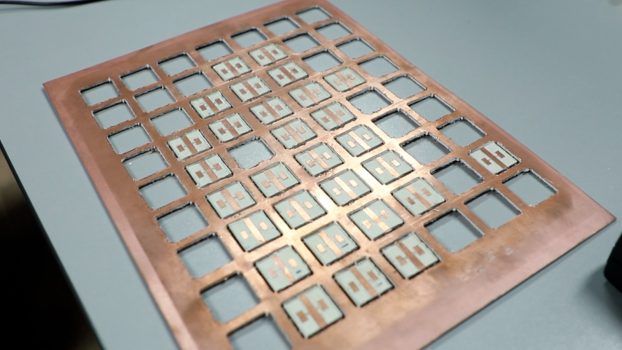
Microwave-based biosensors. Photo credit: Medellín Mayor’s Office.
The new diagnostic technology is intended to address the limitations of existing detection methods, which are often costly, difficult to access, or require specialized laboratory infrastructure. Functioning as a “laboratory-on-a-chip,” the device is specifically designed to identify anti-p53 autoantibodies (Aabs anti-p53) in a blood sample. The presence of these autoantibodies serves as an early warning indicator linked to the initial development of tumors.
The core advantage of the microwave device is its ability to characterize cancer biomarkers without extensive sample manipulation, according to Sebastián Montoya Villada, a professor and researcher at ITM. “The microwave signal is easily measurable, and our laboratory equipment significantly streamlines its analysis and characterization,” Villada stated.
The device employs label-free detection, a feature that expedites the process. It operates using a small copper surface coated with the p53 antigen, which acts as a molecular capture mechanism for the target antibodies. Unlike many assays that rely on chemical markers, the biosensor measures the exact moment the antibodies bind to the surface via a microwave signal, resulting in a faster and simpler procedure.
Researchers at ITM and Universidad de Antioquia developed a microwave biosensor for fast, affordable, and non-invasive detection of colorectal cancer biomarkers, crucial for early diagnosis and improved survival. Photo credit: Medellín Mayor’s Office.
Laboratory evaluations of the device demonstrated high sensitivity and accuracy, capable of detecting very low concentrations of the antibodies. The results were shown to be comparable to those obtained using the conventional Enzyme-Linked Immunosorbent Assay (ELISA) method.
Montoya Villada also addressed the technology’s commercial application, noting, “The technology is easily integrable and, therefore, commercializable. Furthermore, it is a reusable solution, which represents a key distinction when compared to other technologies that are inherently limited to single use before being discarded.”
Jahir Orozco Holguín, a professor at the Universidad de Antioquia, emphasized the practical implications of the technology’s performance compared to established techniques. “The results are comparable to those obtained with conventional techniques like ELISA, with the crucial difference being that the latter requires robust equipment, specialized personnel, and large facilities,” Holguín said.
The next strategic objective for the research teams is to miniaturize and scale the technology. This effort aims to decentralize the diagnostic process, thereby making it accessible to patients in rural and geographically isolated areas where specialized medical infrastructure is scarce.
This Colombian-developed technology, leveraging a low-cost, reusable design, establishes a new approach in oncological diagnosis. The platform also presents opportunities for the identification of other biomarkers associated with various classes of cancer, potentially contributing to both earlier detection and more personalized patient care in Colombia and internationally.
Video and photo credit: Medellín Mayor’s Office.
Registry.co, the new official operator for Colombia.CO internet domain announced it has completed the migration of over 3.3 million domains. The operation, which concluded in early October, transfers the administration of the country-code top-level domain to the new operator for the next 10 years.
The transition follows a public tender led by Colombia’s Ministerio de Tecnologías de la Información y las Comunicaciones (MinTIC). Registry.co, a consortium including Team Internet Group PLC (LON: TIG, OTC: TIGXF), will now manage the domain registry until 2035.
The technological infrastructure supporting the domain is provided by EdgeUno, a company specializing in connectivity, cloud services, and data centers.
Gerardo Aristizábal, director of the consortium operating the.CO domain characterized the migration as an “unprecedented operation in the history of top-level domains. We managed to move more than 3.3 million records without damage or interruptions, complying 100% with the technical and security standards required by the ministry.”

Mehmet Akcin, founder and CEO of EdgeUno (photo: EdgeUno/PRNewswire)
Aristizábal stated that more than 3.3 million records were moved “without disruptions or incidents”. He also confirmed that the process met “100% of the technical and security standards required by the Ministry”.
Mehmet Akcin, founder and CEO of EdgeUno, commented on his company’s role as the infrastructure provider. “Our mission has always been to strengthen the Internet across the region with resilient, secure, and high-performance infrastructure.
Supporting the operation of the.CO domain means reinforcing Colombia’s digital future and empowering thousands of entrepreneurs and businesses that use this extension to project themselves to the world.”
The operator claims the transfer “sets a new world record for the number of domains successfully transferred.” A statement from the company noted the event positions “Colombia as a global benchmark in the technical and operational management of high-traffic domains”.
Headline Photo: Gerardo Aristizábal, director of the consortium operating the.CO domain. Photo credit: Registry.co.
The Procuraduría General de la Nación, Colombia’s top public oversight and disciplinary body, has initiated a preliminary inquiry into potential irregularities surrounding a direct contract for the production of foreign identification cards, known as cédulas de extranjería. The investigation targets officials and contractors, who are yet to be publicly named, within the country’s immigration agency, the Unidad Administrativa Especial de Migración Colombia, and the Imprenta Nacional de Colombia, the national printing office.
The probe stems from a complaint filed with the disciplinary entity, which alleges significant failures in the execution of the contract by the Imprenta Nacional. According to the Procuraduría, these alleged breaches were documented by contract supervisors and in communications between the two government bodies.
The core of the issue appears to be a failure by the contractor to meet production and delivery obligations for the identification documents. The complaint suggests this situation compelled the Imprenta Nacional to create a contingency plan to expedite the printing and delivery of a backlog of pending documents. This plan was reportedly unsuccessful, leading to a breach of contract that has negatively impacted foreign residents in Colombia who rely on the credentials for their legal status and daily activities.
The preliminary inquiry is an initial investigative phase. Its objective, as stated by the Procuraduría, is to identify the individuals potentially responsible for any disciplinary offense fully. During this stage, investigators will gather evidence to define the specific actions under scrutiny and to determine if those actions constitute disciplinary violations that warrant formal charges.
This investigation into the foreign residency cards is separate from, but adds to, the ongoing scrutiny of contracts held by the Imprenta Nacional, which has also been at the center of a national controversy regarding the production of Colombian passports. To date, neither Migración Colombia nor the Imprenta Nacional has issued a formal public statement responding to this specific preliminary inquiry.
Headline photo: Colombian cédula. (Credit: Migración Colombia)
Collective Mining Ltd (CNL), a mining company with assets in Colombia focused on gold, silver, copper, and tungsten, has released assay results for two diamond drill holes from the deeper Ramp Zone, situated at the base of the Apollo system within its Guayabales Project in Caldas, Colombia. The results confirm the continuous nature of reduced intrusion-related gold mineralization within the target area.
The Apollo system, which initiates at the surface, has now been traced vertically over 1,300 meters and remains open for expansion at depth.
Drill Program Results and Expansion
The reported assay results stem from two holes designed to extend the high-grade Ramp Zone laterally and vertically. The Ramp Zone is a key component of the Apollo system, located at the Guayabales Project.
The first hole, APC103-D6, was a shallower intercept that extended the system approximately 50 meters laterally to the northeast.
APC103-D6 intersected 50.50 meters grading 5.66 g/t gold and 13 g/t silver from 526.10 meters downhole.
This includes 8.80 meters at 10.56 g/t gold and 23 g/t silver.
A second high-grade sub-interval measured 17.95 meters at 9.48 g/t gold and 18 g/t silver.
The second hole, APC106-D2, represents the deepest drilling to date into the Ramp Zone. This intersection expanded the zone approximately 200 meters to the east and 50 meters vertically beyond previous drilling, reaching approximately 1,300 meters below surface.
APC106-D2 cut 70.00 meters grading 2.00 g/t gold and 5 g/t silver from 693.80 meters downhole.
This included 25.05 meters at 3.44 g/t gold and 7 g/t silver.
The Ramp Zone has been defined through localized drilling over a horizontal area of 275 meters of strike and 200 meters vertically. The zone remains open in all directions, and the total vertical dimension of the Apollo system has now been traced from the surface.
Comparative Geology and Operations
The Ramp Zone, which begins at approximately 1,000 meters below the surface, is characterized as a reduced intrusion-related gold system. The mineralization exhibits similarities to the Marmato Deeps deposit, owned by Aris Mining Corporation (ARIS), located 1.75 kilometers to the southeast. Both systems share similar gold-bearing sulfide mineral assemblages and commence at comparable elevations. The Marmato Deeps deposit has an NI43-101 resource estimate of 3.76 million ounces of gold (Measured plus Indicated) at 2.54 g/t gold.
Collective Mining attributes the comparatively higher gold grades observed thus far at the Ramp Zone to two primary factors:
- Mineralization is primarily hosted within a breccia structure, which offers greater porosity for metal-bearing fluid deposition than the porphyry host rock observed at Marmato Deeps.
- The Ramp Zone mineralization is locally overprinted by high-grade late-stage porphyry veins (CBM veins), which contribute to the overall grade.
The company is currently utilizing two new large-capacity rigs in its Ramp Zone drilling efforts, including the first directional hole (APC-140D1), which has cut mineralization visually assessed as consistent with the Ramp Zone target. The stated objective of the ongoing drilling program is to extend the Ramp Zone by at least an additional 200 meters both vertically and laterally along strike.
Seven rigs are focused on the Guayabales Project, targeting both the expansion of the Ramp Zone and new greenfield prospects. The company reported a treasury of approximately $70.6 million USD as of the end of Q2 2025.
Acquisitions and Infrastructure Development
Collective Mining announced the acquisition of additional surface and mineral rights within and surrounding the Guayabales Project area.
The acquired surface rights cover the entirety of the Apollo system and are intended for future infrastructure development. Payments for the surface rights are scheduled through 2029, beginning with a Q4 2025 payment of $4.75 million USD.
The acquired mineral rights predominantly consist of licensed mining titles, intended to consolidate gaps within the project area. Payments for the mineral rights are scheduled through 2030, with an initial Q4 2025 payment of $2.8 million USD.
Collective Mining site. Photo: Loren Moss
 Empleobilingue.com

- Director/a de operaciones para hotel, restaurante y discoteca 1626320364.60 - Medellín, Medellin, Antioquia, Colombia
- Coordinador/a de calidad para La Unión 1626483143.1 - La Unión, Antioquia, Colombia
- Desarrollador fullstack - Bogotá, Bogota, Colombia
- Technical Analyst - Remote
- PIM Administrator - Ecommerce - Remote (Bogotá, Bogota, Colombia)
- Auxiliar de gestión humana y bienestar para Girardota 1626060072.28 - Girardota, Antioquia, Colombia
- Marketing Strategist
- Trainer Manager - Bogotá, Bogota, Colombia
- Tolemaida UH- 60 Inspector - Bogotá, Bogota, Colombia
- Virtual Assistant - Team Lead - Remote
Contact Us

