
















Avianca Group International Limited (AGIL) yesterday reported its consolidated financial results for the third quarter of 2025. The company achieved $411 million USD in Earnings Before Interest, Taxes, Depreciation, Amortization, and Rent (EBITDAR), resulting in a 27.2% margin for the period.
The third-quarter EBITDAR represents a 15.5% year-over-year increase from the $356 million USD reported in Q3 2024. Total operating revenues reached $1,509 million USD, marking a 12.8% increase compared to the $1,338 million USD recorded in the same period of the prior year. Total operating costs increased by 13.3% year-over-year, settling at $1,290 million USD. Net income for the quarter was $101 million USD, an improvement from $72 million USD in Q3 2024.
Operational and Capacity Metrics
Capacity, measured in Available Seat Kilometers (ASKs), reached 18,284 million, denoting a 6.8% increase compared to Q3 2024. This growth was attributed primarily to a 6.2% year-over-year increase in Stage Length. Passenger departures increased 1.0% year-over-year. The company transported 9.7 million passengers, consistent with the volume in the comparable period of 2024. The network encompassed 169 routes serving 83 destinations across 28 countries. Subsequent to the quarter’s close, Avianca introduced three new international routes, which included Belém (Brazil) and Monterrey (Mexico).
Cost performance for the quarter indicated a reduction in overall per-unit costs. Total Passenger CASK (Cost per Available Seat Kilometer) was 5.7 cents, a 1.9% decrease relative to Q3 2024. This decline was largely driven by Passenger Fuel CASK, which decreased 9.9% to 1.7 cents, resulting from lower fuel prices and increased fuel efficiency. Passenger CASK excluding fuel increased 2.1% year-over-year to 3.9 cents.
Balance Sheet and Credit Rating Actions
As of September 30, 2025, Avianca reported liquidity totaling $1,361 million USD, which represented 24.2% of last-twelve-month revenue. This total includes a cash balance of $1,161 million USD and $200 million USD available through an undrawn Revolving Credit Facility. The Net Debt to last-twelve-month EBITDAR ratio improved sequentially to 2.8x from 2.9x reported on June 30, 2025.
Rating agencies Moody’s and Fitch upgraded Avianca’s credit ratings to B1 and B+ respectively. Both rating actions were assigned a stable outlook.
Business Unit Performance and Network Development
The cargo division, Avianca Cargo, recorded $157 million USD in revenue during Q3 2025, representing a 14.1% year-over-year increase. The operating freighter fleet currently consists of nine Airbus A330s, following the integration of two additional P2F aircraft during the quarter.
The loyalty program, LifeMiles, reported a 72% year-over-year increase in Q3 2025 Third-Party Cash EBITDA, reaching $77 million USD.
In network strategy, AGIL expanded its Business Class service to 54 additional routes from key operational centers including Bogotá (Colombia), Medellín (Colombia), San Salvador (El Salvador), Quito, and Guayaquil (Ecuador). The company’s passenger operating fleet totaled 161 aircraft as of September 2025, including 134 Airbus A320 family aircraft, 15 Boeing 787s, and 12 Airbus A330s.
Avianca is a member of Star Alliance and is part of the Abra Group. The Abra Group also controls Gol Linhas Aéreas Inteligentes S.A. and holds a strategic investment in Wamos Air .
Above photo: Avianca A330F cargo jet (photo courtesy Avianca)
The Latin American culinary sector convened in Antigua, Guatemala, for the 13th edition of Latin America’s 50 Best Restaurants 2025, an event sponsored by S.Pellegrino & Acqua Panna (SIX: NESN, OTC: NSRGY). The ceremony, held at Santo Domingo del Cerro, highlighted establishments from 21 cities across the region, with Bogotá’s El Chato securing the No. 1 position.
Led by Chef Álvaro Clavijo, El Chato ascended from the No. 3 spot in 2024 to be named “The Best Restaurant in Latin America” and “The Best Restaurant in Colombia.” The contemporary bistro is noted for its engagement with local producers and its interpretation of Colombian ingredients. Clavijo founded the restaurant with the objective of positioning Colombian gastronomy globally by utilizing regional products.
“We are truly delighted to celebrate El Chato as The Best Restaurant in Latin America 2025,” stated Craig Hawtin-Butcher, Managing Director for 50 Best. “This achievement reflects the energy, talent and authenticity that make Latin American gastronomy unique in the world.”
Colombia’s Culinary Footprint
Beyond the top spot, Colombian restaurants maintained a significant presence on the list. Celele in Cartagena, known for its research into Caribbean biodiversity, ranked No. 5. In Bogotá, Chef Leonor Espinosa’s Leo placed at No. 23.
Several new entries and recognitions for Colombia were announced. Afluente, located in Bogotá, debuted on the list at No. 34. Humo Negro, also in the capital, appeared at No. 41. Manuel, a restaurant in Barranquilla, was ranked No. 46.
Specific accolades were awarded to Colombian venues. Oda, a Bogotá-based restaurant situated within the G Lounge, received the Sustainable Restaurant Award. The establishment focuses on ingredients sourced from urban gardens and local producers.
Regional Rankings and Awards
Buenos Aires led the city rankings with eight restaurants in the top 50, followed by Lima with seven and Santiago with five. Kjolle (No. 2) in Lima was named “The Best Restaurant in Peru,” while Don Julio (No. 3) in Buenos Aires took the title of “The Best Restaurant in Argentina.”
Other notable awards included:
-
Highest New Entry: Casa Las Cujas (No. 14) in Santiago.
-
Highest Climber: Cosme (No. 9) in Lima, sponsored by Lee Kum Kee.
-
Icon Award: Rodolfo Guzmán of Boragó (No. 6) in Santiago.
-
Best Pastry Chef: Bianca Mirabili of Evvai (No. 20), sponsored by República del Cacao.
-
Chefs’ Choice Award: Alejandro Chamorro of Nuema (No. 10), sponsored by Estrella Damm (BME: DAMM).
-
Best Sommelier: Maximiliano Pérez, sponsored by Vik.
-
Best Female Chef: Tássia Magalhães.
The voting process is audited by professional services consultancy Deloitte, utilizing a panel of 300 regional experts including journalists, food critics, and chefs to determine the rankings.
Tourism and Partnerships
The event was hosted in partnership with the Guatemalan Institute of Tourism (INGUAT), which aims to position Guatemala as a competitive destination. Other partners included American Express (NYSE: AXP), Buchanan’s (LSE: DGE, NYSE: DEO), and Ron Zacapa (LSE: DGE, NYSE: DEO).
Above photo: El Chato in Bogotá takes the No.1 spot in Latin America’s 50 Best Restaurants 2025, sponsored by S.Pellegrino & Acqua Panna (PRNewsfoto/50 Best)
Colombian propane gas distributor Colgas was recognized at the 2025 edition of Xposible Colsubsidio with the “Companies that Transform Society” award, a distinction granted to organizations with business models that integrate sustainability and social development. The recognition specifically highlighted the company’s corporate purpose and the execution of its “Empowering the Entrepreneurial Spirit” (Potenciar el Espíritu Emprendedor) project, an initiative designed to strengthen entrepreneurs and strategic allies within its value chain.
The 2025 iteration of Xposible Colsubsidio, a program led by Colsubsidio, received a total of over 500 submissions from business initiatives nationwide. The Colgas initiative was selected for its demonstrated capacity to generate value, promote business practices that meet social responsibility criteria, and contribute to the nation’s productivity.
Unusual for companies in Latin America, Colgas pledges to pay small business suppliers within 7 days of invoicing.
Didier Builes, General Manager of Colgas, indicated that the recognition validates the company’s corporate strategy. “At Colgas, we work to boost the entrepreneurs in our country, offering them concrete tools to grow and transform their businesses. This award motivates us to continue building opportunities that positively impact thousands of Colombian families,” Builes stated.
The “Empowering the Entrepreneurial Spirit” project by Colgas incorporates several strategic actions aimed at the formalization and growth of Small and Medium Enterprises (SMEs). Measures implemented include a program that guarantees payment to SME suppliers within 7 days, as well as financial inclusion initiatives designed to facilitate the sustainability of the small businesses associated with the company.
Furthermore, the program includes the Colgas Corporate University for Entrepreneurs (Universidad Corporativa de Emprendedores Colgas), a training platform that has provided instruction to collaborators and allies in areas such as sales, digital marketing, financial management, safety, and the secure use of Liquefied Petroleum Gas (LPG).
Colgas noted that this award reinforces its strategic positioning as an entity that supports productivity and entrepreneurship in Colombia. The company reaffirmed its focus on developing an ecosystem aimed at generating opportunities for the growth of small and medium businesses in the territories where it operates.
The US Animal and Plant Health Inspection Service (APHIS) has authorized the entry of Colombian shell eggs destined for industrial processing, according to an announcement made by Diana Marcela Morales Rojas, Minister of Commerce, Industry and Tourism (MinCIT). This decision expands the export capacity for Colombia’s poultry sector by allowing the product to enter the US market without requiring additional import permits or sanitary certificates from the Colombian Government.
The authorization by APHIS follows technical and commercial discussions between US and Colombian regulatory bodies. Minister Morales Rojas stated that the outcome enables the poultry industry to expand its presence in international markets and integrate into higher-standard value chains.
The regulatory modification is the result of collaboration between the Government of Colombia, the Instituto Colombiano Agropecuario (ICA), the Ministry of Commerce, Industry and Tourism, the Embassy of Colombia in the United States, and the Federación Nacional de Avicultores (Fenavi), the trade association representing the poultry sector.
Six US facilities have been designated to receive the Colombian shell eggs for processing. These plants are situated in the states of New York, Pennsylvania, New Jersey, Arkansas, and Georgia. The direct entry authorization for industrial use simplifies the logistics and required sanitary compliance for the export of the product.
Above photo: Colombia’s Minister of Commerce, Industry and Trade, Diana Marcela Morales (courtesy MinCIT)
Ambassador George Hodgson represents the British Embassy in Bogotá, Colombia which works to strengthen bilateral relations, promote trade and investment, and foster cultural and educational exchange between Great Britain and Colombia. This year marks the 200th anniversary of diplomatic relations between the two countries.
Finance Colombia’s executive editor Loren Moss recently met with Ambassador Hodgson, the United Kingdom’s envoy to Colombia, during a visit to Medellín one sunny November morning, where the city hosted a British pavilion celebrating cultural ties between the two countries. Ambassador Hodgson discussed the historic ties between the UK and Colombia, the evolving business landscape, and opportunities for Colombian students and companies in the UK.
And so through this roadshow, we want to show that we’re interested in Medellín. We’re interested in the relationship with ‘los paisas,’ and we’ve got a lot to offer each other.
Finance Colombia: So I’m here with Ambassador George Hodgson, the ambassador from the UK and Northern Ireland here in Colombia. First, welcome to Medellín. It looks like we’ve got a nice sunny morning.
George Hodgson: Another beautiful day in Medellín, yeah. Great to see you here.
Finance Colombia: Fortunately. You know, it’s too bad that all the embassies and consulates are in Bogotá, because the weather here is a lot better.

British exhibit in Medellín’s Parque del Rio (photo © Loren Moss)
George Hodgson: But that’s precisely why we’re here, because we’re based in Bogotá, but we’re the British embassy in Colombia. And so through this roadshow, we want to show that we’re interested in Medellín. We’re interested in the relationship with ‘los paisas,’ and we’ve got a lot to offer each other.
Finance Colombia: That’s great. And we’re here celebrating…this is, I think, the 200th anniversary of the diplomatic relationship, the bilateral relationship between Great Britain and Colombia. So maybe if you tell me a little bit about the history and what’s gotten us here today.
George Hodgson: So we’re celebrating 200 years of friendship and alliance between our two countries. Obviously, we have a history before that. The UK and Brits played an important role fighting alongside Simón Bolívar for the independence of this country and its neighbors. And through those 200 years, it’s been really positive. And now we have a really thick relationship in lots of different areas. We’re working together on peace and security, on environmental issues, recognizing how important Colombia is in terms of its biodiversity and its forests, things like that. We’re working together a lot in the business space. The UK is one of the top investors in Colombia, and we’ve got a trade relationship of something like $2.5 billion per year. And then, of course, English education and culture is a really important part of what we’re promoting here, too.
The UK is one of the top investors in Colombia, and we’ve got a trade relationship of something like $2.5 billion per year.
Finance Colombia: Absolutely. English is the second language in Colombia. You get into the metro system and the airports anywhere; you see English. But it’s like that globally. I remember going for the first time to Central Asia, and I thought I was going to need a translator. And I didn’t, because everybody spoke English and everything was in English.
Speaking of that, the cultural ties are very strong, I mean, the whole world listens to British music and has done so forever. But there’s a lot of things, like you guys have a scholarship program similar to—I’m most familiar being from the US—the Fulbright Scholarship program. But you all have something that’s even more comprehensive. And I think you have something like 50 or 20 spots, rather, reserved for bright Colombian students. Maybe if you could speak to that.
George Hodgson: That’s right, Loren. So one of the activities that we’ve got today is showcasing the opportunities that British universities offer Colombians. And one of the ways that Colombians can make the most of UK universities is through the Chevening Scholarship. So every year, we’re selecting something like 15 to 20 Colombians. Obviously, Colombians with a great academic record. Obviously, also with a good level of English to study in the UK. But most of all, Colombians with a sense of how studying in the UK is going to help them do something really important for this country, and important for the relationship between our two countries when they come back here.
Finance Colombia: Now, a lot of major British companies are investing and have invested here in Colombia. I mean, we talk about infrastructure and engineering, we talk about financial services. Maybe could you speak to some of the success stories that British companies have had helping Colombia to develop its economy and infrastructure?
George Hodgson: Yeah. So infrastructure, clearly, is a really important thing for Colombia. Colombia needs to build out its rail system again. Colombia needs to improve the capacity of its airports. It needs bigger ports. And in all of these areas and many more, things like entertainment venues, the UK has really world-class experience and expertise to share. And that’s one of the things that we’re focused on at the British Embassy; helping to bring together that British expertise with local know-how as well. And also making the most of financing opportunities. We have UK Export Finance, which is a way of bringing competitive financing to projects where there’s sufficient UK content involved.
Finance Colombia: That goes back to the UK’s history as the world’s banker. Going back hundreds of years. Now, also, we see Colombian companies that are taking advantage of the favorable investment and taxation conditions in the UK I mean, Avianca, when they reincorporated Colombia’s largest flag carrier, is now actually a British company.
George Hodgson: Yeah, so the UK is a really attractive place through which to internationalize your operations, right? Whether you’re a big company like Avianca, but we’ve had other recent decisions to domicile in the UK A huge company called Elite Flower, perhaps the world’s biggest cut flower company, domiciling in the UK
But also for smaller companies, right? You know, thinking about things like tech startups, looking to expand internationally. The UK is a great place to do that from a number of different points of view. So access to financing, access to other markets, access to talent. And all of these things mean that more and more Colombian companies are looking at the UK as a way of reaching the British market, a European market, but also Africa, Asia, the Middle East.
Finance Colombia: I was going to say, London has such strong historic ties with places. You know, they say the EMEA region, you know, Europe, Africa, the Middle East. I mean, a lot of the companies that come down here and do industry trade events that we attend are based in the UK. Vostock Capital, for example, that does a lot of the mining and energy events, that’s a British company. We always participate with them. GFC Media, that does the financial events, that’s a London-based company as well.
What is kind of the “secret sauce” that helps London or helps the UK more broadly to maintain that leadership position globally? No matter the [political] environment which seems to change every 20 years. We have a new…you know, there was the Cold War. I’m old enough to remember the Cold War. And we’re going into a time now where a lot of the multilateral institutions are sort of under attack. But the UK has been able to really kind of be steady through that and maintain its relationships. What’s kind of the key as a diplomat? And then what is the key to the UK’s success in that respect?
George Hodgson: So I think openness. You know, we want talented Colombians. We want ambitious Colombian companies and companies from all over the world to come to the UK And that means that we’ve got this huge talent pool of ambitious, creative, go-getting people from around the world. And we want to keep that going. I think the connections point is really important because from the UK you’re really well-connected physically, but also culturally with all sorts of different parts of the world. And then finance is really important to any business, right? And London is one of the most, alongside New York, the most important financial center in the world. And so that means you’ve got access to financial opportunities, to capital. That is absolutely important in growing a business.
Finance Colombia: For investors, for executives that want to investigate further the commercial and investment opportunities in the UK, is there a site or an agency or a ministry or what are the first steps that an interested company or individual should take?
George Hodgson: Absolutely. So the British Embassy is here to help, is the basic message. We’ve got a fantastic team. We’ve got people here in Medellin, but we’ve got people in Bogotá as well. We’ve got specialists in how to use the UK to internationalize your business. And so get in touch with us at the embassy through our social media, our website. We’ve got contact information on there. And then we can guide you. We can signpost you as you need.
Finance Colombia: Great. Well, George, great talking to you.
George Hodgson: Thanks very much.

British exhibit in Medellín’s Parque del Rio (photo © Loren Moss)
Canacol Energy Ltd. (TSX: CNE) (OTCID: CNNEQ) (BVC: CNEC), a Canadian natural gas exploration and production company with operations in Colombia, has formally requested that the Colombian Superintendencia de Sociedades (Superintendency of Corporations) recognize its ongoing Canadian insolvency proceedings. The objective of the petition is to suspend all execution processes and protective measures that could affect the continuity of its operations in Colombia.
The request, submitted by KPMG INC. in its capacity as the court-appointed monitor and foreign representative, aims to secure the company’s ability to maintain its ordinary course of business while the financial restructuring advances. The local subsidiaries included in the scope of the Colombian petition are Canacol Energy Colombia S.A.S., Cne Oil & Gas S.A.S., Cantana Energy Sucursal Colombia, and Cneog Colombia Sucursal Colombia.
Insolvency Under Canada’s CCAA Framework
The foundation of the process is an Initial Order issued by the Honorable Court of King’s Bench of Alberta, at the Calgary Judicial Centre, which initiated the insolvency proceedings for Canacol Energy Ltd. and several direct and indirect subsidiaries. The restructuring is advancing under the Canadian federal legislation, the Companies’ Creditors Arrangement Act (CCAA).
The subsidiaries involved in the primary proceeding include Alberta LTD, Canacol Energy ULC, Alberta ULC, Cantana Energy GMBH, Cne Oil & Gas S.R.L, Shona Holding GMBH, Cne Energy S.A.S., and Cne Oil & Gas S.A.S.
As the court-appointed monitor, KPMG INC. was authorized to act as the foreign representative. Through its counsel in Colombia, KPMG INC. presented six principal requests to the Superintendencia de Sociedades:
- Recognize the foreign insolvency process pursuant to Title III of Colombian Law 1116 of 2006.
- Recognize KPMG INC. as the monitor and foreign representative of the Canadian principal proceeding.
- Suspend any execution processes and measures that could affect the debtors’ operations in Colombia.
- Maintain the corporate control of bank accounts designated to cover operational and administrative expenses.
- Guarantee the validity and execution of contracts mentioned in the filing.
- Prevent the execution of real guarantees (liens or mortgages) to protect the pool of assets and ensure equitable treatment among creditors.
Separately, the Agencia Nacional de Hidrocarburos (ANH) is reviewing the implications of Canacol’s CCAA filing and has ordered vigilance over its Colombian operations.
Judicial Cooperation and US Chapter 15 Filing
The Superintendencia de Sociedades clarified that its role is to act as the competent authority for the homologation of foreign court decisions, coordinating international judicial cooperation and protecting the patrimony of companies operating in Colombia during cross-border insolvency processes. Superintendent Billy Escobar emphasized that the recognition mechanism does not initiate a local reorganization or liquidation process but rather adopts instruments of cooperation to preserve business continuity and organize the payment of obligations.
The recognition of the foreign proceeding, according to the Superintendent, “will allow decisions adopted by the Canadian authority to take effect in Colombia, ensuring coordination between jurisdictions and the protection of the debtor’s assets against potential individual executions.”
Furthermore, on November 24, 2025, Canacol Energy Ltd. and certain subsidiaries filed for relief under Chapter 15 of the US Bankruptcy Code before the Bankruptcy Court for the Southern District of New York. This action seeks recognition of the Canadian CCAA proceeding as the foreign principal proceeding, primarily to protect company assets located in the US and facilitate cooperation between US courts and the foreign judicial processes.
Stock Exchange Status Update
The financial distress resulted in the suspension of trading for Canacol‘s common shares across the exchanges where they were listed.
On December 1, 2025, the company announced that, following a review by the Toronto Stock Exchange (TSX), its common shares will be delisted effective at the close of trading on December 29, 2025. Trading of the shares (TSX: CNE) has been suspended since November 18, 2025, and will continue until the delisting takes effect, after which a Canadian trading market for the shares will cease to exist. Shareholders will retain their legal rights and equity participation in the company following the delisting.
While the company’s shares remain listed in the US on the OTCID (OTCID: CNNEQ) and on the Bolsa de Valores de Colombia (BVC) (BVC: CNEC), the company anticipates that the OTCID will also delist the common shares. The Superintendencia Financiera de Colombia is also expected to review the issuer’s registration in the National Registry of Securities and Issuers, which could impact its continued listing on the BVC.
Above photo: Canacol’s Capella Oil Field (courtesy Canacol)
The Agency for Cooperation and Investment of Medellín and the Metropolitan Area (ACI Medellín) concluded 2025 by reporting an increase in both domestic and foreign capital inflows, alongside growth in international cooperation funding. The city secured over $400 million USD in national and foreign investment, which the agency credits with the creation of 11,211 jobs. This represents a 266% increase in capital flow compared to 2024, when the city recorded $150 million USD in investment and 1,759 jobs.
Investment capital was primarily concentrated in the technology, creative industries, infrastructure, and commerce sectors. Major sources of this investment included the United States, Colombia, Brazil, and France. To promote further capital attraction, ACI Medellín hosted two investment rounds: one focused on traditional sectors such as agribusiness, energy, health, infrastructure, and technology; and a second round concentrated on the audiovisual sector, executed in partnership with the Film Commission of the Medellín City Hall. These efforts were supported by collaborations with the Mesa de Inversión de Antioquia and the Medellín Chamber of Commerce for Antioquia.
Several companies announced new investments or reinvestments in the city, including Renault Sofasa, TaskUs (NASDAQ: TASK), iQor, Accenture (NYSE: ACN), Poma, Rivana Business Park, Softserve, and DHL (XETRA: DPW).
Medellín went from $3 million USD in international cooperation in 2024 to a projected $8 million USD with projects in the process of closure before the end of the year.
Cooperation Funding and Global Network Engagement
The city also reported a projected increase in international cooperation funds, with management expecting to close 2025 with nearly $8 million USD in projects, up from $3 million USD managed in 2024. This growth was partially driven by alliances with philanthropic organizations.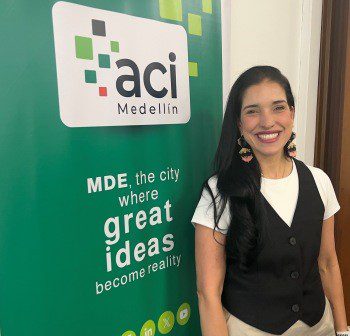
ACI Medellín collaborated with several key foundations to support social and environmental initiatives outlined in the city’s Development Plan. Noteworthy projects include a partnership with The Carter Center, which provided $50,000 USD and technical assistance to the Secretary of Women’s “Informando a las Mujeres, Transformando Vidas” project, aimed at strengthening gender-focused communication strategies for women caregivers. Other philanthropic entities involved in supporting various projects include Bloomberg Philanthropies, the Hilton Foundation, and Sparkassen Stiftung from Germany.
Medellín maintained its engagement in global city networks to advance sustainable development objectives. From 2024 to 2025, the city participated actively in platforms such as C40 Cities Climate Leadership Group, Mercociudades, CIDEU, and Metropolis. This participation led to the receipt of cooperation grants, training scholarships for municipal staff, and technical assistance for specific projects, such as Primavera Norte, which received support through the C40 and GIZ networks. As a member of the C40 Steering Committee, Mayor Federico Gutiérrez participated in global network activities, during which projects like the Corredores Verdes program, which the city credits with contributing to a 2 °C reduction in urban temperature, were presented.
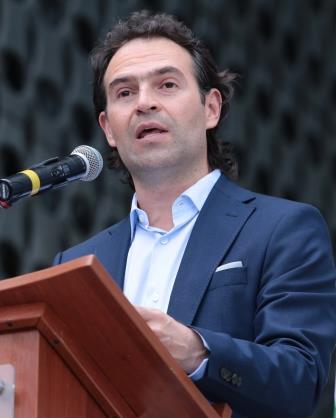
Medellín Mayor Federico Gutierrez (photo courtesy of the mayor’s office)
Recognition and Diaspora Strategy
In recognition of its social policies, the city’s School Feeding Program (Comedores Escolares) received the Milan Urban Food Policy Pact award in the Social and Economic Equity category. Medellín was one of six cities selected from 173 applicants globally, and the award included a financial contribution of €20,000 EUR. The award recognized the program’s integrated strategy, which focuses on providing nutritional food for children, strengthening food security, and supporting purchases from local producers.
Additionally, the Sos Paisa Network was relaunched in 2025. The initiative focuses on connecting the Antioquian diaspora with opportunities in Medellín, specifically aligning their knowledge with local Science, Technology, and Innovation (CTI) projects. This renewal effort aims to leverage the global scientific and academic diaspora for local development.
According to Cristina Zambrano, Executive Director of ACI Medellín, the figures confirm a growing international engagement. The executive noted that from 2008 through 2025, the agency has managed $4.084 billion USD in foreign direct investment, generating an estimated 44,000 jobs in the Aburrá Valley, in addition to $134 million USD in international cooperation.
New power market regulations implemented by the Colombian government reduce commercial flexibility for power generators and could increase pressure on profitability and leverage, particularly during periods of low hydrological conditions, according to analysis from Fitch Ratings. The rating agency suggested that continuous policy shifts prioritizing short-term price control over financial predictability are likely to erode cash flow visibility and place downward pressure on credit ratings. Fitch further noted that the policies risk disincentivizing new power generation capacity ahead of the first quarter of 2026 firm energy auction, which increases the likelihood of future energy shortages.
The recently issued governmental decrees aim to reduce household electricity costs but limit mechanisms available to generators for balancing risk and cost across varying hydrology and market conditions. Specifically, the new policies introduce two key requirements: first, power generators are now required to sell at least 95% of centrally dispatched hydro output through fixed contracts; and second, the policies introduce new differentiated and capped Scarcity Prices. Under the new framework, Scarcity Prices for hydro, coal, and renewable generation are capped at 359 COP/KWh, down from approximately 900 COP/KWh, while thermal plants receive separate pricing.
President Gustavo Petro’s populist measures may please retail electricity consumers but imperils the health of Colombia’s electrical generation sector.
The Scarcity Price is a critical market signal, as spot prices exceeding this level trigger firm energy obligations (FEOs). By capping the Scarcity Price, the new regulation reduces the compensation paid to generators, which is intended to cover capacity availability during tight supply periods. This measure, according to Fitch, is expected to reduce returns on new firm capacity, thereby discouraging future investment. Simultaneously, the rule forcing generators to pre-sell 95% of centrally dispatched hydro output may reduce their flexibility to adjust contract coverage in response to changing hydrological conditions. This increased inflexibility raises the potential for costly spot purchases or penalties for generators during drought conditions.
The rated Colombian utilities with diversified assets, including Empresas Publicas de Medellin E.S.P (EPM) (BB+/Negative), Isagen, (BBB-/Negative), Enel Colombia (BBB/Negative), and Celsia Colombia (BVC: CELSIA) (AAA(col)/Stable), have historically managed hydrology volatility through conservative commercial policies. Over the past four years, these companies have maintained an average of about 80% of sales via contracts, leaving approximately 20% exposure to spot prices even during price spikes. This discipline helped the companies navigate severe dryness conditions experienced in 2023–2024 without compromising credit strength. Fitch expects that if similar dry conditions recur under the new regulatory framework, higher energy procurement costs will weigh on profitability and cash flows, with limited scope for meaningful end-user tariff relief.
Signals for investment are especially critical ahead of the 2029–2030 FEO auction, which is scheduled to commence in early 2026. If these restrictive measures remain in place, auction outcomes could fall short of capacity expansion goals, as the reduced visibility on achievable returns increases developers’ hurdle rates and delays capital commitments. This trend could exacerbate the risk of future power shortages, given Fitch’s estimate that energy demand could exceed current FEOs by 4% to 5% between 2026 and 2028. Durable reliability depends on balanced market incentives that allow all technologies to recover costs and earn risk-appropriate returns. Designing scarcity pricing and contracting rules that preserve clear signals for investment, while enabling generators to manage hydrology risk, remains essential to sustain adequate firm energy and diversify the generation matrix.
Above photo: Electrical transformers en route to the Hidroituango Hydroelectric Dam in Northwestern Colombia. Each has a capacity of 112 MVA (million volt amperes) and will transform the generator output from 18 kilovolts to the grid distribution voltage of 500 kilovolts. Each is 4 meters high and weighs 110 tons when filled with oil. (Photo credit: EPM)
Colombian airline Avianca S.A. announced significant progress in complying with an urgent software update mandated by Airbus S.E. (EPA: AIR; XETRA: AIR) for its global A320 family fleet. The update, required to mitigate potential flight control data corruption caused by intense solar radiation, had temporarily grounded a substantial portion of commercial aviation aircraft manufactured by Airbus.
As of December 1, Avianca reported that specialized technicians had completed the software update on approximately 90% of the affected aircraft. The remaining planes are currently undergoing modification, a process facilitated by the accelerated import of the necessary software from France by the manufacturer, Airbus. The airline is collaborating with civil aviation authorities and the manufacturer to fully restore operations promptly.
The disruption, which began after Airbus issued an “Alert Operators Transmission” on November 28, required affected aircraft to remain on the ground until modifications were implemented. The issue was discovered after an investigation into an incident involving a JetBlue Airways Corporation (NASDAQ: JBLU) A320 flight on October 30, where the aircraft experienced a sudden dive in altitude while flying from Cancun, Mexico, to Newark, New Jersey. Airbus stated that the software fix was required because intense solar storms, such as solar flares, could corrupt data critical to the fly-by-wire flight controls of the A320 series planes (A319, A320, and A321s).
The mandate from the manufacturer affects a majority of Avianca’s fleet, impacting over 70% of its aircraft when the order was issued. Globally, approximately 6,000 of the best-selling single-aisle planes required the software repair. The European Union Aviation Safety Agency (EASA) issued an airworthiness directive requiring airlines to complete the repairs before returning the planes to passenger service.
Operational Impact and Customer Rerouting
Avianca stated that the required grounding of aircraft has so far impacted 233 flights and affected 35,708 passengers, with 29,881 of those passengers traveling within Colombia.
Due to the rapid pace of the required work, the airline has re-opened sales for flights scheduled to operate from December 5, earlier than the original December 8 cutoff date. Prior to this, Avianca had initially closed sales for travel dates up to, and including, December 8, to prevent further impact and allow the company to reallocate existing passengers onto available flights.
To manage the disruption, Avianca implemented a comprehensive customer support plan, which included:
- Rerouting: Affected customers were protected through immediate re-accommodation on available Avianca flights or on flights operated by other airlines with which the company maintains commercial agreements.
- Refunds and Rebooking: Passengers whose plans could not be accommodated were offered a refund for unused flight segments. The airline also offered passengers the option to reschedule their flights up to 180 days after the original flight date without incurring a penalty or fare difference.
- Support Services: The airline increased staff presence at airports, with over 50 additional personnel deployed at Bogotá’s El Dorado international airport, to provide assistance, particularly for elderly passengers, those traveling with children, or those with disabilities.
- Capacity Expansion: The contact center and refund processing teams increased capacity to manage the higher volume of inquiries and expedite reimbursements. New communication channels, including WhatsApp, were established to inform clients of irregularities and offer travel alternatives.
Avianca noted that the efforts of its staff, particularly its base of over 2,500 technicians, remain focused on fully restoring the operation. For most aircraft, the required modification involves a simple reversion to previous software, a process Airbus estimated could be completed in approximately two hours for the majority of the global fleet. However, around 900 older A320 aircraft globally require a more complex fix involving the manual installation of new hardware.
Ecopetrol S.A. (BVC: ECOPETROL; NYSE: EC), Colombia’s state controlled petroleum company, has approved its 2026 Annual Investment Plan, allocating between $22 and $27 trillion Colombian Pesos (approximately $5.43 billion to $6.67 billion USD, based on the projected $4,050 COP to $1 USD exchange rate) to maintain current operational output while advancing its energy transition strategy.
The allocation follows capital discipline criteria and maintains investment levels comparable to projected 2025 year-end figures. Approximately 70% of the total budget ($17.2 trillion COP) is designated for core hydrocarbons operations, including production, refining, and transportation. The remaining 30% ($7.1 trillion COP) is slated for energy transition initiatives, power transmission, and corporate investments.
The 2026 financial model is built on an estimated Brent crude price of $60 USD per barrel and an average annual exchange rate near COP 4,050:1 USD. Under these assumptions, the Ecopetrol Group projects an approximate EBITDA margin of 40%, in line with 2025 levels. Transfers to the Colombian government are estimated at approximately $28 trillion COP. To support these financial targets and maintain debt metrics, the group plans to implement a portfolio rotation program.
A profitability and efficiency program is expected to contribute approximately $5.7 trillion COP, impacting EBITDA, investments, and working capital. This program is structured to support performance in total refining costs and transported barrel costs, while sustaining lifting costs below $12 USD per barrel.
Approximately $1.7 trillion COP is allocated to the company’s “SosTECnibility” strategy, focusing on climate change, sustainable territories, materials and waste management, and occupational health.
Hydrocarbons and Midstream Operations
Investment in exploration and production totals $14 trillion COP, constituting the largest single allocation. This is split with 89% dedicated to crude oil and 11% to natural gas, focused on achieving organic production levels of 730–740 thousand barrels of oil equivalent per day (BOED). Production is anticipated to consist of 80% crude, 15% gas, and 5% white products, utilizing recovery technologies to optimize resources. The strategy involves increasing crude oil output in Colombia to offset natural gas field declines.
The Ecopetrol Group plans to drill between 380 and 430 development wells, with 95% located in Colombia and 5% in the US. The exploration program includes 8 to 10 exploratory wells in Colombia, primarily in offshore, Meta, and Putumayo areas. Gas investments are estimated at $1.5 trillion COP, mainly targeting the Llanos Foothills and offshore areas to develop Caribbean gas, contributing an estimated 105–110,000 BOED.
Transport investments total about $1.5 trillion COP, representing 6% of the budget. The funding is primarily for integrity and reliability projects managed by Cenit, Ocensa, Oleoducto de Colombia S.A.), and Oleoducto del Llano S.A. Transported volumes are targeted between 1,110,000 and 1,120,000 barrels per day.
Refining investments are set at close to $1.7 trillion COP (7% of the budget), targeting reliability, availability, and sustainability at the Barrancabermeja and Cartagena refineries, aiming to reduce product imports and improve fuel quality. Combined refinery throughput is forecast between 410,000 and 420,000 barrels per day.
Energy Transition and Transmission Segment Growth
Interconexión Eléctrica S.A. E.S.P. (ISA) (BVC: ISA), an Ecopetrol subsidiary, is allocated between $6.2 and $6.8 trillion COP in 2026, comprising roughly 26% of the group’s annual budget, with approximately 80% dedicated to its electric transmission business.
For the core energy transition efforts, approximately $0.9 trillion COP (3% of the plan) is earmarked for non-conventional renewable energy and energy efficiency projects. This investment seeks to add approximately 750 MW of clean energy generation capacity from projects in operation, construction, and development.
Renewable Energy Acquisition Moves Ecopetrol Closer to 900 MW Target
In a separate announcement, Ecopetrol confirmed the successful conclusion of negotiations on November 28, 2025, with Grenergy Renovables S.A. (BME: GRE), a Spanish renewable energy company. The negotiations concern the potential acquisition by Ecopetrol of seven solar photovoltaic project companies in Colombia, located across the departments of Córdoba (3), Cesar (2), Magdalena (1), and Sucre (1).
Each of the seven companies owns the assets, licenses, agreements, and permits for a solar project with an estimated renewable energy generation capacity of up to ~12.6 MWp. The completion of this acquisition is contingent upon certain conditions precedent and legal requirements.
Upon closing, the transaction would contribute to Ecopetrol’s decarbonization and energy transition goals by adding installed capacity toward its internal target of 900 MW of self-generated renewable energy. These projects are intended to support low-emission energy generation under competitive conditions for the Ecopetrol Group’s self-consumption, reducing the company’s reliance on bilateral energy contracts and mitigating exposure to spot market energy purchases.
Corporate Governance Changes
Ecopetrol also reported changes to its corporate leadership. During a meeting held on November 27, 2025, the board of directors elected Ángela María Robledo Gómez as Chairwoman and Álvaro Torres Macías as Vice Chairman of the Board. Both individuals were elected to the Ecopetrol Board of Directors in a slate that was “proposed by the government” (President Gustavo Petro’s administration).
Additionally, the company reported the resignation of Independent Director Guillermo García Realpe, citing personal reasons. His resignation is effective as of December 12, 2025. Ecopetrol acknowledged his service to the company during his tenure.
Ecopetrol operates as a key integrated energy firm on the American continent. In Colombia, it is responsible for more than 60% of hydrocarbon production and manages the majority of the nation’s transportation, logistics, and hydrocarbon refining systems. Through its 51.4% stake in ISA, the company holds positions in energy transmission across Brazil, Chile, Peru, and Bolivia, as well as road concessions in Chile, and participates in real-time systems management through XM and the Barranquilla – Cartagena coastal highway concession. Internationally, Ecopetrol has drilling and exploration operations in oilfields across the US (Permian basin and the Gulf of Mexico), Brazil, and Mexico.
 Empleobilingue.com

- Director/a de operaciones para hotel, restaurante y discoteca 1626320364.60 - Medellín, Medellin, Antioquia, Colombia
- Coordinador/a de calidad para La Unión 1626483143.1 - La Unión, Antioquia, Colombia
- Desarrollador fullstack - Bogotá, Bogota, Colombia
- Technical Analyst - Remote
- PIM Administrator - Ecommerce - Remote (Bogotá, Bogota, Colombia)
- Auxiliar de gestión humana y bienestar para Girardota 1626060072.28 - Girardota, Antioquia, Colombia
- Marketing Strategist
- Trainer Manager - Bogotá, Bogota, Colombia
- Tolemaida UH- 60 Inspector - Bogotá, Bogota, Colombia
- Virtual Assistant - Team Lead - Remote
Contact Us

