

















Washington ends the Petro-era rupture on inauguration day
As Abelardo de la Espriella took the oath of office as Colombia’s president on August 7, the US Department of State announced that Washington intends to provide $1 billion USD in security assistance to his new government, capping a stunning reversal in a bilateral relationship that a year earlier had produced sanctions against a sitting Colombian president, a revoked visa, and a call from the presidential palace for American soldiers to disobey their commander-in-chief.
A US Presidential Delegation led by Acting Attorney General Todd Blanche represented the United States at de la Espriella’s August 7 inauguration in Cali, a city in Colombia’s conflict-scarred southwest that hosted the ceremony instead of the traditional venue in Bogotá. In a statement titled “A New Era in U.S.-Colombia Relations,” the State Department said the delegation “demonstrates US commitment to reinvigorating the US-Colombia relationship and deepening of our shared security and economic partnership,” and that the $1 billion package is intended “as a cornerstone of this renewed partnership.”
A delegation built around security and counternarcotics
Secretary of State Marco Rubio did not travel to Cali, but the delegation Washington sent was heavy with counternarcotics and security officials, according to ColombiaOne and Local 10 News. Alongside Blanche, the group included Drug Enforcement Administration (DEA) Administrator Terry Cole; US Representative Mario Diaz-Balart of Florida; Sara Carter, director of the Office of National Drug Control Policy; Hugo Guevara of the US Embassy in Bogotá; Cliff Sims, national security adviser to Vice President JD Vance; Viviana Bovo of the State Department’s Bureau of Western Hemisphere Affairs; Joseph M. Humire, deputy assistant secretary of war for Americas security affairs; and Chris Jarvis of Joint Task Force Vulcan, which targets transnational criminal organizations.
“Yesterday was the start of a new friendship and partnership working as a team in the fight against drug trafficking and furthering our relationship in countering threats to our national security and public safety,” Blanche wrote in a statement carried by Local 10 News.
Cole struck a similarly pointed tone. “DEA is ready to stand shoulder to shoulder with Colombia again,” he said in a statement cited by Local 10 News. “We will hunt down those who profit from cocaine, corruption, violence, and terror. There will be no safe haven, no protected trafficking route, and no immunity for those who poison our communities.”
“We will hunt down those who profit from cocaine, corruption, violence, and terror. There will be no safe haven, no protected trafficking route, and no immunity for those who poison our communities.” — DEA Administrator Terry Cole
From the “Clinton List” to a $1 billion pledge
The turnaround stands in sharp contrast to where the relationship stood barely 10 months earlier. On October 24, 2025, the US Treasury’s Office of Foreign Assets Control (OFAC) added outgoing President Gustavo Petro to its Specially Designated Nationals and Blocked Persons List — known in Colombia as the Lista Clinton (Clinton List), after the 1995 executive order that created it — under Executive Order 14059, which targets foreign persons involved in the global illicit drug trade. OFAC simultaneously designated Petro’s wife, Verónica Alcocer; his son, Nicolás Petro; and his interior minister, Armando Benedetti, according to a Federal Register notice of the action and Finance Colombia’s own reporting at the time. It marked the first time OFAC had designated a sitting, democratically elected head of state of a country long considered a close US ally.
The sanctions followed a September 15, 2025, presidential determination naming Colombia a “major drug transit country or major illicit drug producing country” that had “failed demonstrably” to meet its counternarcotics obligations — the first time Colombia had been placed on that list in more than 25 years.
Relations deteriorated further that same September, when Petro, addressing a pro-Palestinian rally near the United Nations General Assembly in New York, told a crowd: “I ask all the soldiers of the United States’ army, don’t point your rifles against humanity,” and urged them to “disobey the orders of Trump.” The State Department revoked his visa within hours, saying on social media that Petro had “urged US soldiers to disobey orders and incite violence,” according to CBS News. Petro dismissed the punishment, writing on social media that “international law grants me immunity to go to the UN and that there should be no reprisals for my free opinion, because I am a free person,” and noting that as a dual Colombian-European citizen he did not need a US visa, according to Al Jazeera.
Tensions eased only gradually. Petro traveled to Washington for a meeting with President Trump on February 2, 2026, in what CNN described at the time as a shift “from clash to dialogue” after a year of confrontation. Petro remained on the SDN list, and was still lobbying for his own removal from it as late as early July 2026, when he asked Trump by phone to lift the designation on him and his family — a request Trump said he would look into, according to ColombiaOne.
An election fought over the US relationship
De la Espriella, a 48-year-old lawyer and political outsider known to supporters as “El Tigre,” defeated Historic Pact candidate Iván Cepeda in a June 21 runoff, a race Trump endorsed publicly. Petro initially alleged the vote had been manipulated, a claim dismissed by international observers and Colombia’s electoral authorities before he conceded, according to Al Jazeera. The run-up to the inauguration was marked by violence, including a truck bombing near a police station in Cúcuta on August 1 that wounded eight police officers and three civilians, six days before de la Espriella took office, according to Al Jazeera. No group claimed responsibility; dissident factions of the demobilized FARC, the National Liberation Army (ELN), and the Clan del Golfo criminal group are all active in the border region. Security was tightened further ahead of the ceremony itself, held under armored vehicles, soldiers, and vehicle checkpoints in Cali, according to Al Jazeera.
At his swearing-in, de la Espriella broke with Petro’s negotiated-peace strategy toward armed groups, declaring that “the option of dialogue is completely exhausted” and pledging to “relentlessly defeat narco-terrorism.” He also committed Colombia to joining the Shield of the Americas, the US-backed regional counter-cartel coalition that grew out of a March 2026 summit hosted by the Trump administration, and pledged to strengthen state-run Ecopetrol (NYSE: EC) and pursue “responsible and sustainable fracking” to shore up the country’s oil and gas reserves.
Security package now, economic dialogue to follow
Under the State Department’s framework, the $1 billion package — which still requires action by the US Congress — is aimed at strengthening Colombia’s security forces against Foreign Terrorist Organizations and Transnational Criminal Organizations, expanding coca eradication and cocaine interdiction, freezing and prosecuting the finances behind armed groups, tightening border-security coordination, and rebuilding state presence in territory once controlled by armed groups.
The State Department said the two governments will also launch a Bilateral Prosperity Dialogue aimed at stabilizing Colombia’s economy, strengthening its energy sector, and exploring critical mineral investment, alongside efforts to connect Colombian small and medium enterprises in agribusiness, manufacturing, and tech services to US buyers and supply chains. Washington also committed to contributing to relief funds for potential El Niño-related flooding and drought, to modernizing Colombia’s digital, port, and energy infrastructure, and to advancing bilateral cooperation on civil nuclear energy.
Congressional approval of the $1 billion security package remains the first test of whether Friday’s pledges translate into disbursed assistance — and of how durable the “new era” proves once the inauguration goodwill fades.
European Union takes center stage at Cartagena’s AI-focused congress
ANDICOM 2026 will bring together technology companies, government representatives, academics and business leaders in Cartagena from September 1–4 to discuss how artificial intelligence is moving from experimentation into practical applications for productivity, competitiveness and economic development. The congress, organized by CINTEL (Centro de Innovación, Productividad y Desarrollo Tecnológico, or Center for Innovation, Productivity and Technological Development), will take place under the theme “Unleashing the Power of AI.”
The 41st edition of the event will open on September 1 with the ANDICOM Knowledge Hub 2026 – Business Impact Sessions, followed by the Main Academic Forum from September 2–4. The European Union will participate as guest of honor, while Colombia’s national government and executives from global technology companies including Fortinet, Zoho Corporation, Microsoft, Blend360, Google Cloud and Hewlett Packard Enterprise are expected to contribute to the agenda.
“The conversation about artificial intelligence has evolved. Today organizations no longer ask what this technology can do, but how to apply it to increase productivity, strengthen competitiveness, improve decision-making and generate sustainable advantages,” – Mario Castaño, technical director of CINTEL.
The European Union’s participation will focus on artificial intelligence as infrastructure for economic development and digital transformation. According to ANDICOM, the bloc represents 22% of foreign direct investment in Colombia’s technology sector, has generated more than 120,000 jobs through European companies operating in the country and will bring together representatives from its 27 member states during the congress. “ANDICOM will be the stage where global leaders share experiences, real cases and strategies to turn that potential into concrete results.” promised Mario Castaño.
The event’s academic program will focus on four strategic areas: artificial intelligence, cybersecurity and digital trust, connectivity and digital infrastructure, and public policy and regulation. Discussions will cover topics including AI adoption, automation, advanced analytics, data platforms, digital talent, sustainability, digital government and the future of work.
The opening day will also feature the CINTEL AI Forum, which will examine governance and responsible adoption of AI agents, as well as the CyberShield Forum, focused on cybersecurity challenges linked to the development of quantum technologies and Colombia’s transition toward post-quantum cryptography.
Confirmed speakers include Derek Manky, chief security strategist at Fortinet (NASDAQ: FTNT), who will discuss how artificial intelligence is changing the cybersecurity landscape through autonomous attacks, deepfakes and emerging digital threats.
Raju Vegesna, chief evangelist at Zoho Corporation, will address digital sovereignty and the changing relationship between companies, governments and technology platforms. Marc Reguera, worldwide customer engagement general manager at Microsoft Fabric, will discuss how organizations can use AI and data analytics to improve decision-making and create business value.
The agenda will also involve Andrés Barrantes, regional vice president for Latin America at Blend360, an Amazon Web Services Premier Partner, who will examine strategies for using artificial intelligence to monetize data, optimize costs and improve competitiveness.
Pilar Manchón, senior director of AI research strategy at Google Cloud, will share perspectives on AI research and innovation, while Eric Martorell Bouvier, director of artificial intelligence solutions for Latin America and southern Europe at Hewlett Packard Enterprise and Servicelab AI, will discuss enterprise adoption of AI solutions.
Alongside the Main Academic Forum, the Experience Hub will provide demonstrations of technology solutions and innovations developed by participating companies, creating a connection between business needs, technological capabilities and investment opportunities.
The complete agenda is available through the ANDICOM agenda page.
Organized annually by CINTEL, ANDICOM has become one of Latin America’s largest technology and business gatherings, bringing together executives, public officials, investors, academics and technology providers to examine the role of digital transformation in the region’s economy.
Headline phot: Andicom on Day 2 in Nueva Granada salon. (Photo shared by Clicksalinas Photographer)
Customers question advance payments after former Ferrari representative changes operations in Colombia
Several Ferrari customers in Colombia are seeking answers after paying advance deposits for vehicles that they say have not been delivered, following the end of the relationship between Ferrari and its former Colombian representative, Autos Italianos de Colombia S.A.
The dispute emerged in July 2026 after customers reported uncertainty over vehicle orders and advance payments made through the Bogotá dealership. Ferrari North America confirmed that Autos Italianos de Colombia was no longer part of its authorized distributor network as of June 4, 2026, and said it was working to identify a new representative for Colombia.
At the center of the controversy are buyers who say they transferred significant sums of money for Ferrari vehicles but have not received their cars or refunds. One customer, businessman Antonio Mendivil, said he paid a $30,000 USD deposit toward a vehicle order and was later informed that Ferrari had not received the funds.
“We made the $30,000 USD advance, and we were left with the fact that my $30,000 USD never reached Ferrari; it stayed in Colombia, in this company called Autos Italianos.” – Antonio Mendivil, Ferrari customer
According to reports from Colombian media, several customers had placed orders through the Ferrari showroom previously operated by Autos Italianos de Colombia in northern Bogotá. Buyers said they expected the dealership to manage the ordering process, international production timeline and eventual delivery of their vehicles.
The Superintendencia de Industria y Comercio (SIC), Colombia’s consumer protection authority, began reviewing the situation after receiving complaints from customers. On July 22, 2026, the agency requested information from Autos Italianos de Colombia regarding sales conditions, delivery commitments and its commercial relationship with Ferrari.
The SIC’s action is a preliminary consumer protection review and does not represent a final finding of wrongdoing. The authority is seeking documentation to determine whether consumer regulations were followed in the sale of the vehicles.
Ferrari North America has distanced itself from the dispute involving the former distributor and stated that matters related to customer claims against Autos Italianos de Colombia should be addressed directly with that company. The company also confirmed that it is searching for a new official distributor in Colombia.
On July 31, 2026, Autos Italianos de Colombia responded to the dispute by announcing that it had initiated legal proceedings against Ferrari North America. The former distributor requested evidence-gathering measures before civil courts in Bogotá to examine the circumstances surrounding the termination of its representation agreement, including Ferrari’s decision-making process, vehicle allocations, customer orders and advance payments. The company’s legal action represents a separate dispute from the consumer complaints filed by Ferrari buyers and does not constitute a finding that either party acted improperly.
The case has also drawn attention from the Fiscalía General de la Nación after complaints from buyers regarding possible irregularities. Allegations reported by customers and media remain under investigation and have not resulted in a confirmed judicial finding against the individuals or companies involved.
For luxury vehicle buyers, the dispute shows the importance of understanding payment structures, contractual responsibilities and the role of authorized distributors in high-value international purchases.
Ferrari vehicles often involve long production timelines, customized specifications and substantial advance payments. The resolution of the Colombia dispute will depend on whether authorities and the parties involved can clarify the status of customer funds, pending orders and contractual obligations.
Headline photo : Ferrari showroom in Bogota (Photo shared by EEIM via Wikimedia Commons)
Tourism Overtakes Coal and Coffee as a Top Colombian Export Earner
Colombia recorded more than 24 million non-resident visitors during the current presidential term and generated close to $34.43 billion USD in foreign exchange from travel through December 2025, figures released by the Ministry of Commerce, Industry and Tourism (Ministerio de Comercio, Industria y Turismo, or MinCIT) show. The ministry says tourism has become one of the country’s largest sources of foreign exchange, surpassing traditional export sectors such as coal and coffee.
“Today, Colombia demonstrates that it can also generate wealth from its biodiversity, its cultural heritage, the quality of its services and the talent of its people.” -Diana Marcela Morales, Former Minister of Commerce, Industry and Tourism
The figures were presented during the Foro Internacional de Turismo: Colombia, un destino por explorar (International Tourism Forum: Colombia, a Destination to Explore), held in Bogotá on July 15. The event brought together tourism associations, business leaders, academics and government officials to discuss the sector’s performance and future, including regenerative tourism, artificial intelligence, smart mobility and innovation in visitor experiences.
Promoted under the campaign Descubre la Diversidad de Colombia, El País de la Belleza (Discover the Diversity of Colombia, the Country of Beauty), the ministry reported that more than 24 million non-resident visitors arrived during the administration of President Gustavo Petro, representing a 109% increase compared with the previous equivalent period. Of those arrivals, 14.8 million were foreign visitors.
According to the Banco de la República, Colombia’s central bank, tourism generated approximately $34.43 billion USD in foreign exchange through December 2025, exceeding revenue from coal and coffee exports. Tourism has also become the country’s largest services export, with 57% of services export earnings coming from the sector.
“For decades, much of the country’s capacity to generate foreign exchange was tied to the export of raw materials,” Former Minister of Commerce, Industry and Tourism Diana Marcela Morales said. “Today, Colombia demonstrates that it can also generate wealth from its biodiversity, its cultural heritage, the quality of its services, the talent of its people and the confidence that millions of people place in choosing the country as a destination. Tourism expresses, perhaps like few other sectors, that transition toward a more diversified economy with greater added value.”
Employment has also expanded alongside visitor growth. Figures from DANE (Departamento Administrativo Nacional de Estadística, Colombia’s National Administrative Department of Statistics) show that accommodation and food service activities supported approximately 1.8 million jobs in February 2026, a 15% increase compared with the same period in 2019. During 2025, the sector accounted for 4.4% of Colombia’s national value added.
International demand has continued to grow during 2026. In the first quarter, more than 368,000 international airline tickets were sold with Colombia as the destination, representing a 16.7% increase over the previous year. The largest source markets were the United States, Brazil and Mexico.
During the first two months of 2026, approximately 10 million passengers traveled through Colombia’s airports, an 8% increase across domestic and international traffic. Between January and March, the country received 1.58 million non-resident visitors.
The government has also expanded tourism investment beyond major destinations. MinCIT reported that infrastructure projects—including trails, docks, boardwalks and gastronomic plazas—have reached 699 municipalities, representing 63% of Colombia’s territory. According to the ministry, 207 municipalities received tourism investment for the first time.
The ministry also said tourism initiatives now cover all 140 municipalities included in Colombia’s Programas de Desarrollo con Enfoque Territorial (Development Programs with a Territorial Focus, or PDET), a post-conflict development framework for areas historically affected by armed conflict. Through its Turismo para una Cultura de Paz (Tourism for a Culture of Peace) strategy, more than 999 businesses have joined the Colombia Destinos de Paz (Colombia Peace Destinations) certification.
“Unlike other economic activities, whose benefits tend to concentrate in specific production centers, tourism generates value precisely where a country’s natural, cultural and historical heritage is located,” Morales said. “It is a bridge that connects different cultures and brings opportunities to intermediate municipalities, strengthens rural economies, energizes small businesses and creates incentives to conserve what makes each territory unique.”
Headline Photo: Beachside in Barú, Colombia (photo by Loren Moss)
What remains after four years of Colombia’s first left-wing government?
Four years after Gustavo Petro took office, Colombia is a different country from the one he inherited in August 2022, but it continues to face some of its deepest historical problems: inequality, violence, drug trafficking, illegal economies, corruption and the state’s limited ability to exercise control over large parts of the country.
Petro came to power with an ambitious promise: to transform the country. His election represented a historic change in itself. For the first time, a leader from the left reached the presidency, and social sectors traditionally distant from power gained direct representation in the executive branch.
Four years later, just as the self-described “Gobierno del Cambio” (Government of Change) comes to an end, the record is mixed. Petro leaves behind measurable social progress, a broader political spectrum capable of competing for power and significant reforms in labor and politics. But he also leaves unfinished projects, a peace policy that failed to achieve its objectives, a persistent crisis in the health care system, corruption scandals, and an administration marked by high ministerial turnover.
Perhaps his deepest legacy lies not in any specific reform, but in demonstrating that Colombian democracy could incorporate sectors that had remained on the margins of power for decades without altering the system of checks and balances that underpins the country’s democratic processes.
The main achievement: A broader democracy
Petro’s election in 2022 was the culmination of a political process Colombia had been experiencing for decades: the gradual expansion of the ideological spectrum with a realistic chance of reaching the presidency.
Francia Márquez‘s rise to the vice presidency carried equally profound significance. A Black woman from a region historically affected by poverty and conflict, her election became a symbol of political mobility and representation in a country where economic and social elites have traditionally dominated the main centers of power.
Márquez built part of her political discourse around the “nadies” (nobodies), an expression intended to champion historically excluded communities. Petro incorporated that narrative during his term and embraced political and social inclusion as one of the defining elements of his administration.
From that perspective, regardless of how its public policies are evaluated, the Petro administration leaves behind a broader democracy: after 2022, Colombia demonstrated that ideological, social, ethnic and regional groups previously distant from presidential power could also reach the Casa de Nariño. It was a necessary message for a country whose guerrilla movements emerged partly in response to the traditional two-party system of the last century.
Paradoxically, that expansion coexisted with an often-conflictive relationship between the president and some of the institutions designed precisely to limit the exercise of power.
At various points, Petro challenged Congress, the courts, the Banco de la República, the media and sectors of the opposition when their decisions stood in the way of parts of his agenda. Those checks, however, are not an anomaly in Colombia’s political system but one of its structural components: the system of checks and balances.
Incoming President Abelardo de la Espriella will likely face a similar reality. Without his own majorities in Congress, his ability to govern will also depend on negotiations, judicial oversight and institutional limits that no president can eliminate simply by winning an election.
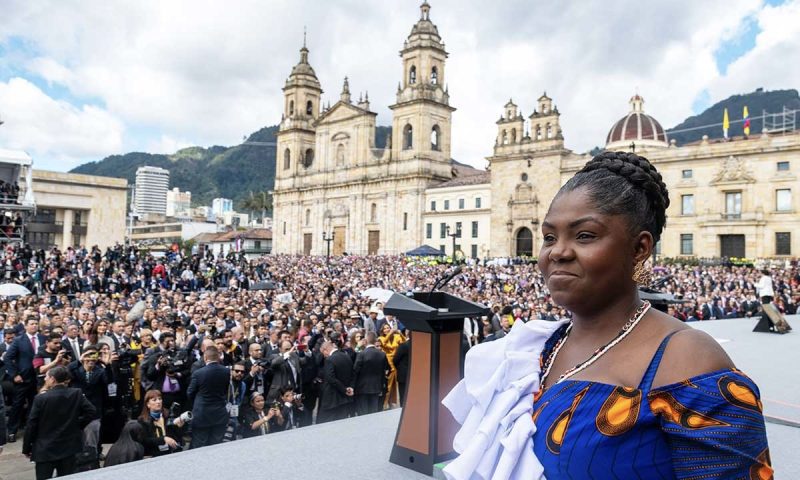
Francia Márquez during her inauguration as vice president of Colombia at Plaza de Bolívar in Bogotá on August 7, 2022. Photo courtesy of the Presidency of Colombia.
Less poverty, more employment and higher wages
On social issues, several indicators improved during the Petro administration.
In 2025, according to figures from the Departamento Administrativo Nacional de Estadística, or DANE, monetary poverty fell to 28%, the lowest level recorded in the country up to that point. Petro had taken office in 2022, when the rate stood at 36.6% following the sharp increase caused by the pandemic.
During the first three years of his administration, about 3.8 million people moved out of monetary poverty and nearly 1 million escaped extreme poverty, according to official DANE figures.
The labor market also improved. Unemployment, which stood at around 11.3% in 2022, fell to about 8% during the first months of 2026.
Petro also ended his term with a 23% increase in the minimum wage for 2026, far above inflation, which closed 2025 at 5.1%. The measure directly benefited about 2.5 million workers and their families and reflected one of the president’s most consistent political priorities: improving workers’ incomes and conditions.
The labor reform moved in the same direction, increasing the amount employers must pay for nighttime, Sunday and holiday work: one of the country’s long-standing labor policy shortcomings.
Those results allow the outgoing government to argue that part of its redistributive agenda produced tangible effects, even though Colombia remains a deeply unequal society.
Reforms that advanced and those left halfway
The record of Petro’s major structural reforms is considerably more complex.
Agrarian reform, one of his central campaign promises, fell far short of its goals. Petro had proposed purchasing 1.5 million hectares of land for distribution to farmers and advancing the formalization of 7 million hectares envisioned under the Peace Agreement.
According to figures from the Ministry of Agriculture, more than 462,000 hectares had been purchased by mid-2026, less than one-third of the announced target.
On pensions, the government succeeded in getting Congress to approve an overhaul of the system that replaced competition between public and private regimes with a system based on a public foundation and additional savings mechanisms administered by private entities. To secure its passage, the executive branch had to compromise on some of its original objectives. The reform was subsequently challenged in court, and its implementation was suspended while the Constitutional Court reviewed the legislative process, which remains unresolved in the absence of a final ruling from the court.
Colombia’s institutional system thus once again demonstrated the limits any president faces when attempting to implement structural transformations without sufficiently broad political consensus.
“Total Peace”, one of the administration’s biggest defeats
If there was one area where results fell particularly far short of initial expectations, it was security policy and the so-called “Total Peace” initiative.
Petro came to power proposing simultaneous negotiations with different armed organizations to reduce violence and move toward resolving the conflicts that persisted after the 2016 agreement with the FARC.
Four years later, his government ended without reaching a final agreement with the main armed groups with which it had opened negotiations.
During that period, organizations such as the Ejército de Liberación Nacional (ELN), and the Clan del Golfo maintained or expanded their operational capacity in different territories, while the country continued to record kidnappings, recruitment of minors, attacks and killings of social and political leaders.
Political violence reached one of its most serious moments with the killing of presidential hopeful Miguel Uribe, an event that reminded the country of the dangers of political violence that Colombia had believed it had left behind.
The failure of Total Peace to produce sustainable agreements will likely be one of the most difficult aspects of the outgoing president’s legacy to defend.
A health care transformation that never came
Petro also failed to transform the health care system on the terms he had proposed during the campaign.
The reform became one of the main battlegrounds among the executive branch, Congress, insurers, health care providers and different political sectors.
As that dispute continued, patient petitions, complaints and claims increased from about 915,000 in 2021 to 2.1 million in 2025, according to figures from the Superintendencia Nacional de Salud.
By the end of the administration, many patients continued to report difficulties obtaining medications and receiving timely care at hospitals and clinics, while household out-of-pocket spending on health care increased.
Petro profoundly altered the debate over Colombia’s health care model, but he failed to replace it with the system he had promised.
Corruption undermined one of Petro’s central promises
Perhaps one of the government’s most politically costly contradictions was corruption.
Petro had built much of his political career denouncing links among corruption, public contracting, and traditional power structures. His arrival at the presidency came with a promise to govern differently.
His administration, however, ended up being affected by several scandals.
The most significant involved the Unidad Nacional para la Gestión del Riesgo de Desastres (UNGRD), in which investigations pointed to the alleged use of public resources and contracts to benefit members of Congress in exchange for support for government initiatives.
The instability caused by the legal troubles surrounding Ricardo Roa, who headed the country’s most important oil and gas company, also had a profound economic impact, eroding both the company’s market value and the governance of one of the institutions underpinning the national economy.
Those controversies were compounded by investigations and disputes involving members of the president’s political and family circle. His son, Nicolás Petro, faced criminal proceedings related to funds received during the campaign, while Verónica Alcocer, then the president’s wife, remains at the center of questions over the use of public funds.
Determining individual responsibility is a matter for judicial and oversight authorities, but politically, the cases eroded one of the central elements of the message that had brought Petro to power.
More than 60 ministers in four years
Administrative instability also became a defining feature of the government. Over four years, more than 60 people served across 18 ministries, equivalent to an average of more than three officeholders per ministry.
The changes reflected political crises, disagreements within the governing coalition, differences between ministers and the president, shifts in the executive branch’s priorities and, at various points, difficulties maintaining a stable administrative course.
The result was a government with considerable rhetorical ability to place issues on the public agenda, but greater difficulty turning some of those debates into sustained policies over its four years in office.
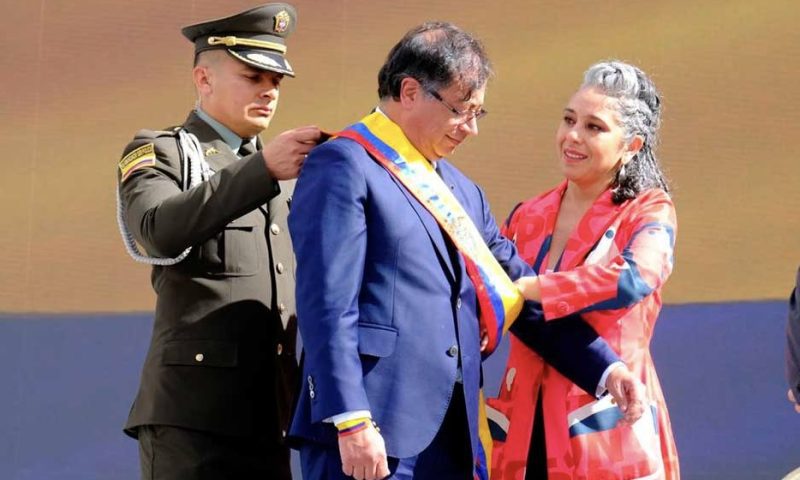
Congresswoman María José Pizarro places the presidential sash on Gustavo Petro during his inauguration at Plaza de Bolívar in Bogotá on August 7, 2022. Photo courtesy of the Presidency of Colombia.
Petro changed who can govern, but not the rules of power
Gustavo Petro’s legacy can hardly be reduced to a simple choice between success and failure.
His administration produced tangible social results and expanded the boundaries of political representation in Colombia. It also put issues on the agenda that will likely remain part of the debate under future governments: inequality, the energy transition, agrarian reform, the functioning of the health care system, and representation for historically excluded populations.
But the promise of structural transformation was far broader than the results ultimately achieved.
Petro discovered, as his predecessors did and as De la Espriella probably will, that winning the presidency does not mean controlling the Colombian state. Congress, the courts, oversight agencies, the Banco de la República, regional governments, the media and a deeply polarized civil society impose limits on any political project.
Petro discovered, as his predecessors did and as De la Espriella probably will, that winning the presidency does not mean controlling the Colombian state. Congress, the courts, oversight agencies, the Banco de la República, regional governments, the media and a deeply polarized civil society impose limits on any political project.
In that sense, the main transformation of these four years may have been less institutional than democratic: Petro did not completely change the way Colombia works, but he did help change the idea of who can govern it.
De la Espriella’s arrival at the presidency from the opposite end of the ideological spectrum is, paradoxically, another manifestation of that expansion.
Colombia thus ends four years of its first left-wing government and begins its first far-right government. What remains between the two is a democracy with more diverse political alternatives, but one that is also deeply polarized, with institutions under intense strain and many of the country’s historical problems still unresolved.
Collective Mining Ltd. (NYSE American: CNL) (TSX: CNL) announced its participation in Colombia’s Comunidades Energéticas (Energy Communities) initiative, backing a community-scale solar power project for the Guamal Afro-Colombian community in the municipality of Supía, Caldas.
The company is partnering with the Guamal Afro-Colombian Community Council, the Gobernación de Caldas (Governor’s Office of Caldas), CorpoCaldas — the regional environmental authority — and the Alcaldía de Supía (Municipality of Supía) to develop the project. Once built, the installation is expected to deliver approximately 600 kilowatts peak (kWp) of solar generation capacity, benefiting about 2,000 residents across 420 households.
Carlos Andres Moreno, President of the Guamal Afro-Colombian Community Council, said the project gives the community a stake in its own development. “This project represents an important development opportunity for our community and has the potential to make a meaningful difference for our families and future generations. We are proud that Guamal is participating in this initiative, which demonstrates what can be achieved when communities, public institutions and the private sector work together. We believe it can create new opportunities and contribute to a stronger future for our community,” Moreno said.
Omar Ossma, President of Collective Mining, said the community’s organization made it a strong partner for the initiative. “The Guamal community has a strong cultural identity, a well-organized structure and a clear vision for its future. Collective is committed to working alongside communities and institutional partners on practical initiatives that support regional development and create meaningful social, economic and environmental benefits. Building trusted relationships through meaningful participation and collaboration remains central to the Company’s approach in the regions where it operates,” Ossma said.
“This project represents an important development opportunity for our community and has the potential to make a meaningful difference for our families and future generations.” — Carlos Andres Moreno, President, Guamal Afro-Colombian Community Council
Once completed, the project is expected to:
- Provide the community with access to a reliable source of locally-generated renewable energy;
- Reduce household electricity costs and generate revenue from the sale of surplus energy;
- Support local employment and skills development;
- Strengthen community participation in energy planning and management; and
- Reduce emissions associated with conventional electricity generation.
Collective Mining describes the initiative as among the first community energy projects of its kind in Caldas, and says it could serve as a model for connecting other communities to renewable energy solutions.
The solar project adds to Collective Mining’s broader community engagement in Caldas, where the company holds exploration rights to the Guayabales and San Antonio projects near the municipalities of Supía and Marmato. The company has previously published sustainability and ESG reporting tied to its Colombian operations, and Ossma discussed the company’s community strategy in a previous interview with Finance Colombia.
Collective Mining was founded by the team that developed and sold Continental Gold Inc. to Zijin Mining for approximately $1.4 billion USD in enterprise value. The company explores for gold, silver, copper and tungsten in Caldas, where its two projects sit within an established mining camp alongside ten permitted and operating mines. Its flagship project, Guayabales, is anchored by the Apollo system, a bulk-tonnage gold-silver-copper-tungsten deposit where the company continues to expand the high-grade Ramp Zone and test new targets across the property.
Above photo courtesy EPM (Tepuy Solar Park)
The US Embassy in Bogotá says representatives from the Regional Federal Benefits Unit will be in Bogotá and Medellín from August 10 through August 14 to provide in-person Social Security services and assistance with other federal benefits for US citizens living in Colombia.
According to the embassy’s July 28 notice, service will run at Centro Colombo Americano in Bogotá and Centro Colombo Americano in Medellín on a walk-in basis. No appointment is required, but access to a representative is limited to a controlled number of tickets handed out daily at the entrance on a first-come, first-served basis.
Locations and hours
In Medellín, the unit will be at Centro Colombo Americano, Carrera 45 No. 53-24, Monday through Friday, August 10-14, from 8:00 a.m. to 4:00 p.m., with Friday hours ending at 2:00 p.m.
In Bogotá, service will be at Centro Colombo Americano, Calle 98 No. 17-32, Monday through Thursday, August 10-13, from 8:00 a.m. to 4:00 p.m. The embassy’s notice does not list Bogotá hours for Friday, August 14.
“Access to a representative is limited to a controlled number of tickets handed out daily at the entrance on a first-come, first-served basis.” — US Embassy Bogotá
Proof of life forms can be dropped off without waiting
Beneficiaries whose Social Security number ends in 50 through 99 may drop off a completed and signed Foreign Enforcement Questionnaire, form SSA-7162 or SSA-7161, at either location during service hours without waiting for a representative.
What to bring
The embassy is asking anyone seeking pension benefits, a Social Security number, or a bank account change to come prepared with both the original and a copy of all required documents, plus the applicable form.
For a direct deposit change, bring form SSA-1199-OP69 and a valid photo ID. For a new application for Social Security benefits, each applicant needs an original and a copy of their birth certificate and US passport; those applying for auxiliary or survivor’s benefits as the spouse of a deceased beneficiary also need the original and a copy of the marriage and death certificates. For a Social Security number card application, each applicant needs an original and a copy of their birth certificate and US passport, along with a completed form SS-5FS.
The embassy directs anyone with questions about the full range of Regional Federal Benefits Unit services to its service page, or to reach the embassy through its consular contact form or by phone at +57-1-275-2000. US citizens in Barranquilla can also reach the US Consular Agency there at [email protected].
The embassy is also encouraging US citizens in Colombia to follow the U.S. Citizen Alerts – Colombia channel on WhatsApp for future security and services updates.
Photo of Miami’s unforgettable Jimbo Luznar (RIP) by Loren Moss
A fine for missed deadlines, but the rural buildout targets stand
Colombia’s Ministry of Information and Communications Technologies (MinTIC) has fined Telecall Colombia more than COP $7.4 billion for failing to meet two administrative obligations linked to its 5G spectrum assignment, while maintaining the company’s commitments to expand connectivity across the country.
Telecall was one of the winners of Colombia’s December 2023 5G spectrum auction. Through the process established under Resolution 3947 of 2023, the company secured an 80 MHz block in the 3500 MHz band, a key frequency for next-generation mobile networks, after submitting a bid of COP $318.3 billion.
The spectrum permit, granted through Resolution 498 of February 23, 2024, authorized Telecall to use the assigned spectrum for 20 years. As part of the agreement, the company accepted a series of investment and coverage obligations designed to support Colombia’s digital inclusion goals.
These commitments include deploying mobile infrastructure along road corridors, providing fiber-optic connectivity to 343 educational institutions, and expanding mobile infrastructure progressively in capital cities and municipalities with populations exceeding 200,000 people.
“The decision does not modify the essential conditions of the spectrum assignment nor reduce the obligations the operator assumed.” – Ministry of Information and Communications Technologies (MinTIC)
MinTIC identified two breaches during its compliance monitoring process: the delayed payment of the first installment of the economic consideration associated with the spectrum assignment and the failure to submit required performance and third-party civil liability guarantees.
The ministry initiated administrative proceedings through Resolutions 05035 and 05033 of 2024. After initial decisions issued in January 2025, Telecall filed requests for reconsideration and appeals.
Following the appeals process, MinTIC determined that any potential termination of the permit would need to follow the formal sanctioning procedure established under Colombia’s Administrative Procedure and Administrative Litigation Code and Law 1341 of 2009, ensuring the company’s right to due process.
The ministry later opened sanctioning proceeding BDI-11784-2026 through Resolution 107 of March 6, 2026. During the process, Telecall completed the outstanding requirements that had triggered the investigation.
The company paid the pending spectrum consideration installment, representing 13% of the economic obligation and including the applicable adjustment, for approximately COP $46.9 billion on March 25, 2026. It also submitted the required performance and civil liability guarantees on March 27, which were reviewed and approved by MinTIC on May 13.
However, the subsequent compliance did not eliminate responsibility for the earlier delays. After completing the administrative process, the Directorate of Surveillance, Inspection and Control issued Resolution 02044 on May 29, 2026, imposing a fine of COP $7.42 billion. The decision became final on June 11, 2026.
To protect the continuity of the infrastructure rollout, MinTIC later issued Resolution 02199 on June 16, 2026, adjusting the timeline for Telecall’s spectrum performance obligations.
The adjustment does not alter the core terms of the spectrum assignment. According to MinTIC, the permit duration, economic consideration, payment obligations, coverage commitments, school connectivity requirements, mobile infrastructure targets, and digital divide objectives remain unchanged.
Headline image: Mauricio Lizcano announcing the inclusion of 5G in Colombia. (Photo shared by MinTic)
Two completed titling processes expand the company’s Caldas land position
Collective Mining (NYSE American: CNL; TSX: CNL) has secured additional mining titles from Colombia’s Agencia Nacional de Minería (ANM), expanding its titled land position around the Guayabales Project in Caldas and adding new drill-ready exploration targets.
The new titles were granted on July 10, 2026, following a public hearing held in the municipality of Supía on May 21, 2026. They follow earlier title grants issued by the ANM on April 10, 2026, after a public hearing in neighboring Marmato on February 17, 2026.
“With the completion of the titling processes in both municipalities, we have meaningfully consolidated our mineral title holdings and further improved continuity across the Guayabales Project.” – Ari Sussman, Executive Chairman, Collective Mining
The completion of both multi-stage regulatory processes during the second quarter of 2026 gives Collective Mining a more consolidated concession position across its area of influence in Supía and Marmato and supports the company’s continued exploration strategy at Guayabales.
The company said the newly granted titles strengthen its ability to advance exploration activities by securing additional prospective ground along structural trends believed to play an important role in controlling mineralization within the project area.
Expanded land position creates additional exploration flexibility
Collective Mining said the new titles are located within and adjacent to the existing Guayabales Project area, improving long-term flexibility for exploration planning, future infrastructure considerations, and district-scale target generation.
The expanded footprint also provides access to additional drill-ready targets, including areas associated with the Trap target and other prospective zones across the property.
“We are very pleased to see continued strong public support for Collective by local communities, as evidenced by the two successful and well-attended public hearings in Supía and Marmato,” said Ari Sussman, Executive Chairman of Collective Mining.
The company added that it expects the larger titled land package to support future drilling and development decisions as it continues evaluating the project’s mineral potential.
Guayabales advances following surface rights consolidation
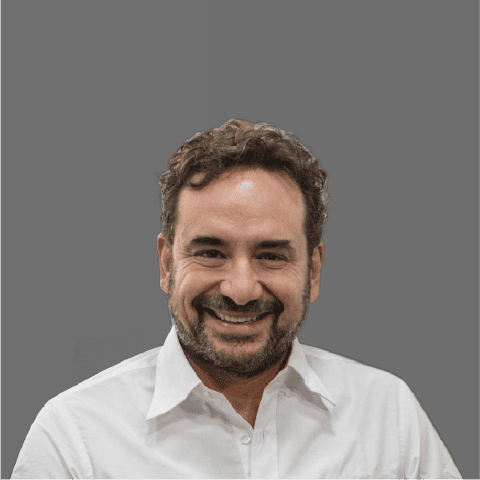
Ari Sussman, Executive Chairman of Collective Mining. (Photo: Collective Mining)
The latest title grants follow Collective Mining’s earlier efforts to secure control over the surface rights required for potential future development at Guayabales.
In March 2026, the company completed land acquisitions covering the remaining surface rights needed for a future mining operation.
The Guayabales Project is anchored by the Apollo system, where Collective has reported high-grade gold discoveries and continues an extensive diamond drilling campaign.
The company has completed 184,000 meters of diamond drilling across the Guayabales and San Antonio projects, including 120,000 meters at the Apollo system.
As of March 31, 2026, Collective reported $113.3 million in cash and said it was fully funded for its 2026 exploration program, which includes up to 100,000 meters of drilling. The company currently operates 13 diamond drill rigs across the Guayabales Project.
Collective Mining continues exploration in Caldas
Collective Mining was founded by the team behind Continental Gold, which was acquired by Zijin Mining for approximately $2 billion in enterprise value.
The company explores for gold, silver, copper, and tungsten in Caldas, where its projects are located within an established mining district hosting ten fully permitted and operating mines.
At Guayabales, Collective Mining is focused on expanding the high-grade Ramp Zone, testing the Northern Apollo Oxidized area, drilling the recently granted license covering the northwestern extension of the Trap target, and evaluating additional greenfield exploration targets.
Collective Mining is listed on the NYSE American and the Toronto Stock Exchange under the symbol CNL. Management, insiders, a strategic investor, and close family and friends hold approximately 45.2% of the company’s outstanding shares.
Inside the new cabinet
President-elect Abelardo de la Espriella has completed the formation of his Cabinet ahead of taking office on August 7, assembling an 18-member team that includes nine women and nine men in compliance with Colombia’s gender parity law. The appointments complete the lineup of officials who will lead the country’s executive branch during his first year in office.
The Cabinet’s composition offers the first clues about the profile the new administration may adopt, becoming the first Colombian government led by a politician identified with the far right.
Throughout the presidential campaign, De la Espriella portrayed himself as a political outsider, describing himself as one of “los nunca”, those who had never governed before, while referring to his rivals as “los de siempre,” a label for Colombia’s traditional political class.
One of the central questions is whether he will govern following the models of leaders he has cited as references, such as Argentina’s Javier Milei and El Salvador’s Nayib Bukele, or whether he will ultimately rely on the traditional right that has governed Colombia repeatedly within the constitutional framework and the country’s system of checks and balances.
That debate had already emerged during the campaign when he selected José Manuel Restrepo, an economist and former minister under President Iván Duque, as his running mate. Widely regarded as a technocrat, Restrepo’s nomination was interpreted as a signal of moderation to voters who questioned the presidential candidate’s limited political and government experience.
The final Cabinet combines ministers who served in previous administrations, representatives of traditional political dynasties, business leaders, figures aligned with the MAGA movement and President Donald Trump, representatives of evangelical churches and Christian communities, and several officials with no previous experience in the national government. It also includes a number of politicians who were outspoken opponents of the outgoing administration of Gustavo Petro.

Top row, from left: Elsa Noguera (Transport), Mauricio Gómez Amín (Commerce, Industry and Tourism) and Viviane Morales (Education). Bottom row, from left: Jaime Andrés Beltrán (Housing), Juliana Gutiérrez Zuluaga (Sports) and Iván Cancino (Justice and Law). Photos from the ministers’ social media accounts.
The most technocratic appointments
Among this group, one of the appointments that generated the greatest expectations was Ana María Vesga as health minister, one of the country’s most sensitive portfolios after years of debate over Colombia’s health care system.
A lawyer and representative of the business sector, Vesga previously served as executive president of ACEMI, the association representing Colombia’s leading EPS or health insurance providers. From that position, she became one of the country’s main voices on the health system crisis, its financing and proposals to strengthen it. Eliminating the EPS system was one of the main objectives of the unsuccessful health reforms promoted by the government of Gustavo Petro.
Another top priority for the incoming administration will be security, which De la Espriella says has deteriorated because of “the failure of Petro’s Total Peace policy.” He appointed retired Gen. Jorge Mora as defense minister. With more than 35 years of military service, academic credentials and technical expertise, Mora will lead the government’s strategy against illegal armed groups, which the president-elect has given an ultimatum to abandon criminal activity. Mora also unsuccessfully ran for public office with the endorsement of Centro Democrático, the right-wing party founded by former President Álvaro Uribe.
María Nohemí Arboleda, appointed minister of Mines and Energy, represents a profile that bridges technical expertise and politics. Since 2016 she has led XM, the company responsible for operating Colombia’s national electricity transmission grid, after spending much of her career at ISA, the state-controlled energy company based in Medellín. One of her main challenges will be the possible reactivation of hydraulic fracturing, or fracking, a method of oil and gas extraction criticized by the outgoing government for its environmental impact.
Representatives of traditional political dynasties
Among figures affiliated with Colombia’s traditional political parties and family political clans, those De la Espriella has referred to as “los de siempre”, Elsa Noguera stands out as the incoming transportation minister. She previously served as mayor of Barranquilla, governor of Atlántico and housing minister, while building much of her political career within Cambio Radical, the party linked to the Char political clan, one of the new president’s main political allies.
Rodrigo Lara Restrepo, the incoming interior minister, also fits that profile. He served two terms as a senator for Cambio Radical and has maintained close political ties with former Presidents Álvaro Uribe and Iván Duque, as well as former Vice President Germán Vargas Lleras, all leading figures of Colombia’s conservative right.
Indalecio Dangond, who will head the Ministry of Agriculture, advised the administrations of Ernesto Samper (Partido Liberal), Andrés Pastrana (Partido Conservador) and Álvaro Uribe (Centro Democrático), and also worked for Fedepalma, the palm oil producers’ federation that he will now oversee as minister.
Mauricio Gómez Amín, appointed minister of Commerce, Industry and Tourism, served two terms as senator, was a member of the House of Representatives and a city council member. He also managed De la Espriella’s presidential campaign and is considered a key political ally of the Char clan in Barranquilla.
Also in this group is three-term Centro Democrático Senator Paola Holguín, who will become culture minister. Although she sought her party’s presidential nomination, she distanced herself after Paloma Valencia was selected.
Holguín also maintains close political ties with Medellín Mayor Federico “Fico” Gutiérrez, whose sister, Juliana Gutiérrez, has been appointed sports minister. They are joined by Natalia López, the incoming labor minister, who unsuccessfully ran for the Senate under the Creemos movement led by Fico Gutiérrez.
Fabio Arjona, the incoming environment minister, served as deputy environment minister during the Ernesto Samper administration from 1997 to 1998. He later led Conservation International in Colombia for two decades.
Rounding out this group is Miguel Gómez, the incoming finance minister. He belongs to one of Colombia’s traditional Conservative families: he is the nephew of slain Conservative leader Álvaro Gómez Hurtado, grandson of former President Laureano Gómez and brother of current Senator Enrique Gómez.

President-elect Abelardo de la Espriella poses with his Cabinet during a leadership retreat ahead of his inauguration. Photo published on X by the incoming administration.
Those who had never held government office
Five Cabinet members most clearly embody De la Espriella’s campaign concept of “los nunca”: Jorge Mora (Defense), criminal lawyer Iván Cancino (Justice and Law), audiovisual expert Alexandra Falla (Information and Communications Technologies), Omar Bula (Foreign Affairs) and Claudia Benavides (Science, Technology and Innovation).
Omar Bula’s appointment has attracted particular attention. Although De la Espriella has pledged to strengthen relations with the United States, the incoming foreign minister’s most significant international experience came between 1989 and 2012 through several missions with the United Nations World Food Program. At the same time, in recent years he has become a strong critic of the UN, describing it as a “left-wing directory” with an “anti-Western globalist agenda.” On social media he has also defended positions associated with the MAGA movement and argued that climate change is a false “woke idea.”
Claudia Benavides, meanwhile, was selected through a digital “talent hunt” platform created by De la Espriella to receive applications from citizens interested in joining the government. According to the president-elect, she was chosen from more than 300,000 applicants and had no previous relationship with him.
Signals to religious sectors
The presence of leaders linked to religious and Christian groups is another defining feature of the Cabinet.
The most prominent figure is former Senator and former Attorney General Viviane Morales. Although she built much of her political career within Partido Liberal, she has embraced conservative positions on same-sex marriage, adoption by same-sex couples, euthanasia and abortion. She also led a referendum initiative seeking to prohibit adoption by same-sex couples, although it was rejected by the House of Representatives.
Her appointment as education minister has raised concerns among academic and liberal sectors, particularly after stating that schools should “remove Marx and bring God back into the classroom.” Morales is also the wife of Carlos Alonso Lucío, a former M-19 guerrilla member who helped shape the ideology behind the Salvación Nacional movement and De la Espriella’s government.
Also, in this category is Jaime Andrés Beltrán, the incoming housing minister. The removed former mayor of Bucaramanga, Christian pastor and outspoken admirer of Salvadoran President Nayib Bukele reflects the growing political influence of Christian movements within the governing coalition.
Between change and continuity
The Cabinet’s composition partially contrasts with one of De la Espriella’s central campaign messages: governing with “los nunca,” referring to people who, as he repeatedly said, had “never lived off the state’s payroll” and had never belonged to Colombia’s traditional political class.
Beyond the individual appointments, the Cabinet provides the first concrete indication of the governing model De la Espriella intends to pursue over the next four years.
The combination of figures drawn from the traditional political establishment, technocrats, private-sector representatives, leaders close to Christian movements and several officials with no previous government experience suggests a strategy focused more on governability and institutional stability than on political disruption.
That balance will be tested from the beginning of the administration in a highly fragmented Congress where no political force holds a majority, forcing the new president to negotiate each of his major reforms while confronting challenges including security, economic recovery, health care reform and strengthening relations with the United States.
 Empleobilingue.com

- Director/a de operaciones para hotel, restaurante y discoteca 1626320364.60 - Medellín, Medellin, Antioquia, Colombia
- Coordinador/a de calidad para La Unión 1626483143.1 - La Unión, Antioquia, Colombia
- Desarrollador fullstack - Bogotá, Bogota, Colombia
- Technical Analyst - Remote
- PIM Administrator - Ecommerce - Remote (Bogotá, Bogota, Colombia)
- Auxiliar de gestión humana y bienestar para Girardota 1626060072.28 - Girardota, Antioquia, Colombia
- Marketing Strategist
- Trainer Manager - Bogotá, Bogota, Colombia
- Tolemaida UH- 60 Inspector - Bogotá, Bogota, Colombia
- Virtual Assistant - Team Lead - Remote
Contact Us

