Previous Story

Petro Denies Holding Parties at Presidential Palace after Allegations Over 48 Women Emerge
Posted On November 10, 2026
Comment: 0
Colombia’s former president says he never held a party at the Casa de Nariño, as the current government prepares to refer questions over service contracts to prosecutors
Former Colombian President Gustavo Petro has denied allegations that parties were routinely held at the presidential palace during his administration, after current presidential administrative director Carlos Andrés Ríos accused him, stating that 48 women may have been improperly recruited through government service contracts.
The controversy has intensified as former senior presidential official Angie Rodríguez continues to make allegations about conduct inside the administration. Petro has rejected the accusations and said he will pursue legal action over claims he considers false.
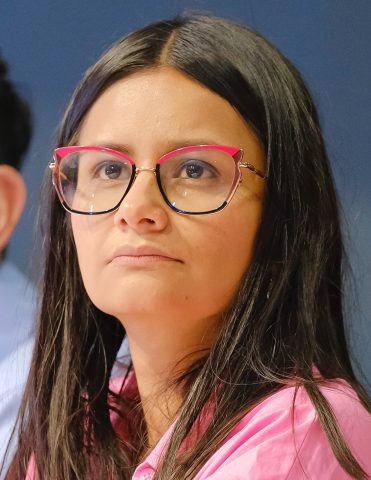
Angie Rodriguez, former Secretary General of the Presidency and head of DAPRE under former President Gustavo Petro (photo: Presidencia de La República)
Ríos made his allegations during a political oversight debate in Colombia’s Senate on October 21. He said he intended to report the alleged instrumentalization of women to the Attorney General’s Office and argued that service contracts may have been used for purposes unrelated to their stated duties. BluRadio reported that Ríos did not provide detailed evidence publicly to substantiate the allegations during his remarks.
“I will personally file the complaints concerning the 48 women who were in the Presidency under President Petro, who were unfortunately instrumentalized through service contracts.” – Carlos Andrés Ríos, director of the Administrative Department of the Presidency
Allegations concerning contracts at the Casa de Nariño
Ríos alleged that women hired through órdenes de prestación de servicios (OPS), a form of service contract commonly used by Colombian public institutions, were allegedly used for purposes beyond their contractual responsibilities. He also accused the previous administration of allowing the Casa de Nariño to become a venue for frequent parties rather than focusing on government business.
The allegations have not, by themselves, established that the contracts were irregular or that the women involved were pressured into personal encounters with the former president. The details of the individual contracts and the circumstances of the women’s employment remain central to determining whether any wrongdoing occurred.
According to La FM, the Departamento Administrativo de la Presidencia de la República (Administrative Department of the Presidency), or DAPRE, was preparing a report on the 48 women’s contracts for submission to prosecutors, who could examine the terms of their appointments and the work they performed. The allegations should therefore be distinguished from any findings that may emerge from an investigation.
The controversy follows separate public accusations by Angie Rodríguez, Petro’s former director of the DAPRE. Rodríguez has made claims about alleged conduct within the presidential administration and has said she will not retract her statements. In an October 21 report, El País reported that Rodríguez maintained her allegations while acknowledging that responsibility for establishing the facts rests with the relevant authorities.
Petro rejects claims about parties at the presidential palace
Petro responded publicly on October 23, challenging the allegations about parties at the Casa de Nariño. In a post on X, he said he would submit a formal request asking which parties he had scheduled during his four years in office.
“Never did I hold one,” Petro wrote, denying that he had organised parties at the presidential residence. He also rejected the accusations directed at his former wife, Verónica Alcocer, describing them as defamatory.
As reported by Colombia.com, Petro said the gatherings he had organised included Christmas lunches for people experiencing homelessness. He denied the broader claims that parties and alcohol consumption had been regular features of his presidency.
Petro has also challenged Rodríguez’s allegations and indicated that he intends to seek legal recourse. His response adds a legal dimension to a dispute that has increasingly moved from political statements into competing allegations that may require judicial scrutiny.
What happens now?
The next steps will depend on whether the allegations lead to formal complaints and investigations by Colombia’s judicial and oversight authorities. The DAPRE’s claims concerning 48 women and the allegations made separately by Deicy Jiménez raise questions about the use of public contracts, which investigators would need to examine against employment records, contract documentation and other supporting evidence.
The government’s October 25 announcement that it had activated an institutional protection process for Jiménez ensures her safety while her allegations are assessed. The Ministry of Justice and the National Protection Unit (UNP) have said they will coordinate the response, although the public announcement did not specify the protective measures to be implemented.
Petro has denied the allegations concerning his conduct in office. Whether any wrongdoing occurred will depend on evidence and the findings of the relevant authorities, rather than the public statements made by either side.
Headline photo: A picture of former president Gustavo Petro in 2025. (Photo: Official Presidency of Colombia photography)