Previous Story
So You Want to Import a Car Into Colombia? Colombia Routes Every Car Import Through Four Agencies as It Weighs a 40% Tariff
Posted On October 21, 2026
Comment: 0
Tag: 40% vehicle tariff, ANLA, arancel, cartagena, CEPD, Certificado de Emisiones por Prueba Dinamica, Colombia auto market, Colombia car import, Declaracion de Importacion, Decreto 1165 de 2019, Decreto 1881 de 2021, DIAN, electric vehicles Colombia, how to import a car into colombia, importing a car to Colombia, impuesto nacional al consumo, IVA, levante, matricula, MinCIT, ministerio de transporte, new vehicle rule, Resolucion 0762 de 2022, RUNT, santa marta, Sistema de Recoleccion Selectiva, soat, used vehicle import ban, vehicle import Colombia, vehicle tariff Colombia, vuce
A new-only rule and a proposed 40% tariff reshape import costs
Importing a car into Colombia is a regulated, multi-agency process, not a simple purchase and shipment. Any individual or company can do it, for personal or commercial use, but the vehicle has to clear environmental review, customs nationalization and the national traffic registry before it can legally take to the road. It also has to be brand new. The rules are set by several different authorities, and a buyer who skips a step can end up with a vehicle stranded at the port.
The starting point is the vehicle itself, because Colombia does not allow the importation of used cars. The Dirección de Impuestos y Aduanas Nacionales (DIAN, the National Tax and Customs Directorate), in Concepto 54 de 2007, which clarified an earlier Concepto 006 de 2003, traces the restriction to Article 6 of the Convenio de Complementación en el Sector Automotor (Automotive Sector Complementation Agreement) among Colombia, Ecuador and Venezuela. That provision authorizes the importation only of new vehicles whose model year is the year of importation or the year after it. In practice, a buyer importing in 2026 can bring in a 2026 or 2027 model, but not a 2025 one, even if it has never been driven.
The only significant exception is for antique and classic cars. Resolución 019199 de 2002, issued by the Ministerio de Transporte (Ministry of Transport) under Ley 769 de 2002, defines an antique vehicle as one that has reached 35 years and a classic as one that has reached 50, in each case keeping its original specifications. Those vehicles can be imported with a prior license, a certification of national interest from the Automóvil Club de Colombia and compliance with Ministry of Transport requirements. For everything else, new is the rule.
Country of origin matters next, because it determines both the arancel (customs tariff) and whether a free trade agreement reduces or eliminates it. Vehicles that meet the rules of origin under Colombia’s trade agreements, including those with the United States, the European Union and Mexico, can qualify for preferential or zero tariffs, while vehicles from countries without an agreement pay the full rate. The car also has to be compatible with Colombian emissions and safety norms. Vehicles usually arrive by sea, either in a container or on a roll-on/roll-off carrier, typically through ports such as Cartagena and Santa Marta.
Environmental clearance comes before customs
Before a vehicle can be nationalized, it needs environmental clearance, the visto bueno, from the Autoridad Nacional de Licencias Ambientales (ANLA, the National Environmental Licensing Authority). The central document is the Certificado de Emisiones por Prueba Dinámica (CEPD, the Dynamic Test Emissions Certificate), governed by Resolución 0762 de 2022. It records the vehicle’s technical specifications and emission measurements, which must meet the standards in that resolution and in Ley 1972 de 2019, and the importer has to appear as the holder of the certificate. ANLA states that the certificate is free of charge.
Importers also have to check whether they fall under a Sistema de Recolección Selectiva (SRS, a Selective Collection System for end-of-life tires) under Resolución 1326 de 2017, which sets the thresholds that trigger the obligation. Both the CEPD and any SRS reference are submitted through the Ventanilla Única de Comercio Exterior (VUCE, the Single Window for Foreign Trade), administered by the Ministerio de Comercio, Industria y Turismo (MinCIT, the Ministry of Commerce, Industry and Tourism) under Decreto 0925 de 2013. The data entered has to match the certificate exactly — down to numbers, letters and symbols — or the request can be denied. ANLA says interoperability between its systems and VUCE can reduce approval time to about five minutes, within the response deadlines set by Decreto 2106 de 2019.
Nationalizing the vehicle through customs
With the environmental clearance in hand, the importer turns to DIAN to nationalize the car. That begins with registering as an importer, which in practice means the Registro Único Tributario (RUT, the single tax registry) reflects foreign-trade activity. The importer then files the Declaración de Importación (import declaration) under Decreto 1165 de 2019, the Estatuto Aduanero (Customs Statute), and Resolución 046 de 2019. In many cases a Declaración Anticipada de Importación (advance import declaration) is filed before the goods arrive. Before the declaration is accepted, Article 177 of Decreto 1165 requires the importer to hold supporting documents including the commercial invoice, the transport document, the packing list and, where it applies, the import registration or license.
The vehicle can then be selected for a documentary or physical inspection under Articles 181 and 182 of Decreto 1165; filing an advance declaration does not remove that control. The final customs step is the levante, the authorization to withdraw the vehicle from the port or free-trade zone. An advance filing does not guarantee an immediate levante, which still depends on meeting every legal and documentary requirement.
The taxes stack up
Nationalizing a car means paying a layered set of charges, not a single duty. The general arancel on passenger cars under tariff heading 87.03 runs at about 35% of the CIF (cost, insurance and freight) value, according to figures cited by La República and set out in the customs schedule adopted by Decreto 1881 de 2021. On top of that, the general IVA (value-added tax) of 19% applies, calculated on the CIF value plus the tariff.
Combustion and applicable hybrid vehicles also pay the impuesto nacional al consumo (national consumption tax). Under Articles 512-3 and 512-4 of the Estatuto Tributario (Tax Statute), the rate is 8% for cars under heading 87.03 whose FOB value is below $30,000 USD and 16% for those at or above $30,000 USD. Because the charges are applied in sequence rather than in parallel, the combined tax load on an imported gasoline or diesel car is well above any single headline rate, which is why origin and any applicable trade preference weigh heavily on the final cost.
A proposed tariff increase would push the cost higher
The economics of importing a combustion car could change. A draft decree from MinCIT, recommended by the Comité de Asuntos Aduaneros, Arancelarios y de Comercio Exterior (the Committee on Customs, Tariff and Foreign Trade Affairs) in its session 384 on November 5, 2025, would raise the arancel on gasoline and diesel vehicles under heading 8703 to 40% and the rate on gasoline and diesel motorcycles under heading 8711 to 35%, amending Decreto 1881 de 2021. The measure would take effect 15 days after publication in the Diario Oficial (Official Gazette) and was opened for a 15-day public consultation.
The draft frames the increase as industrial and environmental policy, tying it to the Política Nacional de Reindustrialización (National Reindustrialization Policy, CONPES 4129) and to Colombia’s climate commitments under the Paris Agreement.
“The measure seeks to strengthen, protect and promote the Colombian automotive industry based on clean-energy technologies.” — Ministerio de Comercio, Industria y Turismo, draft tariff decree
The proposal covers only gasoline and diesel vehicles and motorcycles; it does not name hybrid or electric models, which already receive more favorable treatment, as reflected in Colombia’s earlier move to reduce import duties on natural-gas and electric heavy trucks. Article 3 of the draft states that it applies without prejudice to existing trade agreements, so vehicles from partners such as Brazil would not be affected; the Federación Nacional de Comerciantes (Fenalco, the National Federation of Merchants) confirmed, in reporting by La República, that Brazil’s ACE72 arrangement had been extended for a year. In the same report, the dealer association Aconauto warned that the higher rate could contract the market for cars from origins without a trade agreement, such as Japan, China, Southeast Asia and the United Kingdom. The government has separately pursued domestic assembly, including talks to bring assembly by Mazda (TSE: 7261) back to Colombia, a process Finance Colombia has reported.
Registration, insurance and plates
Once the vehicle clears customs, the last stage is registration. The owner records the matrícula inicial (initial registration) at an organismo de tránsito (transit authority) in the municipality where the vehicle will be kept, and the record is entered in the Registro Único Nacional de Tránsito (RUNT, the National Traffic Registry), which operates under the Código Nacional de Tránsito (National Traffic Code, Ley 769 de 2002) administered by the Ministerio de Transporte. At that point the owner obtains the remaining mandatory documents, the Seguro Obligatorio de Accidentes de Tránsito (SOAT, the mandatory traffic accident insurance) and the license plates.
The sequence, from choosing a compliant vehicle to receiving the plates, involves several authorities and a set of documents that cannot be skipped, and the timeline varies with shipping frequency, port congestion and inspections. Because the rules draw on customs, environmental, tax and transit law at once, and because the tariff framework is under active revision, anyone considering importing a vehicle should consult a qualified customs agent and legal counsel for their specific case rather than relying on a general explainer such as this one.
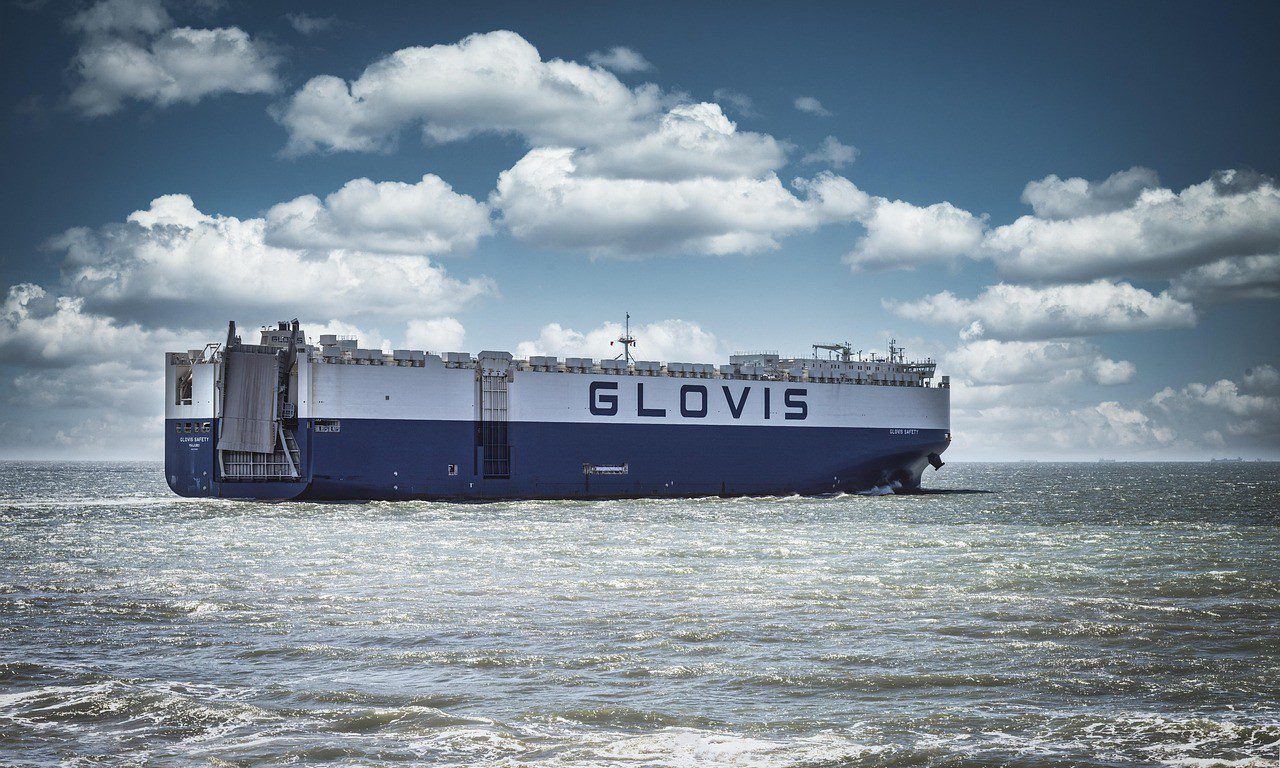
Headline photo: A vehicle is loaded aboard a ship bound for port. (Photo: Image by ddzphoto from Pixabay)