Previous Story

Medellín’s Comptroller Probes an Alleged $108.6 Billion COP Loss From Quintero Administration’s Hidroituango Contractor Switch
Posted On July 13, 2026
Comment: Off
Tag: antioquia, colombia, Contraloria de Antioquia, Contraloria de Medellin, daniel quintero, detrimento patrimonial, empresas publicas de medellin, epm, fiscal responsibility, Hidroituango, hydroelectric, indagacion preliminar, ituango pc-sc consortium, medellin, Paula Ortega, Power China International, public utilities, schrader camargo, Sociedad Hidroituango, Superservicios, yellow river
Auditors flag a planning breach in EPM’s turbine re-contracting
The Contraloría Distrital de Medellín (Medellín District Comptroller’s Office) has opened a preliminary inquiry into whether a change of contractors on the final works of the Hidroituango hydroelectric project caused a presumed fiscal loss of $108.585 billion COP — 108,585,346,005.76 pesos, or roughly $33 million USD at mid-July exchange rates — to Empresas Públicas de Medellín (EPM), the city-owned utility that operates the plant. The review centers on generating units 5, 6, 7, and 8, the final stage of the megaproject.
The matter reached Medellín’s comptroller from the department’s own auditors. Since February, the Contraloría General de Antioquia (Antioquia Comptroller’s Office) had been conducting a special audit of the contractor change. In June it reported that the Sociedad Hidroituango, the project’s owner, suffered no patrimonial harm from the decision, but that it had identified a presumed breach of the principio de planeación (planning principle) in the contracting process led by EPM. Because EPM does not fall under the departmental comptroller’s jurisdiction, the finding of more than 100 billion pesos was transferred to the Medellín district comptroller, which must now formally open a fiscal-responsibility investigation.
“The new contractor presented values in its proposal that are higher than the values EPM had in its official budget. That difference is what generates the patrimonial detriment.” — Paula Ortega, Comptroller of Medellín
Medellín Comptroller Paula Ortega said the possible harm did not arise from a direct increase in the contract’s value. “The new contractor presented values in its proposal that are higher than the values EPM had in its official budget. That difference is what generates the patrimonial detriment,” she told La FM. Ortega stressed that the process is only at the preliminary-inquiry stage, which could run about six months, and that no fiscally responsible parties have been named so far.
The office will need to reconstruct the contracting process and determine whether the decision to change contractors rested on sufficient technical, legal, and financial grounds, or whether it damaged EPM’s assets. Fiscal-responsibility proceedings move through several stages and can extend for up to two years, meaning a decision on the merits may not come until around 2028.
The decision under review was made between 2022 and 2023, when Daniel Quintero served as mayor of Medellín and chaired EPM’s board of directors. Quintero’s administration defended the change at the time, arguing that the firms then executing the project were under investigation over the 2018 Hidroituango contingency, which followed the collapse of the plant’s auxiliary diversion tunnel. On that basis, EPM awarded the completion of the works on turbines 5 through 8 to the Ituango PC-SC Consortium — made up of the Chinese firms Yellow River Co. and Power China International Group, alongside Colombian firm Schrader Camargo — which Finance Colombia reported was the sole bidder for the works. Quintero has rejected the comptroller’s finding. Finance Colombia has also reported on the earlier stages of the dispute, including the breakdown of mediation between EPM and its original consortium, the utility’s re-bidding of the Hidroituango works, and the broader turmoil at the utility under Quintero.
The inquiry adds to other oversight fronts surrounding Hidroituango and EPM, including an inspection of the company by the Superintendencia de Servicios Públicos Domiciliarios (Residential Public Utilities Superintendency) and judicial proceedings that already involve dozens of people over alleged irregularities during the previous administration. The Medellín district comptroller will ultimately decide whether the presumed detriment is confirmed and who, if anyone, must answer for it.
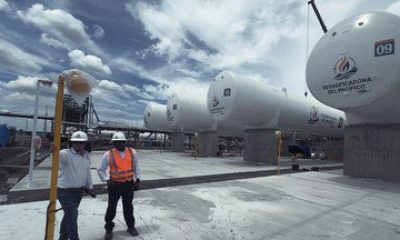
Above photo: Construction workers labor to complete the Hidroituango hydroelectric project (photo © Loren Moss)