Previous Story
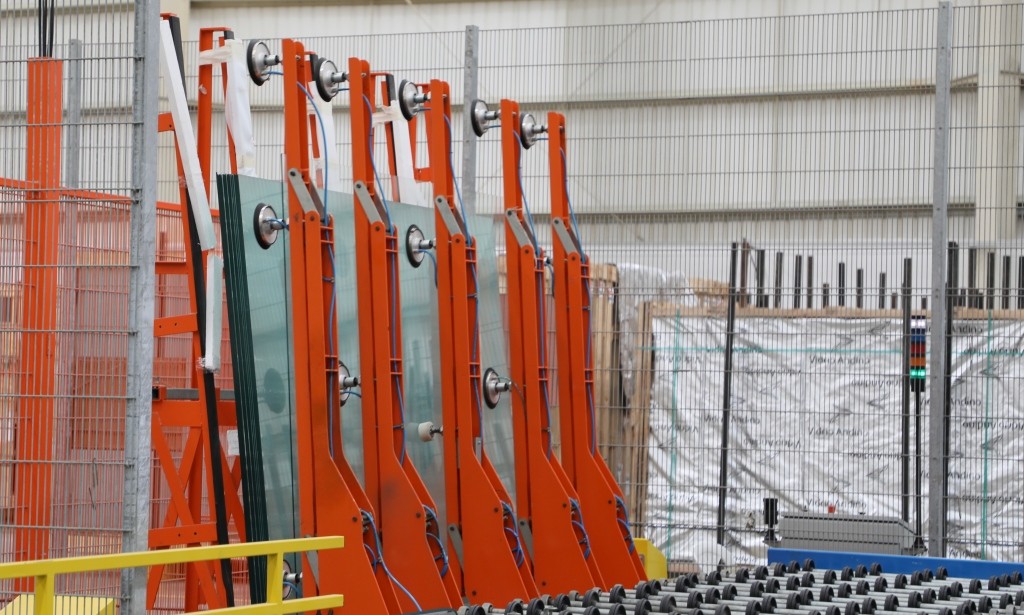
Colombia Imposes a 35% Tariff on Float Glass Imports From Non-FTA Countries
Posted On July 7, 2026
Comment: Off
Tag: 35% tariff, andean community, China imports, Colombia tariff, colorless float glass, Construction Materials, customs tariff, Decree 636 of 2026, DIAN, Diana Marcela Morales Rojas, DNP, float glass, glass manufacturing, import tariff, Indonesia, malaysia, Ministry of Commerce Industry and Tourism, reindustrialization, subheading 7005.29.10.00, subheading 7005.29.90.00, trade diversion, trade remedies, vidrio flotado incoloro
Colombia’s national government issued Decree 636 on June 26, 2026, establishing a 35% import tariff on colorless float glass for a term of five years. The measure, signed by Commerce, Industry and Tourism Minister Diana Marcela Morales Rojas and Finance Minister Germán Ávila Plazas, covers two customs subheadings — 7005.29.10.00 and 7005.29.90.00 — and takes effect 15 calendar days after its publication in the Diario Oficial (Official Gazette).
Because the decree applies without prejudice to the trade agreements Colombia already has in force, the duty falls in practice on imports from countries with which the country has no free trade agreement. According to the technical analysis cited in the text, those origins are led by China, followed by Indonesia and Malaysia.
“In order to protect the national production of float glass and to prevent trade diversion, the application of a tariff becomes necessary.” — Decree 636 of 2026, Ministry of Commerce, Industry and Tourism
The government based the tariff on a steep rise in imports. Total purchases of colorless float glass under the two subheadings grew about 134% between 2022 and 2025, rising from roughly 26,334 metric tons to 61,673 metric tons. Over the same period, the share supplied by countries without a trade agreement climbed from 52.36% to 87.07%. In 2025, China accounted for 57.74% of the volume imported from those origins, followed by Indonesia at 23.65% and Malaysia at 17.08%.
Imports from partners with an agreement in force — chiefly the United States, Mexico and Brazil — fell 36.50% between 2022 and 2025, while shipments from countries without an agreement rose 289.02% over the same period. The decree also documents a widening price gap. The average cost, insurance and freight (CIF) price of glass from trade-agreement countries slipped from $0.705 USD per kilogram in 2022 to $0.660 USD in 2025, a drop of 6.38%. Prices from countries without an agreement fell far more steeply, from $0.604 USD to $0.291 USD per kilogram, a decline of 51.82%. The gap between the two blocks widened from 14.24% in 2022 to 55.86% in 2025.
The decree describes colorless float glass as a strategic input for construction, manufacturing, industrial processing, architectural finishes, the automotive sector and safety-glass production, and notes that Colombia has registered domestic production of the material. Citing the risk of trade diversion, it points to trade-remedy measures that other countries — including Brazil, Mexico, India, Chinese Taipei, Botswana, Eswatini, Namibia and South Africa — have applied to float glass from various Asian origins, as recorded by the World Trade Organization.
The Comité de Asuntos Aduaneros, Arancelarios y de Comercio Exterior (Committee on Customs, Tariff and Foreign Trade Affairs) recommended the 35% rate for a five-year term during its session on May 4, 2026. The Ministerio de Vivienda, Ciudad y Territorio (Ministry of Housing, City and Territory) issued an opinion on April 24, 2026 stating that the measure would help soften inflationary effects and preserve the continuity of housing construction and improvement projects. The Departamento Nacional de Planeación (National Planning Department, DNP) found on April 29, 2026 that the measure aligned with the government’s reindustrialization policy and with the housing objectives of the 2022–2026 National Development Plan.
The Dirección de Impuestos y Aduanas Nacionales (National Tax and Customs Directorate, DIAN) estimated additional fiscal revenue from the adjustment of $248.127 billion COP, accumulated over the 2026–2035 period. The decree was opened to public consultation for 15 calendar days, from May 7 to May 21, 2026, on the ministry’s website.
The tariff rests on the president’s constitutional authority over customs and foreign trade, Laws 7 of 1991 and 1609 of 2013, and Decision 805 of the Comunidad Andina (Andean Community), which allows member countries to adopt tariff modifications. It partially amends Article 1 of Decree 1881 of 2021, the customs tariff schedule in force since January 1, 2022.
The move continues a series of tariff actions by Colombia’s Ministry of Commerce, Industry and Tourism directed at domestic industry. In recent months the ministry has drafted a “smart tariffs” decree tying import duties to domestic production capacity, moved to reintroduce duties on 32 goods and raw materials, and extended a 35% tariff on footwear imports.