Previous Story
Colombia Drafts Smart Tariffs Decree Linking Import Duties to Domestic Production Capacity
Posted On June 18, 2026
Comment: Off
Tag: andi, Apparel, colombia, defense, Diana Marcela Morales Rojas, Gustavo Petro, import duties, Manufacturing, metals, MinCIT, Ministry of Commerce Industry and Tourism, petrochemicals, plastics, reindustrialization, smart tariffs, steel, Tariffs, Textile, trade policy, wood, World Trade Organization, wto
Steel, plastics and petrochemicals among sectors targeted under proposed trade policy
Colombia’s Ministry of Commerce, Industry and Tourism (Ministerio de Comercio, Industria y Turismo, MinCIT) has published a draft decree introducing what it calls “smart tariffs,” a proposed system that would adjust import duties based on the level of domestic production within each industrial chain.
The proposal would replace Colombia’s traditional structure of broadly applied tariff rates, which are largely shaped by World Trade Organization commitments and multiple free trade agreements, with a more segmented approach tied to supply-chain conditions inside the country. In practice, tariff levels would vary depending on how much of each industrial chain is already supplied by domestic producers.
Colombia’s current tariff regime is relatively open by regional standards, with differentiated rates shaped by trade agreements and product classifications, but without a systematic mechanism linking duties to domestic production capacity. The proposed framework represents a change toward a more interventionist industrial policy approach, where tariffs are used not only for trade regulation but also for production steering.
The draft applies to a list of products where domestic production already exists. This includes steel, wood, plastics, metalworking, and petrochemicals. Under the proposal, higher tariff levels would apply to finished goods in sectors where Colombia has established industrial capacity and inputs essential to production chains could face reduced or zero tariffs.
For example, intermediate goods or components in industries where Colombia has limited production capacity could be exempted if they are considered essential for manufacturing export-oriented goods, particularly in textiles and apparel.
The Ministry said the framework was developed through technical discussions with industry associations and private-sector representatives, who provided input on supply-chain constraints, production bottlenecks, and competitiveness challenges across different sectors.
“Smart tariffs do not start from a uniform logic toward international trade, but from a reading of the country’s productive capacities and the needs of each value chain,” – Diana Morales Rojas, Minister of Commerce, Industry and Tourism.
Rising Imports and Industrial Policy Pressure
The proposal comes at a time when Colombia has seen growth in imports of manufactured goods, especially in industrial inputs and finished consumer products. Data shared by the National Administrative Department of Statistics (DANE) shows that imports of manufactured goods have remained important in Colombia’s trade balance. This reflects both domestic demand and limited local production in certain value chains.
Industry Perspective
The National Business Association of Colombia (ANDI) has previously warned that any tariff redesign must balance industrial protection with cost competitiveness for downstream manufacturers that rely on imported inputs.
The organization has supported efforts to strengthen domestic production but has also cautioned that higher input costs could affect export competitiveness in sectors such as textiles, automotive components, and processed foods.
Government Position on Smart Tariffs
Minister of Commerce, Industry and Tourism Diana Marcela Morales Rojas said the measure is designed to make tariff policy more responsive to industrial realities rather than applying uniform rules across sectors.
“Smart tariffs do not start from a uniform logic toward international trade, but from a reading of the country’s productive capacities and the needs of each value chain,” said the minister.
She added that the system is intended to support sectors where industrial capacity can expand and improve access to strategic inputs used in manufacturing processes.
The draft decree has been published for public comment before moving forward in the regulatory approval process.
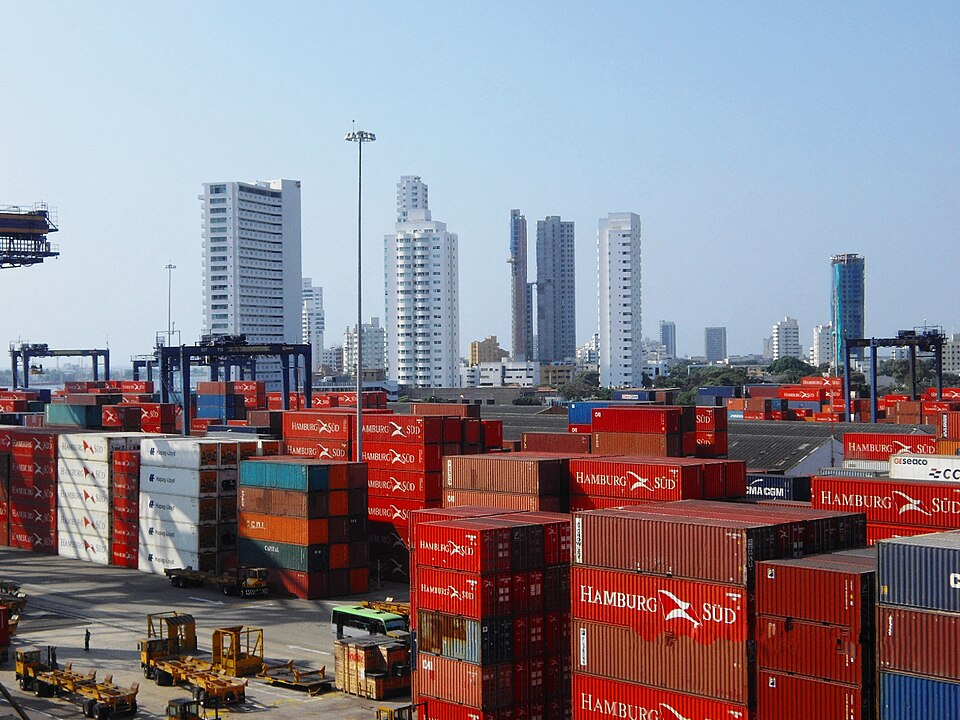
Above photo: Cartagena skyline viewed from the harbor. (Photo: [Pe-sa] / Wikimedia Commons