Previous Story

City of Medellín Reports 266% Growth in Investment & International Cooperation During 2025
Posted On December 1, 2025
Comment: 0
Tag: Accenture, aci, aci medellin, aior, antioquia, bloomberg philanthropies, brazil, c4o cities, chamber of commerce, cideu, City Hall, climate leadership group, comedores escolares, corredores verdes, Cristina Zambrano, dhl, Federico Gutierrez, fico, france, germany, giz, hilton foundation, informando a las mujeres, iqor, medellin, mercociudades, mesa de inversion, metropolis, milan urban food policy pact, poma, renautl, rivana business park, sofasa, softserve, sparkassen stilftung, taskus, the carter center, transformando vidas, united states
The Agency for Cooperation and Investment of Medellín and the Metropolitan Area (ACI Medellín) concluded 2025 by reporting an increase in both domestic and foreign capital inflows, alongside growth in international cooperation funding. The city secured over $400 million USD in national and foreign investment, which the agency credits with the creation of 11,211 jobs. This represents a 266% increase in capital flow compared to 2024, when the city recorded $150 million USD in investment and 1,759 jobs.
Investment capital was primarily concentrated in the technology, creative industries, infrastructure, and commerce sectors. Major sources of this investment included the United States, Colombia, Brazil, and France. To promote further capital attraction, ACI Medellín hosted two investment rounds: one focused on traditional sectors such as agribusiness, energy, health, infrastructure, and technology; and a second round concentrated on the audiovisual sector, executed in partnership with the Film Commission of the Medellín City Hall. These efforts were supported by collaborations with the Mesa de Inversión de Antioquia and the Medellín Chamber of Commerce for Antioquia.
Several companies announced new investments or reinvestments in the city, including Renault Sofasa, TaskUs (NASDAQ: TASK), iQor, Accenture (NYSE: ACN), Poma, Rivana Business Park, Softserve, and DHL (XETRA: DPW).
Medellín went from $3 million USD in international cooperation in 2024 to a projected $8 million USD with projects in the process of closure before the end of the year.
Cooperation Funding and Global Network Engagement
The city also reported a projected increase in international cooperation funds, with management expecting to close 2025 with nearly $8 million USD in projects, up from $3 million USD managed in 2024. This growth was partially driven by alliances with philanthropic organizations.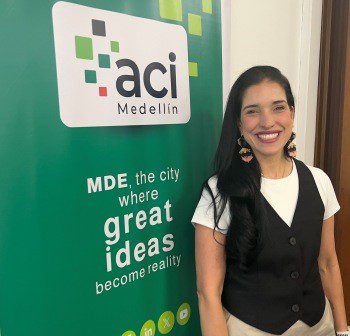
ACI Medellín collaborated with several key foundations to support social and environmental initiatives outlined in the city’s Development Plan. Noteworthy projects include a partnership with The Carter Center, which provided $50,000 USD and technical assistance to the Secretary of Women’s “Informando a las Mujeres, Transformando Vidas” project, aimed at strengthening gender-focused communication strategies for women caregivers. Other philanthropic entities involved in supporting various projects include Bloomberg Philanthropies, the Hilton Foundation, and Sparkassen Stiftung from Germany.
Medellín maintained its engagement in global city networks to advance sustainable development objectives. From 2024 to 2025, the city participated actively in platforms such as C40 Cities Climate Leadership Group, Mercociudades, CIDEU, and Metropolis. This participation led to the receipt of cooperation grants, training scholarships for municipal staff, and technical assistance for specific projects, such as Primavera Norte, which received support through the C40 and GIZ networks. As a member of the C40 Steering Committee, Mayor Federico Gutiérrez participated in global network activities, during which projects like the Corredores Verdes program, which the city credits with contributing to a 2 °C reduction in urban temperature, were presented.
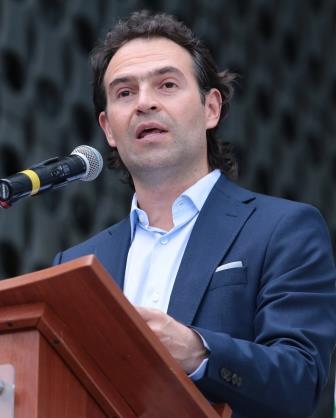
Medellín Mayor Federico Gutierrez (photo courtesy of the mayor’s office)
Recognition and Diaspora Strategy
In recognition of its social policies, the city’s School Feeding Program (Comedores Escolares) received the Milan Urban Food Policy Pact award in the Social and Economic Equity category. Medellín was one of six cities selected from 173 applicants globally, and the award included a financial contribution of €20,000 EUR. The award recognized the program’s integrated strategy, which focuses on providing nutritional food for children, strengthening food security, and supporting purchases from local producers.
Additionally, the Sos Paisa Network was relaunched in 2025. The initiative focuses on connecting the Antioquian diaspora with opportunities in Medellín, specifically aligning their knowledge with local Science, Technology, and Innovation (CTI) projects. This renewal effort aims to leverage the global scientific and academic diaspora for local development.
According to Cristina Zambrano, Executive Director of ACI Medellín, the figures confirm a growing international engagement. The executive noted that from 2008 through 2025, the agency has managed $4.084 billion USD in foreign direct investment, generating an estimated 44,000 jobs in the Aburrá Valley, in addition to $134 million USD in international cooperation.










Facebook Comments